
Maish Yarmush’s profound analysis takes us on wild intellectual journey; from the Torah’s intolerance of foreign cults to the limits of tolerance in a modern - and overly tolerant - free society. His article is a perfect example of what I call Anglo-Hebraic Political Philosophy; and it brings the Torah to life as a (the?) living, foundational document of Western Civilisation (thus it’s the prototype Guerre and Shalom essay). Moreover, Maish confronts us with a very modern dilemma: Should we be tolerant to those that are intolerant; those that would undermine the very foundations of our delicate, political society? Or should we grin and bare it as we see our once enlightened nations fall apart? The response of Torah, Maish and myself is clear. It is that of Karl Popper:
"We should therefore claim in the name of tolerance the right not to tolerate the intolerant".
Or to be slightly more polemical, “Get those hate marchers off our streets”. - Daniel Clarke-Serret (editor)
Among the many profound ethical and theological ideas contained in Parshat Re’eh, few challenge the modern reader more than the Torah’s uncompromising attitude toward idolatry. Repeatedly, the Torah commands the Jewish people to destroy pagan altars, obliterate idolatrous monuments, and erase the very places in which false gods were worshipped. “You shall utterly destroy all the places where the nations whom you are dispossessing served their gods... You shall tear down their altars, smash their pillars, burn their Asherim with fire... and you shall obliterate their name from that place.” (Devarim 12:2–3).
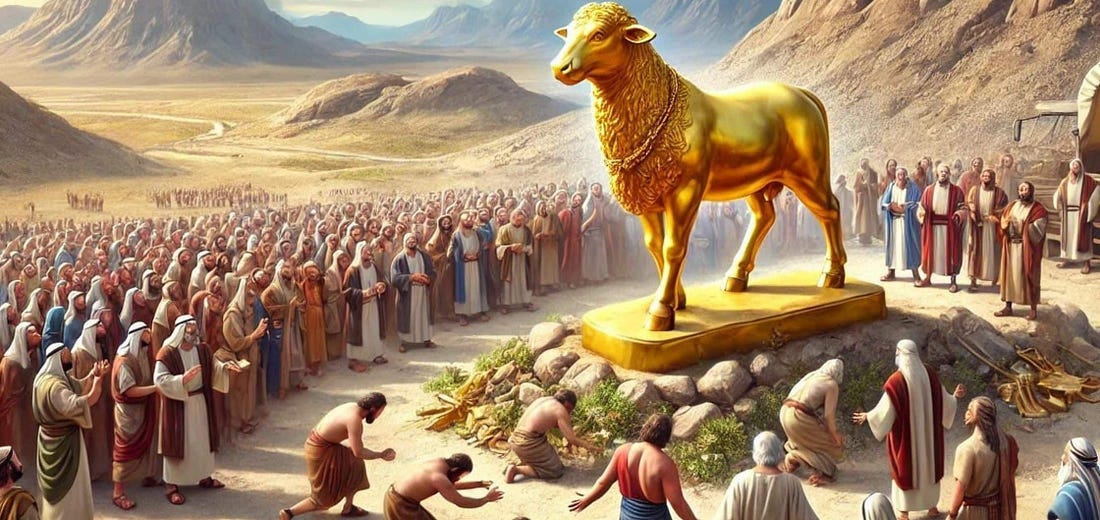
To modern ears, raised on the language of diversity, pluralism, and unlimited religious freedom, these verses can sound intolerant, even disturbing. Shouldn’t every belief system be respected? Doesn’t freedom require an unrestricted marketplace of ideas? Why would the Torah demand not merely disagreement with idolatry, but its complete eradication from the Land of Israel? These are not questions to be ignored or explained away. They deserve to be confronted directly.
The answer lies in recognizing that the Torah does not view ideas as isolated intellectual exercises. Ideas create cultures. Cultures create institutions. Institutions shape civilizations. What people worship ultimately determines how they live, how they govern, how they raise their children, and how they treat one another.
The Torah therefore asks a question that remains astonishingly relevant today: Can every idea safely coexist within every society? The modern world often assumes the answer is yes. The Torah argues otherwise.
Modern liberal societies frequently describe beliefs as private matters. Religion is viewed as a personal preference, much like cuisine or music. One person prefers one faith, another chooses another, and society simply accommodates both. The Torah rejects this understanding entirely. Throughout Tanach, idolatry is never presented as merely holding incorrect theological opinions. It is portrayed as a complete alternative civilization.
The pagan religions of the ancient Near East were inseparable from every aspect of social life. Their temples controlled wealth. Their priesthoods wielded political authority. Fertility cults normalized ritual prostitution. Child sacrifice was practiced in several cultures. Kings often claimed divine status. Violence, exploitation, and social hierarchy were sanctified through religious myth.
To worship a different god was therefore not simply to believe something different. It was to adopt an entirely different conception of morality, justice, family, sexuality, human dignity, and political authority. Destroying pagan shrines was not an attack on intellectual diversity. It was the dismantling of institutions that perpetuated systems fundamentally incompatible with the covenant Israel was charged to build.
An important distinction is often overlooked. The Torah consistently differentiates between individuals who sin and institutions that normalize sin. Individual human beings remain capable of repentance. Institutions often exist to perpetuate error.
Throughout Jewish history, prophets repeatedly called sinners to return. Yeshayahu preached. Yirmiyahu warned. Yechezkel offered hope. Yonah was sent to Nineveh, a non-Israelite city, to encourage repentance rather than destruction.
Judaism therefore never teaches hatred of people because they are mistaken. At the same time, the Torah recognizes that certain institutions become engines for transmitting destructive beliefs from one generation to the next. Altars educate. Temples educate. Schools educate. Public symbols educate. Every civilization understands this. The real struggle is almost never over private belief. It is over public institutions.
Modern societies often congratulate themselves on being uniquely tolerant. Yet no civilization practices unlimited tolerance. Every society decides that some ideas are too dangerous to institutionalize. No democratic nation permits schools dedicated to recruiting children into ISIS. No civilized country celebrates child sacrifice as a protected religious ritual. Most European nations prohibit public Nazi symbolism. Human trafficking is universally condemned despite the fact that many ancient cultures accepted slavery as ordinary.
Why? Because every civilization eventually recognizes that some ideas destroy the very conditions necessary for civilization itself. The disagreement is therefore not whether limits should exist. The disagreement concerns where those limits belong. The Torah answers that question differently than modern secular philosophy, but it is addressing precisely the same problem.
Karl Popper (1902–1994) was an Austrian-British philosopher widely regarded as one of the most influential thinkers of the twentieth century. Best known for his work in the philosophy of science and political philosophy, he revolutionized scientific thinking through his principle of falsifiability and became a leading defender of liberal democracy and the open society. Fleeing Nazi-occupied Europe, Popper spent much of his career in the United Kingdom, where his writings on science, reason, and freedom continue to shape philosophy, politics, and public discourse.
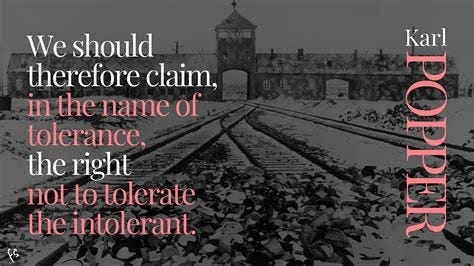
Karl Popper, articulated what has become known as the Paradox of Tolerance. A society that extends unlimited tolerance, even toward movements dedicated to eliminating tolerance, will eventually lose tolerance altogether. The tolerant society destroys itself.
History repeatedly confirms Popper’s insight. The Weimar Republic tolerated movements committed to destroying constitutional democracy. The result was Nazi Germany. Many liberal democracies underestimated totalitarian ideologies until those ideologies had already captured political institutions. Freedom became the instrument of its own destruction. The Torah recognized this dynamic thousands of years earlier. Its concern was not simply false theology. It was civilizational self-preservation.
John Stuart Mill (1806–1873) was one of the nineteenth century’s most influential English philosophers, economists, and political theorists. A leading advocate of classical liberalism, he championed individual liberty, freedom of expression, representative government, and women’s rights. His most influential works, including On Liberty (1859) and Utilitarianism (1863), profoundly shaped modern political philosophy, arguing that society flourishes when individuals are free to think, speak, and act without unnecessary interference, so long as they do not harm others.
Mill, perhaps history’s greatest advocate of liberty, defended nearly unrestricted freedom of thought. His reasoning remains powerful. Truth emerges most clearly when competing ideas confront one another openly. Suppressing ideas may suppress truth itself. Judaism shares much of this confidence. The Talmud preserves minority opinions. Debate fills every page. Disagreement is celebrated. אֵלּוּ וָאֵלּוּ דִּבְרֵי אֱלֹהִים חַיִּים, “These and those are the words of the living God” (Eruvin 13b).
Yet even Mill recognized limits. Speech that directly incites violence may be restrained. Liberty cannot become a license for immediate harm. The Torah reaches the same conclusion through a different path. Its concern is not merely whether ideas are intellectually mistaken. Its concern is whether they systematically corrupt the moral foundations upon which society depends.
One of the greatest misconceptions about biblical idolatry is that it concerned people bowing before pieces of stone. The prophets understood otherwise. An idol represents whatever occupies the place reserved for God. Power can become an idol. Nationalism can become an idol. Money can become an idol. Pleasure can become an idol. Technology can become an idol. Political ideology can become an idol.
Whenever people elevate something limited to the highest possible value, they have created an idol. Modern society often congratulates itself for abandoning paganism while constructing entirely new objects of worship. The statues have disappeared. The idols have not.
A businessman who professes atheism may sincerely believe he has rejected religion, yet if the pursuit of wealth becomes his highest value, he has merely exchanged one object of worship for another. When profit becomes absolute, ethical restraints become negotiable. Customers are no longer neighbors to be served but opportunities to be exploited, employees become costs to be minimized, and integrity is sacrificed whenever dishonesty promises a greater return.
The Torah would recognize this not simply as greed but as a form of idolatry. The idol is no longer carved from wood or stone; it is money. Whenever financial success occupies the place that belongs to God and moral law, commerce ceases to be an honorable vocation and becomes an act of worship at the altar of wealth.
The Torah’s commands concerning idolatry were directed specifically toward the Land of Israel, the place in which the covenantal nation was to be established. The objective was not global religious coercion. Israel was to become a society demonstrating ethical monotheism in public life. Its institutions were to embody justice, compassion, holiness, and human dignity. Introducing competing religious systems into the very heart of that national project would have undermined its foundational mission before it could take root.
Every constitutional democracy protects its constitution. Every university protects academic integrity. Every scientific discipline excludes fraud. Every profession establishes standards without apologizing for doing so. The Torah similarly protects the covenant that defines Israel’s national existence.
The internet has created the largest marketplace of ideas in human history. Never before have billions of people possessed immediate access to virtually every philosophy, ideology, conspiracy theory, and religious movement. This unprecedented freedom has produced extraordinary advances. It has also produced unprecedented confusion.
Algorithms reward outrage. Falsehood spreads faster than truth. Extremism recruits globally. Hatred finds audiences instantly. Even technologically advanced societies now struggle with questions previous generations scarcely imagined:
Should social media host terrorist propaganda?
Should schools teach every worldview as equally valid?
Should dangerous conspiracy theories receive identical treatment as established knowledge?
Should democratic institutions protect movements explicitly committed to ending democracy?
These debates demonstrate that the Torah’s underlying question remains alive. Not every idea merely competes. Some ideas consume.
At this point an important clarification must be made. Judaism is not afraid of intellectual disagreement. Quite the opposite. The history of Torah scholarship is the history of relentless argument. The Mishnah records disputes. The Gemara preserves disagreements. Rashi debates his predecessors. The Tosafists challenge Rashi. The Rambam provoked generations of criticism. The Ramban challenged the Rambam. The Vilna Gaon challenged accepted traditions. Rabbi Samson Raphael Hirsch confronted modernity. Rabbi Abraham Isaac Kook engaged science, nationalism, and modern philosophy.
None feared ideas. They answered them. The Torah does not fear honest inquiry. It fears organized systems that elevate falsehood into cultural institutions capable of reshaping an entire civilization. That distinction is essential.
Parshat Re’eh is therefore not asking whether people should think freely. It is asking a far more difficult question. What happens when ideas become institutions? History suggests that institutions shape societies far more powerfully than individual opinions.
The Torah insists that societies possess not only the right but the obligation to preserve the moral foundations upon which human dignity depends. Whether one ultimately agrees with every biblical application or not, the underlying principle remains remarkably contemporary. No civilization survives if it refuses to defend the principles that make civilization possible.
One of the great misconceptions of the modern age is that tolerance itself is the highest moral value. The Torah respectfully disagrees. Justice is higher than tolerance. Truth is higher than tolerance. Human dignity is higher than tolerance.mLife itself is higher than tolerance.
Tolerance is indispensable because human beings are imperfect, because coercion is dangerous, and because intellectual humility is a genuine virtue. Judaism has long recognized these truths. The rabbinic tradition preserves dissenting opinions, encourages vigorous debate, and insists that arguments conducted l’shem shamayim, for the sake of Heaven, can deepen rather than threaten religious understanding.
But tolerance ceases to be virtuous when it demands indifference toward institutions that systematically degrade human beings, sanctify cruelty, or replace moral truth with destructive falsehood. A society that refuses to distinguish between ideas that sustain civilization and ideas that undermine it eventually loses the very freedoms it sought to protect.
Parshat Re’eh therefore presents a timeless challenge. Every generation must ask not only what it is willing to tolerate, but also what it is obligated to defend. The Torah’s command to destroy idolatry is not a rejection of intellectual inquiry or honest disagreement. It is a recognition that civilizations are ultimately shaped by what they choose to honor, what they choose to institutionalize, and what they refuse to permit at the center of their collective moral life.
The question is as urgent today as it was more than three thousand years ago. Every society has its sacred values. Every society has its red lines. The only real question is whether those lines are drawn wisely enough to preserve both freedom and the civilization that makes freedom possible.
Comments
Nothing yet. Say the first thing.
Sign in to join the conversation.