
So pleased to introduce Maish Yarmush as our regular commentator on the Torah with weekly Divrei Torah (commentaries on the text) and a personal tab on the Guerre and Shalom website. The idea here isn’t to convert people to a particular religion, set of practices or a belief in God. Rather, we seek to launch a renaissance of understanding about the Hebrew Bible —restoring it to its pedestal as one of the foundational documents of Western civilisation. These commentaries show that the Torah is an eternal book full of insights, beyond the tired old cliché of “the God of the Old Testament”, and regardless of how one relates to the text, it is a cornerstone of our modern liberties and way of life.
In today’s commentary, Maish tells us about how the section of Deuteronomy known by Jews as Ki Teitzei should be seen as one synthesised narrative, teaching us to protect the most vulnerable in our society, and the commandment to “blot out” Amalek is an integral part of this. Maish—thank-you for your work and your contribution to the defence of our civilisational story - Daniel Clarke-Serret (editor)
Parshat Ki Teitzei contains more mitzvot than any other parshah in the Torah, seventy-four by the traditional count, and at first reading it can feel almost deliberately disorderly. We move from the beautiful captive woman to inheritance, the rebellious son, returning lost property, the fallen animal, the mother bird, rooftop parapets, forbidden mixtures, marriage and divorce, sexual offenses, escaped slaves, prostitution, interest, vows, workers eating from a field, divorce, military exemptions, collateral, kidnapping, leprosy, wages, individual criminal responsibility, justice for the stranger and orphan, gleanings for the poor, lashes, the unmuzzled ox, levirate marriage, dishonest weights, and then, suddenly, Amalek.
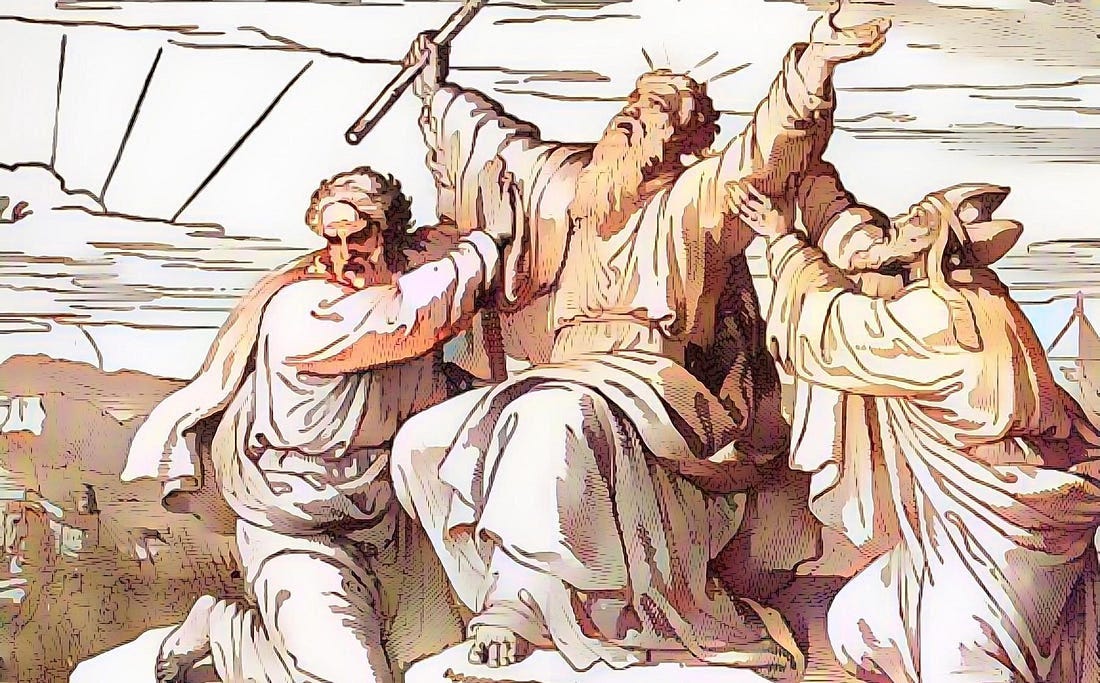
Or perhaps not suddenly at all. Perhaps Amalek is exactly where Amalek belongs. The final three verses of Ki Teitzei are among the most famous and disturbing in the Torah:זָכוֹר אֵת אֲשֶׁר עָשָׂה לְךָ עֲמָלֵק בַּדֶּרֶךְ בְּצֵאתְכֶם מִמִּצְרָיִם. אֲשֶׁר קָרְךָ בַדֶּרֶךְ וַיְזַנֵּב בְּךָ כָּל הַנֶּחֱשָׁלִים אַחֲרֶיךָ וְאַתָּה עָיֵף וְיָגֵעַ וְלֹא יָרֵא אֱלֹהִים, “Remember what Amalek did to you on the way when you left Egypt: how he encountered you on the way and struck at all the stragglers behind you, while you were exhausted and weary, and he did not fear God.”
We usually race toward the command in the following verse: תִּמְחֶה אֶת זֵכֶר עֲמָלֵק, you shall blot out the memory of Amalek. But before asking what it means to destroy Amalek, we should ask the question the Torah itself forces upon us: What, exactly, made Amalek so terrible?
Israel had enemies before Amalek and would have enemies afterward. Pharaoh enslaved an entire people and murdered its infants. Sichon and Og fought Israel. Midian would become an enemy. The Philistines, Assyrians, Babylonians, Greeks, and Romans would eventually follow. Warfare itself cannot explain Amalek’s unique theological status.
The Torah therefore gives us details. Amalek did not simply attack Israel.וַיְזַנֵּב בְּךָ כָּל הַנֶּחֱשָׁלִים אַחֲרֶיךָ, Amalek went after the people at the back. And that may be the key to the entire parshah.
Every moving society develops a front and a rear. At the front are the strong, the fast, the organized, the well-connected, the people with resources, status, family, health, confidence, and power. At the rear are those who cannot quite keep up. The Torah calls them הַנֶּחֱשָׁלִים אַחֲרֶיךָ.

Rashi, drawing on Midrash Tanchuma, Ki Teitzei 10, makes the description considerably more uncomfortable. These were not necessarily innocent saints who happened to walk slowly. He describes them as חסרי כח מחמת חטאם, people weakened because of their sins, whom the protective cloud had expelled.
That changes everything. If the stragglers had been flawless victims, protecting them would be morally easy. Rashi’s reading makes the Torah’s demand harder. Some people end up at the back partly because of their own failures.
And they are still your people. They may have sinned. They may have made terrible decisions. They may have wandered beyond the protective cloud. They may even bear some responsibility for their vulnerability.
Amalek sees that vulnerability and says: Good. Now they are easy to kill. The Torah says: They are still part of Israel.
This is one of Judaism’s most demanding moral propositions. The test of a community is not merely how it treats its finest members. It is how it treats the people who have fallen behind, including some who helped put themselves there.
Now go backward through the parshah. Suddenly its apparent miscellany begins to acquire a remarkable coherence. There is a captive woman, taken in war and completely at the mercy of the victorious soldier. The Torah intervenes. There is the son of the less-loved wife, vulnerable to manipulation by a father who prefers another child. Again the Torah intervenes. There is a lost animal whose owner is absent and therefore unable to protect his property. The Torah intervenes. There is a mother bird sitting defenselessly upon her young. The Torah intervenes. There is a person walking on your roof who could fall because you failed to construct a parapet. The Torah intervenes before he falls. There is an escaped slave, perhaps the most powerless human being imaginable in the ancient world. The Torah astonishingly commands:לֹא תַסְגִּיר עֶבֶד אֶל אֲדֹנָיו, Do not return an escaped slave to his master. He is permitted to live “in your midst, in the place that he chooses.” Do not oppress him. There is a poor laborer who possesses so little economic leverage that his employer might casually postpone his wages. Torah says no. בְּיוֹמוֹ תִתֵּן שְׂכָרוֹ, pay him that day, because “he is poor and his life depends upon it.” There is a debtor whose poverty has placed him under the power of a creditor. Even then, the creditor may not barge into his home and seize whatever he wishes. There is a widow whose garment might be taken as collateral. The Torah says no. There is the גֵּר, the stranger, without the family networks and inherited social capital enjoyed by everyone around him. Do not distort his justice. There is the יָתוֹם, the orphan, without a father to advocate for him. Do not distort his justice. There is the poor person who owns no field and waits behind the landowner during harvest. Torah tells the owner not to squeeze every final unit of value from his property. If you forget a sheaf, leave it. When harvesting olives, do not go over the tree again. When harvesting grapes, do not strip the vineyard a second time. What remains belongs to the stranger, the orphan, and the widow.
Again and again, Ki Teitzei asks the same question in different legal forms: What do you do when another human being is temporarily or permanently at your mercy? And again and again the Torah answers: You restrain yourself. You remember that weakness does not extinguish human dignity. You leave something behind. You pay on time. You return what was lost. You build the railing before someone falls. You do not enter the debtor’s house. You do not exploit the stranger. You do not manipulate the inheritance of the unwanted child. You do not return the fugitive to the person from whom he fled. And then, after constructing this extraordinary moral architecture, the Torah says: Now let me tell you about Amalek.
Amalek sees exactly the same human being Torah sees. The difference is in what happens next. The Torah sees the weak and identifies an obligation. Amalek sees the weak and identifies an opportunity. That may be the deepest distinction.
Amalek does not merely practice violence. Amalek practices predatory violence. He does not confront Israel at its strongest point. He searches for its weakest.
The Or HaChaim emphasizes the deliberateness of the attack. Rabbi Chaim ibn Attar (1696–1743), the great Moroccan-born Sephardic commentator who eventually settled in Jerusalem is universally known by the title of his Torah commentary, the Or HaChaim. He says Amalek did not merely stumble across Israel. He went looking for them, traversing the wilderness in pursuit of his prey. This was not an unfortunate border skirmish. It was a hunt. And the prey Amalek selected consisted of the people least capable of defending themselves.
The Torah even piles vulnerability upon vulnerability: וְאַתָּה עָיֵף וְיָגֵעַ you were exhausted and weary. Rashi connects עָיֵף to Israel’s thirst immediately before Amalek’s attack in Exodus 17. They were physically depleted. Amalek waits for exhaustion. That is not incidental information. It is the indictment.
There is a species of evil that does not merely desire victory. It calculates weakness. It asks where resistance will be lowest. It finds the exhausted, the isolated, the unprotected, the straggler, and strikes there. That is Amalek.
The verse then adds three apparently simple words: וְלֹא יָרֵא אֱלֹהִים, “and he did not fear God.” Rashi, following Sifrei Devarim 296 understands the subject as Amalek: Amalek did not fear God enough to refrain from harming Israel. But why is fear of God the decisive description?
Because throughout Tanach, yirat Elokim is not merely an emotion felt during prayer. It frequently appears precisely where one person possesses power over another person who cannot protect himself. The Egyptian midwives refuse Pharaoh’s command to murder Hebrew infants because וַתִּירֶאןָ הַמְיַלְּדֹת אֶת הָאֱלֹהִים, the midwives feared God. Yoseph, holding his brothers completely within his power as ruler of Egypt, says אֶת הָאֱלֹהִים אֲנִי יָרֵא, I fear God.
Why invoke God at precisely those moments? Because when the vulnerable person cannot stop you, something else must. That something is yirat Elokim. The fear of God means that there is no such thing as an unwitnessed exercise of power. There is no human being so insignificant that what you do to him becomes morally invisible. There is no field so completely yours, no employee so economically dependent upon you, no debtor so powerless, no stranger so disconnected, no captive so defeated, no straggler so far behind the camp that God ceases to care what happens there.
Amalek’s defining characteristic is therefore not atheism in the modern philosophical sense. It is something much more dangerous: the conviction that when nobody powerful is watching, you may do whatever you want, וְלֹא יָרֵא אֱלֹהִים.
Rashi famously offers several interpretations for אֲשֶׁר קָרְךָ בַדֶּרֶךְ. One derives קרך from chance or happenstance. Another associates it with impurity. But his most famous explanation connects it with קור, cold.
The nations had heard what happened in Egypt and at the sea. Israel seemed untouchable. Rashi, citing the Midrash Tanchuma, compares the situation to a boiling bath that everyone is afraid to enter. One reckless man jumps in. He is badly burned but in doing so he cools the bath for everyone else. Amalek was that man.
This adds another dimension to Amalek. Amalek does not merely injure his immediate victims. He changes the moral temperature. Someone must be first to demonstrate that the previously unthinkable can be done. Someone must be first to cross the line. Once he does, everyone else’s inhibition decreases.
That is how barbarism often spreads. The first humiliation shocks us. The tenth becomes familiar. The hundredth becomes background noise. Someone must first teach society that the forbidden is possible. Amalek cooled the bath.
And that metaphor extends far beyond warfare. Every civilized taboo depends partly upon the expectation that decent people simply do not do certain things. Once someone publicly violates the taboo and succeeds, the psychological barrier is lowered for everyone else. Cruelty is contagious. So is contempt. Amalek’s crime was therefore not only killing the stragglers. It was introducing a new possibility into the world: perhaps the weak are fair game.
There is another clue hiding immediately before the Amalek passage. What are the verses preceding זכור את אשר עשה לך עמלק? They concern weights and measures. You may not keep a large weight and a small weight, manipulating the measurement depending upon whether you are buying or selling. You must possess אֶבֶן שְׁלֵמָה וָצֶדֶק, a complete and honest weight. Then, without transition the Torah states: זָכוֹר אֵת אֲשֶׁר עָשָׂה לְךָ עֲמָלֵק.

Rashi refuses to treat the juxtaposition as accidental. Citing Tanchuma, he writes that if Israel falsifies weights and measures, it should fear the provocation of the enemy. At first this seems strange. What does cheating someone at the marketplace have to do with Amalek? Everything.
The merchant with the dishonest weight and Amalek share a moral operating system. Both search for an asymmetry they can exploit. The customer does not know the true weight. The merchant does. The straggler cannot defend himself. Amalek can attack him. In each case, one human being discovers that another is vulnerable and asks not, What do I owe him? but What can I get away with?
The magnitude is obviously different. Fraud is not murder. But the moral vector points in the same direction. This may explain why the Torah places Amalek immediately after dishonest weights. Before commanding us to identify Amalek outside ourselves, Torah forces us to examine the miniature Amalek that can appear in ordinary economic life.
Do not manipulate the scale merely because the customer cannot detect it. Do not exploit the worker because he needs the job. Do not squeeze the debtor because he needs the loan. Do not mistreat the stranger because he lacks connections. Do not attack the straggler because he cannot fight back. These are not unrelated commandments. They are variations on one question: What kind of person are you when you possess an advantage?
There is an additional feature of Ki Teitzei that deserves attention. The Torah does not merely command us to protect the vulnerable. It repeatedly instructs the powerful person to remember having once been vulnerable himself.
After commanding justice for the stranger and orphan and protecting the widow’s garment, the Torah says: וְזָכַרְתָּ כִּי עֶבֶד הָיִיתָ בְּמִצְרַיִם, “Remember that you were a slave in Egypt.” Then, only a few verses later: זָכוֹר אֵת אֲשֶׁר עָשָׂה לְךָ עֲמָלֵק. Remember Egypt. Remember Amalek. These are not merely historical exercises. They are technologies of moral memory.
Remember what it felt like to possess no power. Remember what it felt like when someone stronger could determine whether you ate, worked, rested, lived, or died. Remember what happened when you were exhausted and somebody saw your exhaustion as an opportunity.
The Torah’s theory of memory is therefore profoundly practical. We remember suffering not in order to cultivate permanent victimhood but in order to prevent suffering from reproducing itself when the former victim finally acquires power. Yesterday you were the slave. Tomorrow you will own a field. Yesterday you possessed nothing. Tomorrow someone will owe you money. Yesterday Pharaoh controlled your labor. Tomorrow you will employ laborers. Yesterday you were the stranger. Tomorrow strangers will live in your country. Yesterday Amalek attacked you when you were weak. Tomorrow you will be strong. And then comes the real test. What will you do with your strength?
The Ramban makes an important observation about זכור and לא תשכח. Why both? The rabbinic tradition distinguishes them: לא תשכח addresses forgetting in the heart; זכור requires active verbal remembrance. The Ramban explains that Israel must transmit what Amalek did across the generations, telling its children what occurred and why the command concerning Amalek exists. That means Amalek cannot be reduced to a vague symbol of generic evil. The story must be told. Something happened. A people had just escaped slavery. They were traveling through a desert. They were thirsty, exhausted, disorganized, and vulnerable. Some fell behind. Another nation deliberately attacked those people. Remember that. Because civilization has a remarkable capacity to remember victories and forget victims. The Torah insists upon the opposite. Remember the rear of the column.
And this, finally, is where Ki Teitzei stops being ancient history. Every society has נחשלים אחריך. Every community has a rear. There are elderly people who cannot keep pace with technological and social change. There are poor families quietly drowning while living beside affluent neighbors. There are children who do not fit the educational machinery constructed for everyone else. There are people with disabilities for whom ordinary architecture becomes an obstacle course. There are immigrants who do not understand the language or bureaucracy. There are workers who cannot afford to antagonize their employers. There are widows and widowers suddenly navigating institutions their spouses once managed. There are people whose marriages collapse, whose businesses fail, whose children struggle, whose reputations are damaged, whose judgment was poor, whose luck was worse.
And, crucially, some of them have made mistakes. Rashi will not allow us the luxury of imagining that everyone at the rear of the column arrived there through no fault of his own. That may be precisely why the Torah’s ethic is so demanding. A civilization committed to protecting only the blameless vulnerable will eventually discover reasons why almost nobody qualifies.
The poor should have saved more. The addict should have exercised greater self-control. The prisoner should not have committed the crime. The debtor should not have borrowed. The struggling student should have worked harder. The socially isolated person should have behaved differently. Perhaps. But the Torah asks another question first: What are you going to do now that he is behind you? Amalek has an answer. The Torah has another.
We often imagine the command to destroy Amalek exclusively as a command about Amalek. Ki Teitzei suggests something more demanding. Before we can speak seriously about eradicating Amalek, we must make certain that we are not reproducing Amalek’s governing principle ourselves. The Torah has just spent an entire parshah teaching Israel how not to become the thing it is commanded to oppose. Do not exploit the captive. Do not dispossess the unwanted son. Do not ignore what your neighbor has lost. Do not create preventable danger. Do not return the fugitive slave. Do not exploit the poor worker. Do not invade the debtor’s dignity. Do not pervert justice for the stranger or orphan. Do not strip the field bare. Do not cheat with the scale. And finally: remember Amalek.
Now the ending of Ki Teitzei no longer seems strange. It seems inevitable. The parshah begins with Israel possessing power over a captive woman and ends with Amalek possessing power over exhausted stragglers. Between those poles lies an entire Torah of what human beings are supposed to do with power.
That is the architecture. Ki Teitzei asks us to construct a society in which vulnerability generates responsibility rather than opportunity. Amalek constructs the opposite society. To Amalek, the rear of the column is where one goes hunting. To Torah, the rear of the column is where responsibility begins. Perhaps that is why the Torah does not merely say תמחה את זכר עמלק, erase the memory of Amalek. It first says זכור. Remember. Remember what he did. Remember whom he chose. Remember when he attacked. Remember that you were עיף ויגע, exhausted and weary. Remember the people who could not keep up. And then look behind you.
Because the ultimate question raised by Parshat Ki Teitzei may not be whether we can identify Amalek among our enemies. That is usually easy. The harder question is whether, after acquiring strength, security, wealth, sovereignty, institutions, and power, we can still recognize the people walking at the back of our own column.
The Torah’s answer to Amalek is therefore not weakness. Judaism has never demanded helplessness in the face of evil. Amalek must be confronted precisely because predation upon the defenseless cannot be tolerated. But military strength alone does not constitute the defeat of Amalek. You defeat Amalek when your strength becomes the shield behind which the weak can walk.
You defeat Amalek when the worker knows he will be paid, the debtor knows his home will not be invaded, the stranger knows the law will protect him, the fugitive knows he will not automatically be returned to his oppressor, the widow and orphan know they will receive justice, and the person who has fallen behind discovers that the community has noticed his absence. Amalek looks backward and sees prey. The Torah commands Israel to look backward and see a brother. That may be the most important difference of all.
Comments
Nothing yet. Say the first thing.
Sign in to join the conversation.