
Last night we hosted an AMA. A small group joined, three or four people. But the questions were good, and most of them centred around Tarawera.
It made me realise there’s an opportunity to go a little deeper here than what I’ve already shared on Instagram. I’ve already talked quite a bit about the practical side of the race. The nutrition, preparation, execution, and I’ll still include some of that here. A big shout-out to Precision Fuel & Hydration, because the nutrition strategy worked extremely well. I hit my targets, and in some areas even exceeded them.
But that’s not really what this article is about. What I want to focus on instead are the mental moments during the race. The thoughts that came and went across different sections of Tarawera. Now, I probably should have written down some thoughts immediately after finishing. But, I’m not that organised. Anyway somehow I can still clearly remember distinct parts of the course and the racing thoughts that showed up along the way.
Some people probably assume I go into races with a detailed tactical plan. When to move, who to follow, how the race should unfold. But the truth is, I went into Tarawera with a much simpler intention: to test myself properly. I didn’t want to hold back. I wanted to lay everything down and see where that took me.
I knew the field was incredibly competitive. Some of the best trail runners in the world were on the start line. But I also believed that if I executed well, I belonged up there with them. And there was an added layer of confidence: this wasn’t unfamiliar terrain. I’ve raced here before, having won the previous three editions of the 102km, and I’ve trained extensively on these trails, many of which I’ve known since growing up in the sport. That experience gave me a mental edge.
The first moment of real mental clarity actually came before the race even started.
Standing on the start line, I felt calm. Completely calm.
This came up again during the AMA, because a few athletes mentioned how hot and humid it already felt while waiting for the start of both the 100km and 50km races. Some said they felt like they were overheating before we’d even begun.
For me, it was the opposite. I didn’t feel hot at all, just a comfortable temperature.
I remember asking one of the guys (Dan Jones who raced the 50km). Whether he thought he would have felt that same heat/humidity if he’d simply stepped outside at 7 a.m. in shorts and a singlet on a normal morning. Honestly, I don’t think he would have. Most people would probably start shivering after five or ten minutes and think about putting another layer on.
It made me realise how much the environment around a start line can shape perception. The noise, the anticipation, the nerves, the adrenaline. All of it can convince you something is happening physically when really it’s happening mentally.
For some athletes, that energy seemed to push them into race mode too early. I was trying to do the opposite. Stay calm, stay controlled, stay patient. I didn’t feel overheated or rushed, just ready to get the job done.
When the gun went off, everyone started moving, but there wasn’t any chaotic rush. We all just got into our work. For me, it was almost like leaning back on the experience from previous years. Recalling the feel of running across the golf course, the single track along the river, getting into the miles of the early miles.
I found a good position near the front, where I could dictate the pace if I needed to. From there, everything felt smooth. My breathing was under control, and I kept a close eye on my heart rate with my Suunto Race 2. The goal was simple: maintain an effort I knew I could sustain for the long day ahead.
If someone wanted to follow, I fully expected that. My focus was on running the race I had planned, on my terms.
Early on, running through the Tarawera forest, it felt quite different from previous years. I remembered last year, Hiroki Kai was right there beside me, stride for stride. This time, it was a bit different.
I found myself leading a pack of four or five runners, but they were sitting in behind. I wasn’t being pushed. It didn’t feel like I had to work harder to keep pace, even though part of me wanted someone to come through and share the mental load of setting the early effort.
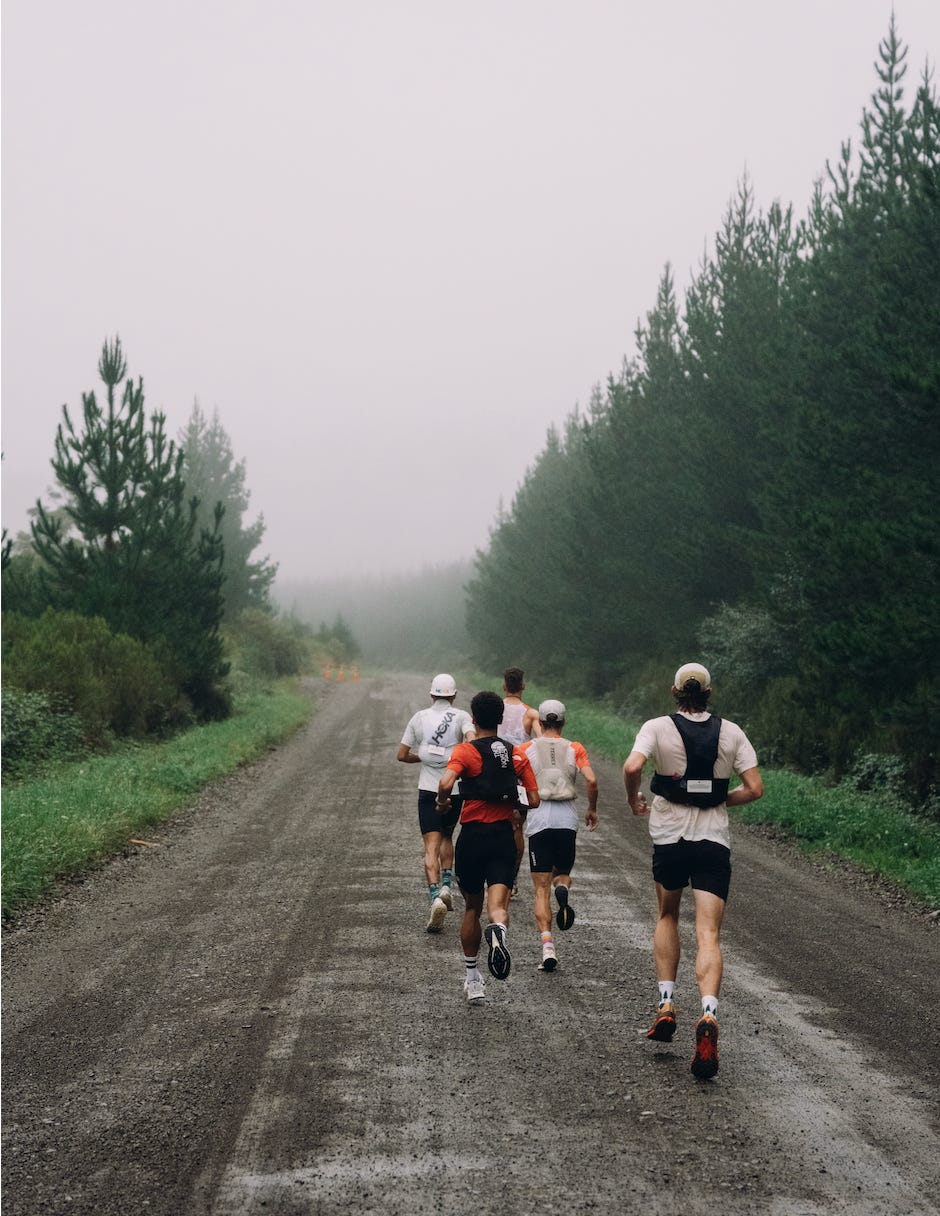
I wasn’t frustrated or stressed about it, but I noticed the mental shift. When you’re following someone in a pack, like in a fast marathon, you can conserve effort. You can let the rhythm of the person in front guide you, and all your energy goes into maintaining position. Here, I had to set the pace myself. That meant keeping effort steady, thinking about every section, and holding the line. I accepted it. If I was going to aim for a fast day, I’d just have to do it myself and trust that the pace I set would carry the group and give us a strong overall performance.
By the time we reached the Titoki aid station, it was almost time for the first proper hill of the race. Going through the station, everything was efficient, no drama, just smooth transitions.
I left the aid station following one of the Chinese athletes, Ji Duo, who had about 10–15 metres on me. I thought, okay, this is good. I’ll follow him up the hill and see what kind of effort he’s putting out.
Almost immediately, I caught up. And I was surprised. Ji seemed to be breathing quite heavily, more than I expected. I was feeling very comfortable, which suggested I was in a good spot physically.
Petter left the aid station just behind us with Shen, the other Chinese athlete. Early in the race, I wanted to avoid splitting the lead pack too soon. But when I caught up to Ji, it was clear I could take the initiative. I didn’t let off the gas. I passed him, and a small gap opened immediately.
By this stage, Petter had caught up to me, and we ran together for a bit. There was a brief pit stop, a quick walk while handling the essentials, and as we carried on, we slowly started to open a gap over the Chinese athletes.
It was one of those early moments where mental awareness, comfort in your own effort, and reading the field came together. Small gaps, small decisions, but they set the tone for the first real climb of the day.
Beyond that first climb, the course opened up into a series of undulations, a few pinches here and there, but nothing too extreme early on. This was around the 20–25 km mark, just before the Tarawera Outlet aid station.
By this point, Petter and I had managed to create a small gap ahead, but we could still see the Chinese athletes behind us. And I think this is where the first real gamesmanship of the race came into play.
I distinctly remember turning to Petter and saying, “Good on you, mate. We’ve got these guys a little on the ropes here. Let’s work together. If we can open up the gap, then it could be us pushing forward in this race, stamping our mark on it.”
It wasn’t about aggression for the sake of it. It was about reading the field, feeling strong, and knowing that we had the opportunity to influence the race. That small mental and tactical alignment between us set the tone for the next section of the course.
Soon after that early exchange, Petter and I began to create a slightly bigger gap over the rest of the field. Even though I was still leading, I could sense that Petter wasn’t quite able, or maybe wasn’t willing, to match the effort I was pushing.
For a moment, I considered easing off to bring him back alongside me, thinking “let’s close that gap, work together again.” But the gap started to open too much to do that effectively.
I gave him a little wave, wished him well for the rest of his race, and committed to the effort I wanted to sustain. It was a subtle mental shift: from cooperative pacing to running my own race, trusting my own strategy and strength, and accepting that others will find their own rhythm along the way.
Obviously, there was a lot of racing left beyond the 30km mark in a 100km race. From that point on, the tactical games were behind me. My focus shifted entirely to running as sustainably as possible while maintaining the fastest overall pace I could manage.
That meant staying on top of nutrition, pacing carefully, and adapting to the conditions underfoot. After the Okataina aid station, a torrential downpour hit. The rain came in sheets, and the track quickly turned into a shallow river.
I remember thinking, these are serious conditions. My priority became simple: watch every step, focus on foot placement, and avoid anything stupid that could end the race prematurely. Being in a strong position was one thing, but the day wasn’t won yet. Staying safe and controlled while continuing to push was the balance I needed to maintain.
Beyond the earlier climbs and downpours, the most brutal part of the course, and mentally the hardest for me, was the section where the 50k and 20k runners had run through. It had turned into an absolute mud bath. Navigating around athletes still racing, trying not to slip, and maintaining an effort I was happy with was a serious challenge. By this stage, I realised it wasn’t going to be a super-fast day. Some hills I would normally run, I was walking. I was carefully skirting around others who had fallen. The conditions made the race absolutely hectic.
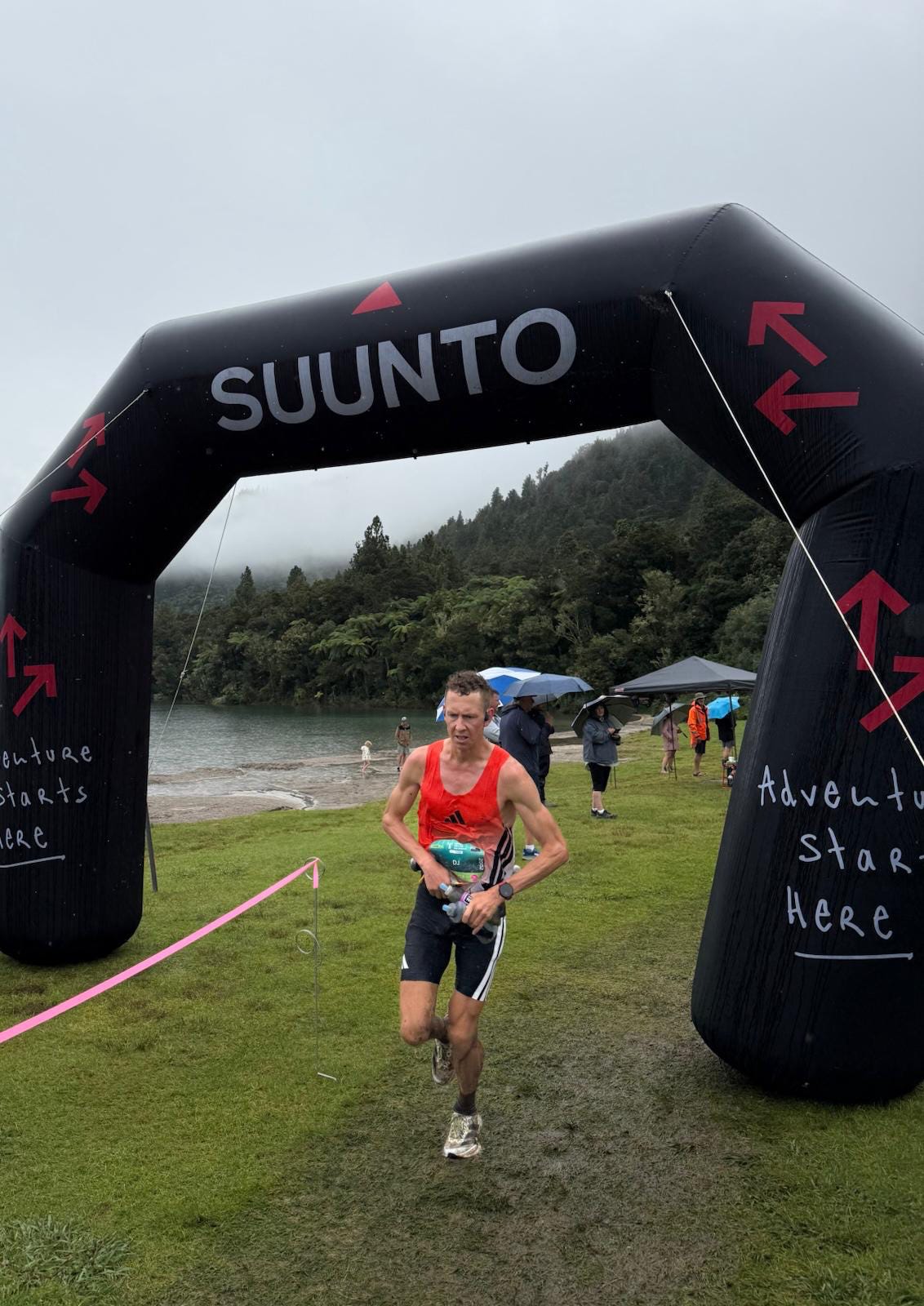
Even so, my goal was simple: continue competing at a level I’d be proud of and finish knowing I had left everything out there. That mindset guided me through the rest of the race. Once I returned to the more runnable sections after the Redwoods aid station, I was able to find my rhythm again. From there, I could push to through to the finish.
Crossing the line, the focus shifted from effort to appreciation. Appreciation for the athletes out there competing, the volunteers, the organisers, and of course, my family, supporters, and the Adidas team. Everyone who helped make the weekend what it was. That’s exactly how I wanted to finish: exhausted, fulfilled, and grateful.
I hope this gives you a good insight into some of the thought processes that happen during a race. Sometimes decisions are instant, made in a snap. Other times, we’re left pondering, recalculating, and adjusting our strategy on the fly.
Sometimes it plays out exactly as we hope, and sometimes it doesn’t. The constant, though, is adaptability. And that’s what being a trail runner is all about.
I’m pleased to share that this article has been presented to you by Precision Fuel & Hydration. The team that helped me nail my Tarawera nutrition - hitting 126g/hr of carbs.
We’re constantly in comms around how to maximise my performance in training & race day, it truly feels like an “athlete-first” approach. If you’re keen to get an understanding of how to weave their products into your training & racing - check out their planner: PF & H Planner

Comments
Nothing yet. Say the first thing.
Sign in to join the conversation.