
We were near the end of the trip. Maria and I grabbed some lunch in the lodge at Lake McDonald, the big one on the west side of Glacier. Its lobby is built around a fireplace so big you can actually step inside, and we found a cozy spot, right next to the fire.
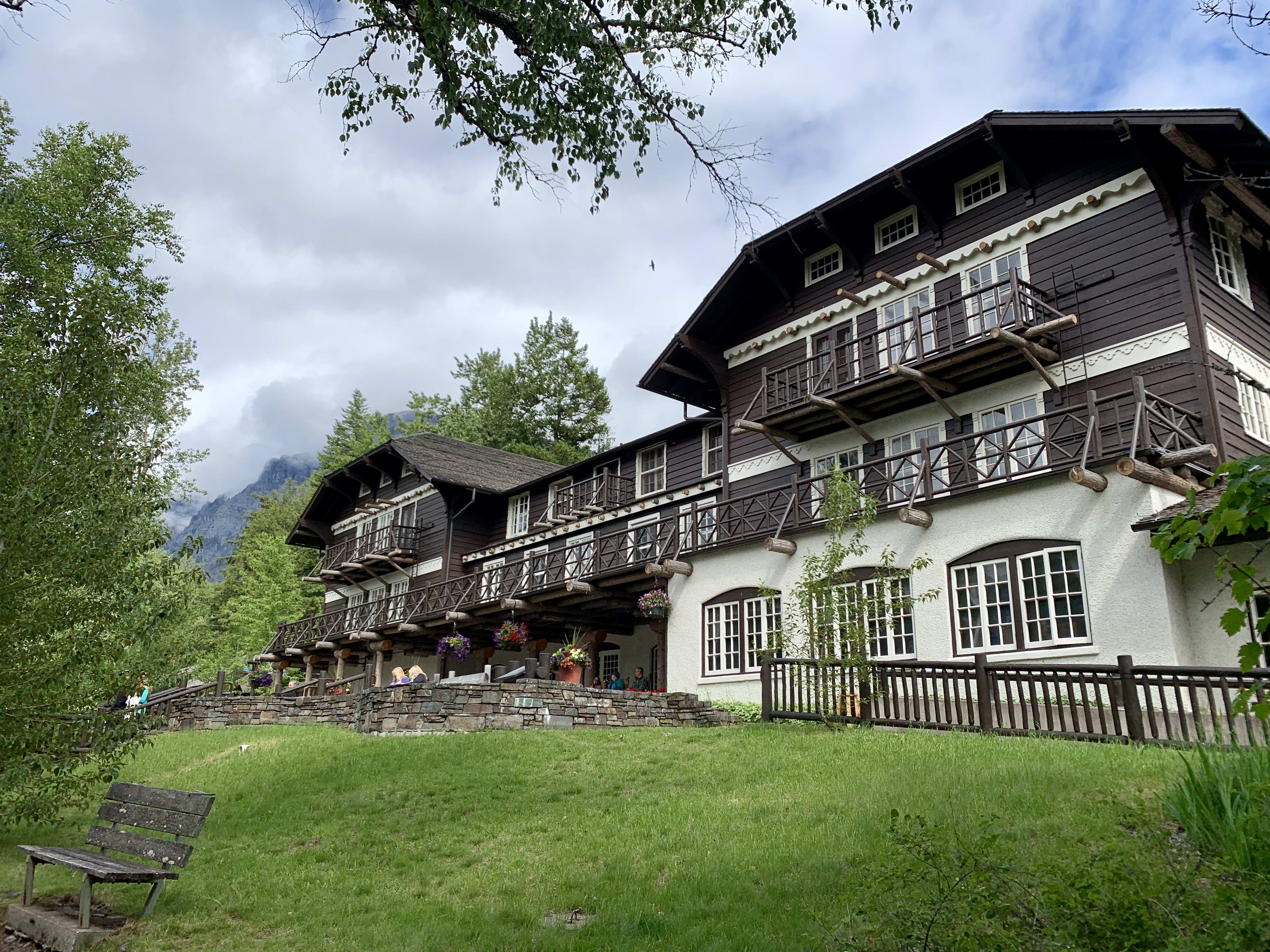
Across the room was an upright piano with a small sign on it. Something like: please don’t play this unless you actually know how.
A teenage girl, maybe a high school senior, sat down and began to play gently. She was really good. The room slowed just a bit. Then another girl walked over and began to sing. In Russian. Then three or four more. It didn’t feel forced, but the confidence of these students was compelling.
At first, I couldn’t understand a word. Then I could. The melody surfaced under the language, and I caught what they were singing.
“You are great. You do miracles so great. There is no one else like you.”
A worship song in Russian, in a hotel lobby in Montana. It was so unexpected and beautiful that I began to tear up. Spontaneous worship can do that.
As the song swelled, more students joined in around the piano and from the balconies above. Nobody organized it. Nobody called them together. It just happened the way weather does. When it ended, there wasn’t really any applause. We all just sat in it. A room full of strangers quiet and in the moment.
You can’t schedule something like that. You certainly can’t force it. You can only be present and pay enough attention to notice that it’s special. I don’t want to overstate it, but that moment was holy.
The Celts have a phrase for that. They call certain spots thin places, where the gap between heaven and earth seems to thin to almost nothing.
We assume thin places are rare, or that they belong to somebody else in a special place. A famous abbey. A holy site. With a gift shop, of course. I think we have it backward.
I don’t believe thin places are as scarce as we treat them. That lodge was one, though the builders didn’t intend it to be. The question isn’t whether such places are rare. It’s whether we’re awake when we’re standing in one. They sometimes arrive unannounced, in the middle of an ordinary afternoon, and ask only one thing of us: that we slow down enough to notice the ground beneath us has changed.
Maria and I decided a long time ago that travel was worth it. We made it a priority. Not as an escape, but as formation. We took our son with us whenever we could, and some of the best education we ever gave him happened in cathedrals, museums, and on the streets of places where we don’t speak the language.
Travel doesn’t manufacture thin places. What it does is train the muscle that notices them. You’re out of your routine, a little disoriented, paying closer attention than you do at home, and the noticing tends to follow you back. You start to expect the ordinary to say something.
That’s most of what reading the signs is. Not finding holier ground, but bringing more attention to the ground you’re already on.
This week that attention has me in Ireland. Our family lived on this island for a short stint years ago, and coming back doesn’t feel like sightseeing. It feels like coming home, to a place that didn’t just shape us but healed us.
Yesterday, our team walked the ruins of Bective Abbey, a Cistercian house close to nine hundred years old.1 The roof is long gone, open to the Irish sky, and the monks are nine centuries in the ground.
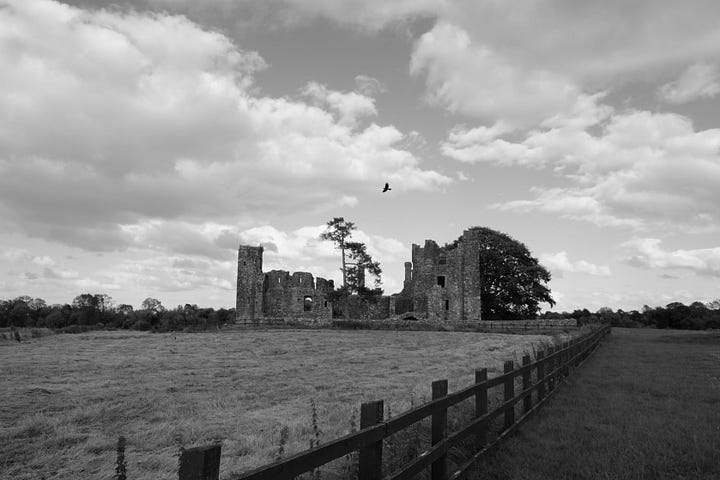
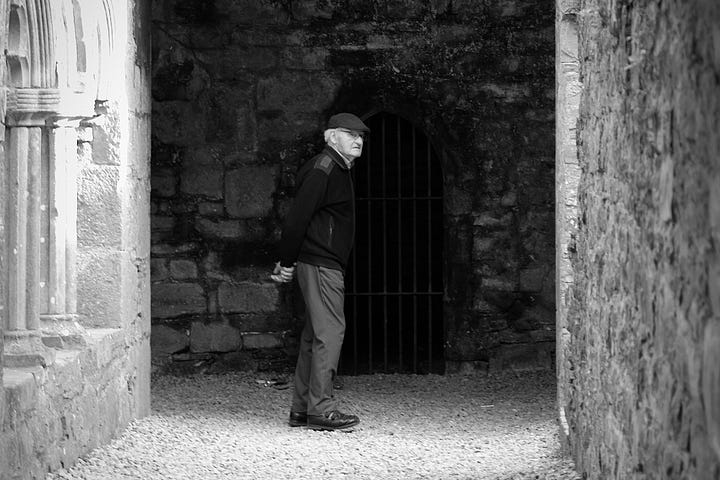
What strikes me isn’t the architecture. It’s the simple awareness that people prayed here. Real people, with their own inner landscapes, personalities, longings, and failures, gathered on this exact ground to love Jesus and serve the people around them.
They are not a footnote to my faith. They are part of the same story I’m standing in. The same Lord. The same gospel. Nine hundred years apart, on one patch of ground in a place far from home. And the geographic and chronological distance becomes thinner when I pause long enough to read the signs of what was and still is.
On the way back, we stopped at Skryne, an old church on a slope, its graves leaning around it.2 The breeze up there feels good. The sun was going down through a bank of clouds, casting long shafts of light my wife calls a Jacob’s ladder.3
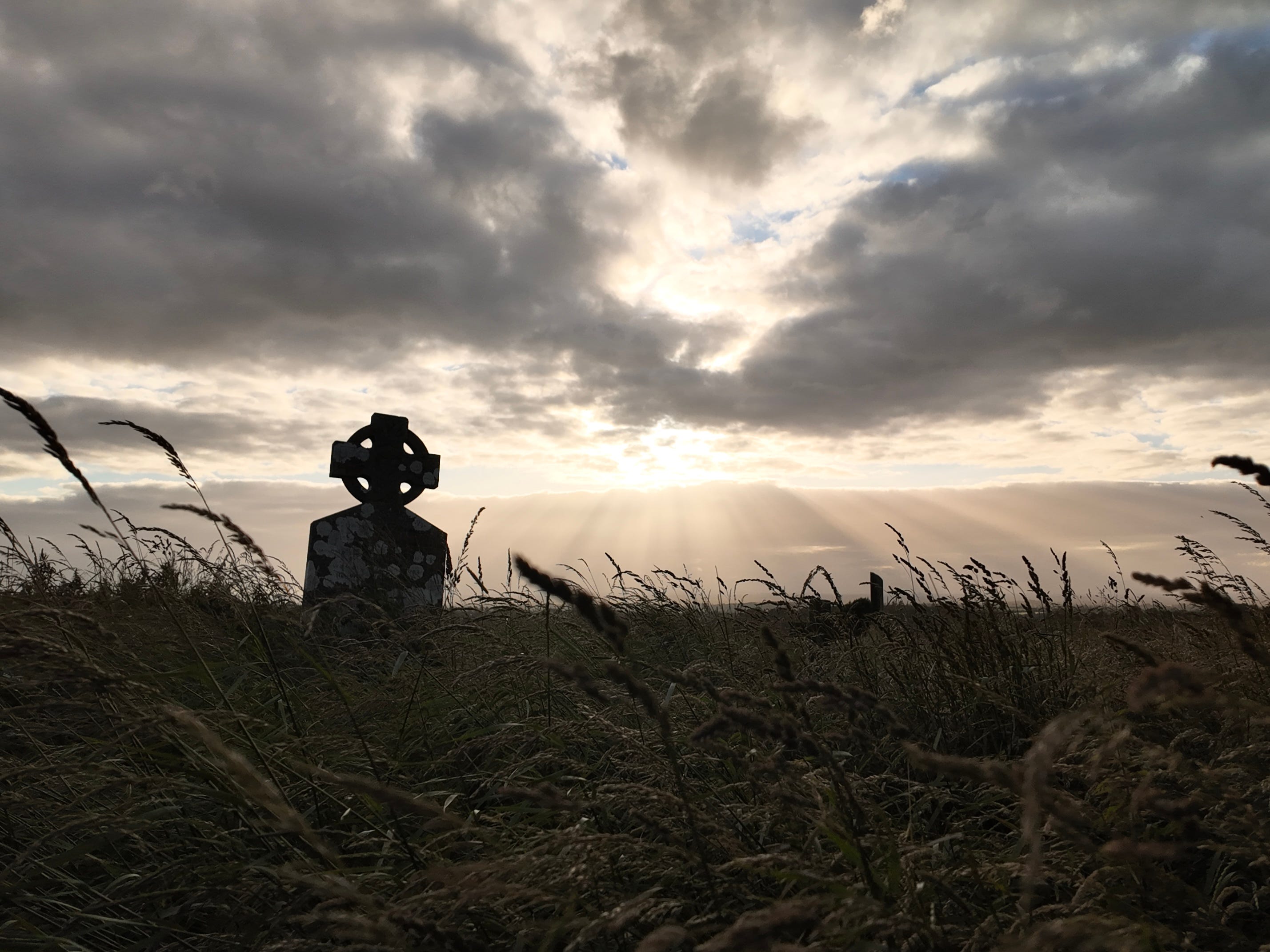
Just down the slope there’s a pub where people gather for a pint together. And it strikes me that a hundred yards away, centuries before that pub poured its first pint, people climbed this same hill to gather in the church. The building changes. The pull for connection doesn’t. People still long to gather. We’re still looking for each other, and for something past that most people can’t quite name. But it’s there.
That longing is why we’re here. I’m in Ireland with a team of Highlands College students, working with a church called Lighthouse. The students came to serve, to help a church meeting in a school do the oldest thing the church has ever done: gather people on a particular piece of ground and point them to Jesus. Nine hundred years ago it was monks at Bective. This week it’s a handful of college kids and a church with a beacon as a name. Same impulse. Same Christ. Different century.
Here’s the conviction underneath all of it. God does not meet us in the abstract.
When John wants to tell us that God came near, he writes that the Word became flesh and made his dwelling among us (John 1:14). The Greek verb he uses is skēnoō, which means to pitch a tent.4 It literally means that God tabernacles with us.
God doesn’t deal in generalities. There’s a name for this. Theologians call it the scandal of particularity, the offense that the God of everywhere would tie himself to one body, one village, one century. That he had an address. Bethlehem. Nazareth. Galilee. And finally, on a hill outside one particular city. The God of everywhere chose somewhere.
Why a scandal? Because we’d rather have a God of universal principles than a God with an address. A principle asks nothing of an ordinary afternoon. A person who showed up in Bethlehem does.
So a thin place isn’t magic. It’s an echo of the most rock-solid truth there is. The God who made the ground decided to stand on it. Places aren’t incidental to him, which is probably why they shouldn’t be to us.
You can’t manufacture a thin place. I couldn’t have built that lodge moment if I’d tried, and I couldn’t recreate it now if I went back to the exact same chair. But you can become the kind of person who notices when the ground goes thin. That’s the whole discipline. Not chasing holier places, but paying attention to the one you’re already standing on.
And here’s what that attention gives in return. It doesn’t just capture the moments on the trip: the abbey, the sunset, the song in a language you don’t speak. It changes an ordinary Thursday. Your kitchen. Your commute. The room you’re already in. The world doesn’t go quiet once you start reading it. It gets louder with God.
So this week, look around you. It might just be thinner than you think.
Bective Abbey, in County Meath, was founded as a Cistercian monastery in 1147.
Skryne (Skreen), the medieval church of St. Columba, sits on a hill within sight of the Hill of Tara.
The shafts of sunlight that break through gaps in cloud are sometimes called “Jacob’s ladder,” after the stairway between earth and heaven in Jacob’s dream (Gen 28:12). A fitting name for a thin place.
skēnoō, literally “to pitch a tent, to tabernacle.” John’s word choice deliberately echoes the tabernacle of the Exodus, the tent where God’s presence dwelt with a wandering people. The God who once camped in the wilderness now camps in human skin.
No posts
Comments
Nothing yet. Say the first thing.
Sign in to join the conversation.