
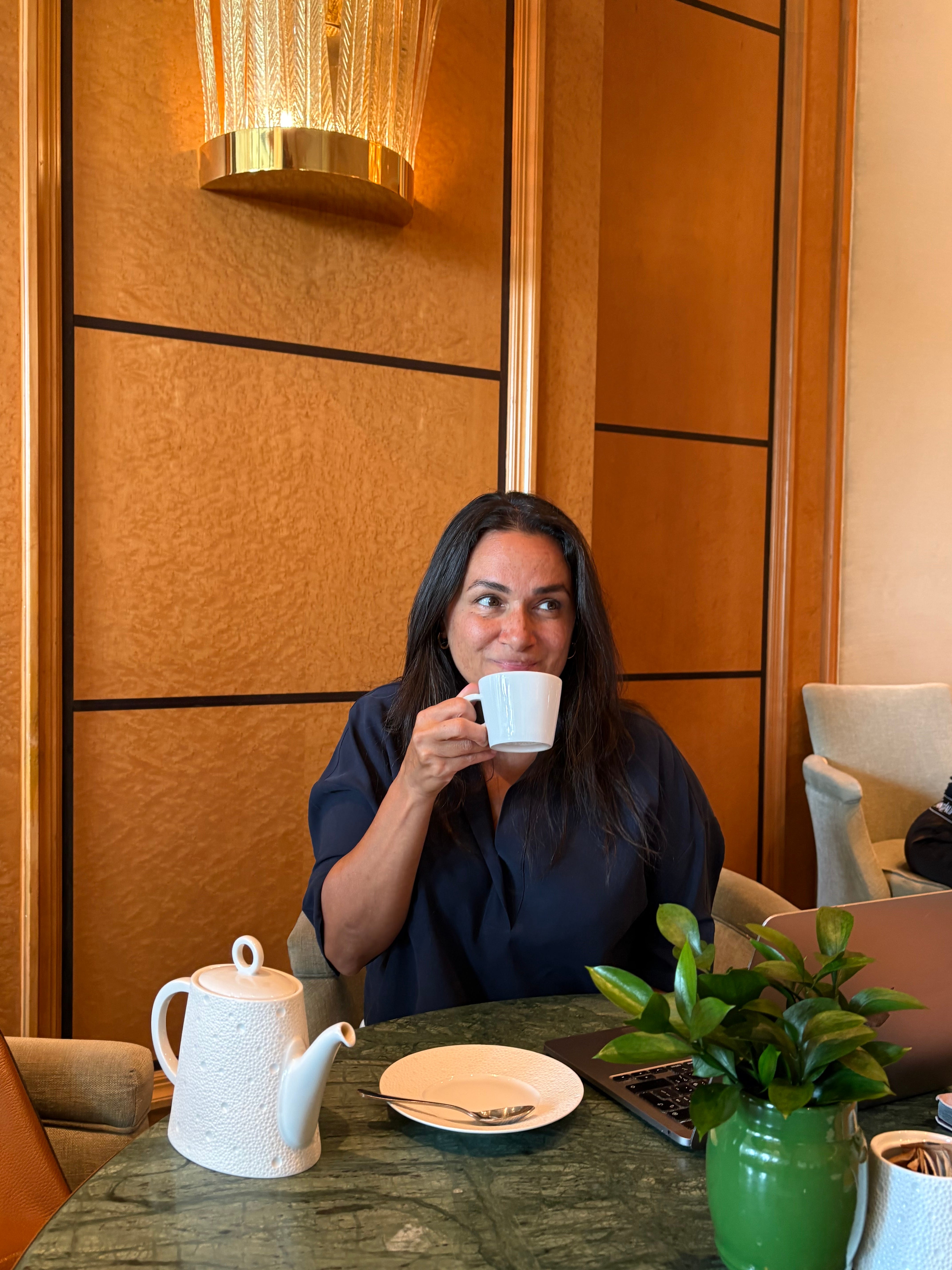
The only thing that got me out of bed every morning was the promise of a skim milk mocha latte.
Not my children.
Not the day ahead.
Certainly not the ninety-minute workout I knew I’d force myself through later.
Coffee.
That first sip was the reward for surviving the morning.
I’d get the kids dressed, make breakfast, pack lunches, sign permission slips I had forgotten about the night before, hunt for missing shoes, and finally wave everyone out the door.
Then the house would fall silent.
I’d sink into the sofa, wrap both hands around that warm paper cup, and take the first sip as though it contained the answer to my life.
In a way, I suppose I thought it did.
Because I wasn’t looking forward to much else.
Looking back, that’s probably the hardest part to admit.
I loved my children.
I loved my husband.
I loved the life we’d built together.
There was nothing objectively wrong with it.
And yet...
I wasn’t enjoying it.
Everything felt heavy.
Waking up was heavy.
Making breakfast was heavy.
Packing school lunches was heavy.
Answering the phone felt like a commitment.
Even deciding what to cook for dinner felt overwhelming.
Every task required more energy than I seemed to have.
By two o’clock every afternoon, I could barely keep my eyes open.
By three, I was asleep on the couch.
Not occasionally.
Every single day.
I woke up with headaches no matter how many hours I slept.
My shoulder throbbed for no apparent reason.
Physiotherapy didn’t help.
Sleeping longer didn’t help.
Exercising more certainly didn’t help.
Meanwhile, I kept gaining weight.
Not fifty kilos.
Not twenty.
Seven kilos.
Seven.
Objectively, it wasn’t very much.
Subjectively, it became everything.
Those seven kilos convinced me that happiness lived on the other side of weight loss.
If I could just lose them...
I’d finally feel like myself again.
So I did what millions of women do.
I followed another meal plan.
Atkins. South Beach.
Counted another calorie.
Bought another pair of running shoes.
Started another first day of the week.
I cut fat.
Then carbs.
Then protein.
Then dairy.
At one point, I think the only thing left to cut was my enjoyment of food.
I became obsessed with hiding those seven kilos.
I discovered Spanx and convinced myself they were the answer. Every morning became a negotiation. Pulling them on. Tugging. Sucking in my stomach. Trying to smooth out a body that suddenly didn’t feel like mine.
I planned outfits around what would conceal me best. I avoided certain clothes altogether.
I blamed myself for not having enough discipline.
I exercised every day.
Ninety minutes.
Sometimes more.
I hated every single minute of it.
Not because I hated moving my body.
Because every workout felt like punishment for a body that refused to cooperate.
I believed I had no choice.
After all...
I couldn’t be miserable and overweight.
Could I?
Looking back now, I realize I wasn’t actually trying to become healthy.
I was trying to become acceptable.
Acceptable to myself.
I thought those seven kilos were the reason I didn’t recognize the woman staring back at me in the mirror.
I had convinced myself they were standing between me and happiness.
The harder I tried, the more exhausted I became.
Eventually, I stopped blaming my body.
I started blaming my life.
Maybe my marriage wasn’t working.
Maybe I wasn’t cut out to be a stay-at-home mother.
Maybe I wasn’t cut out to be a mother at all.
Even writing those words now makes me wince.
I adored my children.
I would have done anything for them.
But I couldn’t understand why motherhood felt so much harder than it seemed to be for everyone else.
Then I turned the blame inward.
Maybe I simply hadn’t found myself yet.
I had degrees in Journalism, English, and Comparative Literature.
Books had always made sense to me.
People had always made sense to me.
Words had always made sense to me.
Life suddenly didn’t.
Maybe I’d missed my chance to build a career.
Maybe this was what everyone called a midlife crisis.
Maybe it was lingering postpartum depression after my youngest son was born.
I even considered making an appointment with my doctor.
But that required energy too.
Energy I didn’t have.
So instead, I kept doing what every well-meaning woman does.
I tried harder.
I exercised more.
I ate less.
I drank more coffee.
And every night, I’d climb into bed and make myself the same promise.
Tomorrow will be different.
Tomorrow I’ll wake up energized.
Tomorrow I’ll get everything done.
Tomorrow I’ll be patient with the kids.
Tomorrow I’ll enjoy my life.
Tomorrow I’ll finally become the woman I know I’m capable of being.
Tomorrow never came.
What I didn’t know then, but have spent the last fifteen years teaching thousands of women, is that inflammation doesn’t just affect your body.
It affects your personality.
It steals your patience.
It steals your curiosity.
It steals your motivation.
It convinces you that you’ve become lazy...
when you’re actually exhausted.
It convinces you that you’re unmotivated...
when your cells are struggling to produce energy.
It convinces you that you’re unhappy...
when your body is simply overwhelmed.
I didn’t know any of that then.
I just thought something was wrong with me.
Until my brother recommended I see a nutritional therapist.
I almost didn’t go.
I’d already tried everything I could think of, including all the ‘in’ dieticians and nutritionists.
Another expert felt like another opportunity to fail.
But I made the appointment anyway.
I had no idea that one conversation would divide my life into two parts.
The woman before it...
and the woman after it.
He listened patiently as I described everything that had become normal.
The headaches.
The shoulder pain.
The afternoon naps.
The weight that refused to budge.
The coffee.
The constant exhaustion.
The ovulation pains.
The acne.
When I finished, he suggested something I’d never heard of before.
A ten-day detox.
This was 2011.
Detox wasn’t the buzzword it is today.
Nobody was making celery juice.
Nobody was talking about liver health on Instagram.
No influencers were showing off green smoothies and before-and-after photos.
In fact, I had never even heard the word detox.
He explained what would happen.
“At first, you’ll probably feel worse.”
That wasn’t exactly the sales pitch I’d been hoping for.
“You’ll feel tired.”
“You may feel irritable.”
“You might cry.”
“You may even want to send your children to your mother’s house.”
I laughed.
Then he continued.
“But after that...”
“You’ll wake up rested.”
“You’ll have more energy.”
“Your mind will feel clearer.”
“Your joint pain will disappear.”
“You’ll probably lose weight.”
“And...”
He smiled.
“You might even have an epiphany.”
I wish I could tell you that I signed up because I wanted to heal.
I didn’t.
I wanted to lose seven kilos.
That was it.
If I’m being completely honest, he could have said absolutely nothing else after “you’ll lose weight.”
I was in.
The first few days were exactly as promised.
I cried.
I snapped at everyone.
I questioned my decision approximately every fifteen minutes.
I stared at the scale far more often than any emotionally stable adult should.
I remember wondering whether I’d completely lost my mind.
Who voluntarily gives up bread, sugar, dairy, and coffee?
Apparently...me.
Although there were moments when I seriously questioned that decision.
Then something happened.
Not overnight.
Not dramatically.
Subtly.
Almost imperceptibly.
One morning I woke up before my alarm.
No snooze button.
No dragging myself out of bed.
No negotiating with myself for “just five more minutes.”
I was simply...
awake.
I can’t adequately describe what that felt like unless you’ve lived on the other side of chronic fatigue.
When you’ve spent years waking up already tired, waking up rested feels almost miraculous.
Then came the afternoon.
Three o’clock came and went.
Then four.
I looked at the clock and stopped in my tracks.
I’d forgotten to take my nap.
Forgotten.
That may sound ridiculous if you’ve never organized your day around exhaustion.
But for me, it was astonishing.
My body had done something it hadn’t done in years.
It had made enough energy to get through an entire day.
The shoulder pain disappeared.
Not gradually.
It was simply...
gone.
I remember moving my arm around in disbelief, waiting for the familiar ache.
Nothing.
Then I exercised.
Not because I had to.
Because I wanted to.
For the first time in years, movement felt like a celebration instead of a punishment.
Then came the moment that still makes me laugh.
My beloved skim milk mocha latte.
The drink that had carried me through every morning.
I took one sip.
Just one.
And I didn’t want another.
If you had told me a month earlier that I’d voluntarily walk away from coffee, I would have laughed in your face.
These days, my relationship with coffee is a little more complicated.
Sometimes I enjoy it.
Sometimes I don’t.
I go through seasons.
The difference is that coffee is no longer carrying me through my life.
It’s simply...coffee.
Around that same time, I noticed something else.
My clothes were becoming loose.
The seven kilos I’d obsessed over were disappearing.
Ironically...
By then, they had become the least interesting part of the story.
Because something much bigger had changed.
The fog had lifted.
The woman I’d been looking for hadn’t been hiding underneath seven kilos.
She’d been buried beneath inflammation.
For years, I’d believed I was unhappy.
I’d questioned my marriage.
I’d questioned motherhood.
I’d questioned my purpose.
I’d questioned myself.
What I never questioned was whether the food I was eating every single day could be influencing how I felt physically...
and emotionally.
Today we know that inflammation doesn’t stay in one place.
It doesn’t politely limit itself to your joints or your digestive system.
It affects your hormones.
Your brain.
Your energy.
Your mood.
Your sleep.
Your ability to think clearly.
Your resilience.
Even your sense of hope.
Looking back, I wasn’t lazy.
I wasn’t lacking discipline.
I wasn’t weak.
My body was overwhelmed.
And once I stopped overwhelming it...
it remembered exactly what to do.
People often ask me whether I really believe detoxing can change someone’s life.
I always smile before I answer.
Because I know how unbelievable it sounds until you’ve experienced it yourself.
Yes.
I do.
I think detox is magic.
Not because there’s anything mystical about it.
Not because it’s trendy.
Not because it’s a quick fix.
I think it’s magic because I’ve now watched thousands of women experience what I experienced: that extraordinary moment when the fog lifts, inflammation settles, energy returns, pain disappears, the body rebalances, medication becomes a thing of the past, and they begin to recognize themselves again.
A detox doesn’t perform the healing.
Your body does.
The detox simply removes enough interference for your body to do what it has wanted to do all along.
And to me...
that’s magic.
Three months after that first detox, an email landed in my inbox.
The subject line was simple.
“Have you ever thought about becoming a health coach?”
I remember staring at it for a long time.
Not because I’d always dreamed of becoming a health coach.
I hadn’t.
If you’d told me six months earlier that I’d one day spend my life talking about inflammation, hormones, gut health, and vegetables, I would have laughed.
I had degrees in Journalism, English, and Comparative Literature.
I thought words were going to be my career.
Not food.
But something had shifted.
Not just in my body.
In me.
For the first time in years, I felt capable of saying yes to something bigger than the life I was living.
I had the energy.
I had the mental clarity.
I had the confidence to believe I could actually do it.
So I said yes.
Looking back now, it feels obvious.
At the time, it felt terrifying.
That one decision became another.
And another.
One client became ten.
Ten became hundreds.
Hundreds became thousands.
Women from every corner of the world began telling me stories that sounded eerily familiar.
“I wake up exhausted.”
“I don’t recognize myself anymore.”
“My doctor says everything is normal.”
“I’ve lost my motivation.”
“I feel anxious all the time.”
“I’ve forgotten what it feels like to have energy.”
“I think this is just what getting older feels like.”
Every time I hear those words, I think back to the woman sitting on her couch with a skim milk mocha latte in her hands, convinced she was simply unhappy.
I wish I could go back and sit beside her.
I’d tell her that she isn’t lazy.
She isn’t failing.
She isn’t imagining things.
She isn’t a bad mother because she’s counting the minutes until bedtime.
She isn’t a bad wife because she’s too exhausted to be present.
She isn’t weak because another diet didn’t work.
I’d tell her that her body isn’t betraying her.
It’s trying to save her.
It has been whispering to her for years.
The headaches.
The shoulder pain.
The afternoon crashes.
The weight gain.
The cravings.
The bloating.
The night sweats that would come later.
The hormonal symptoms.
The anxiety.
The brain fog.
None of them were random.
None of them were separate problems.
They were different ways of saying exactly the same thing.
Something isn’t right.
For years, I believed my body was the obstacle standing between me and the life I wanted.
Now I know it was the messenger trying to lead me there.
Looking back now, it’s almost funny that I thought seven kilos were ruining my life.
They weren’t.
The weight was simply the most visible symptom of a body asking for help.
That realization has changed not only the way I eat, but the way I live.
I no longer ask,
“How can I lose weight?”
I ask,
“What is my body trying to tell me?”
I no longer wonder whether a food will make me fat.
I wonder whether it will help me wake up excited for the day ahead.
Whether it will help me think clearly.
Whether it will support my hormones.
Whether it will give me the energy to play with my grandson, travel, write, cook dinner, laugh with friends, and still have something left in the tank when the day is over.
Because that, to me, is health.
Not fitting into a certain pair of jeans.
Not chasing a number on the scale.
Not surviving on coffee until lunchtime.
Health is having enough energy to fully participate in your own life.
It’s one of the reasons I rarely talk about weight anymore.
Weight was simply the symptom that got my attention.
Healing was the thing that changed my life.
People often ask me what the greatest transformation from that first detox was.
They expect me to say I lost seven kilos.
Or that I stopped drinking coffee.
Or that my shoulder stopped hurting.
Or that I stopped taking thirty painkillers a month for my ovulation pains.
Those things mattered.
But they weren’t the greatest gift.
The greatest gift was that I got myself back.
Or perhaps that’s not quite true.
I didn’t “get myself back.”
Because she was never actually gone.
She had simply been buried beneath inflammation.
Fifteen years later, I still think about that woman sometimes.
The one who believed happiness lived on the other side of seven kilos.
I wish I could tell her that she was looking in the wrong place.
She didn’t need another diet.
She didn’t need more discipline.
She didn’t need more willpower.
She needed someone to explain that her body wasn’t broken.
She needed someone to teach her how to listen.
And maybe...
That’s why I’ve spent the last fifteen years doing exactly that.
If you recognized yourself in this story...
...I’d love to hear yours.
Every week, women write to me describing symptoms they’ve been living with for years, sometimes decades. They tell me about the headaches they’ve learned to ignore, the afternoon crashes they’ve accepted as normal, the weight that won’t budge, the bloating, the anxiety, the night sweats, the migraines, the constipation, the hormonal chaos, the medication that isn’t working…
Almost every email ends the same way:
“I thought it was just me.”
It usually isn’t.
It’s funny how we imagine life changes all at once.
We expect fireworks.
A dramatic revelation.
A movie-worthy moment.
Mine began with a conversation that lasted about an hour.
Fifteen years later, I’m still living inside what started that day.
If something in this essay felt familiar, send me an email and tell me your story.
Tell me what you’ve been living with.
Tell me what you’ve tried.
If I think I’m the right person to help, I’ll invite you to complete my comprehensive health history form so I can understand the full picture and recommend the program that’s the best fit for you:)
My notebook. Snippets from my journal. Unfinished thoughts. Rabbit holes. Things I’m still trying to understand. Welcome to the place where my inner monologue gets a microphone.
“thinking about creating versus reacting..creating my life means letting go of reactions. because you can’t create from a place of constant reacting because you’ll always be on someone else’s timeline; someone else’s agenda. I need to exit that. jump off. when I pause and think, and do what I want, i’m calmer; i’m nicer; i feel i connect with myself and those around me more.
so what is reactive? scatter brained, nervous, shallow breathing, edgy, running around, slamming doors, dropping things, checking phone constantly, resentful, constantly thinking about what to do next, snacking all day, always feeling like not enough time, lots of housework
and what’s creative? relaxed, unbothered, taking my time, day goes by much slower, i don’t want the day to end, reading a lot, working out easily, dreaming, no guilt, lots of deep breaths, lots of self care, connecting, less screen time, less housework, more deep thinking”
Because changing your mind is a form of growth…
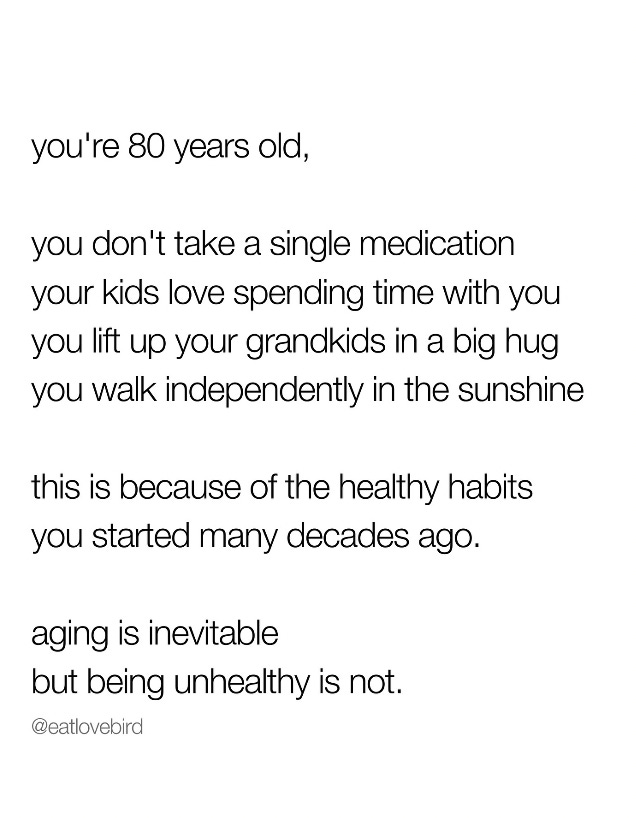
Love isn’t sacrificing yourself for your family.
For most of my life, I thought being a good mother meant putting myself last.
If there was one piece of cake left, my children got it.
If there wasn’t enough time, I skipped the walk.
If everyone else needed something, my needs could wait until tomorrow.
That’s what good mothers do, isn’t it?
We wear exhaustion like a badge of honor.
We survive on coffee.
We eat whatever’s left on our children’s plates.
We ignore the headaches.
The bloating.
The weight gain.
The fatigue.
The night sweats.
The aching joints.
We tell ourselves we’ll deal with it later.
After the kids are older.
After work calms down.
After summer.
After New Year’s...
After...
But somewhere over the last fifteen years, I’ve changed my mind.
Completely.
Today, I think one of the greatest acts of love is taking extraordinary care of your own health.
Not because I want to live forever.
None of us will.
But because I want the years I do have to belong to me and to the people I love.
When I’m eighty, I want my children to look forward to spending the afternoon with me.
I want to hug my grandchildren without worrying whether my back can manage it.
I want to travel.
To walk through museums and cities for hours.
To wander unfamiliar streets without searching for the next bench.
I want to cook because I enjoy it, not because someone has to do it for me.
I want to be independent for as long as I possibly can.
Not because I don’t need people.
But because I’d rather spend my time making memories with my family than asking them to become my caregivers.
Some people hear this and think I’m talking about vanity.
I’m not.
I’m talking about responsibility.
We’ve somehow accepted the idea that getting older automatically means accumulating medications, joint replacements, diabetes, hypertension, osteoporosis, dementia, and declining mobility, as though they’re inevitable milestones of aging.
They’re not.
Aging is inevitable.
How we age is influenced by the choices we make every single day.
The food we eat.
Whether we move.
Whether we sleep.
Whether we step outside into the sunshine.
Whether we nourish ourselves or simply get through another day.
I’ve spent the last fifteen years watching women reverse symptoms they were told they would simply have to “live with.”
I’ve watched inflammation disappear.
Energy return.
Joint pain resolve.
Blood sugar normalize.
Hormones rebalance.
Medications thrown out.
I’ve also watched women discover, often too late, that decades of believing “it doesn’t matter what I eat” came with a price.
And the people who paid that price weren’t only them.
It was their husbands.
Their wives.
Their children.
Their grandchildren.
Because illness is rarely carried by one person.
It ripples through an entire family.
Appointments.
Hospital visits.
Cancelled plans.
Missed holidays.
Adult children becoming parents to their own parents.
None of us can guarantee perfect health.
Some illnesses arrive despite doing everything right.
Life is wonderfully unfair like that.
But many of the chronic diseases we now consider “normal aging” are not random acts of fate.
They’re the accumulation of thousands of small choices.
That’s the part I’ve changed my mind about.
I used to think taking care of myself was something I did for me.
Now I see it differently.
Every nourishing meal.
Every walk.
Every good night’s sleep.
Every decision to support my body instead of ignoring it...
is also a gift to the people who I love and who love me.
Because one day, if I’m lucky enough to be eighty, God willing, I don’t want my family to remember me as the woman who spent the last twenty years of her life waiting in doctors’ offices.
I want them to remember me laughing around the table.
Walking beside them in the sunshine.
Lifting my grandchildren into impossibly big hugs.
Still curious.
Still independent.
Still fully participating in my own life.
That’s the future I’m investing in every time I sit down to eat.
And that’s why I’ve stopped thinking of healthy habits as self-care.
I’ve started thinking of them as one of the purest expressions of love.
I’d love to leave you with two questions.
When you picture yourself at eighty, what do you hope is still true?
And...
What’s one thing you’ve changed your mind about in the last few years?
Leave a comment below. I read every one, and some of my favorite conversations begin there.
Written by Dana Dinnawi, holistic health coach, writer, and creator of the Hormone Detox Program.
No posts
Comments
Nothing yet. Say the first thing.
Sign in to join the conversation.