
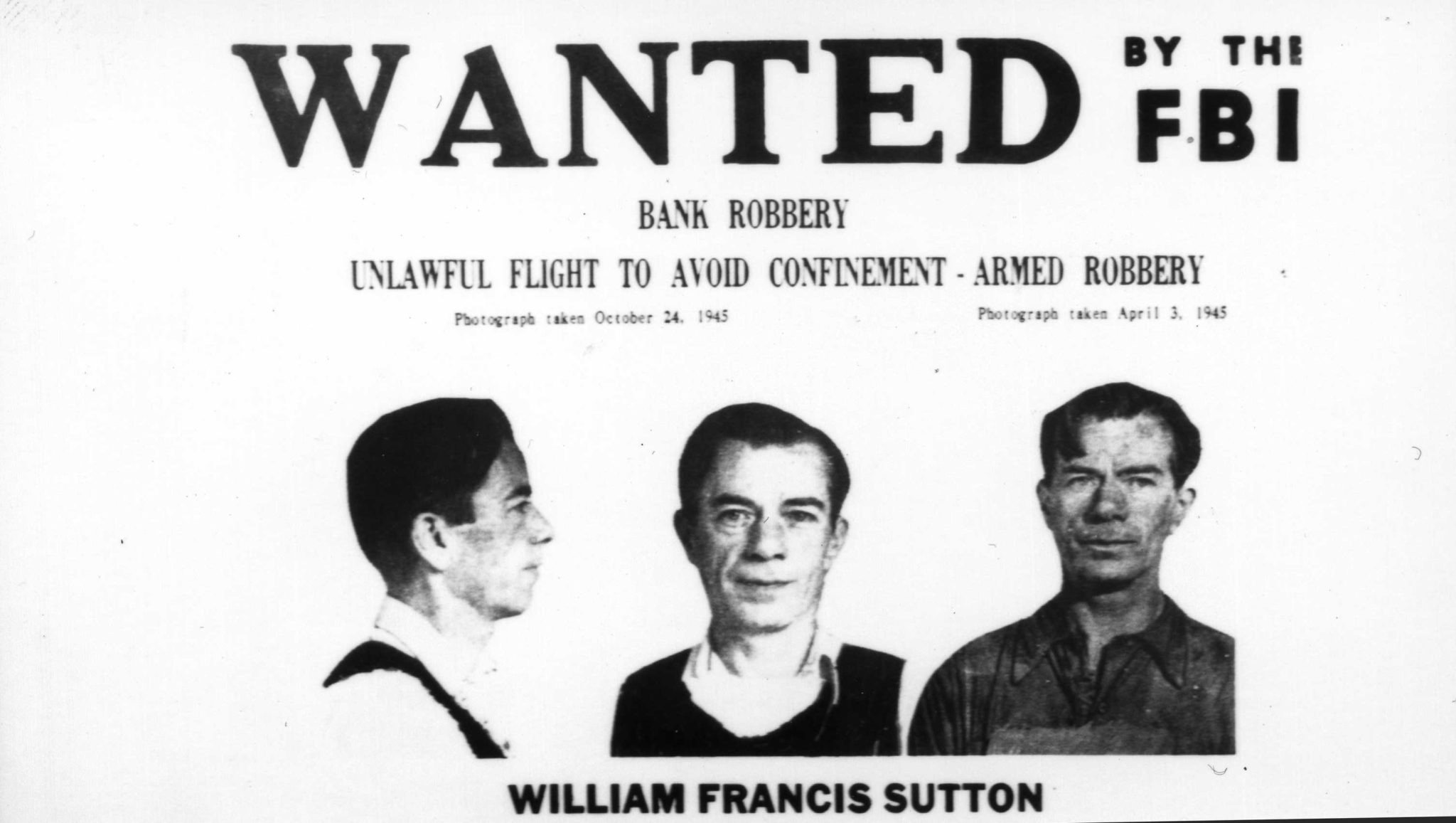
This guy’s whole thing was to work where the money was.
Last year I worked on a project for a client in which we tried to map out exactly how and for what purposes New York City spent money on job training and employment programs. Perhaps the most striking finding was how relatively little NYC invested in opportunities to support the more than 900,000 working-age adults employed part-time but seeking full-time jobs, or employed full-time but under or barely over the poverty line, and often in jobs with high turnover or limited advancement prospects.1
From a certain perspective, one could argue that this reflects the system performing as designed. Federal Workforce Innovation and Opportunity Act (WIOA) funding remains geared toward placement into relatively low-wage, low-quality jobs, with minimal focus on what happens next. As I’ve written before, I see this as a manifestation of our mostly unconscious2 view that people mostly should make their own way in the labor market—a choice that sacrifices vast economic potential on the altar of “individualism,” and (please hold onto your monocle and keep your smelling salts at hand) tends to reinforce existing patterns of privilege and power that are strongly coded by race and class.
Now, I don’t want to overstate the case here, or assign blame where empathy is a more appropriate response. Local and state system administrators and policymakers are constrained by ever-declining federal investments—in real dollars, federal workforce spending has fallen by 77 percent since 1979, even as the workforce has grown by 50 percent—as well as policy that requires “priority of service” for public assistance recipients and others with particularly acute needs.3 This of course helps explain why most of the placements are in low-quality jobs, and why so few dollars are left over to do anything else.
I’m more curious why places like NYC, which does have some capacity to make investments aligned to its policy priorities that complement federal and state funds, haven’t really leaned in here—at least not in a fully intentional and strategic way. The indispensable ALICE (Asset Limited, Resource Constrained, Employed) report for New York, released earlier this year,4 found that 58 percent of households in the five boroughs did not earn enough to meet basic costs of living. The large majority of those households include at least one working adult, and many have two or even more.
If I were, say, a Democratic Socialist public official who wanted to show that I meant what I said about putting the power of the government to use on behalf of the working class, I would see in those 900,000 low-income working New Yorkers an enormous target of opportunity. How many of them might be within reach of middle-income jobs and real economic security with just a bit more support—a chance to finish the college degree they stopped short of completing, or access to funds that help them overcome emergency expenses related to childcare or transportation or medical issues, or just a source for career guidance and financial planning? How many might have built skills or developed networks through their past and current positions that could translate into higher-paying opportunities than they have right now? What would it cost for my administration to help them, and who—among businesses or philanthropy or even state government—might want to share those costs?
A lot of this, of course, is doable with assistance from AI. In that spirit, I’d like to welcome Claude back to Disillusionist! I asked for a starting strategy on identifying a share of current low-income workers for support to advance into middle-wage jobs, and got back a four-step plan graphically presented here:
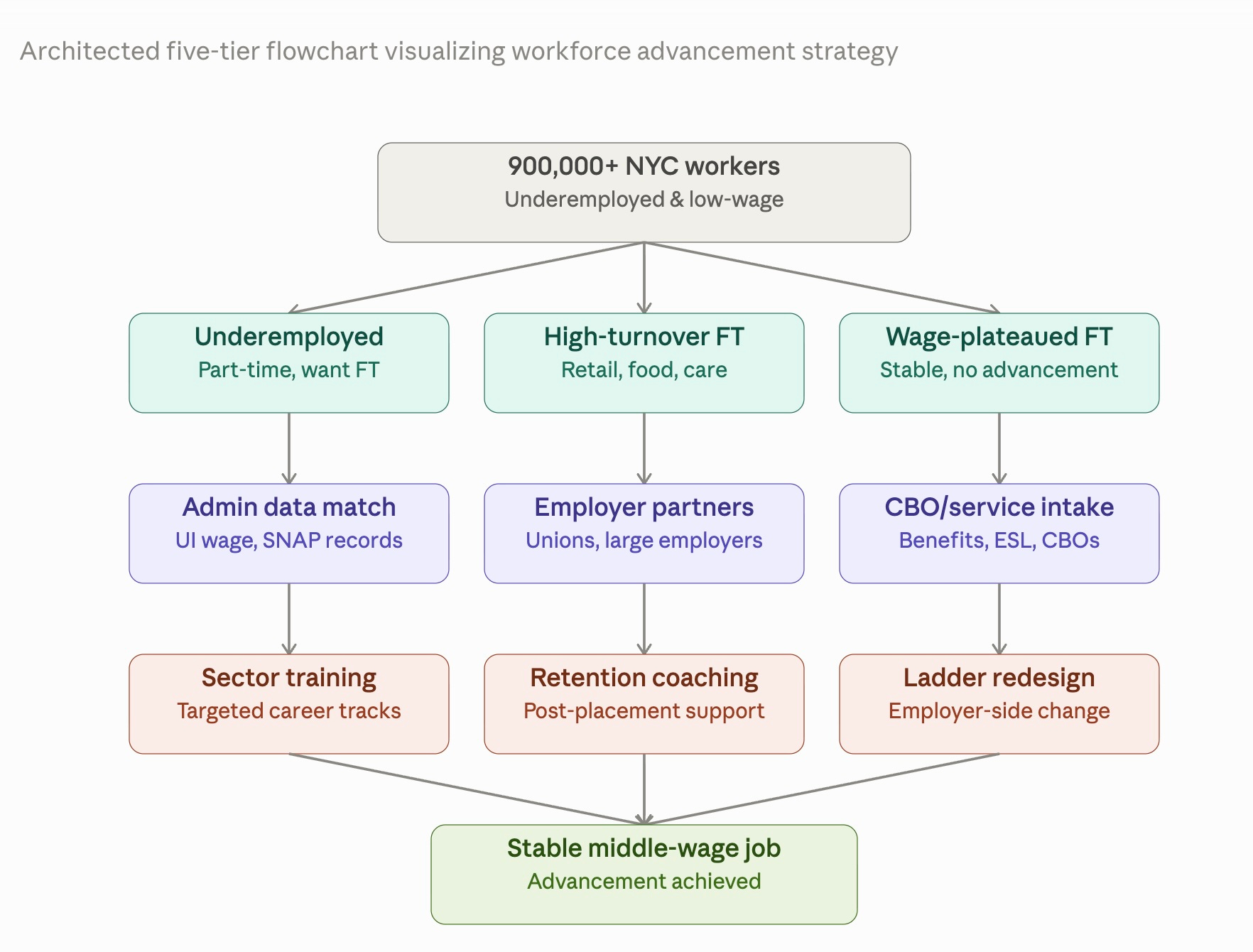
First you’d disaggregate the 900,000 to determine categories of need; then you’d consider where there’s leverage to engage; then you’d determine the mix of interventions most likely to enable advancement; and finally you’d recalibrate the policy/funding ecosystem to render this progress sustainable.
Within that third bucket—the most important as far as actually helping individual workers achieve economic mobility—Claude also noted a Bloomberg-era initiative that I’d forgotten about called WorkAdvance, which attempted (on a much smaller scale) something along these lines, and suggested three major takeaways:
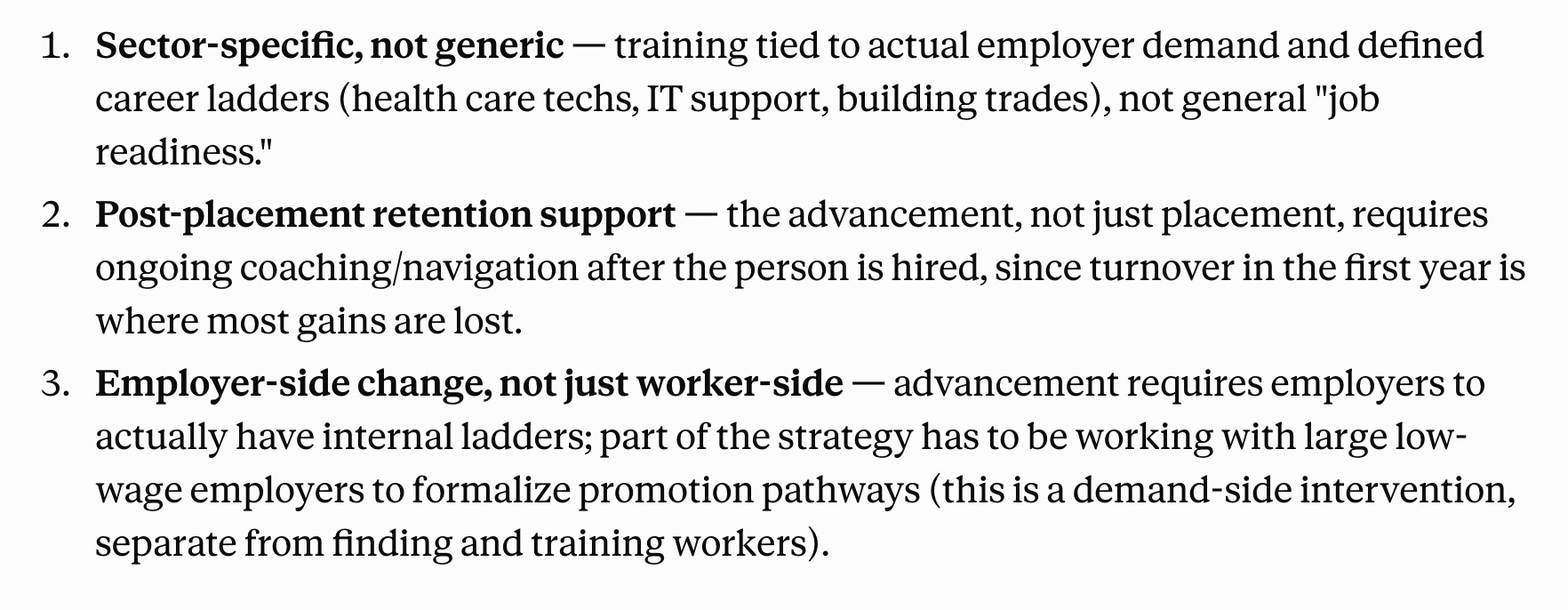
This is, indeed, the stuff—and none of it really fits well with federal policy as it’s currently constructed. Yes, you can do some or most or all of it under WIOA, but with limited dollars and competing priorities, you probably won’t. If it’s going to happen, it needs to start with local public of philanthropic investment. But the strategy is pretty straightforward, and the fruit hangs relatively low.
The large majority of new City-originating spending over the last 15-plus years has gone toward programs to prepare youth and young adults for career success. I’ve always felt that early investment in career readiness made sense on all levels, and still do—and as the founding executive director of a City office created to pursue that specific mission, I take some pride in the fact that others came around to the idea. But if the point is to maximize return on investment, I do wonder if we missed something, as this post discusses.
And absolutely not seriously interrogated…
Given their generally savage treatment of people in poverty, it’s mildly surprising that the Trump administration hasn’t eased priority of service—though I guess that would require someone to make a distinction between the working and non-working poor. Even so, I am curious whether their open invitation for WIOA waivers released late last year has prompted any requests in this area.
I should note that I was on the Research Advisory Committee for this year’s version of the report, which mostly meant I got to fanboy on it and suggest a copyedit or two.
No posts
Comments
Nothing yet. Say the first thing.
Sign in to join the conversation.