
This is the second part in a series on places visited by Weil. You can read the first part on Marseille here.
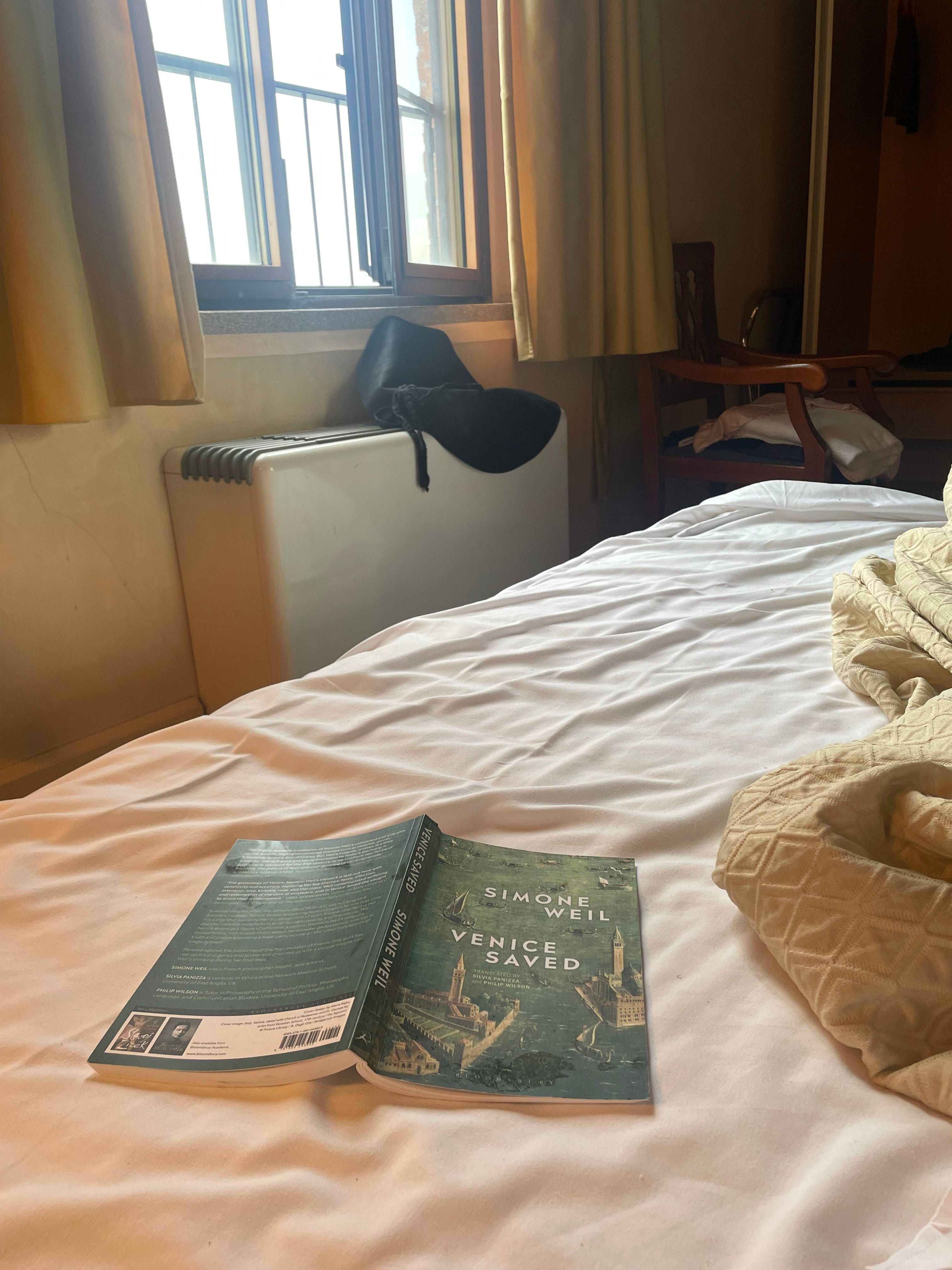
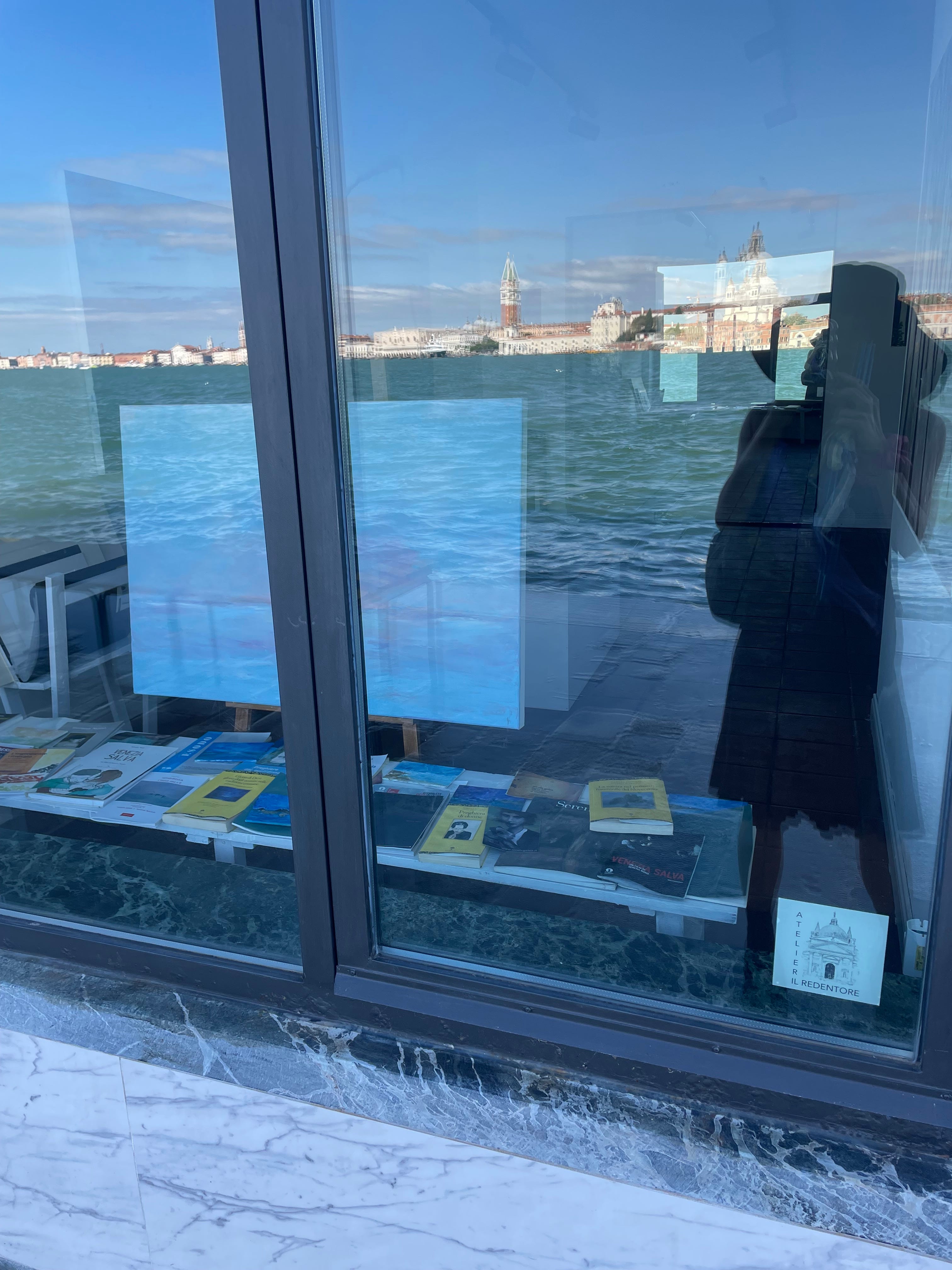
Simone Weil’s only play, Venice Saved, was incomplete at the time of her death in 1943. I first read it a few years ago while staying on Giudecca, described to me as the most accessible of Venice’s islands if you are having mobility issues, which I was. My room in a former flour mill, covered by a research residency, looked out over the water in two directions. In the mornings I woke to the scrappy noise of boat engines and read Venice Saved in bed, before wandering along the waterfront that was intermittently flooded by vaporetto waves. Weil visited Venice with her parents in the summer of 1938, when she was 29 years old, following a trip to Florence and Padua. She wanted to visit these places before the catastrophe she predicted made it impossible (before leaving for Italy she had published an article on Europe’s probable war, affirming her pacifism – a position she would later regret). In Venice she took tours of the city’s churches, and discovered that what the beauty, history and culture offered its inhabitants was what she called ‘rootedness’. Weil understood roots as the opposite of ‘the social’, which she described as relations defined by prestige and force that easily coalesced into empire and oppression. Roots were something different, horizontal rather than vertical, a way of relating to place and people structured by commonality. In Venice she saw a world about to be lost.
Weil began work on Venice Saved in 1940. By then war had begun, and she and her parents fled occupied Paris. On their way to Marseille they stopped in Vichy, where Weil spent two months in her sleeping bag, working on the manuscript to distract herself from an open sore on her leg that refused to heal over. Venice Saved is the shadow-text of the more famous works that Weil produced in her final years, and shares their preoccupation with the ancient tension between roots and force: The Great Beast analysed Nazism on a continuum with the Roman Empire’s greed and tyranny; The Iliad, or the Poem of Force demonstrated the ‘petrifactive’ power of force that afflicts both victims and perpetrators, robbing them of humanity. She based Venice Saved on a historical fiction by the Abbé de Saint-Réal, published in 1674, which told the story of a failed Spanish conspiracy to pillage Venice and enslave its people. In Weil’s play, which retains the seventeenth-century setting, the conspiracy is foiled at the last hour by an insider’s change of heart. Jaffier, one of the conspirators, is so moved by the beauty of Venice and its people that he takes pity on them. He discreetly informs the Venetian Council of the plot, in exchange for sparing his fellow mercenaries. The Council agree, but ultimately dishonour Jaffier’s request; Venice is saved, his friends are slaughtered. Jaffier, the tragic hero, is tortured by his actions. His life is spared, but he has lost everything - both his beloved friends, who he betrayed, and the rooted, beautiful city from which he is exiled.
I was in Venice, supposedly, to look at the Biennale, but most of my notes from that week were about Venice Saved. So many of its lines – in which Jaffier and his fellow conspirators gleefully describe the Venetians’ imminent slaughter and suffering – seemed to grotesquely narrate the images and reels that filled my social media feed each day, of recently-bombed Lebanon interspersing the endless stream of destruction in Palestine. I realised that part of what made Venice Saved an uneasy and uncannily contemporary read was its attention to the perspective and hoped-for humanity of the oppressor. It revolves around the actions of a man - deeply embedded within a genocidal project and beloved by his peers – who is somehow moved to pity their ‘enemy’, and chooses to betray his friends rather than aid their destruction. But pity alone is nothing without action, the play suggests. ‘The Romans wept for Carthage,’ Jaffier’s co-conspirator reminds him, ‘but they destroyed it.’
Comments
Nothing yet. Say the first thing.
Sign in to join the conversation.