
Dear friends and supporters of Daily Philosophy,
Last week we discussed how you can use AI to create good-looking, interactive timelines for the history of philosophy with just one simple prompt. I know that many of you are skeptical of AI, and I am myself in many ways, but I think that using AI to create media that support learning (rather than replacing it) is a good use of the technology. Whether we like it or not, AI is here to stay, and we better learn how to use it in good ways instead of closing our eyes and hoping it will go away, while our students use it to avoid writing their assignments.
So let me today discuss two further uses that I have found for AI in philosophy teaching. Both examples are things that I have created but not yet verified in detail or deployed in my classes, so the examples could contain factual errors (as AI products often do) — you need to do your own research and verify that the information is correct before using any of these materials in your teaching. The purpose of these posts is to inspire you to try things out, not to provide you with ready-made teaching materials (although, if you would be interested in that, leave a comment below and I might create and give you actually usable documents.)
Today we will talk, first, about argument maps and, second, about good-looking summaries and hand-outs that you can give to your students as a help for revision before exams.
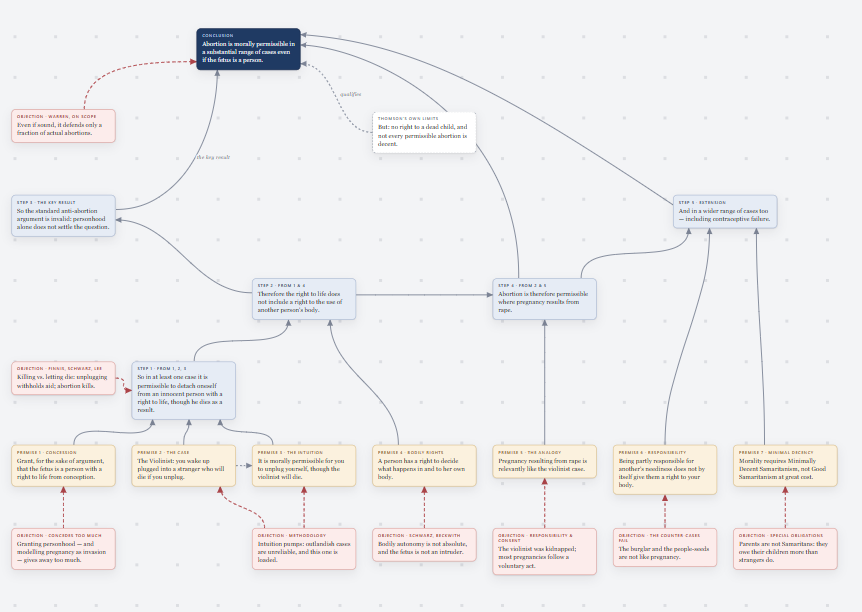
The first example is Anselm’s Ontological Argument. This is a complex and difficult to appreciate argument in its details, and I feel that the argument map would be more useful in class than for self-study (perhaps differently from last week’s timelines, which students can explore by themselves). I can imagine putting this up on the projector and then talking the class through it. Click this link to see it in action:
Comments
Nothing yet. Say the first thing.
Sign in to join the conversation.