
There have been so many creative director changes that I’ve stopped pretending I can keep track.
Every few months another designer leaves, another arrives, and fashion media treats the announcement like a major league sports trade. The coverage is enormous and the predictions begin immediately. Talking heads across social media pull up their green screens and start pontificating, armed with little more than a press release and a headshot.
Meanwhile, I’m over here trying to remember the starting lineup. Who’s at Valentino again? Who took over at Loewe? I love Balenciaga’s collection. Who’s the designer?
Twenty years ago, I don’t think I would have struggled with those answers. Designers were celebrities in their own right. Tom Ford. John Galliano. Marc Jacobs. Karl Lagerfeld. They weren’t just making clothes. They were shaping culture. Their personalities were often as recognizable as the brands they represented.
Which brings me back to all these recent appointments. Fashion media treats them like blockbuster trades. But how much of the excitement belongs to the designer and how much belongs to the house?
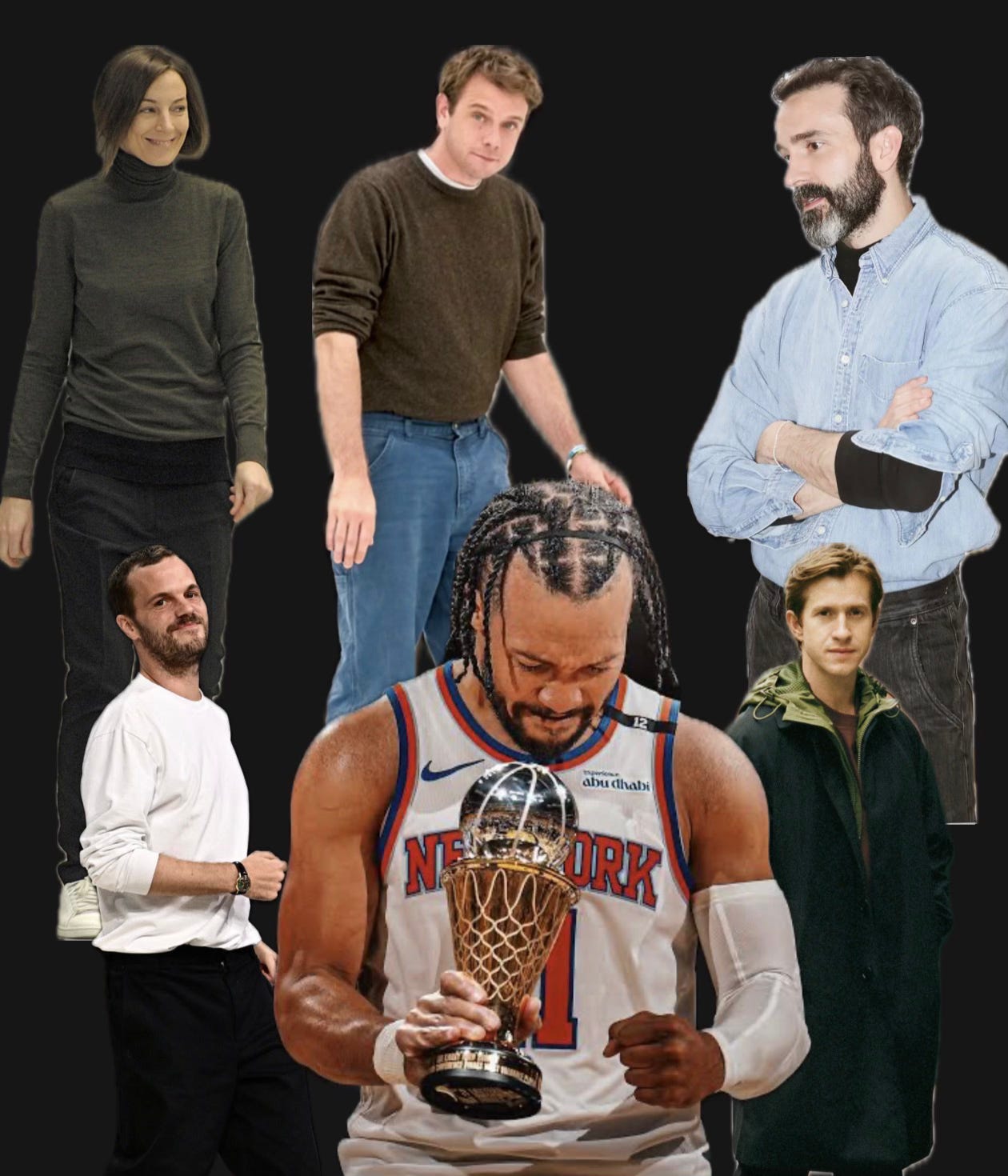
Chanel has Matthieu Blazy. Dior has Jonathan Anderson. Gucci has Demna.
The assumption behind all of this coverage is that one extraordinary person can change the trajectory of an entire brand – and sometimes that’s true. Every now and then a designer arrives and their impact is undeniable .
It would be impossible to discuss modern fashion without acknowledging what Daniel Roseberry has done at Schiaparelli. The house existed before him, of course, but what we’re looking at today is unmistakably his vision. The measuring stick isn’t simply sales or social media impressions. Schiaparelli spent two generations in hibernation before reemerging as one of the most culturally relevant brands in fashion.
Yet the relationship between designer and house is rarely so linear.
Daniel Lee arrived at Burberry carrying the kind of momentum most designers only dream about. At Bottega Veneta, he wasn’t just designing products. He was dictating trends. By any measure, he should have been a sure bet. Looking more closely, I’m not sure the excitement followed him in the way many expected.
And then there’s Pharrell at Louis Vuitton. Has he been successful? Certainly. But how much of that success belongs to Pharrell and how much belongs to Louis Vuitton, arguably the most powerful luxury machine in the world? At a certain point, it becomes difficult to separate the individual from the institution.
The more I think about it, the more I realize that fashion’s biggest successes rarely come from talent alone. They come from fit. The right person. The right house. The right moment.
For years, New York searched for the superstar who would save the franchise. Then along came Jalen Brunson. Brunson has been phenomenal, but he didn’t take the Knicks to the Finals alone. He took less money. The front office built the t tteam around him. The right pieces came together at the right time. Talent mattered. So did everything surrounding that talent.
We tell ourselves stories about singular genius because they’re easier to understand.
Maybe that’s what the fashion industry misses every time another creative director changes jobs. We spend so much time debating whether the designer makes the house or the house makes the designer that we overlook the possibility that the most successful partnerships stop keeping score.
Nobody talks about Tom Ford without talking about Gucci. It’s difficult to separate Phoebe Philo from Céline. Daniel Roseberry’s name is now intertwined with Schiaparelli. At a certain point, the relationship becomes bigger than either side could have created alone.
As Matthieu Blazy settles into Chanel and Jonathan Anderson begins writing his chapter at Dior, perhaps the question isn’t whether these designers can transform the houses they’ve inherited.
The better question is whether, ten years from now, we’ll remember the signing or the dynasty.
No posts
Comments
Nothing yet. Say the first thing.
Sign in to join the conversation.