
In one week, I was invited to three different closet sales. Not casually, but insistently. DMs, follow-ups, a sense that I should want to go.
I politely declined, citing calendar conflicts, but I couldn’t quite explain my hesitation. After all, I can entertain myself shopping at Gristedes.
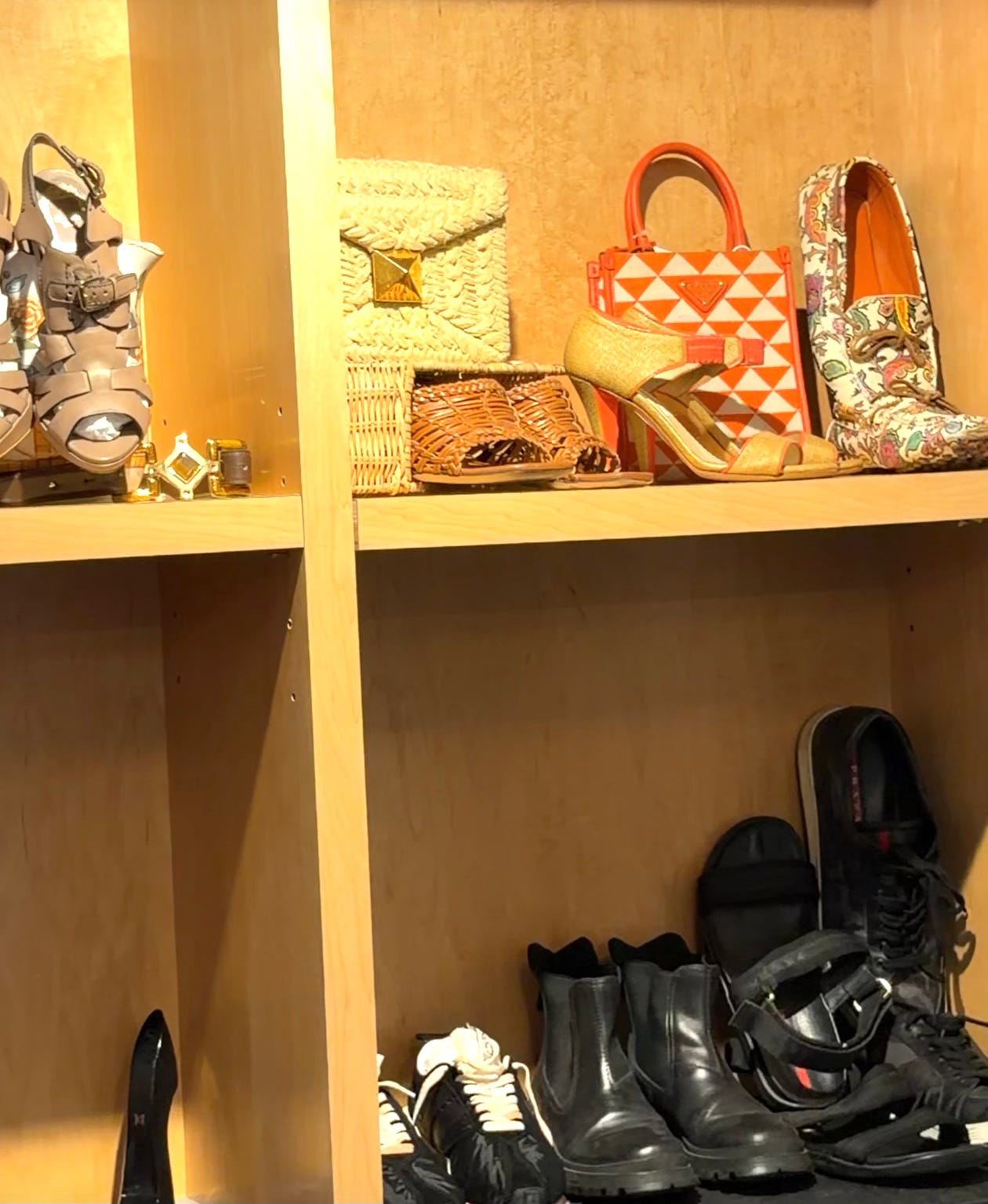
After thinking about it, and speaking to a few people hosting these sales, I realized it wasn’t that I didn’t want to shop. It’s that many of these sales don’t make sense to me because no one agrees on what anything is worth.
I’ve been to several pre-owned, vintage, and market sales this year to see a pattern. Pricing is all over the place. A twenty-year-old Fendi Baguette priced within striking distance of a new one. Fur coats with cracking skins tagged higher than what you’d pay at a luxury retailer. Shoes that have been resoled, still priced close to department store levels.
This isn’t happening in a vacuum. The resale market is growing quickly. In the US, the secondhand apparel market reached about $55 billion in 2025, accounting for roughly 12% of total clothing spend, and it’s growing three to five times faster than new retail. Resale is beginning to take actual market share from retail.
Even so, there’s no shared understanding of value. We can all agree that when you drive a car off the lot, the value drops. There’s an immediate, accepted reset.
In fashion, once a new collection is launched, we expect markdowns on what remains from the prior season. Sometimes prices are cut dramatically, to move aging fashion. Then you look at resale, and the numbers don’t follow that same logic. Prices creep back up, sometimes uncomfortably close to retail.
We’ve been told that certain fashion holds value. Platforms like The RealReal and Poshmark normalized the idea that you can buy, rotate, and resell. And you can. But you also can’t be surprised when you only make out with $100 on that $1,000 dress you bought for a friend’s..
Closet sales operate on a different logic. A Khaite dress from three years ago is tagged at $900, even though it cleared at a sample sale for $600. It’s not that anyone is wrong. It’s that everyone is using a different logic.
The moment of depreciation is unclear. The resale market is crowded. Retail prices keep climbing. Somewhere in between, value has become subjective and that feels a bit uncomfortable,
So you walk into one of these sales and there’s a quiet tension. The seller has a number in mind. The buyer has a different one. No one is negotiating because nobody wants to insult the other. You either buy, or you don’t.
No posts
Comments
Nothing yet. Say the first thing.
Sign in to join the conversation.