
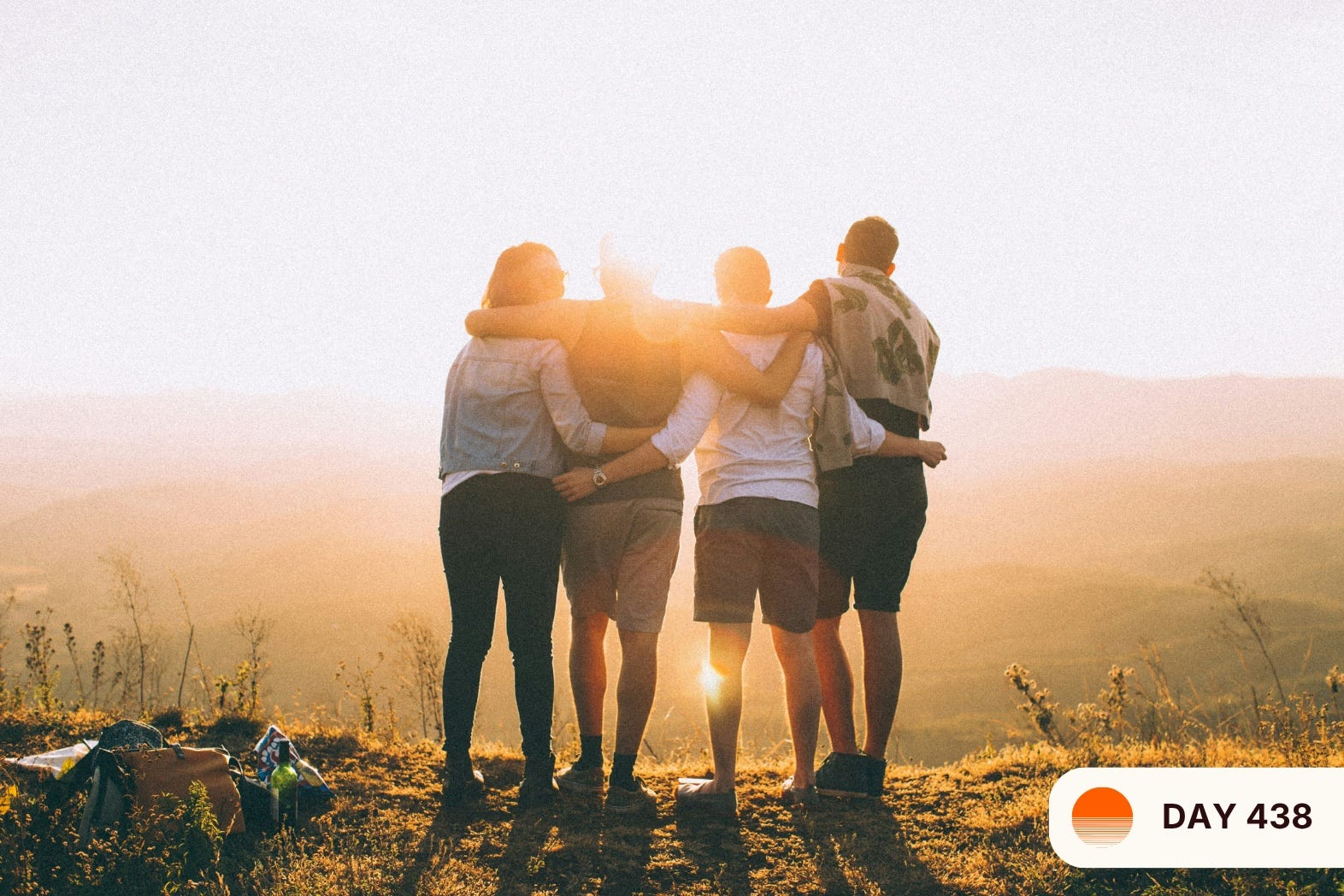
Courtesy of Helena Lopes (thank you!)
Someone in our hopeful community asked the following questions: “Does friendship bring hope? If so, how?” No introduction or context; just the question. It took a number of days to contemplate the response. On surface, the easiest answer is “of course friendship brings hope.” Yet, it really caused me to do some additional research. Here is what I found.
Here is how friendship fosters hope.
Challenges actually feel more manageable. Friends can listen to you, offer practical advice by sharing their perspective on things, and, be present for you. That presence allows you to believe that future goals are more achievable rather than overwhelming.
Friendships create both belonging and purpose. When you have a close relationship, it gives you the feeling that you matter to someone. According to a study by the Mayo Clinic, friendship strengthens connection, purpose, belonging, self-worth and coping during personal hardships.
Friendhips give us perspective. Oftentimes, when we are discouraged, our friends give us perspective. They know our strengths and have seen our past progress. Consequently, they can fuel us with options that we may be blinded to in the moment. Knowing possible pathways forward is really the core element of hope.
Friendships actually support both resilience and well being. A 2023 meta-analysis of 38 studies found that friendship quality along with socializing with friends, could predict well-being.
Good friendships help hope grow over time. Perceived social support predicted hope across three assessments over a year in a longitudinal study of 1,283 university freshman. The study also showed that the relationships were reciprocal, implying that support and hope can reinforce one another.
“The most overlooked public health asset” we have. This is a direct quote from Jaimie Krems and Victor Kaufman’s paper published in 2026. The study lays out that a shrinking number of close relationships is now its own public health problem, right alongside of loneliness. Their research shows that social connection shows up in meta-analyses as a real predictor of lower mortality risk. Social support is linked to better survival odds for people fighting serious illness. Friendship does something measurable in both how long and how well people live.
Roughly one in four adults say they don’t have a single person they can confide in. That is a huge number of people carrying things alone. Robert Waldinger, who runs the Harvard Study of Adult Development (which has been following the same people since 1938) is the source of this statement.
I think it does.
Who’s someone who’s been a “pathway” for you? Who showed you a way forward you couldn’t see on your own and have you told them that lately?
“Call me, when you need a hand, we all need somebody to lean on.” This song was written and performed over fifty years ago, yet it explains this entire post in a very succinct way.
And if today’s dose was useful, share it with someone who could use some hope.
Most people wait for life to feel lighter before they feel hopeful again.
This was built for the days when it doesn’t.
For $5/month, you can help to support my work—or just subscribe for free.
Comments
Nothing yet. Say the first thing.
Sign in to join the conversation.