
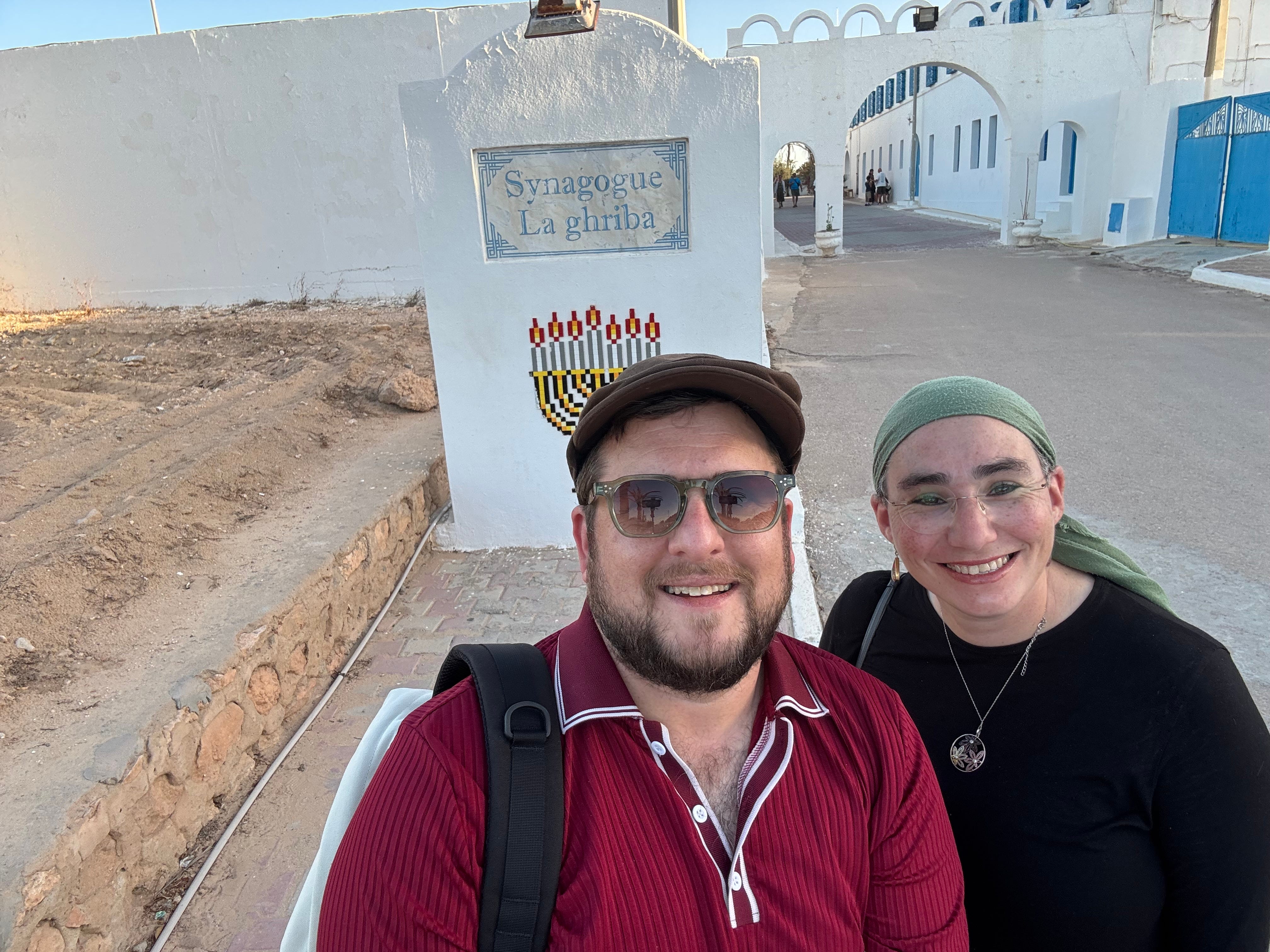
Djerba first came onto my radar around 2019. I met my friend Nissim from Djerba at Ben Gurion Airport, almost by chance. We talked, exchanged details, and stayed in touch over the years. Ever since then, the island sat somewhere in the back of my mind. Not as a plan or a goal, just as a place I wanted to see for myself one day.
By the time we went, I had been studying Arabic for about six months. I was genuinely excited to have an opportunity to use it outside of lessons or apps, to see whether any of it would hold up in real conversations. Djerba turned out to be a good place for that, in small, low-pressure interactions that felt natural.
That interest eventually became this trip, which is worth situating properly. It wasn’t research or a project. It was a trip with my wife for our sixteenth wedding anniversary. We weren’t rushing, documenting, or optimizing anything. We had time to walk, to sit, to notice small things. Whatever impressions I came away with formed slowly, without pressure to turn them into conclusions.
I loved Djerba.
I loved the Jewish community there, not as an idea or a symbol, but as something lived and ordinary. People going about their days, praying, working, talking, without explanation or performance. There was very little sense that anything needed to be framed for visitors, which I appreciated.
One thing that stood out immediately was how warm and welcoming people were. Not in an organized or demonstrative way, just straightforwardly kind. People were consistently helpful, often before we even asked. Directions, timing, small practical things. It felt natural, as if hospitality was simply assumed rather than staged.
Using Arabic fit easily into that rhythm. Conversations were brief and unremarkable in the best way. Shops, streets, passing exchanges that began and ended without ceremony. I spoke, people answered, and we moved on. Being understood and answered back normally felt like part of daily life rather than an achievement.
Some things in Djerba made immediate sense to me, and others didn’t. No one seemed especially concerned with explaining the difference. I liked that. It felt like a place where life goes on whether or not a visitor fully understands it.
What stood out most was the tone of religious life. The piety is real, but quiet. People observe because that’s how life is structured, not because observance needs to be displayed or intensified. There was little sense of competition or signaling, no feeling of a frumkeit arms race. The seriousness felt assumed rather than asserted.
At the same time, I was aware that the community carries real constraints. In some ways it feels like a time capsule. Not frozen, but limited by demographics, economics, and geography. That awareness doesn’t cancel out the vitality of daily life, but it sits alongside it, unspoken.
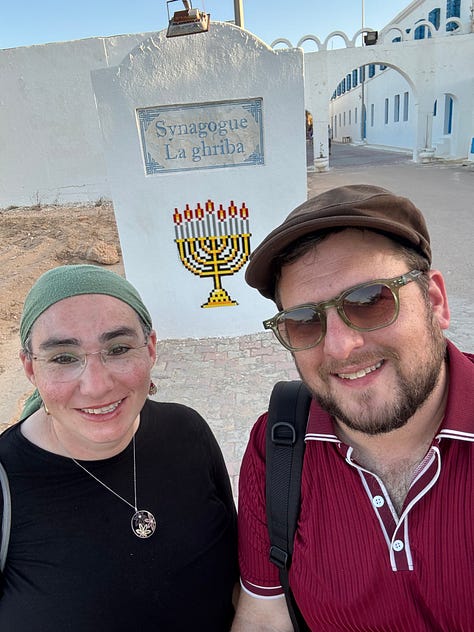
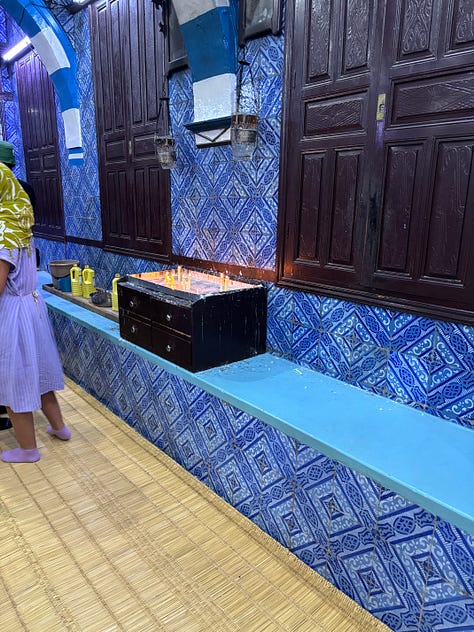
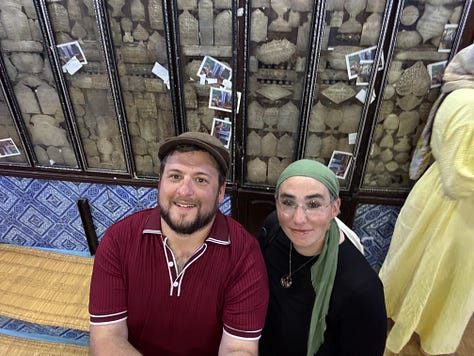
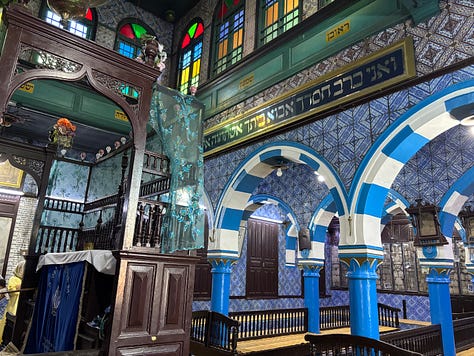
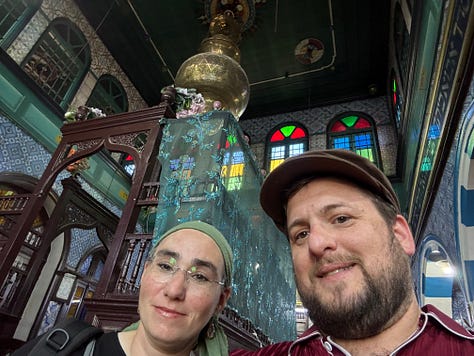
I visited El Ghriba Synagogue, which was beautiful and clearly meaningful. The space has weight and calm, even when it’s quiet. I was disappointed to learn that there have been no regular prayer services there since Covid. Being in the shul without minyanim made it feel closer to a monument than a functioning synagogue, even though the sense of sanctity remains.
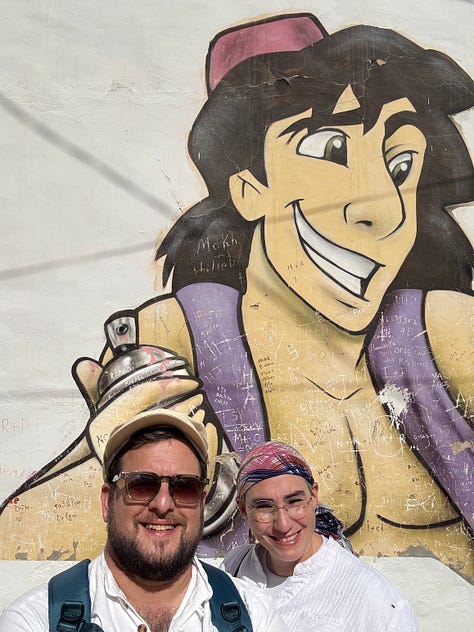
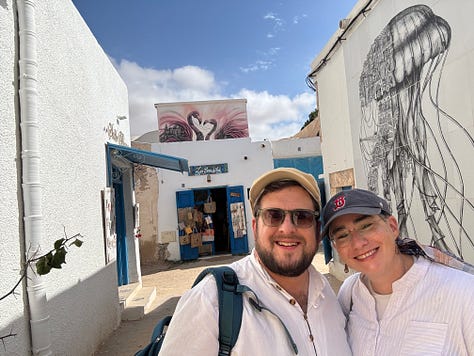
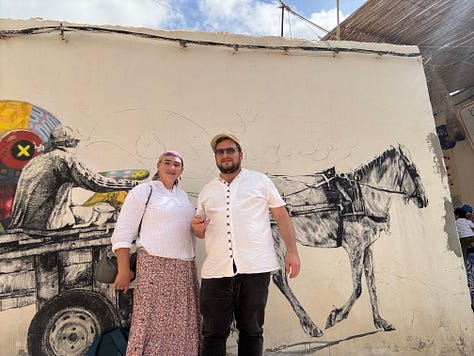
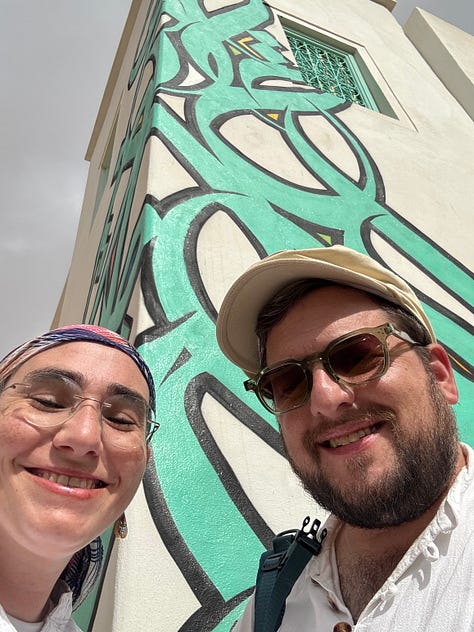
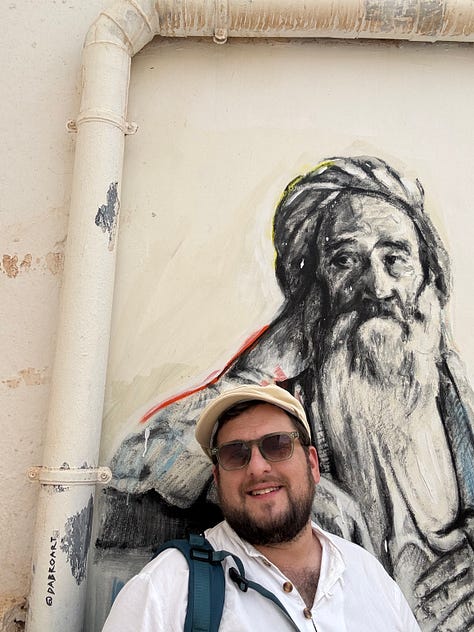
I also spent time in Djerbahood. The artwork is thoughtful and well done, and it has brought attention back to the area. At the same time, it sits on what used to be a Jewish neighborhood. Today, only a small number of Jewish families still live in Hara Saghira. The restaurants there are good, and the area is pleasant to walk through, but the shift from lived neighborhood to curated destination is noticeable.
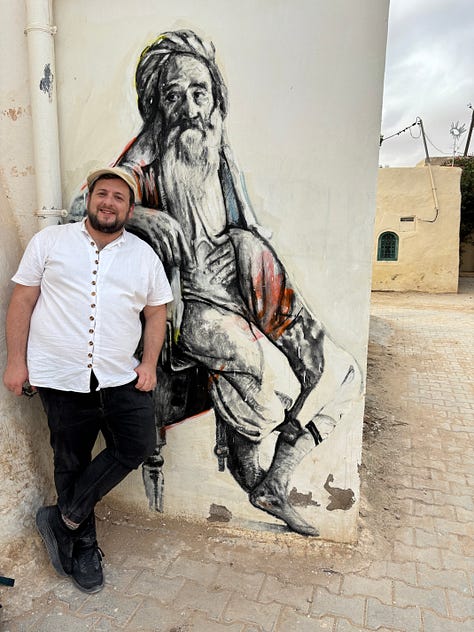
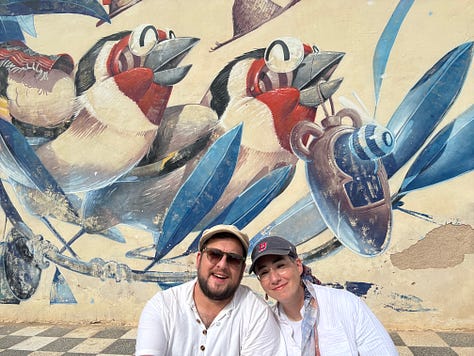
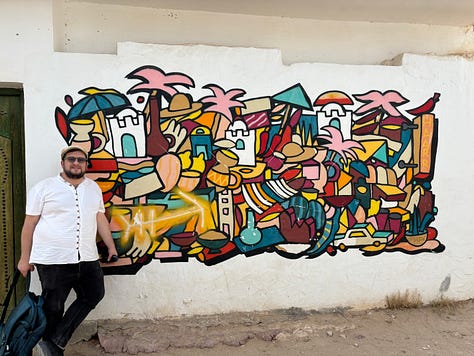
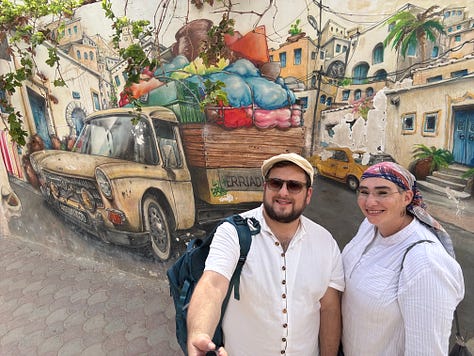
By contrast, time spent in Hara Kabira felt very different. Jewish life there is active and unmistakable. There are many synagogues, regular prayer, and a daily rhythm clearly organized around religious life rather than memory or display.
What stood out to me there was the level of piety. It’s thorough and unshowy. People take observance seriously across the board, in a way that feels increasingly rare even in Israel. There’s little anxiety around it, little sense of needing to prove anything. Walking through Hara Kabira made it clear where Jewish life on the island actually is today: not concentrated in a single symbolic site, but spread across neighborhoods, prayer times, and routines that still belong primarily to the people who live there.
None of this felt like a lesson. These were simply impressions gathered over time, while being there together. We left Djerba rested and thoughtful. It was a good place to slow down, to listen more than talk, and to see a community living its life with seriousness, warmth, and restraint.
Like any small, long-standing community, there are real issues and pressures beneath the surface. I didn’t want to fold those into this piece. If people are interested, I can come back to them another time.
No posts
Comments
Nothing yet. Say the first thing.
Sign in to join the conversation.