
There’s a style of popular commentary on Judaism that I’ve encountered often—one that leans more on bold confidence than on deep understanding. Elon Gilad has become a prime example of this approach in my reading.
The pattern is familiar and consistent. It starts with a narrow, technical claim, delivered with the flair of insider expertise: perhaps a manuscript variant, a linguistic nuance, or a historical snippet. It sounds scholarly, even intriguing. But then it’s inflated far beyond what it can reasonably support. A modest detail gets transformed into a sweeping verdict.
Sometimes these claims are just stretched too thin. Other times, they’re outright inaccurate or speculative hypotheses presented as settled fact.
This isn’t isolated to one topic or one season—it’s a recurring dynamic across Gilad’s work on Jewish customs, texts, and history.
Take the assertion about the sufganiya that resurfaced this Hanukkah. It’s portrayed as a modern invention: essentially a German or Polish pastry, kosherized in Europe, renamed by Hebrew linguists, and aggressively marketed by the Histadrut labor union in the 1920s to support local bakeries. The religious link to Hanukkah? Supposedly nonexistent until this economic push.
The twentieth-century promotion by Zionist institutions is well-documented and uncontroversial—the jelly-filled version gained massive popularity in Israel thanks to that campaign. But to frame this as the outright invention of the custom, dismissing any religious antecedent entirely, is not just overextension—it’s inaccurate. The association of oil-fried sweets with Hanukkah appears in medieval sources across communities, explicitly tied to the miracle of the oil.
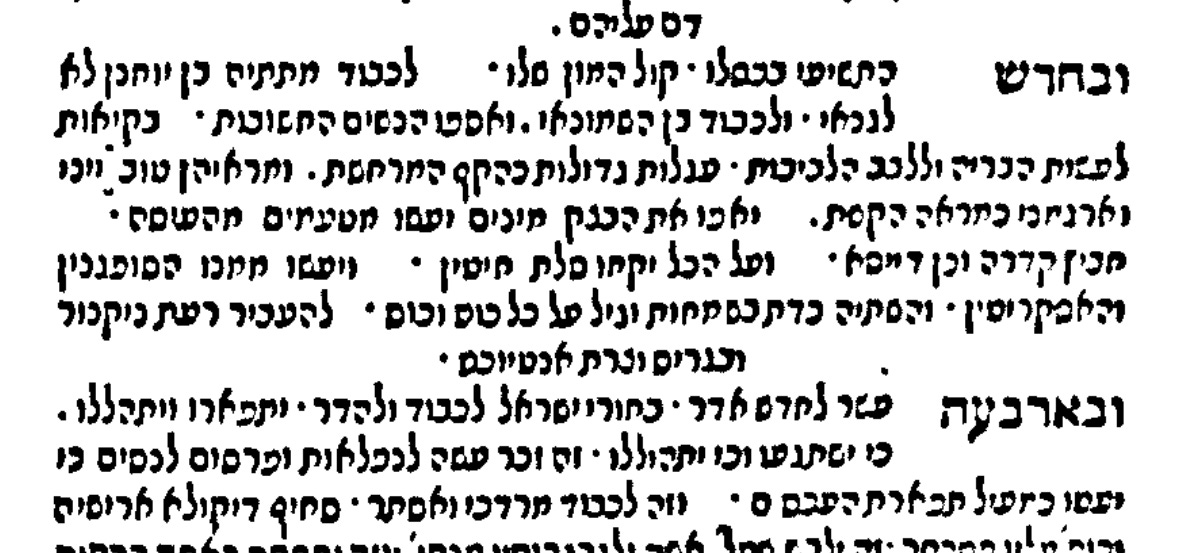
In the late thirteenth or early fourteenth century, Kalonymus ben Kalonymus mentions “sufganin” and related fried treats in a Hanukkah context in Even Bohan.
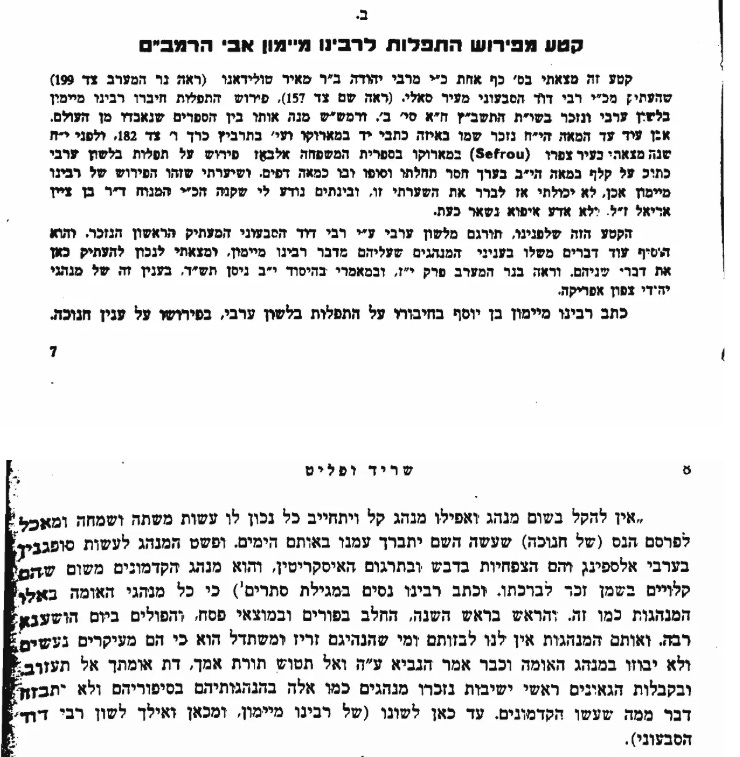
Earlier still, the twelfth-century Rabbi Maimon ben Joseph (Maimonides’ father) describes the widespread custom of “sufganin”—fried dough called “alsfingh” in Arabic, akin to biblical and Talmudic terms—as an ancient practice done “because they are fried in oil, in remembrance of the blessing” (i.e., the miracle). He calls it a custom of the “ancient ones,” underscoring its pre-modern religious roots. This is preserved in transmissions cited in sources like the Serid U’Palit of Rabbi Yehuda Toledano (Meknez, Morocco).
Even the jelly-filled form builds on older fried pastries; the injected filling may trace to European innovations, but sweetened fried dough itself has far deeper roots, with the Hanukkah connection attested centuries before Zionism.
Dismissing this evidence outright isn’t scholarly caution—it’s factual error, presented with unearned certainty.
A more speculative case is the prohibition on mixing milk and meat. Gilad proposes that the biblical command “do not seethe a kid in its mother’s milk” stems from a vocalization error: the root could mean “fatten” or “ripen” rather than “cook,” originally warning against fattening a kid on its mother’s milk to delay sacrifice. This “tiny misunderstanding,” he suggests, birthed the entire kosher separation. (Let’s ignore the fact that the verse appears three times, not twice, as Elon claims 🙄.)
Alternative readings of the root exist in philological discussion. But the Masoretic vocalization as “cook/boil” is ancient and consistent, and the rabbinic extension to all meat and milk (even poultry) is deliberate fence-building, not accidental snowballing from a scribal slip. More crucially, the “fatten an animal” sense has no biblical parallel whatsoever—the root בשׁל means “cook” dozens of times, “ripen” only rarely (and only for plants, like grapes). To redefine it here requires taking a minority botanical sense and forcing it onto animals in one verse alone. Again, there is not a signal case in Hebrew, Biblical or Rabbinic, where תבשל means to fatten up an animal! So to nonchalantly attest that “it could just as easily mean” that – assumes your audience is just ignorant of Biblical Hebrew.
In traditional hermeneutics, this kind of move is rejected outright. The Talmud rhetorically asks of such isolated interpretations: מי אית ליה חברתא?—Does this reading have any “friend” or precedent in the sources? Here, the answer is no. No biblical verse uses בשׁל for fattening animals; no early sage suggests it. It’s a lone novelty, unsupported by the consistent textual tradition.
The pattern peaks in assertions about rabbinic texts themselves. Gilad often invokes “the best versions of the Mishnah” or “the best manuscripts” to forward novel readings that supposedly “correct” centuries of tradition.
A telling example is the mishnah in Pirkei Avot 1:8: “אל תעש עצמך כעורכי הדיינים” – traditionally, “Do not make yourself like the arrangers/advocates of the judges,” a warning to judges against acting like lawyers who manipulate cases.
But in some presentations, this is claimed to “really” read “כארכי הדיינים” (with alef, from Greek “arche,” meaning “like the arch-judges” or even implying God as the ultimate judge). Early manuscripts like the Kaufmann Codex (11th–12th century) do indeed have this variant, lending philological intrigue.
Yet this reading diverges from all printed editions, all classical commentaries (Rashi, Rambam, Bartenura, and onward, who uniformly interpret “עורכי” as advocates), and the dominant textual tradition. Contemporary manuscripts and Genizah fragments preserve the ayin reading too, reflecting parallel Babylonian and mixed lines that became normative.
Elevating the alef variant as the decisive “best” reading—while dismissing the received text and interpretive consensus—again showcases selective scholarship: spotlight a minority MS to deliver demystification, but sideline the broader transmission history and why the ayin version prevailed.
This selective embrace of fringe linguistics or variants—while ignoring Masoretic consistency, common usage, centuries of commentary, and balanced textual criticism—reveals a broader issue: a flagrant disregard for any scholarship that doesn’t fit the agenda of demystification. Critical theories or manuscripts are cherry-picked when they deliver a “gotcha,” but traditional readings (or even nuanced academic ones) are sidelined if they preserve depth or intentionality in the text.
A similar dynamic appears in treatments of the Hanukkah miracle itself. The absence of the story about the singular sealed jug of oil in early sources like Maccabees or Josephus is highlighted to suggest the “real” events were purely political, with the miracle of the oil a later rabbinic invention.
The historical point is valid—the oil narrative emerges explicitly only in the Talmud. But to flat-out dismiss the possibility that it was a well-known oral tradition preserved and emphasized by the Sages makes little sense in a culture built on oral transmission. Judaism’s core practices and stories – from the reasons for mitzvot to midrashic expansions – were often passed down orally long before commitment to writing. Insisting on written attestation alone as proof of authenticity ignores how Jewish memory actually worked.
Biblical figures get similar treatment. One piece alleges a “conspiracy” to insert Aaron as Moses’ brother and subordinate him, citing narrative gaps and inconsistencies as proof of later priestly editing.
These observations draw from the Documentary Hypothesis, a theory popular in academic biblical criticism and widely accepted in Christian scholarly circles. But in traditional Jewish thought, such fragmentation of the Torah’s authorship is rejected outright as heresy – contradicting the fundamental belief in Mosaic authorship and divine unity of the text. Moreover, the classic form of the hypothesis rested on now-discredited assumptions, like the ahistoricity of King David or the lack of early literacy in Judah – claims undermined by discoveries such as the Tel Dan Stele explicitly mentioning the “House of David” in the 9th century BCE.
Presenting critical theories as unassailable fact without acknowledging this profound divide – or the hypothesis’s outdated foundations – risks importing foreign assumptions into Jewish discourse.
In each case, the methodological shortcut stands out: sources cited selectively, alternatives downplayed, no engagement with counter-evidence. Readers get assertion, not demonstration.
What ties these examples together isn’t genuine curiosity, but the tone: partial truths packaged as final exposures. The audience shares the demystifying thrill – another tradition “crumbles” under one clever insight.
But Jewish history accumulates through layers: use, reinterpretation, continuity. Understanding requires proportion – knowing a detail’s limits.
This isn’t about shielding traditions. Scrutiny is vital. But when speculation or critical theories are rushed to verdict, dressed as hidden truth—while dismissing any scholarship that complicates the narrative—the result is distortion, not clarity. And his audience—random people on Instagram interested in Jewish and Israel-adjacent topics—are not a discerning audience of academics where this level of sleight of hand can be chalked up to showmanship and buyer beware.
Elon Gilad’s work illustrates this clearly: not for asking questions, but for answering them too hastily, with too much confidence.
No posts
Comments
Nothing yet. Say the first thing.
Sign in to join the conversation.