
Last week, I attended a magnificent ball in London. The who is who of European tech was in attendance, drinking champagne, dancing and networking.
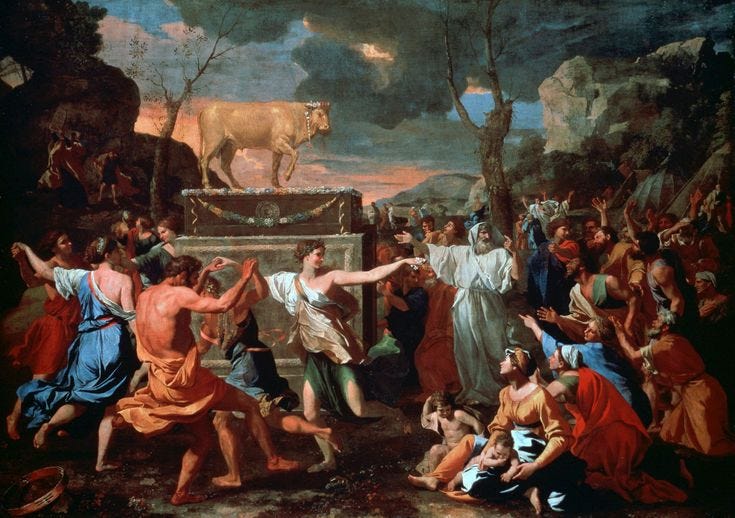
Standing in the middle of the room, looking up at the gigantic dinosaur skeleton hung under the ceiling of the Natural History Museum, I had the distinct feeling that we may be dancing like the Israelites danced in front of the golden calf thousands of years ago. Revelling before an idol, elated, just before the reckoning arrives. Mind you, have you seen the stock market valuations for software companies lately?
But let us not lose ourselves in dark perspectives today. Instead, let me offer a different provocation: If AI continues to progress at its current speed, it may soon make the notion of work optional. A great deal of brilliant people are now grappling with the labour market impact of such a change. Far fewer are asking the more interesting question: what happens to us when we no longer need to work?

roon@tszzl
technological job loss is awesome and i hope it starts with mine
11:34 PM · Feb 18, 2026 · 162K Views
166 Replies · 53 Reposts · 1.37K Likes
Most utopian visions of a post-work world talk about days full of hobbies and contentment, a life in which we can afford everything, get to do nothing but what our hearts desire…and then more or less stop there.
So, in an effort to understand what the past might teach us about this intriguing future, I decided to do a bit of old school reading myself. What follows is a journey through Europe’s noble society, the gods of Mount Olympus, American social clubs, and the Boy Scout movement.
While most of this essay will focus on society in the face of abundance, let us briefly consider the opposite.
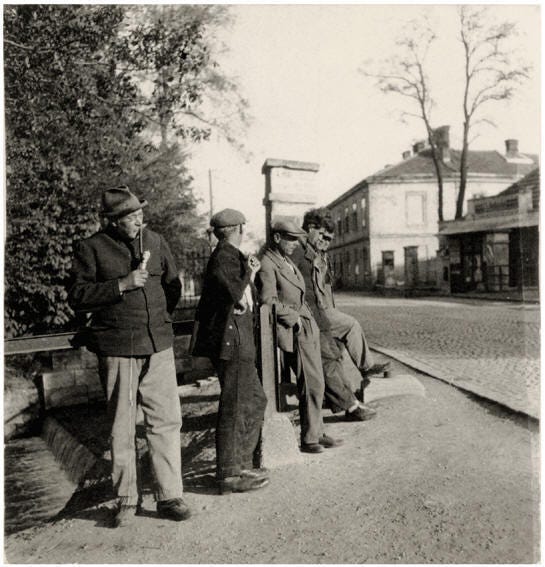
In 1931, sociologists descended on a village called Marienthal, close to Vienna, where the closing of a factory had thrown nearly the entire community into long-term unemployment.1
It will come as no surprise to you that what they found was not a village of people finally free to pursue their passions.
People stopped going to theatres, libraries and parks, partly for lack of money but also for lack of will. When faced with ample free time, people did less with it, not more. They arrived late to appointments and walked more slowly through the village. The loss of temporal structure became identical with the loss of social structure. Unemployment became the only form of identity, and instead of liberation, they found themselves socially impoverished: lonely and existing in a state of passive resignation.
Marienthal's people were financially destitute, and destitution is no foundation for a blissful life. Much of the philosophy about the impact of leisure therefore focuses on a life in which our material needs have already been covered.
But even then, there is disagreement about the value of leisure. One camp has always argued that free time inevitably leads to mischief and trouble. It is exemplified by expressions like having too much time on our hands. Another camp sees leisure as the very basis of culture.
Aristotle argued that scholē, genuine leisure, was the purpose of life itself, the space in which philosophy, music, and civic virtue could flourish. Rather than idleness, it represented the highest form of human activity.
The German philosopher Josef Pieper picked this idea up in 1948, arguing that culture depends for its very existence on leisure.2 He did not mean free time in the sense of hours left over after work, but something closer to a contemplative openness, what he called “an attention to things in which man begins to see how worthy of veneration they really are.” In Pieper’s vision, leisure is almost sacred: the moment when we stop being useful and start being human.
In 1932, philosopher Bertrand Russell made a more political case. He attacked the moral suspicion that had always surrounded idleness, quoting an old Duchess who asked “What do the poor want with holidays? They ought to work.” Russell saw this cult of work as a condemnation of our civilisation, noting that without leisure, the work of Shakespeare would never have been produced.
“The modern man thinks that everything ought to be done for the sake of something else, and never for its own sake.”
He argued that by obsessing over ever more competitive ways of working we have lost the very capacity for light-heartedness, which sits at the core of our humanity.
But if genuine post-work leisure is the precondition for everything that makes civilisation worth having, why aren’t all rich people turning into Shakespeares?
The psychologist Mihaly Csikszentmihalyi spent decades studying what he called “flow,” the state of complete absorption in a task that is neither too easy nor too hard. In my view, his most interesting finding was that people report more flow states at work than during their free time. This is less because work is inherently fulfilling, but because it provides something that unstructured leisure struggles with: clear goals and reward, as well as a level of challenge matched to one’s abilities.
Left to our own devices day after day, we tend not to enter flow. We begin to feel restless, anxious, and vaguely dissatisfied. Days begin to stretch into an unrecognisable blur. We pick up our phones and drop them again. We open the fridge, randomly searching, only to nibble on something we didn’t even crave. We start unnecessary arguments with people we love.
Csikszentmihalyi’s research suggests that what we actually crave is not the absence of effort, but instead the right kind of effort: freely chosen, genuinely demanding, and just difficult enough to require our full attention. That is the precondition for anything of Shakespearean quality in our lives.
I also believe this is what parenting can give us. It is an arduous task, but one that naturally structures our day, constrains it, gives it friction - and in doing so, provides us with a deep sense of meaning.
Csikszentmihalyi’s insight reframes the question of leisure. The challenge of a post-work world is not how to help people relax but to help them find meaningful resistance.
Because without meaningful resistance, as we are about to see, some very strange things begin to happen.
The aristocratic courts: leisure as a performative status machine
If we want to understand what a life of ample leisure and financial freedom would mean for society, it is worth studying the people who have lived in this setting for hundreds of years: European aristocrats.
In The Book of the Courtier (1528), Count Baldesar Castiglione describes the life of a nobleman living at court.3 In wonderful detail, he depicts how Renaissance nobles spent their abundant free time: cultivating conversation, art, sport, and wit.
But more than that, leisure was formalised into an elaborate social system with its own rules and hierarchies. It was normal for the nobility to engage in excruciating social rituals, marked by the most subtle signs of distinction.
When the queen was being dressed, there was a strict hierarchy governing which lady-in-waiting could hand her which garment. If a higher-ranking woman entered mid-process, the entire chain had to restart. One can only imagine the silent fury in that room.
Dinners lasted for many hours and table manners became elaborate not because it was necessary, but because it allowed the nobility to distinguish themselves through ever more intricate status games. Nobody needs to know which fork to use - the complexity exists purely to create a legible hierarchy in the absence of other forms of distinction that we know from the workplace.
The ideal nobleman was seen as a total person, cultivating mastery across a vast range of domains: martial skill, literary knowledge, musical ability, physical grace and conversational wit.
Yet, one of the most important concepts of the book is sprezzatura, best translated as a kind of studied nonchalance. It was the “one universal rule” of graceful behaviour: make all accomplishments appear completely natural, as though they required no effort at all. True art is that which does not appear to be art, and if the artifice is ever discovered, it destroys the magic entirely.
Let’s think about that for a moment. The entire leisure class developed an elaborate performance ethic around appearing not to try, which is its own kind of exhausting labour. And so, instead of symbolising the absence of effort, the absence of paid work just redirected effort toward social performance.
Shonda Rhimes understood this perfectly. When asked whether her TV show Bridgerton was a romance, she pushed back: “It is more of a workplace drama. The women don’t have power in other areas of their lives, the power is in how they marry, so it becomes a workplace. And that's where the drama is.”
When you deny people access to the economy, they build a shadow economy of social manoeuvring. When you deny them formal power, they develop extraordinarily sophisticated informal power structures. And they bring all the seriousness of a career to it, because for them the stakes genuinely are existential.
In a post-work society, we may want to short LinkedIn but go long on Instagram, where the intricate display of who we marry, what we wore, and what so-and-so said about our flower arrangements becomes the real economy.
For the nobility, rather than freedom, the absence of work created a tyranny of social obligation. Spending was not dictated by how much money you had, but by your rank in society. A duke simply had to spend like a duke, no matter their actual financial means, leading to the ruin of many noble families. The system ran on its own strange momentum, driven endlessly by competition for status among people entangled in its web. Nobody could stop it, nobody fully controlled it, and it served little function beyond its own perpetuation.
America’s social clubs
But the European aristocracy is not the only model. In other places, the existence of leisure created societal structures where work shifted towards learning, art, sport, civic life, care, and community building.
Alexis de Tocqueville’s Democracy in America (1835) offers many insights.4 As a French aristocrat visiting America, Tocqueville was struck by how Americans, lacking the inherited social structures of Europe, spontaneously created clubs, societies, and movements to organise collective life. He noted that Americans formed associations to create entertainment, founded schools, constructed churches, or diffused books. Wherever you’d expect to see the government in France or a man of rank in England, in the United States you’d find an association.
In a society of equals, where no single person has the power to get things done alone, voluntary association is a social mechanism for progress. But Tocqueville also issued a warning that reads as though it were written yesterday: He foresaw that democratic equality can also breed a dangerous kind of individualism. As people withdraw into private life, their concern narrows until each person’s world shrinks to their family and a few friends. He imagined a society of people “constantly circling in pursuit of petty pleasures,” watched over by a benevolent, protective power that secures their enjoyment and watches over their fate. Hundreds of years ago, he called this “soft despotism.” Today, we might call it social media.
One of the globally most successful examples of leisure organised as virtuous structure is the Scout movement. In August 1907, Baron Robert Baden-Powell led a week-long experimental camp with twenty-one boys from various social backgrounds. Baden-Powell was obsessed with the fall of Rome. He believed the Roman Empire had collapsed because its citizens grew idle, comfortable, and indifferent, and he feared Britain was heading down the same path. Scouting was his answer: a system designed to re-inject purpose, physical challenge and moral discipline into a society he feared was drowning in comfort.
The skills young scouts learn are manifold, ranging from fire-making and first aid, to nature study and adventure stories, combined with moral instruction on chivalry, honesty and self-restraint. All of it structured into a programme that gives young people clear goals, challenges, and a community of shared commitment.
The movement attracted thousands of voluntary workers from every grade of society, giving their time and energy for no reward other than the satisfaction of helping young people become good citizens and the status of being a scout.
What Baden-Powell built, perhaps without realising it, was really a flow machine. Idle afternoons were turned into increasing levels of difficulty, with immediate, socially legible feedback through badges and ranks, all embedded in a community that made effort meaningful.
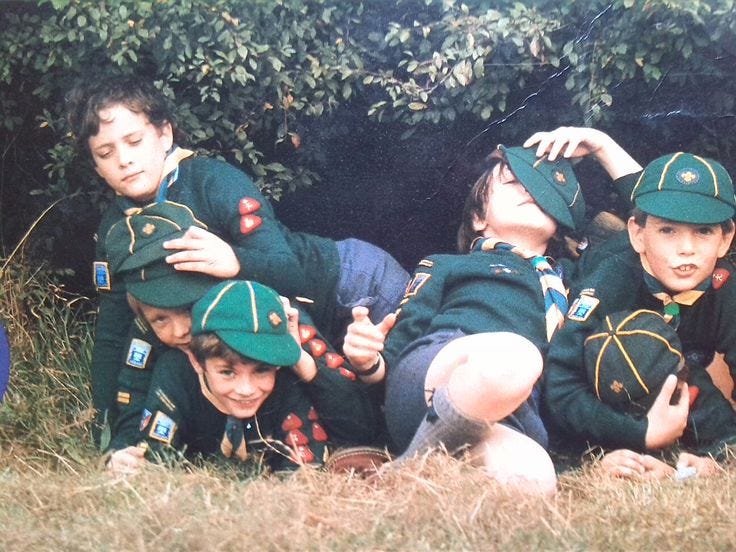
The examples of the excruciating etiquette of the aristocratic courts, the marriage market Rhimes dramatised, the civil associations Tocqueville admired, and the Boy Scout movement show us that when the external structure of work disappears, rather than simply relax, we do one of three things.
First, we reinvent work under another name. The human drive for agency and achievement will colonise whatever domain it finds vacant: social manoeuvring, status competition, or community service. The “work” may look trivial from outside. Who hands the queen her chemise? Who leads the next scout patrol? But it is experienced with deadly seriousness by those inside the system. Leisure has an uncanny ability to turn anything into a drama.
Second, we degenerate into destructive restlessness. Using another ancient example, the Greek gods are the most vivid illustration of this. The Olympians have everything a post-work utopia promises: unlimited time, beauty, power, material abundance.
And what do they do with all of it?
They scheme. They seduce one another’s spouses. They take petty revenge over trivial disagreements. They torment mortals out of boredom. Zeus, the mightiest of them all, spends most of his time in pursuit of sexual conquests. Hera devotes her considerable intelligence to jealousy and punishment. Ares picks fights for entertainment. The gods are a portrait of what happens to character when every external constraint is removed.
The few moments of genuine divine nobility in Greek mythology are notable precisely because they involve the gods voluntarily choosing limitation, purpose, or service. Prometheus accepts horrific punishment for helping humanity. Athena channels her power into craft and justice. These are acts of self-imposed structure in a universe that otherwise imposes none. Abundance without purpose produces not happiness but a kind of magnificent squalor.
What the Greek myths dramatise is what Csikszentmihalyi studied in his work: humans need resistance to flourish. The gods have infinite skill and face no real challenge, so they collapse into the divine equivalent of a bad Sunday afternoon, except theirs lasts for eternity.
Satan finds some mischief still for idle hands to do is a fitting 18th century proverb, but it is less the idleness we should worry about and more the seeming communal agreement that in the face of material abundance nothing carries consequences.
The Epstein files have given us an inside look into the world of the superrich. Much reminds me of mount Olympus: scheming, petty revenge and truly sinister crimes committed by people who feared no consequences whatsoever.
Third, we build idols. More than a story about worshipping the wrong God, the golden calf that the Israelites built at the foot of Mount Sinai is a story about how people fill the gap between liberation and meaning.
Moses has gone up the mountain, leaving his people waiting for him. They have just been freed from slavery, which is to say, freed from forced labour, and they are in the wilderness with nothing to do. They have abundant leisure for the first time in their collective memory. And in that gap, they reach for the easiest available source of meaning: spectacle and sensory pleasure in the form of a tangible object they can see and touch.
It takes a matter of days to build the golden calf, while finding and worshipping God takes a lifetime.
I suspect that thanks to modern technology and AI, we are all building golden calves at an industrial pace right now. Consumer culture, viral trends and the attention economy fill our time, while only a few of them fill our soul.
So what decides the future trajectory of our leisurely lives? If the past is anything to go by, the answer depends less on the quantity of our leisure than on what we choose to do with it.
Next to the status games, the degeneracy, and the golden calves, we have learned that there is a distinct fourth possibility: the voluntary construction of moral and civic purpose, spanning town meetings and scout patrols. These are forms of leisure that require people to choose difficulty, discipline, and obligation when they could simply choose comfort. They work precisely because they impose demands of shared commitment on otherwise free people.
This is what the Scout movement, religious communities and civil associations attempt: more than just structuring leisure through shared rituals and moral guidance, they form a status system that recognises and rewards acts of service.
Even Castiglione’s nobleman, for all his sprezzatura, reaches toward something beyond himself in the end. The nobleman’s ultimate purpose is to become the prince’s instructor, to use all his cultivated graces in service of political influence. Even in a world of pure leisure, the noblemen can’t resist reaching toward purpose and impact.
But the trouble is that these virtuous structures are fragile in a way the other three are not.
In Bowling Alone (2000), the political scientist Robert Putnam documented the decline of voluntary associations in America: civic clubs, scouting, church groups, bowling leagues.5 Back then he cited generational change, the television, suburbanisation and the time pressures of two-income households as likely causes. Twenty-five years later, nothing has reversed the trend. Scout membership, church membership, political party membership and sports club membership all know only one direction: free fall. Any increase in leisure hours has so far not translated into new civil infrastructure. We are still waiting for more Shakespeares.
With uncanny prescience, Russell foresaw this too. He noted that communal pleasures such as peasant dances had largely died out, replaced by passive consumption: “seeing cinemas, watching football matches, listening to the radio.” He attributed this to the exhaustion of working life, and believed that more leisure would revive active participation. I wonder if he would feel the same today, watching us doomscroll through the lives of others rather than actively participating in our own.
A disheartening asymmetry lies at the heart of the post-work world: the easy responses to leisure are self-sustaining. They can be passive, petty, empty and vain, and they will perpetuate themselves quite happily without anyone’s conscious effort. The Versailles court lasted centuries, Greek gods bicker for eternity and golden calves get built in a matter of days.
On the other hand, the noble leisurely pursuits require constant and effortful renewal. Every generation must choose them again. In a post-work life, these two distinct human spirits will be fighting in our chest.
When AI takes over, we will not just randomly laze about. That much is clear. Our eternal need for status and the drive to prove ourselves will generate new structures that may look remarkably similar to how work looks today, though if you showed them to us now, we would barely recognise them as such.
The question is whether, in our attempt to feel alive and meaningful, among all the ways we will find to re-inject drama and status into our lives, we will still build the things that are hardest to keep.
https://www.gutenberg.org/files/67799/67799-h/67799-h.htm
https://oll.libertyfund.org/titles/democracy-in-america-english-edition-vol-1
https://en.wikipedia.org/wiki/Bowling_Alone
No posts
Comments
Nothing yet. Say the first thing.
Sign in to join the conversation.