
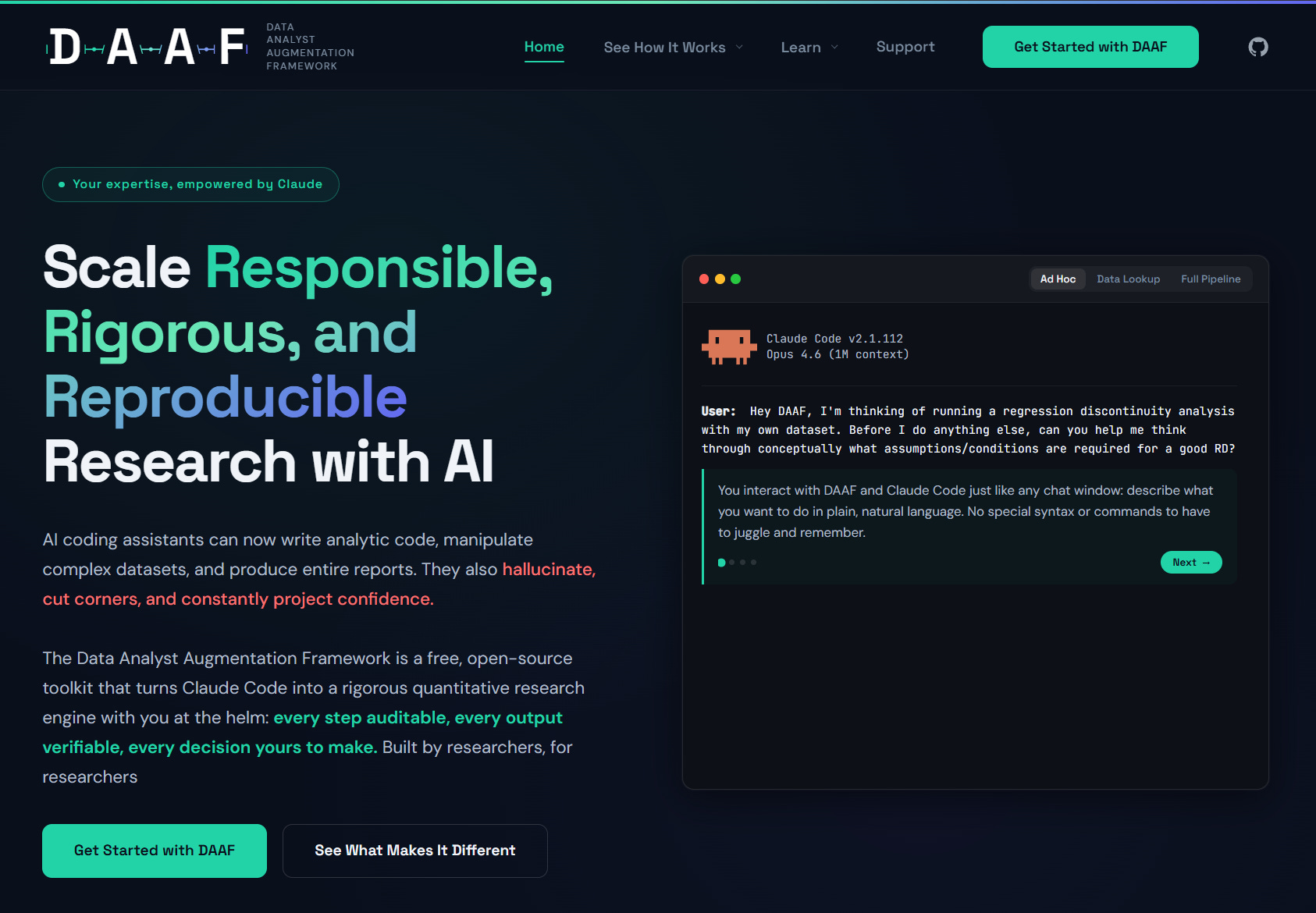
TLDR: If you’ve been wondering how to use Claude Code as a quantitative researcher of any kind, what Agentic Orchestration is all about, or more generally are curious about how AI might benefit the world of science and research: I’ve finally made a very nice, very accessible, and hopefully very informative homepage for the Data Analyst Augmentation Framework (DAAF) -- daaf.openaugments.org -- and I think you’ll really want to take a look! I’ve spent an enormous amount of time on interactive explainers, intuitive diagrams, and a hopefully very compelling explanation of what AI for research can and should look like when we center responsibility, rigor, and reproducibility.
Even if you’re already deep in the weeds using Claude Code as a researcher, I hope it’s also a nice inventory of extremely valuable features/functionality you’ll probably want to adapt for your own setups!
It’s been just about three months since I first launched DAAF, and we’ve come quite a long way from the scrappy v1.0.0 version.
One of the greatest frictions I’ve navigated since launch is trying to explain to people what DAAF is, at least in part because it relies on the person understanding three big things:
What’s currently possible for quantitative data analysis/social science research with Claude Code in the ideal state
Why Claude Code out of the box is actually extremely bad at doing the things we’d want it to do for good data analysis and research, despite good data analysis looking a lot like good code (which, obviously, Claude Code was explicitly designed for)
How hard and complex and weird it really is to get Claude Code to operate more like what we imagine is possible in #1 from where we actually start in #2
In the months since DAAF’s launch, I’ve presented on its capabilities for grant foundations, a variety of R1 institutions, an enormous webinar of nearly 200 education researchers, research thinktanks/institutes, and more. After many conversations and a lot of product development on my end, I think I’ve finally honed a clear articulation of what makes DAAF -- in my mind -- a necessary step in getting the field caught up on where AI for research currently is and should be.
I won’t go on in detail here, since I think the website is by design going to be far more compelling than anything I can type out on a simple page. But I hope people find this useful on a lot of levels whether they want to use DAAF or not, and I hope it brings valuable attention to the exciting opportunities that we’re facing in a world where the scientific community collaborates to bend this wild lightning rod of AI towards ethical, responsible use together.
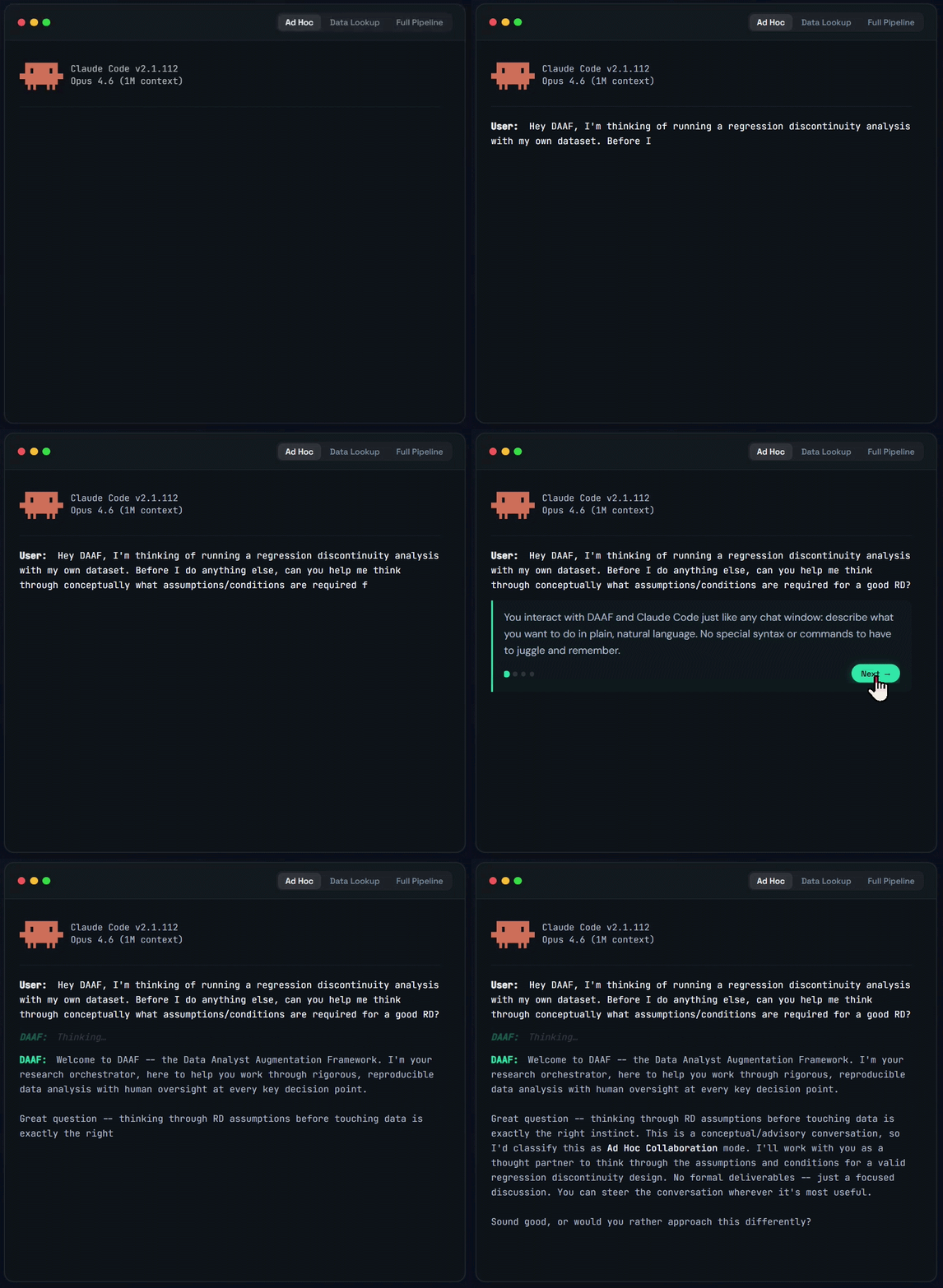
What are you waiting for? Go to daaf.openaugments.org to see nifty interactive terminal demos like:
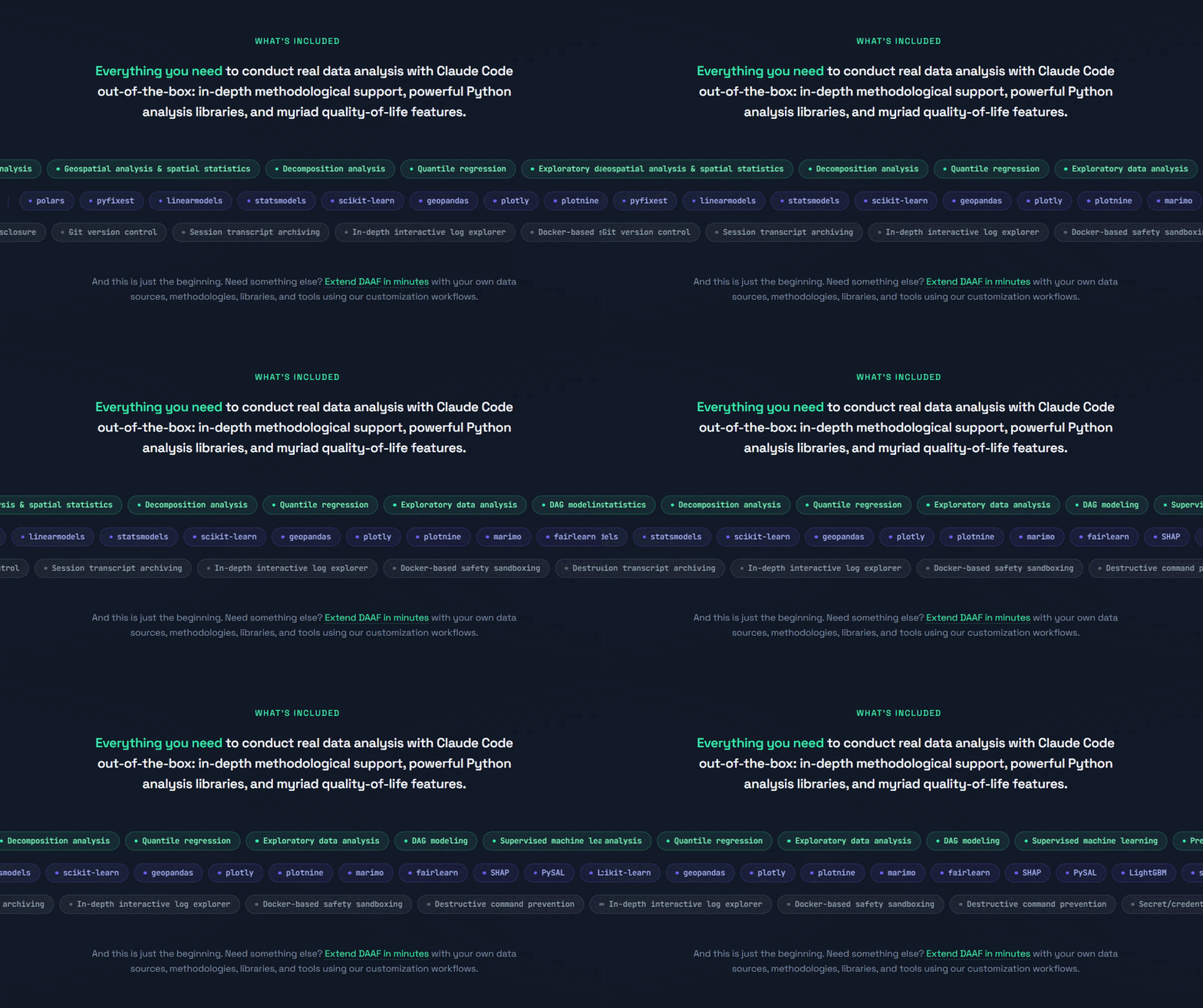
Or fun visuals laying out the many features/capabilities of DAAF like:
Up next on the work docket, for those interested:
An in-depth video tutorial walking people through how to install and use DAAF! I’ve already drafted a really nice onboarding guide for the website here, but the video tutorial will be a nice companion for people who need a little more guidance to get moving.
A broadly accessible explainer video trying to communicate a sort of “Here’s what everyone needs to understand about AI in 2026” -- part video version of this post on a more useful mental model for AI progress, part open-access version of my introductory workshop on using AI for researchers/non-profits/higher ed.
R support in DAAF! Most of the work here is already done, I just need to test the hell out of it. Please let me know if you’re interested!
Open-source model benchmarking for DAAF! Figuring out, basically, what are the cheapest models that can still reliably follow DAAF instructions/context engineering practices/workflows?
That’s all for now. Til next time!
Comments
Nothing yet. Say the first thing.
Sign in to join the conversation.