
WEEKLY HIGHLIGHTS
August 10 - 16
TOP STORY
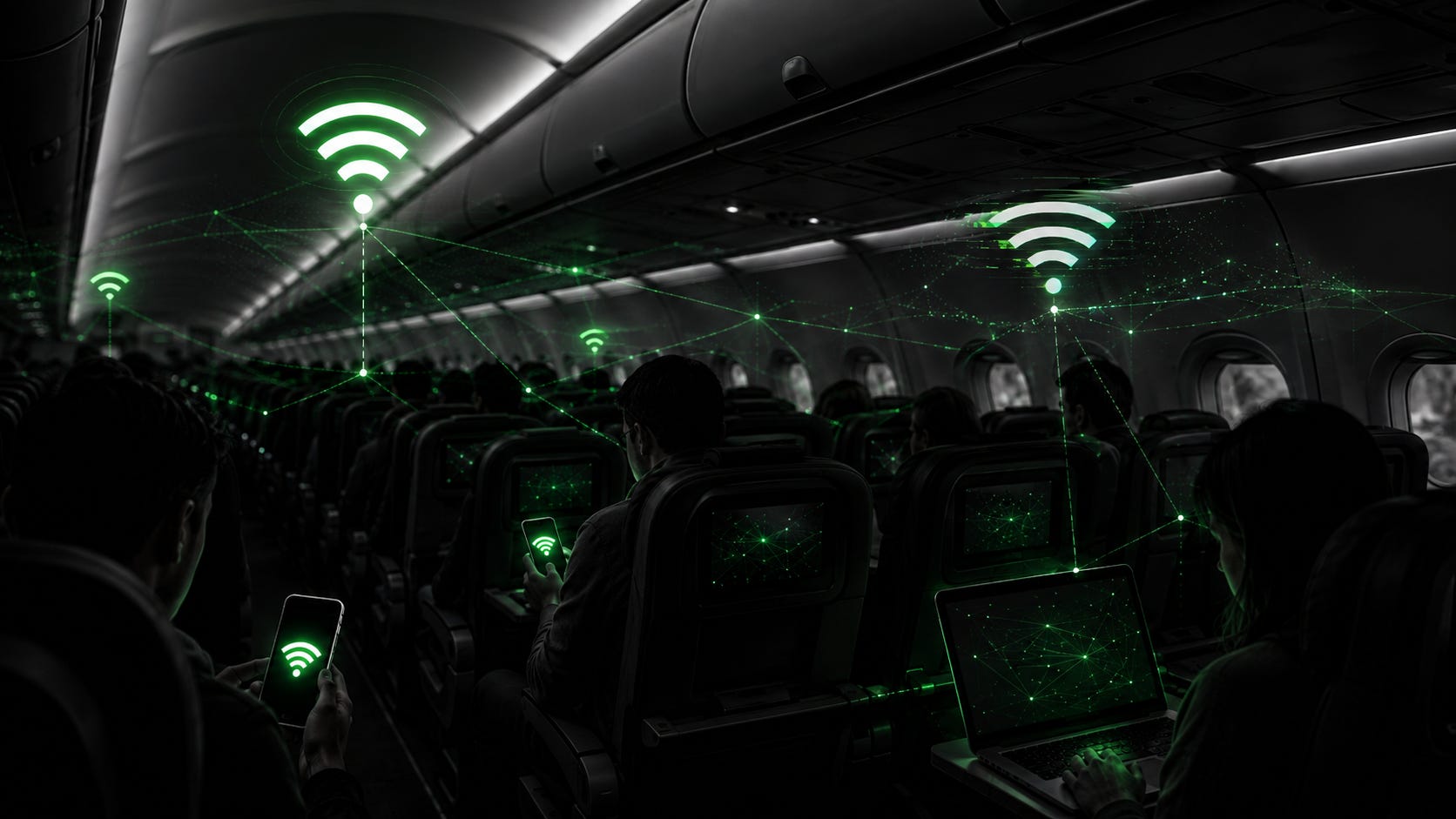
A Delta Air Lines flight from Las Vegas to Atlanta became the center of aviation security attention this week after crew discovered an unauthorized wireless network broadcasting inside the cabin, a day after DEF CON wrapped up in Las Vegas. Cabin Wi-Fi was disabled for roughly 30 minutes while crew investigated, and federal authorities met the aircraft after landing.
The incident bears the hallmarks of an evil twin attack, where a rogue network is designed to look identical to a trusted one. Delta has confirmed no aircraft operating systems were affected and flight safety was never in question, but the episode is a pointed reminder of how much of aviation’s cyber exposure now sits in the passenger cabin rather than the cockpit.
ALSO THIS WEEK
UAE's National Cyber Defenses Intercept a Coordinated Push Against Aviation and Energy Systems
The UAE Cybersecurity Council says it detected and stopped a coordinated, multi-vector cyberattack campaign targeting aviation, energy, and education organizations before the attackers could reach their objectives. The campaign reportedly combined direct network intrusion attempts, account compromise efforts, and targeted phishing.
This is the third major critical-infrastructure campaign publicly disclosed by the UAE in 2026. It reinforces that aviation now sits inside the same national threat model as energy and finance, and that resilience depends heavily on rapid detection and containment.
An Explosive-Laden Drone Near a Cargo Jet Signals a New Category of Airport Threat
Germany’s Leipzig/Halle Airport briefly suspended operations after an unauthorized drone carrying an explosive device was found on the tarmac near a parked cargo aircraft. German officials described it as a new threat scenario, distinct from the surveillance-style drone incursions the country has grown accustomed to responding to.
Investigators believe a technical malfunction, not successful interception, may be the only reason the device did not detonate before it was found. The incident is a pointed reminder that airport detection infrastructure, including counter-drone radar and sensor systems, is itself digital technology with its own potential blind spots.
REGULATORY WATCH
University of California San Diego researchers, working with a collaborator from Oberlin College, presented a paper at USENIX Security showing that brief physical access to an exposed Boeing 737 maintenance port can let a small hardware implant hijack the aircraft’s ARINC 429 data bus, the decades-old link between the flight-management computer and cockpit displays.
The research reframes physical access to an aircraft as a genuine cybersecurity concern rather than purely a badging and access-control matter. The team disclosed the vulnerability to Boeing well ahead of publication, and the findings apply to a bus technology used broadly across commercial aviation, not just the 737.
RESEARCH WATCH
At USENIX Security ‘26, researchers presented a full security analysis of CPDLC, the digital messaging system increasingly used between controllers and aircraft in place of voice radio, finding that it relies on protocol complexity rather than real authentication or encryption. Using inexpensive software-defined radio equipment, the team built a working fake ground station that certified avionics accepted as legitimate in a live test environment.
The findings echo earlier research on CPDLC and ACARS and reinforce a broader pattern across legacy aviation communication protocols: systems designed when radio access itself was the security control now face a very different threat landscape, one where the equipment needed to participate is cheap and widely available.
SKYRAY INSIGHT

This week’s stories cover very different corners of aviation: a cabin Wi-Fi incident, a national cyber defense campaign, a drone found near a cargo jet, and two separate research disclosures involving an aircraft’s physical data bus and its digital communication link to the ground. But they share a common thread. The aviation cyber risk surface has expanded well beyond the aircraft’s flight-critical systems, into passenger connectivity, ground infrastructure, physical perimeter detection, and the unauthenticated wiring and messaging links tying aircraft systems together and to the ground.
Understanding that full surface starts with visibility. Knowing exactly which systems, protocols, physical access points, and configurations exist across a fleet and its supporting infrastructure is the foundation for spotting the kind of anomalies these stories describe, whether that is a rogue network broadcasting where it should not be, unauthenticated data on a bus that should be trusted, or a detection system with a gap large enough for something to slip through unnoticed.
As connected aircraft, legacy protocols, and physical maintenance interfaces continue to coexist across the same operating environment, aviation organizations benefit from continuous, aircraft-level threat visibility paired with the kind of regulatory and threat intelligence context that helps teams prioritize what actually matters.
FROM THE CYVIATION TEAM
Every story in this issue looks, on the surface, like a different kind of problem. A rogue Wi-Fi network is a passenger-facing nuisance. A nation-state style campaign against critical infrastructure is a geopolitical concern. A drone near a cargo plane is a physical security failure. Two research papers about a data bus and a messaging protocol are academic findings.
The lesson worth carrying forward is that aviation cybersecurity does not live in one department, one system, or one type of incident. It spans the cabin, the network, the perimeter, and the physical and digital links connecting aircraft systems to each other and to the ground, often all at once. Building real operational resilience means treating those as connected pieces of the same picture rather than isolated events to be handled by whichever team happens to own that particular system.
Discover how SkyRay delivers aircraft-level cyber intelligence, continuous threat visibility, and actionable insights to help aviation organizations strengthen cybersecurity and operational resilience.

Comments
Nothing yet. Say the first thing.
Sign in to join the conversation.