
The cult of networking has become one of those modern articles of faith that is never questioned, only repeated. Somewhere between the motivational speaker’s seminar and the university careers office, it acquired the status of revealed wisdom. Want admission into an elite university? Network. Want the coveted internship? Network. Want investors, promotions, clients, influence, success, happiness, perhaps even immortality? Network. It is dispensed with the same certainty once reserved for religious commandments, except instead of tablets descending from Mount Sinai, we are handed business cards and told to “build meaningful connections.”
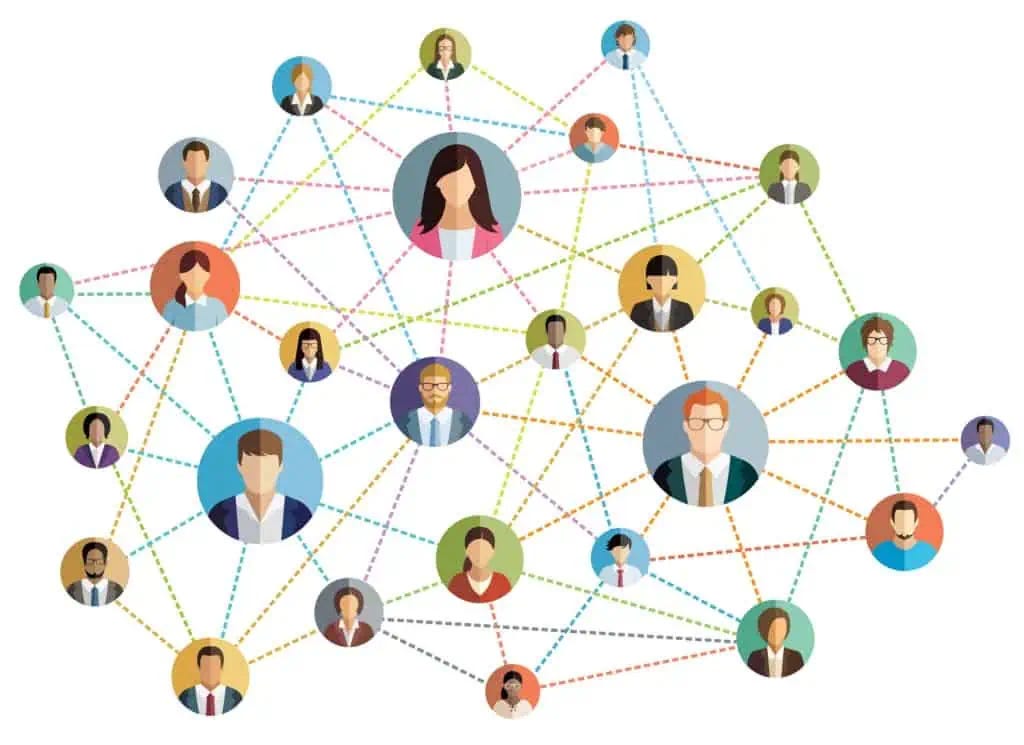
The advice is not without merit. For much of modern history, opportunities travelled at the speed of human acquaintance. Information was scarce, introductions were precious, and one’s future often depended as much upon who was willing to vouch for you as upon what you actually knew. A recommendation from the right professor could alter the trajectory of a career. An invitation to the right dinner could prove more valuable than a year’s salary. Entire industries became little more than exclusive clubs with payroll departments attached.
But every orthodoxy deserves the occasional audit.
The world that made networking indispensable has largely disappeared. Today, a software engineer in Kuala Lumpur can impress a recruiter in New York without leaving home. A writer can build an audience without the need for an editor. A researcher can become known before ever becoming tenured. The old gatekeepers have not vanished, but they no longer enjoy a monopoly over attention.
This raises an awkward question. If everyone can, in principle, reach everyone else, what exactly has become of networking? Has it remained the indispensable currency of success, or has it simply evolved into something we no longer recognise?
Networking succeeded because it solved a problem that once seemed inescapable: the scarcity of information.
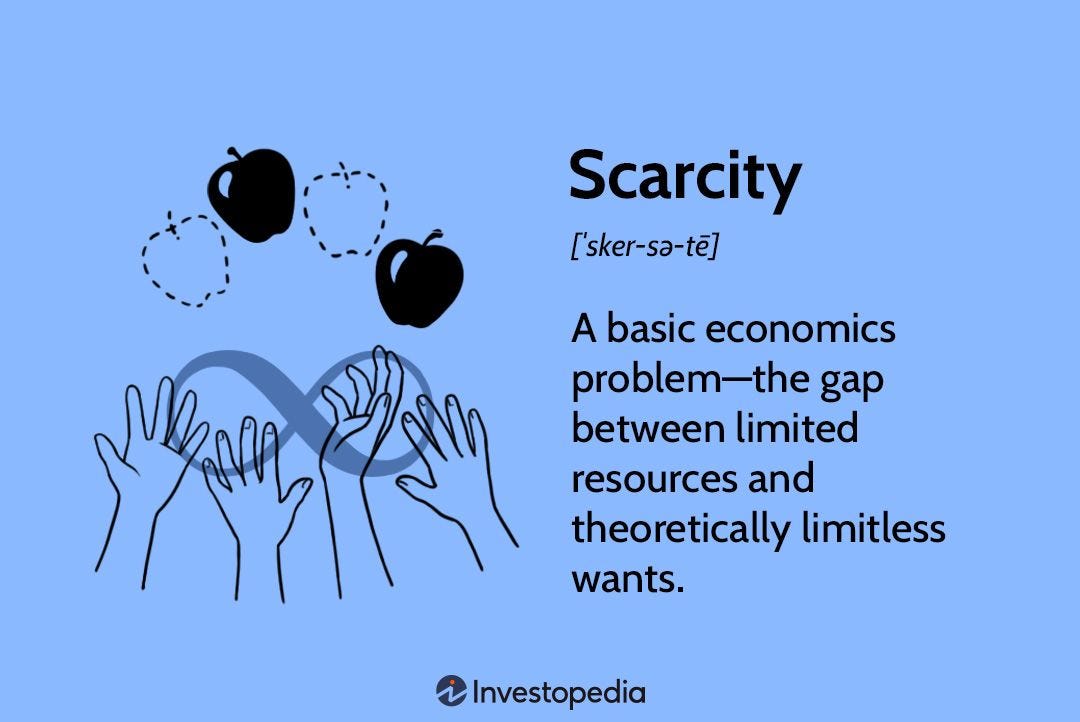
For centuries, opportunities were local. Jobs were filled through recommendations. Investors relied on trusted circles. Universities recruited from familiar institutions. Knowing the right people was not merely advantageous; it was often the only practical way for information and trust to circulate.
This was not necessarily corruption. It was efficiency.
Trust is expensive. Verifying competence is difficult. A recommendation from a respected colleague was an early form of quality control, long before algorithms promised to rank candidates or artificial intelligence claimed it could identify talent. Human beings outsourced judgment to people they already trusted.
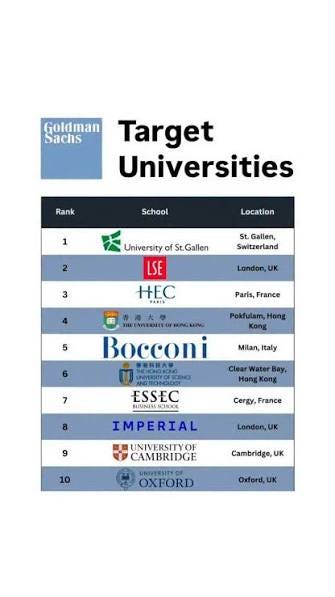
Elite universities understood this perfectly. Their greatest asset was never simply education. It was concentration. They gathered ambitious, capable individuals into the same environment, allowing relationships to develop that would later span government, finance, academia, and industry. The diploma certified competence; the network multiplied opportunity.

The same logic produced the familiar career ladder through investment banking, management consulting, and private equity. These institutions were prized not only for what they taught, but for whom they introduced. Their alumni became each other’s investors, clients, employers, and partners.
Networking, then, was never irrational. It was an elegant solution to a world in which information travelled slowly, and trust travelled even more slowly.
Where networking went astray was in becoming an explanation for almost everything.
Over time, a useful strategy was promoted into a universal law. We came to believe that behind every remarkable career stood an impeccably cultivated contact list. Success, it was said, belonged not to the most capable, but to the best connected.
There is some truth to this. Introductions matter. Mentors matter. Chance encounters occasionally change lives.
But networking is often mistaken for the cause of success when it is merely its amplifier.
Elite institutions illustrate the point. Their graduates succeed partly because they possess valuable networks, but also because they were already unusually capable before they ever met one another. It is remarkably easy to mistake clustering for causation. The network accelerates success; it does not necessarily create it.
The myth persists because it is comforting. It allows the successful to credit belonging as much as ability, and the unsuccessful to blame exclusion rather than circumstance. Yet it begins to falter when confronted with a simple observation.
If networking were truly indispensable, then success without it ought to be exceptionally rare.
Increasingly, it is not.
Something fundamental has changed in the way opportunities are discovered, and that change begins with the internet.
The internet did not kill networking.
It industrialised it.
For most of the twentieth century, networking was constrained by geography and time. A recommendation required a conversation. A mentor required proximity. A recruiter could only hire from the universities they visited, the conferences they attended, or the colleagues they trusted. Networks were small, dense, and expensive to build.
The internet dismantled those constraints almost overnight.
LinkedIn gave every professional a searchable profile. GitHub became a living résumé for software engineers. Substack allowed writers to cultivate readers without editors. YouTube turned lecturers into educators with audiences larger than entire universities. Visibility, once rationed by institutions, became available to anyone willing to publish consistently.

That is an extraordinary democratisation of opportunity. It is also where many observers stop thinking.
The mistake is to assume that more connections necessarily mean better networking.
They do not.
Traditional networks were narrow but deep. One recommendation from a trusted colleague could secure a job because that recommendation carried genuine reputational risk. Your professor did not casually endorse twenty students a week. A venture capitalist did not introduce every entrepreneur they met to their partners. Relationships were few but consequential.
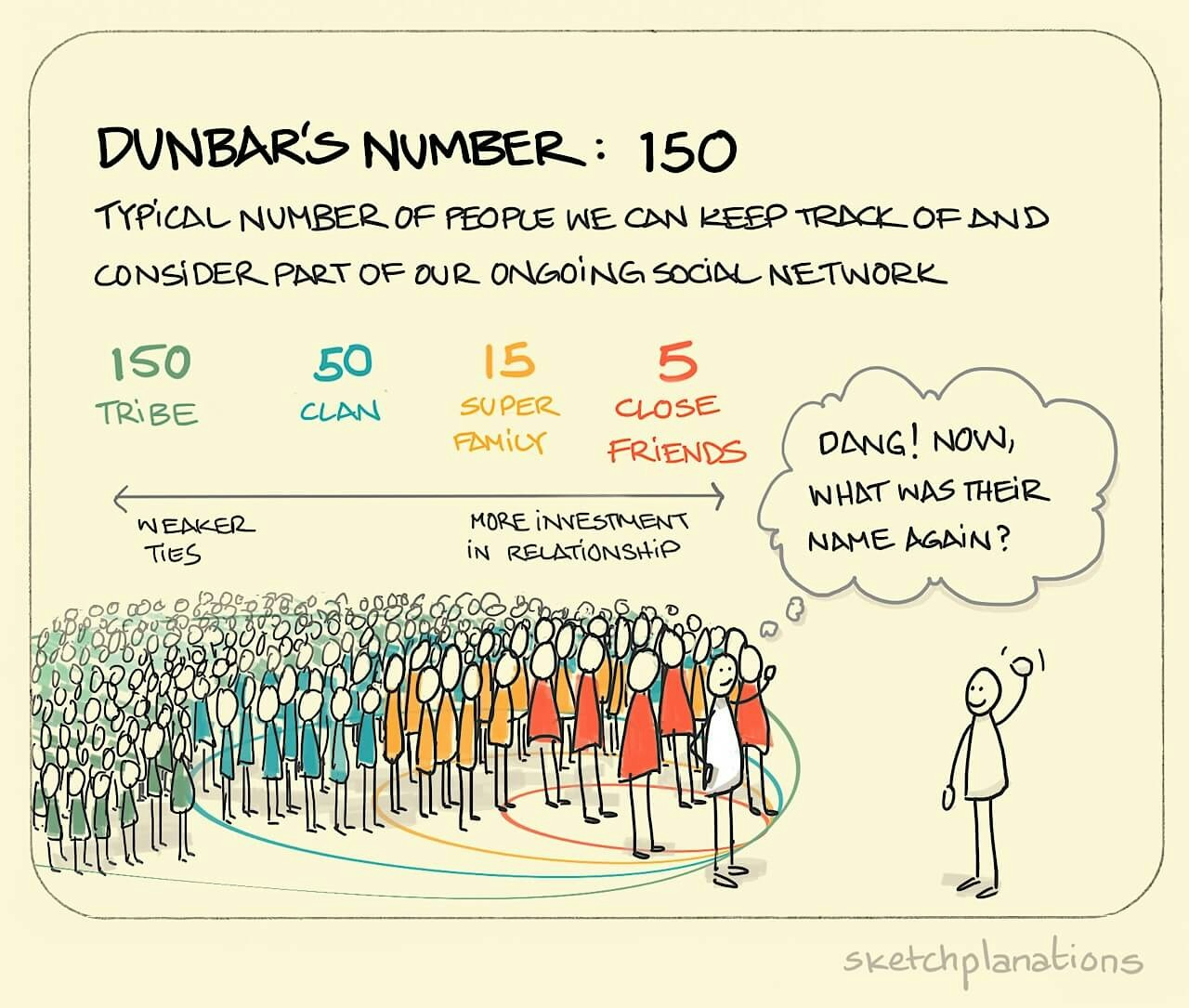
Digital networks invert that equation. We now possess hundreds, sometimes thousands, of professional connections, yet many exist only as names on a screen. The average LinkedIn user has vastly more contacts than the average executive did thirty years ago, but far fewer of those relationships would survive a request for meaningful help. We have gained unprecedented reach while sacrificing a measure of depth.
Networking, in other words, has neither weakened nor strengthened. It has become broader and shallower.
This is neither entirely good nor entirely bad.
Weak ties, as sociologists have long observed, are remarkably effective at spreading information. A distant acquaintance is often more likely to expose us to a new opportunity than our closest friends, precisely because they inhabit different circles. The internet has multiplied these weak ties to an almost unimaginable degree. A single post may reach recruiters, collaborators, investors, and clients who would otherwise never have known we existed.
But when trust becomes essential, the old rules quietly reassert themselves.
A billion-dollar acquisition is unlikely to begin with a LinkedIn connection request. A board appointment is seldom decided by follower count. The higher the stakes, the more valuable strong relationships become.
The internet, then, did not replace traditional networking. It layered a second network on top of it.
One is broad, open, algorithmic, and optimised for discovery.
The other remains narrow, private, and optimised for trust.
The mistake is to confuse one for the other.
Yet this raises an even more interesting question. If discovery is increasingly solved by platforms rather than people, then perhaps networking is no longer the decisive bottleneck in professional success. Perhaps the scarce resource is something else entirely.
It is one of the quieter ironies of our time that while we continue to tell young people to “get out there and network,” many of the defining success stories of the past two decades have been built not on ever-expanding circles of personal connections, but on something that scarcely existed a generation ago: an audience.
This is more than a technological innovation. It is a structural substitution.
Before the internet, there was no practical way for an unknown individual to broadcast their work to thousands, let alone millions, of people. If you wished to be discovered, you first had to be introduced. Visibility was largely rented from institutions, publishers, universities, television networks, newspapers, employers, or borrowed from someone already influential. Networking was indispensable because there was no viable alternative.
The internet changed that equation.
Today, writers build readerships before they find publishers. Programmers establish reputations through open-source contributions before they attend an interview. Designers attract clients through online portfolios before ever meeting them. Educators teach audiences larger than many universities without stepping inside a lecture hall. In each case, the audience performs many of the functions that networking once monopolised.
This is not networking in its traditional sense. It is something different.
Networking asks, “Who do you know?”
An audience answers, “Who knows you?”
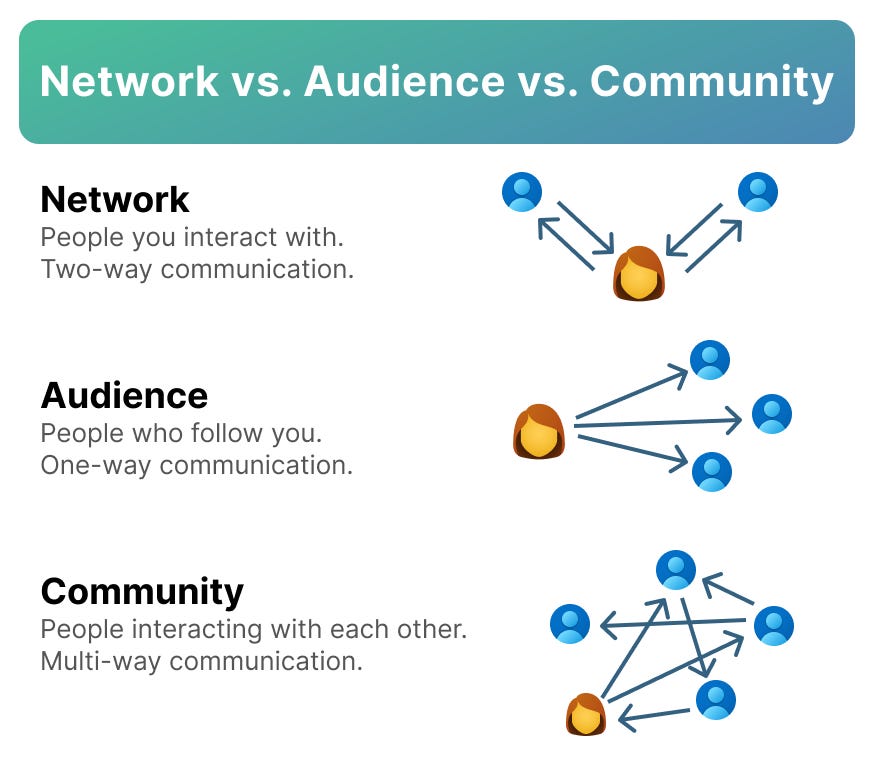
That distinction may appear subtle, but it changes the direction of opportunity entirely. Traditional networking required individuals to seek out influential people, one relationship at a time. An audience reverses the flow. Recruiters, investors, collaborators, clients, and employers increasingly come to the individual because they have already observed evidence of competence in public.
Consider the open-source software movement. Some of the world’s most important software projects were not born inside elite corporations or introduced through prestigious professional circles. They emerged from publicly visible contributions made by people whose work could be evaluated directly by anyone willing to inspect the code. Reputation was earned through demonstrable ability rather than inherited through institutional affiliation.
The same pattern is increasingly visible across media, entrepreneurship, education, and even scientific research. A compelling essay, a useful product, an insightful video, or a widely shared research preprint can now function as a global audition. In another era, each would have required the approval of editors, publishers, conference organisers, or hiring committees before reaching an audience. Today, distribution precedes permission.
This is why the old networking orthodoxy feels increasingly incomplete.
It assumes that opportunities originate within networks and flow outward through personal relationships. Increasingly, the reverse is true. Opportunities emerge from public visibility, and relationships form afterwards. The network becomes a consequence of success rather than its prerequisite.
That does not mean networking has become obsolete. Strong relationships remain indispensable wherever trust carries high stakes. But for millions of professionals, entrepreneurs, creators, and researchers, the audience has become a viable substitute for many of networking’s traditional functions.
What once required knowing the right people can now often begin with being known by the right people.
At this point, it would be tempting to declare the matter settled: that networking has been democratised, decentralised, and ultimately dethroned by the internet. It would make for a satisfying conclusion, and like most satisfying conclusions, it would be only partially true.
For while the barriers to visibility have fallen, the barriers to power have proven considerably more stubborn.
There remains, in the upper reaches of finance, politics, and corporate life, a persistent truth that no amount of digital enthusiasm has fully erased: trust still prefers proximity. Large sums of capital are not typically allocated on the basis of online engagement metrics. Boardroom decisions are not usually preceded by viral threads. And no serious institution, when faced with genuine risk, relies exclusively on public visibility as a substitute for private judgment.

In these environments, networking retains its older form with surprising fidelity. The dinner still matters. The introduction still carries weight. The recommendation still functions as a form of currency that has not yet been replaced by anything more efficient. Elite universities continue to act as sorting mechanisms, not merely of talent but of trust. The same names recur in different combinations across consulting firms, investment banks, venture capital funds, and government advisory boards, not because the system is static, but because it is cautious.
There is a reason for this inertia, and it is not merely conservatism. High-stakes environments are fundamentally allergic to uncertainty. When outcomes are expensive, and failures are visible, institutions tend to rely on signals that are difficult to fake. A polished online presence may indicate competence, but a long-standing personal endorsement still carries a different kind of assurance, one built not on visibility, but on familiarity.
In this sense, the old networking structures have not vanished. They have narrowed their domain.
What has changed is not that elite networks no longer matter, but that they matter less universally. They are no longer the sole route to success, but remain one of the more reliable routes to certain kinds of success, particularly those involving large organisations, regulated industries, or the management of other people’s money.
The result is a strange dual system.
On one side, a sprawling public marketplace of reputation, where individuals build careers through open contribution, audience-building, and direct engagement. On the other, a quieter, more traditional architecture of trust, where introductions, affiliations, and institutional pedigree still do much of the heavy lifting.
Most people, whether they realise it or not, are now navigating both simultaneously.
And so the question becomes less whether networking matters, and more which version of networking one is speaking about. The intimate, closed-loop system of elite circulation has not disappeared—but neither does it define the entire landscape anymore. It has become one ecosystem among several, rather than the ecosystem itself.
If there is a single error that runs through most discussions of networking, it is the assumption that it refers to a fixed set of practices, handshakes in corridors, polite emails, remembered introductions, the careful cultivation of acquaintances who might one day prove useful. In reality, networking has never been a single thing. It has always been a mechanism for solving a simple problem: how do opportunities find people, and how do people find opportunities?
What has changed, in the last two decades, is not the existence of that problem, but the infrastructure through which it is solved.
In the pre-digital world, the answer was necessarily interpersonal. Information travelled slowly, reputations were local, and access was mediated by geography and institution. To be “well-networked” meant to be close, physically and socially, to centres of power. Proximity was not just advantageous; it was structural.

Today, proximity has been partially replaced by permeability.
The internet has not abolished networks so much as flattened them into something more continuous. Visibility is no longer a by-product of belonging; it is a condition that can be independently produced. A person may now acquire influence without first acquiring permission. They may build reputation before entering any formal institution that would traditionally certify it.
This subtle inversion carries a significant implication: networking is no longer primarily about access to people. It is increasingly about access to attention.
And attention, unlike geography or pedigree, does not obey old hierarchies particularly well.
Yet even here, caution is warranted. It would be naïve to assume that attention is evenly distributed, or that digital platforms have produced a frictionless meritocracy. They have not. They have merely replaced one set of filters with another: algorithms instead of admissions committees, virality instead of interviews, engagement instead of endorsements.
In this environment, the most effective form of networking is often not direct solicitation, but sustained visibility. One is less likely to succeed by asking for introductions than by becoming someone others feel compelled to introduce themselves to.
This is a subtle but profound shift. It suggests that the modern professional question is no longer simply “Who do I know?” but something closer to: “What is there about me that makes me discoverable, legible, and worth sharing?”
If the old world rewarded proximity, the new world rewards signal.
Which leads to an uncomfortable speculation: perhaps the future of networking will not look like networking at all. Perhaps it will resemble something closer to an open market of reputations, where individuals continuously broadcast evidence of competence, and institutions continuously scan for signals of value. In such a system, introductions become less necessary, not because relationships cease to matter, but because they are increasingly formed after discovery rather than before it.
If that is correct, then the traditional rituals of networking, the conferences, the forced conversations, the carefully exchanged business cards, may not disappear, but they may gradually lose their centrality. Not because they are useless, but because they are no longer indispensable.
And so we arrive at a quiet reversal of the old orthodoxy.
It was once said that success depends on who you know. It may be closer to the truth now to say that success depends on whether anyone knows you exist—and whether, upon discovering you, they find anything worth remembering.
There is a peculiar comfort in believing that success is governed by a stable set of rules. If those rules privilege connections, then one learns to cultivate them. If they privilege pedigree, one seeks admission. If they privilege proximity, one moves closer to the centre of power. In each case, the world remains legible, even if it is not especially fair.
For much of the twentieth century, networking appeared to offer precisely such a rule. It suggested that behind the apparent randomness of success lay a discernible architecture of relationships. Find the right university, the right mentor, the right employer, the right circle, and opportunities would eventually follow. It was never a perfect system, but it was at least an understandable one.
The internet has disrupted that architecture. It has not abolished relationships, but it has diminished their monopoly over discovery. Audiences now compete with networks. Public reputation competes with private introductions. Visibility increasingly precedes endorsement rather than the other way around.
It is tempting to see this as the triumph of merit over privilege, a world in which talent finally escapes the confines of elite institutions and closed professional circles.
History suggests we should resist such optimism.
Power has an irritating habit of adapting.
Every generation believes it has discovered the final key to opportunity. One century it was noble birth. Another, university pedigree. Then came professional networks, prestigious employers, and carefully cultivated mentors. Today, we celebrate audiences, personal brands, follower counts, algorithmic reach, and public visibility.
The currency changes.
The marketplace does not.
As soon as one barrier becomes widely understood, another quietly emerges. If elite universities become less decisive, attention becomes scarce. If publishing is democratised, discoverability becomes the new bottleneck. If everyone can build a personal brand, authenticity itself becomes a commodity. Every technological revolution that widens access also creates new competitions, new hierarchies, and new gatekeepers. Human beings appear remarkably unwilling to tolerate a world in which influence is evenly distributed.
Perhaps this should not surprise us. Scarcity has always been the raw material from which status is manufactured. When information was scarce, those with information held power. When access was scarce, networks became valuable. Now that visibility is abundant, attention has become the scarce resource, and with scarcity comes a fresh contest for influence.
This is why the debate over whether networking is “dead” ultimately misses the point.
Networking was never the objective. It was simply one mechanism by which societies allocated opportunity. The audience has become another. Tomorrow there will almost certainly be a third.
The playbook changes because the game changes.
The real lesson, then, is not to master today’s fashionable strategy as though it were eternal. It is to recognise that every system of advantage eventually becomes crowded, every shortcut becomes a highway, and every open gate eventually acquires a gatekeeper.
That is not a flaw in networking.
It is the nature of power itself.
Comments
Nothing yet. Say the first thing.
Sign in to join the conversation.