
In November 2025, Mohammed bin Salman dined at the White House, and the President, seated beside him, told the room that the two countries had always been on the same side of every issue. It was a generous reading of the historical record. Seven years earlier the same crown prince had, in the assessment of American intelligence, approved the operation that killed and dismembered a journalist inside a Saudi consulate in Istanbul. In the years between, his government had prosecuted a war in Yemen that produced mass starvation and a cholera outbreak of a scale the modern world had nearly forgotten was possible. None of it registered as an obstacle. Two months after the dinner the administration named Saudi Arabia a Major Non-NATO Ally, the twentieth country to hold the status, and the arms relationship was being described, without embarrassment, as the largest in the country’s history.
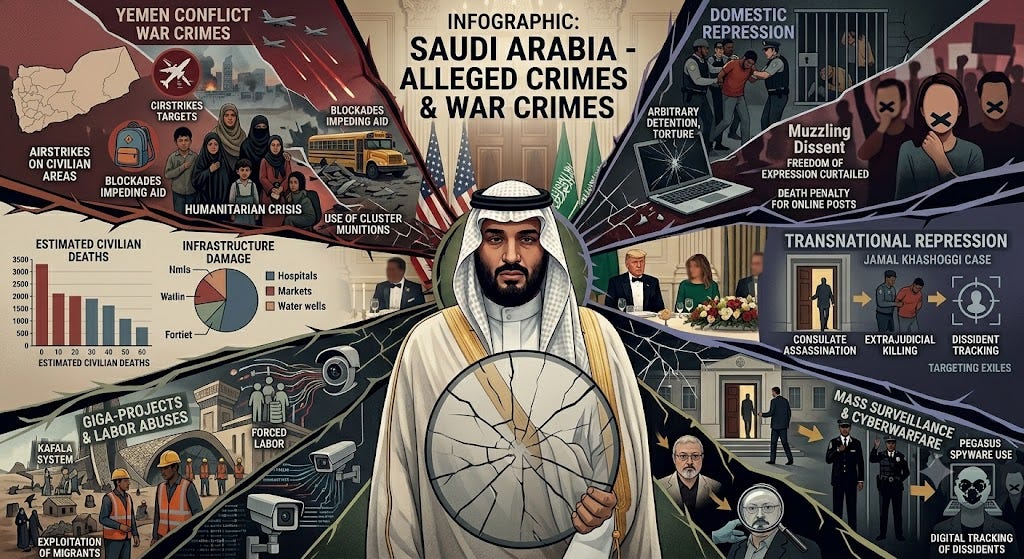
Now hold that scene beside the other one, the one running constantly in the background of Western political life. A country sits at the centre of the threat maps, the think-tank war games, the bipartisan consensus that has survived three changes of American administration and every realignment of European politics. Its name is spoken the way Soviet was once spoken. It is the pacing challenge, the systemic rival, the authoritarian shadow falling across the century. That country is China, and the interesting question is not whether the alarm is justified. The interesting question is why the alarm sounds for China and stays quiet for Riyadh, given that one of the two has not started a war in over forty years, and it is not the one getting the arms deal.
Let me give the objection its full weight before I take it apart, because the objection is true and I have no interest in pretending otherwise.
China’s domestic record is monstrous in places. Beginning in 2017, the state interned something on the order of a million Uyghurs and other Muslims in Xinjiang, in camps it preferred to call vocational centres, and subjected the wider population to forced sterilisation, family separation, and a surveillance apparatus of a thoroughness that would have made the Stasi weep with envy. Tibet has spent decades under a slower version of the same machine. Hong Kong’s promised autonomy was extinguished on a published timetable. None of this is a Western invention; the satellite imagery, the leaked police files, and the survivor testimony are real, and anyone reaching for a “the camps were just job training” line should be shown the door.
We need to talk about China...
·
December 7, 2024
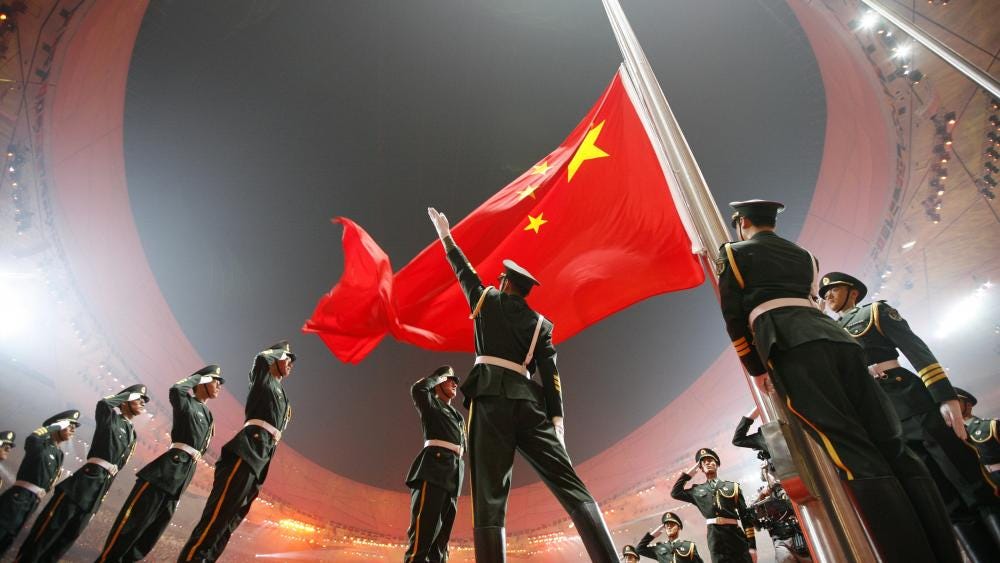
Laissons la Chine dormir, car quand elle se réveillera, le monde tremblera (Let China Sleep, for when she wakes she will shake the world) famously attributed to Napoleon Bonaparte
So when I argue that anti-China sentiment is about power rather than morality, I am not arguing that China is innocent. I am arguing something more uncomfortable: that its guilt is largely beside the point. The West did not arrive at its present posture by weighing the Uyghur against the Yemeni and finding the scales tipped one way. It arrived there by a different route entirely, and the moral vocabulary was applied afterwards, like paint over a structure that was already built.
Comments
Nothing yet. Say the first thing.
Sign in to join the conversation.