
Happy Friday.
To kick off the weekend I wanted to share some positive developments taking place on and for this magnificent planet. These success stories demonstrate nature’s resiliency and humanity’s potential to be a restorative force.
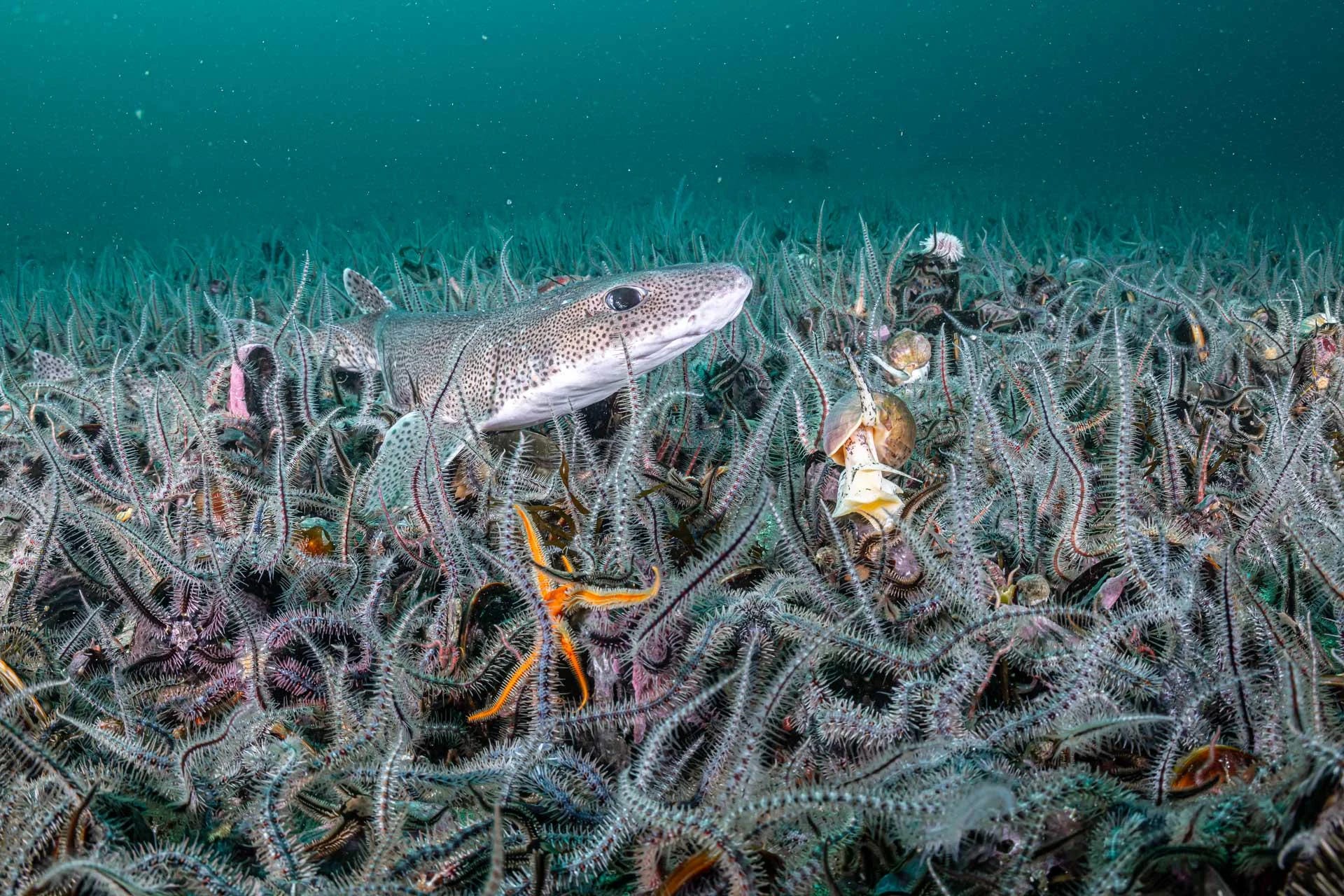
Scotland’s South Arran Marine Protected Area is teeming with life again, ten years after bottom trawling was restricted across much of the zone.
Scientists pulled up just 100 liters of sediment and counted more than 1,500 organisms representing over 150 species — spoon worms, tower snails, and tiny “gardeners of the seabed” that quietly cycle nutrients and lock carbon into the ocean floor. Researchers found three times more organisms and twice the species diversity compared to nearby unprotected waters, all without any active restoration.
The lesson is beautifully simple: lift the nets, wait, and life returns. For Europe’s battered seafloors — and for marine recovery efforts worldwide — South Arran is a quiet, powerful proof of concept.
Dublin Bay oyster restoration is underway after native oyster reefs disappeared from the Irish coastline more than two centuries ago. Scientists and conservation groups have reintroduced more than 18,000 European flat oysters into Dublin Bay to help rebuild marine ecosystems that once thrived there. Scientists and conservation groups have reintroduced thousands of native oysters to the bay, aiming to rebuild marine biodiversity and improve water quality along Ireland’s coast.
Unlike commercial oyster farms, these shellfish are not intended for food. Their role is ecological. The goal is for the oysters to reproduce and gradually rebuild the natural reef structures that historically existed across the bay. Oysters provide important water filtration and cleaning.
Shanghai’s waste overhaul has pushed industrial recycling to 98%, meaning almost nothing from the city’s factories ends up in a landfill anymore.
Six years in, companies have built whole businesses around the idea that scrap is just raw material in disguise — one Jinshan firm now processes 130,000 tons of aluminum cuttings a year, while another turns used cooking oil into bioplastic for take-out containers sold worldwide. At the neighborhood level, a Hongkou pilot composts 220 pounds of kitchen scraps daily into fertilizer for the gardens right outside residents’ doors.
For a city of 25 million, it’s a hopeful glimpse of what circular living can look like when waste is treated as treasure rather than trash.

To help us build even more momentum please jump onto this special POP UP OFFER of 75% DISCOUNT for LIFE! This offer is for 36 hours only.
Paid subscribers are what make it possible for me to do this work and offer it to everyone. Thank you so much!
Mangrove forests are coming back — and the scale of the recovery is genuinely meaningful. Since 2010, the world has been gaining more mangrove coverage than it loses each year, reversing decades of rapid destruction. These forests do extraordinary work: they absorb carbon at rates that dwarf most land-based forests and shield more than 15 million people annually from storm flooding. Community-led restoration in countries like Senegal and the Philippines has been central to the turnaround.
It’s a reminder that ecosystems under pressure can recover quickly when protection, funding, and local knowledge work together.
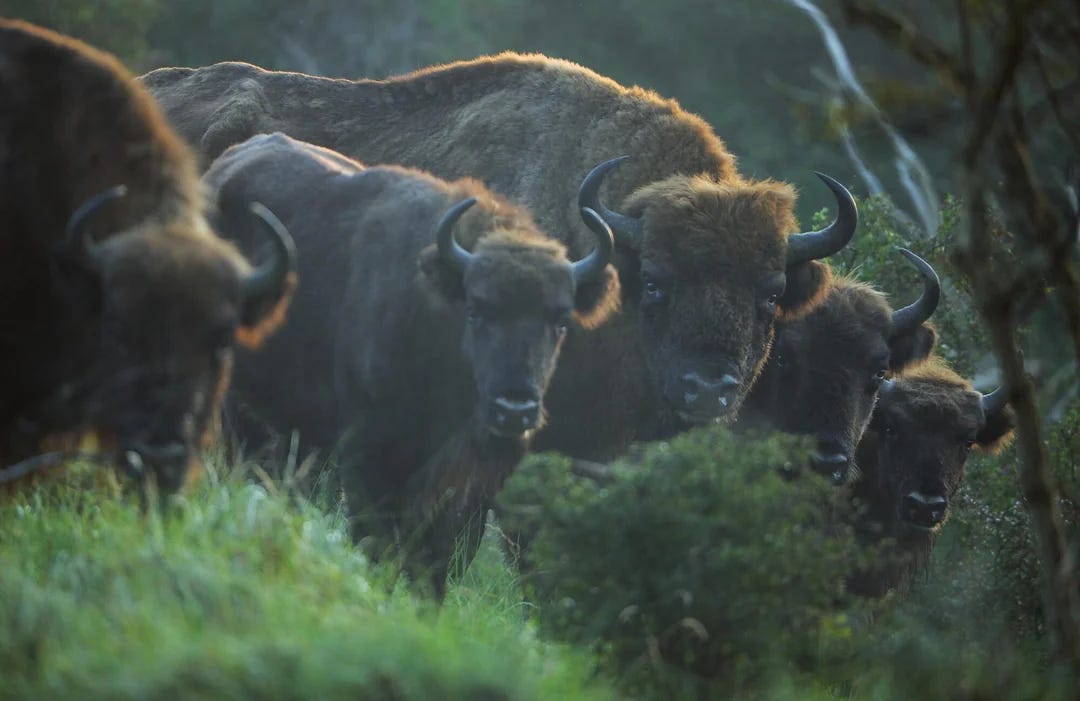
Several European bison calves have been born in the wild in Romania’s Țarcu Mountains, offering fresh evidence that one of Europe’s most ambitious wildlife rewilding efforts is beginning to establish a self-sustaining population.
The calves were recently captured on camera by WWF-Romania‘s field rangers during routine monitoring of the free-roaming herds.
“The birth of calves in the wild is one of the strongest indicators that the reintroduction is succeeding,” says Adrian Grancea, Project Manager, WWF-Romania. “It tells us the animals have adapted to their environment and that the conditions are right for the next generation to grow up in the wild.”
The European bison (Bison bonasus), Europe’s largest terrestrial mammal, disappeared from Romania more than 200 years ago following centuries of hunting and habitat loss. By the early twentieth century, the species had become extinct in the wild across Europe, surviving only in captivity.
Its return to the Southwestern Carpathians has been the result of more than a decade of coordinated conservation work. Since 2014, WWF-Romania has worked alongside Rewilding Europe, local authorities, scientists and local communities to re-establish free-ranging bison in the Țarcu Mountains. The program has combined carefully planned releases with long-term monitoring, habitat management, scientific research and community engagement to ensure both the animals and local people can thrive together.
I love doing this work and delivering solid information to all of you. If this work matters to you, please support it at the highest level you can. Every subscriber, free or paid, helps this information reach more people. Every paid subscriber is the reason I can keep it free. I have no institutional backing, no corporate sponsors, and no one telling me what I can and cannot publish. I am accountable only to you. As a thank you I am currently offering a very special POP UP 75% Discount for the next 36 hours.
And, before you go—hit the ❤️ like button and re-stack this edition right now. Every time you share, you’re getting this information to someone who may be caught in a media silo propaganda bubble. That’s part of creating a world that works better for all beings. Thank you!
Way to go Earth! May you always heal and thrive.
Cylvia
Comments
Nothing yet. Say the first thing.
Sign in to join the conversation.