
Today, working from home, in hotels, a cafe, and having remote employees is normal.
We answer emails from airports. Review client information from hotel rooms. Join meetings from coffee shops. Access business systems from home offices.
The flexibility is great.
The risk is that cybercriminals know we’re doing it.
Most people assume that if a Wi-Fi network requires a password, it’s secure. Unfortunately, that’s not always true. Public Wi-Fi networks are common targets for cybercriminals looking to intercept data, steal credentials, or monitor activity.
If your business handles sensitive client information—as most insurance agencies do—that risk becomes even more important.
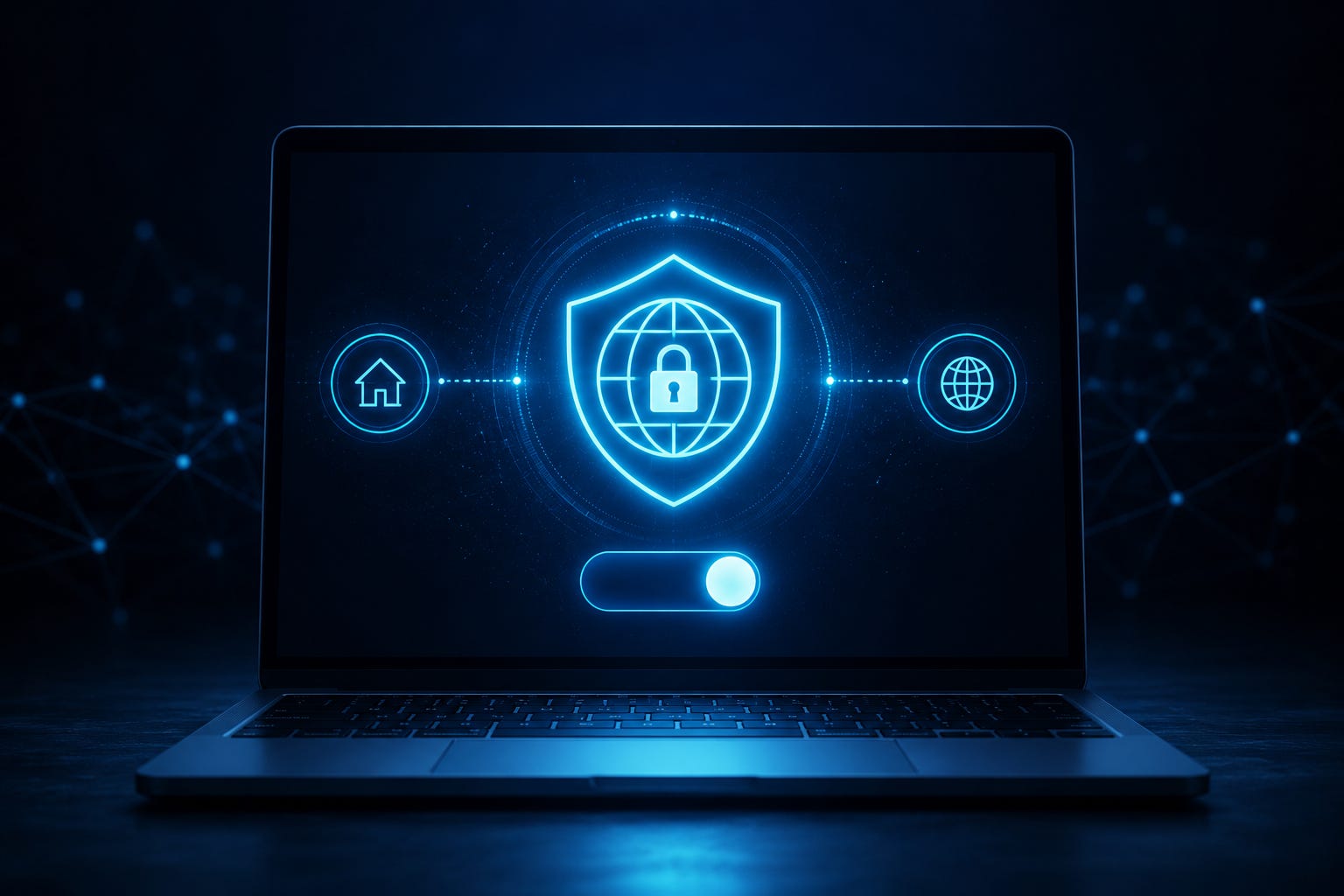
A VPN (Virtual Private Network) creates a secure, encrypted tunnel between your device and the internet.
A VPN helps protect:
Client information
Login credentials
Business emails
Financial data
Internal company systems
Cloud applications
For insurance agencies, financial professionals, and other regulated businesses, protecting this information is part of maintaining trust and meeting compliance expectations.
A VPN is important, but it’s not a complete cybersecurity solution.
Cybersecurity works best when multiple layers work together:
Email protection
Multi-Factor Authentication (MFA)
Endpoint Protection
Employee Awareness Training
You wouldn’t protect your office building with only a lock on the front door.
Your cybersecurity should work the same way.
If you’re missing essential cybersecurity protections such as a VPN, you’re leaving gaps that put your business and data at risk. Now is the time to strengthen your defenses.
The first step to a more secure agency is to know where you stand today and how to fix your security gaps. Get a free assessment here to find out.
-Daniel
A Cyber Assessment identifies gaps before they turn into incidents. Get one with our experts. We make it simple for you.
Comments
Nothing yet. Say the first thing.
Sign in to join the conversation.