
Why not Troy Jackson for Senate? A new poll finds Americans think the economy is bad and getting worse. The case for nationalizing AI. Yet more evidence for economic populism. Rural initiatives that work to reduce ideological polarization. And, friend of the Center, Joan Williams, on winning working-class voters.
Plus, it’s forever 2016: an interview with Tad Devine on Bernie’s legacy (and how the Democrats screwed him).
Below you’ll find a range of news and views that concern working-class politics today. Many are written by research associates and friends of the Center for Working-Class Politics.
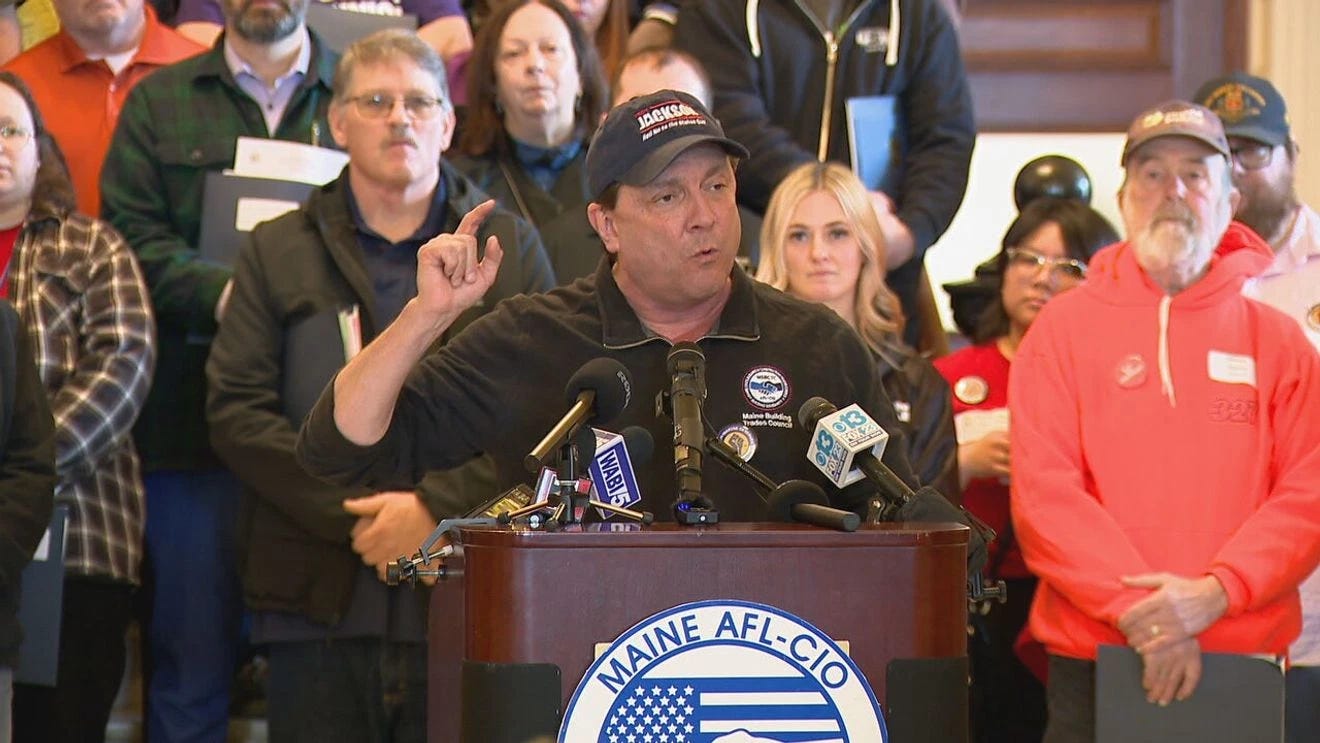
Platner’s out. Luckily there is another Pine Tree State populist who can appeal to rural working-class voters, Troy Jackson:
Jackson was born to a 16-year-old mother in the northern Maine town of Fort Kent. He is a fifth-generation logger, union member and former state legislator. As a teenager himself, he went to work in the woods, and by 1998 he led a union logging blockade to prevent Canadian scabs from working Maine jobs.
In other words, he was on the frontlines as globalization devastated rural communities like his. He’s spent his life in the tradition of the New Deal, as one of those rare labor Democrats who have kept that spirit alive.
A lot of moderate Democrats smell blood in the water. They are taking the opportunity indict Platner’s populist politics along with his personal character. That’s a mistake. If Democrats nominate a buttoned-up business-class liberal they’ll be in trouble.
Economic populism is still the best path forward, and Jackson is a credible populist with a blue-collar background, and a lot of practice winning over rural voters in the heart of Trump country.
A new Harris/Guardian poll finds that 95% of Americans think we’re in the midst of an economic crisis:
Despite stable employment and record-high stock markets, more Americans believe the overall economy is getting worse (57%) than in February (46%), when the poll was last conducted and before the war in the Middle East sent gas prices soaring. Fewer people today also believe the economy is getting better (16%, compared with 28% in February) and more say their financial security has gotten worse. […] Two-thirds of Americans – including 49% of Republicans – said they have little faith that the federal government will improve the cost-of-living crisis they face.
It’s a long shot but not crazy, nationalizing AI firms is firmly in the public interest:
In the press, the so-called AI race is portrayed as a geopolitical competition whereby the Unites States and China compete for who can invest the most, learn the fastest, and build the best models. But this too is a myth. With the partial exception of China, the AI race is a competition between private firms, not nation-states. As such, the spoils do not redound to the citizenry, or the popular classes, but only to the oligarchy. This is especially the case in the United States, where the state has directly invested in the technology and secured a prime business climate for AI expansion through a biased regulatory environment and enormous tax incentives. Meanwhile, the only benefit to the popular classes seems to be the privilege we now enjoy of paying a small sum to slowly cook our brains with vertical video slop.
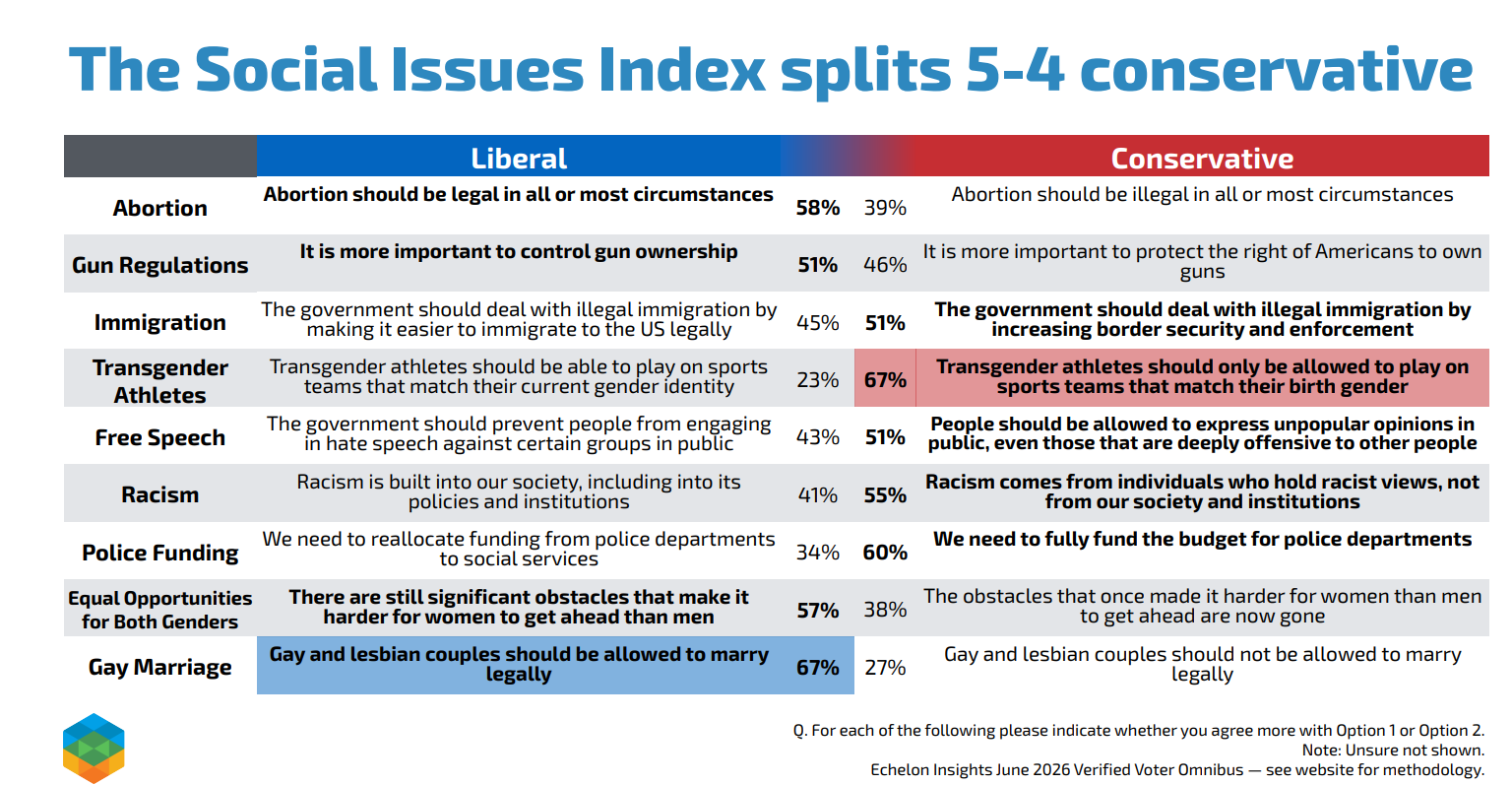
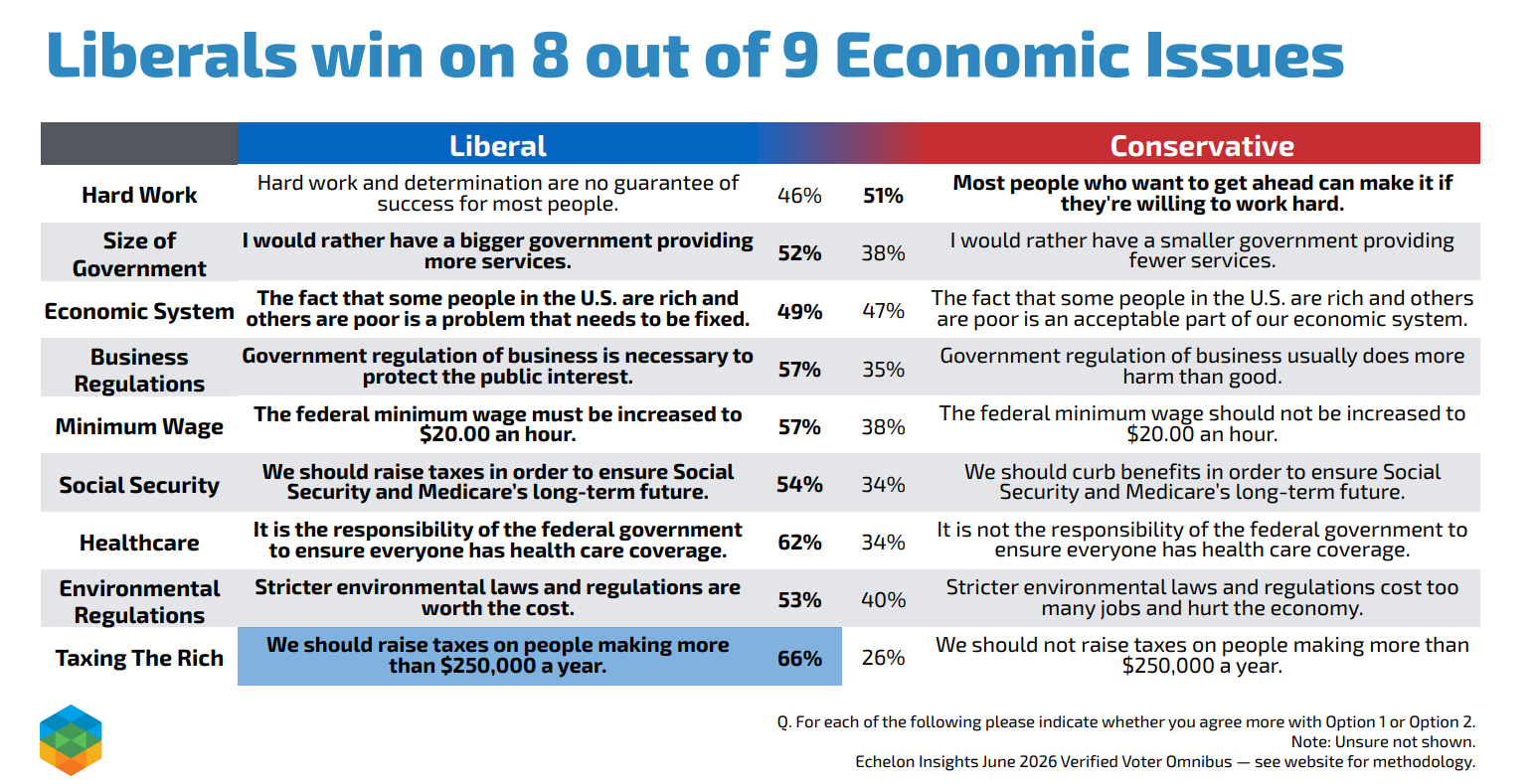
A new study from Eschelon Insights says, again, what few Democratic Party factionalists are willing to admit: “Our traditional four quadrants confirm a 2026 electorate that is down the middle on cultural issues and left on economic issues.”
On the issues:
The Rural Urban Bridge Initiative (RUBI) has worked to bring rural working-class people together through its Community Works program, an effort aimed at rebuilding some social trust. A new report finds they’ve made some impressive progress:
The main takeaway: Community Works reduces the intensity of partisan polarization. While the study period (2023–25) saw a shift toward the Republican Party in many rural communities, particularly in the rural Georgia counties surveyed, areas where Community Works operated changed their attitudes much more gradually, bucking the trend of hyperpolarization that makes it so hard for progressive voices to break through in rural America. Why? Community Works acted as a moderating force between everyday people and partisan narratives at the national level.
Longtime Democratic Party strategist Tad Devine on his new book:
No posts
Comments
Nothing yet. Say the first thing.
Sign in to join the conversation.