
Turtles have always fascinated me with their slow, steady movement and ancient appearance. Considering how frantic and fast-paced our daily lives can be, the allure of this slow-moving creature is probably unsurprising. In this article I thought I would share a few examples of how turtles appear in Japanese folklore, culture and art. I will introduce you to a very ancient turtle, an underwater folktale, a turtle ghost, some yokai turtles, and examples of turtles in Japanese art. I hope you enjoy it!
Turtle Symbolism
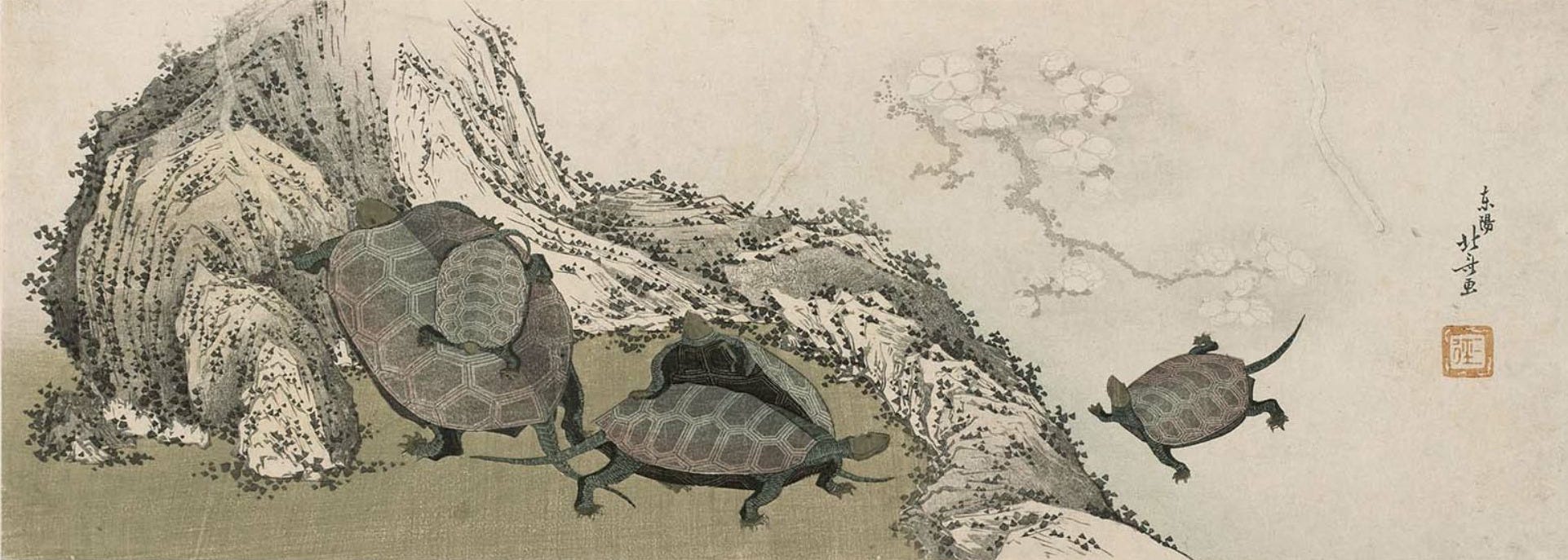
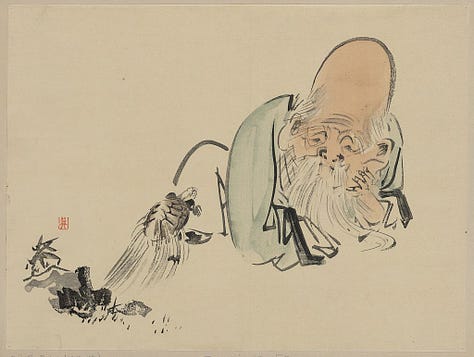
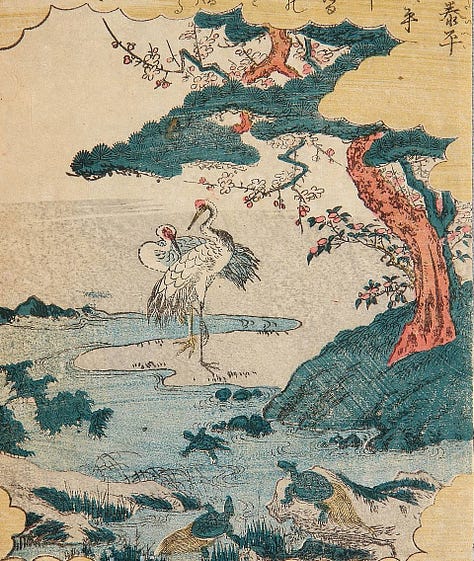
In Japan, turtles (亀, kame) represent longevity, wisdom, good fortune and protection. To understand why this is the case, I will need to introduce you to a creature known as minogame, a turtle believed to live for up to 10,000 years. Minogame (蓑亀) can be translated as ‘straw-raincoat-turtle’ and is named for the turtle’s long ‘tail’ that trails after it like a farmer’s straw raincoat. This ‘tail’ is actually created by seaweed or algae that attaches to the turtle’s shell over time. This phenomenon is more likely to occur as the turtle gets older, which is why the virtues of longevity and wisdom came to be associated with this fantastic creature, and by extension to all turtles.
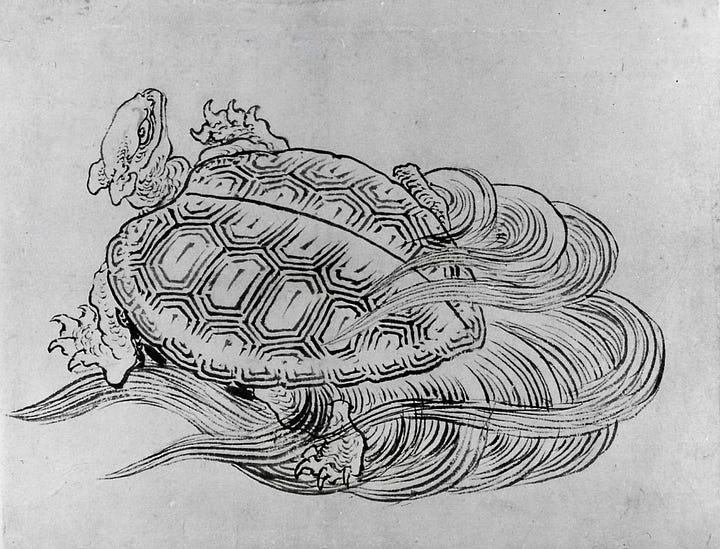
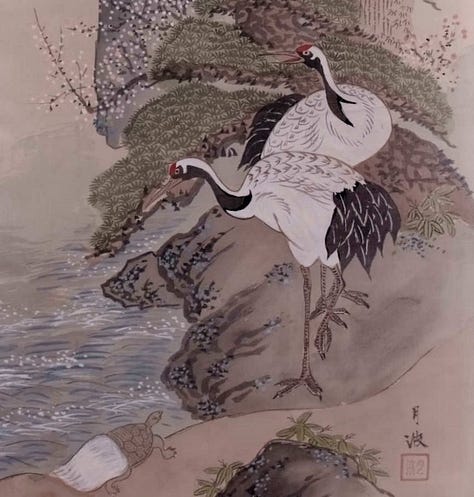
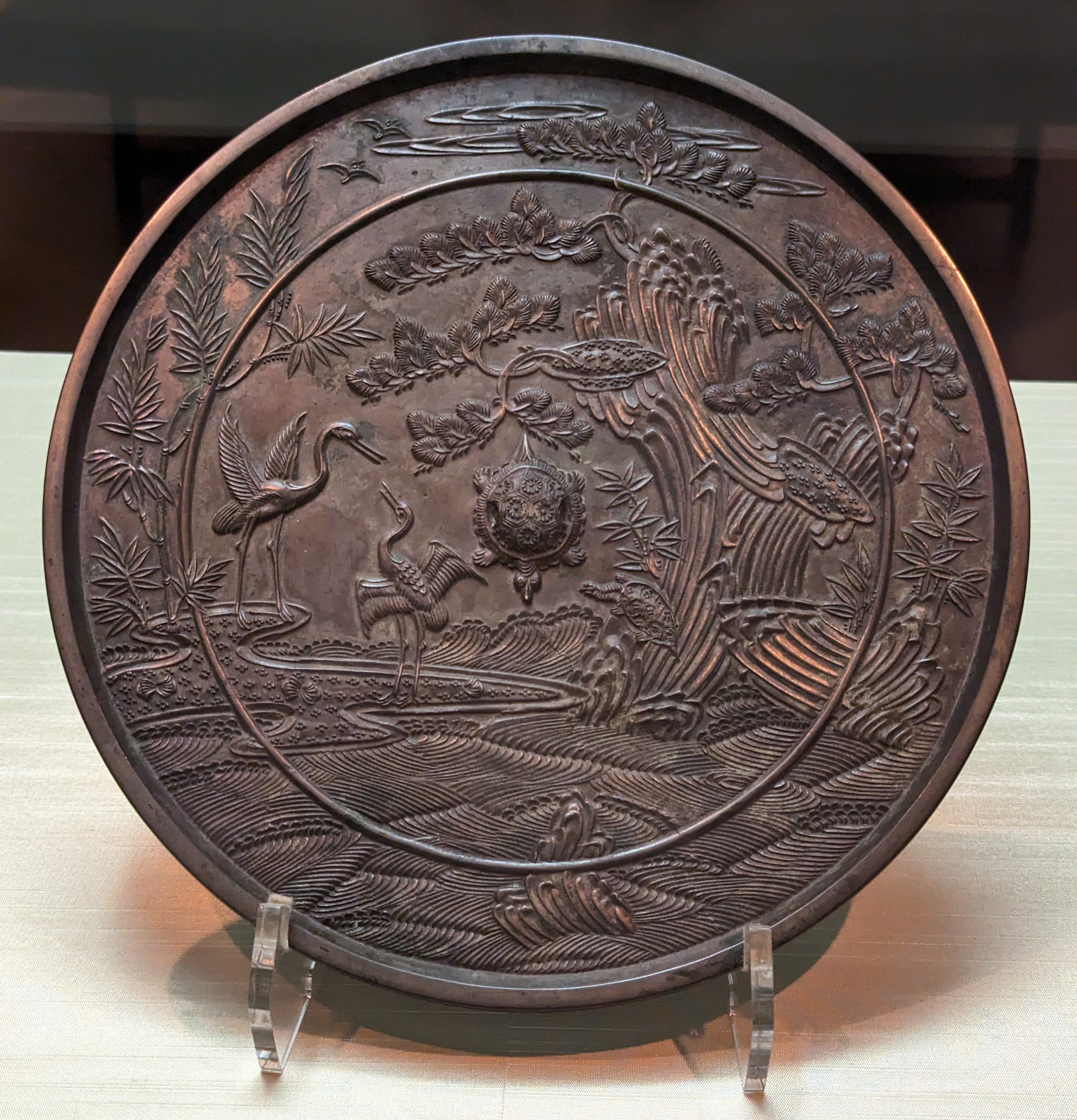
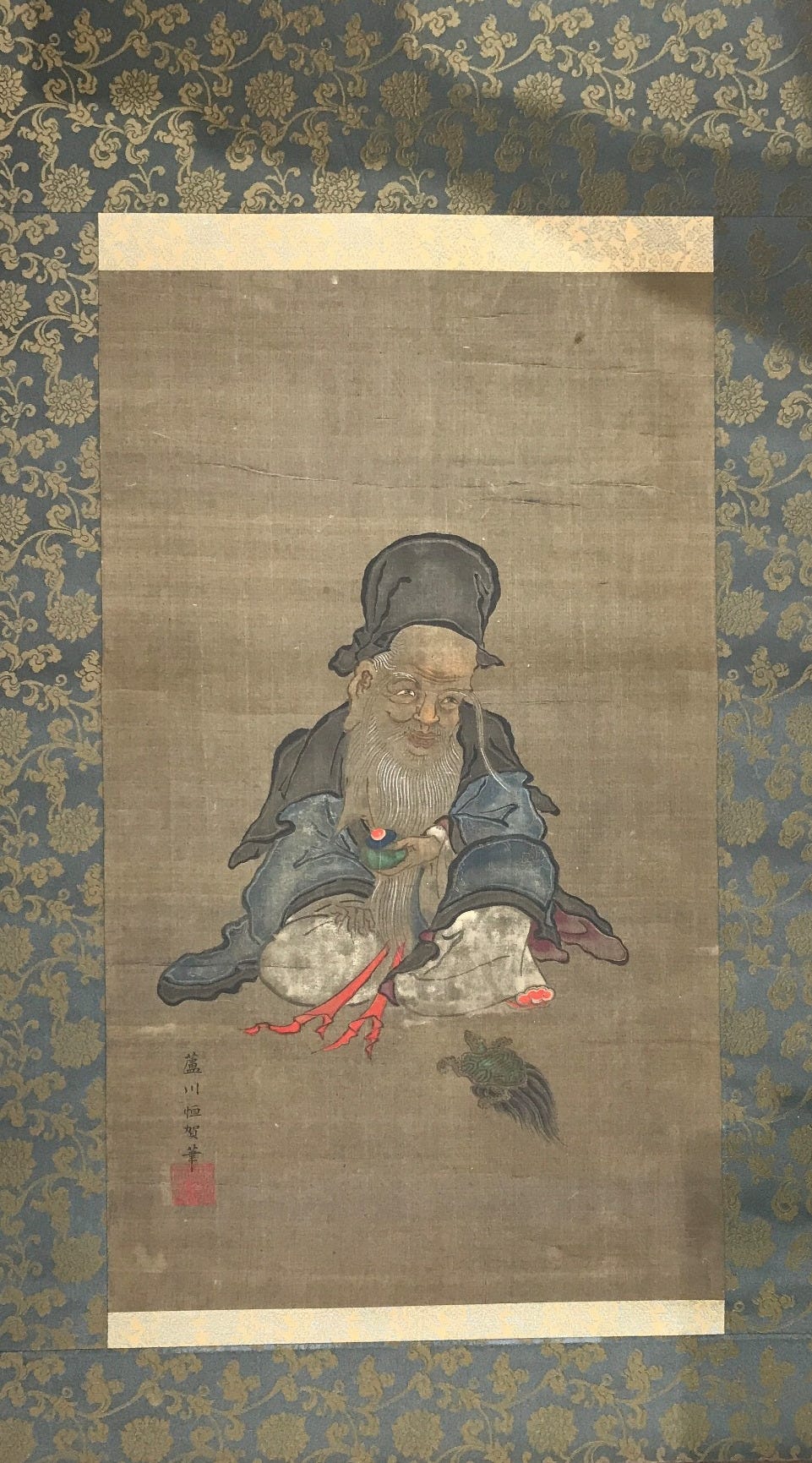
In decorative arts, minogame or turtle shell motifs are used to convey blessings for long life and prosperity and are commonly given as wedding gifts. Turtles are often paired with other auspicious symbols such as cranes and pine trees to emphasise longevity. They are also associated with both Jurojin and Fukurokuju, two of the seven lucky gods of Japan, who are are also symbols of wisdom and long life.
Turtle Tales
The Tale of Urashima Taro
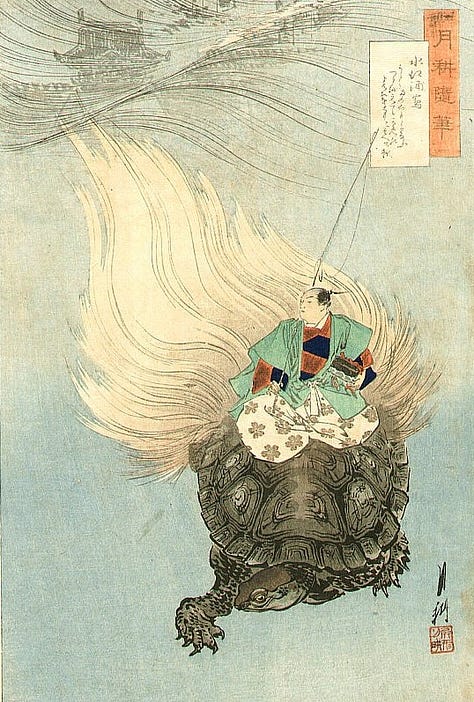
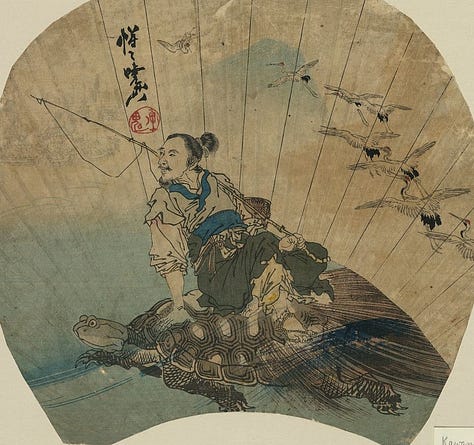
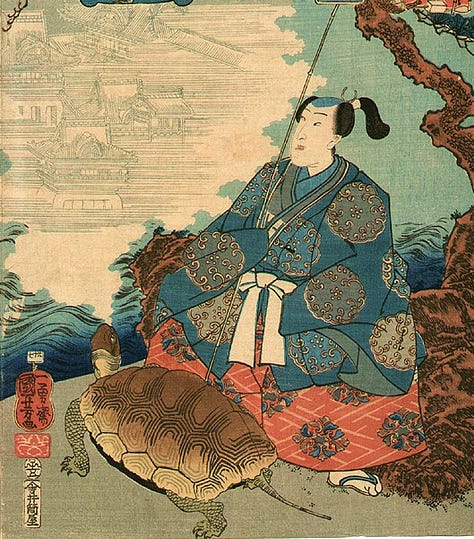
The minogame features in one of Japan’s most famous folktales about a fisherman named Urashima Taro. One day Urashima saw two children tormenting a turtle on the beach and intervened to stop them. He returned the turtle safely to the sea and it swam away. The next day he was approached by an enormous turtle who informed him that the smaller turtle he saved the previous day was actually the daughter of the Dragon King, who now wished to meet him. Urashima then rode upon the turtle’s back, and with the help of some magical gills, was taken deep beneath the water to visit the magical palace of the Dragon King at the bottom of the sea. He was entertained by the King and his daughter Princess Otohime as a reward for his kindness.
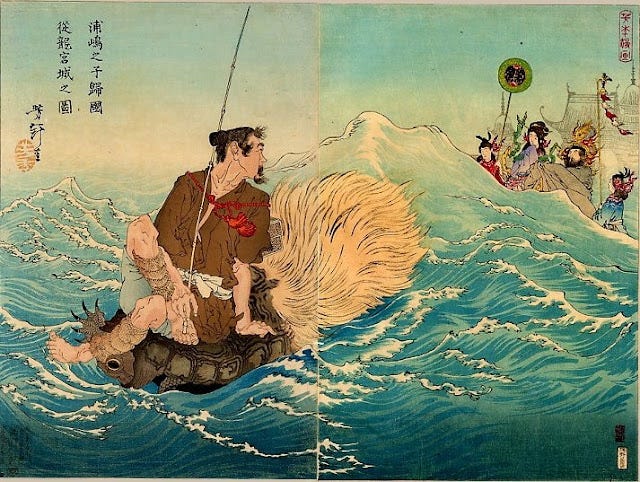
Urashima enjoyed what he believed to be several days at the magnificent underwater palace but then realised he wished to return to his village to see his aging mother. The princess was sad that he wanted to leave but gave him a magical box which she said would protect him from any danger. She warned him that he was not to open it for any reason. Urashima jumped on the back of the turtle and waved farewell before he was returned to the shore.
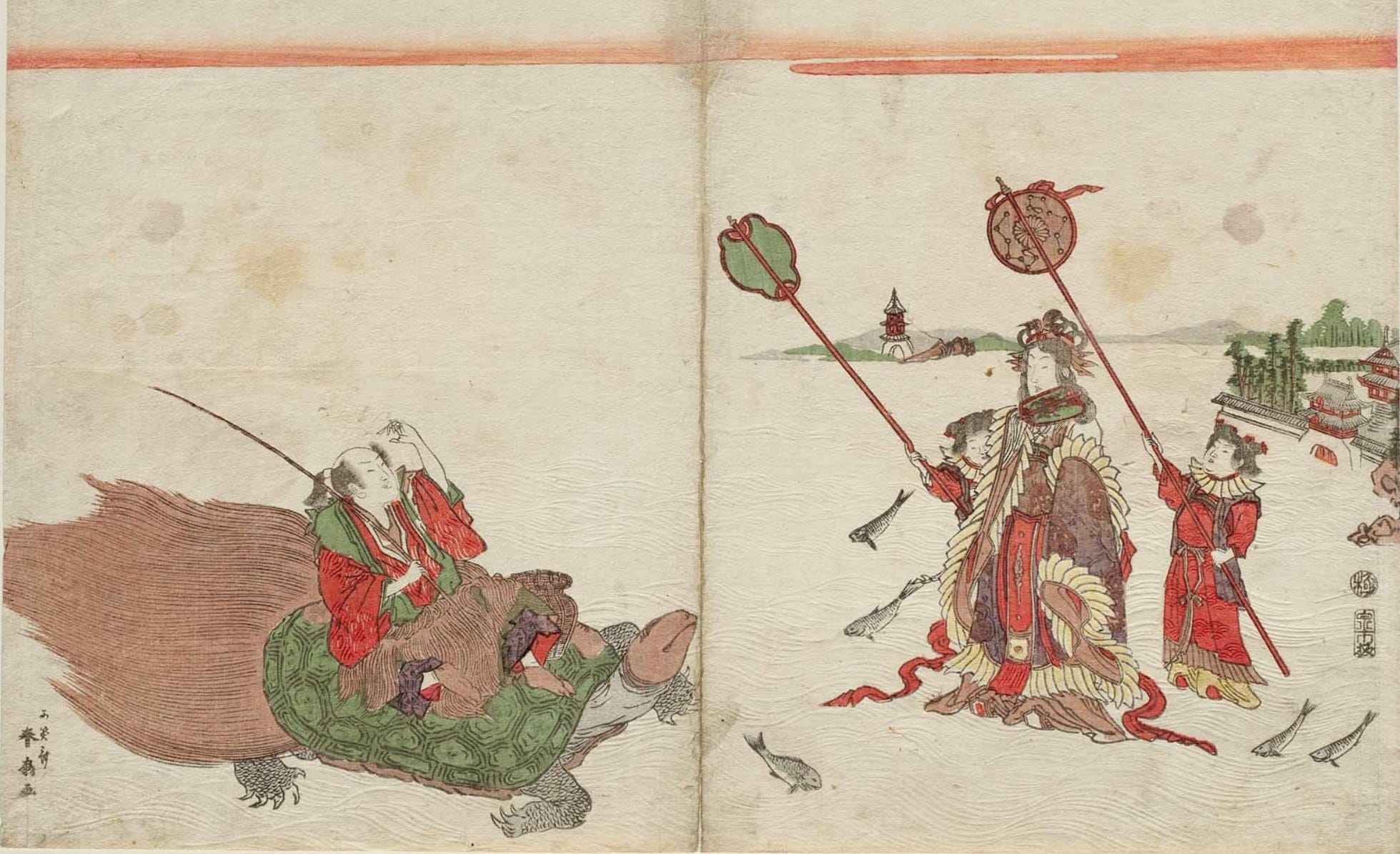
When he arrived home he discovered that everything had changed and he couldn’t find anyone he knew. He soon learnt that 300 years had passed since he left to visit the Dragon King. Filled with grief, he absentmindedly opened the box and instantly transformed into an old man. A mysterious voice floated over the sea saying ‘I told you not to open the box, it contained your old age.’
Suppon no Yurei
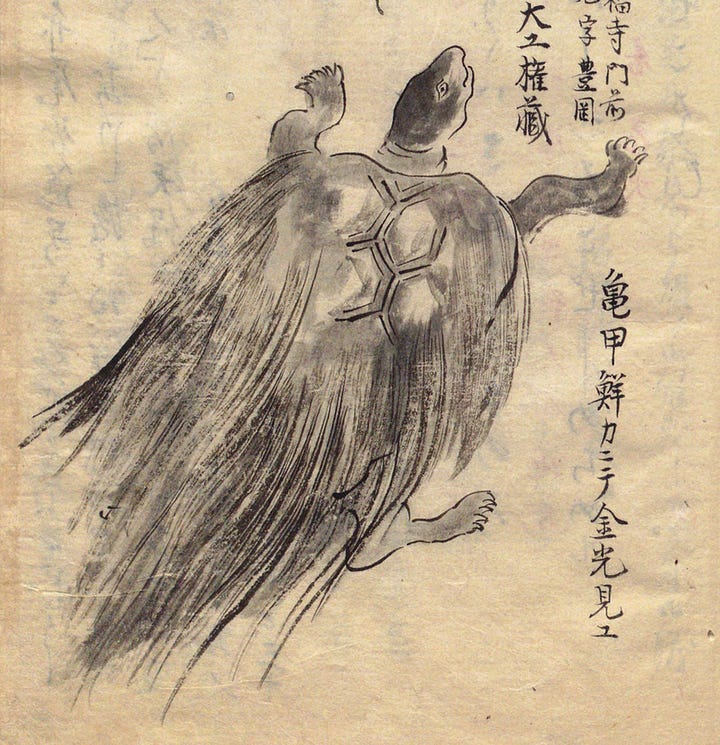
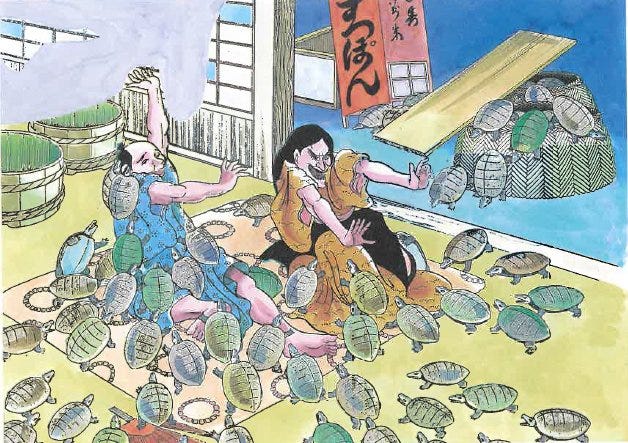
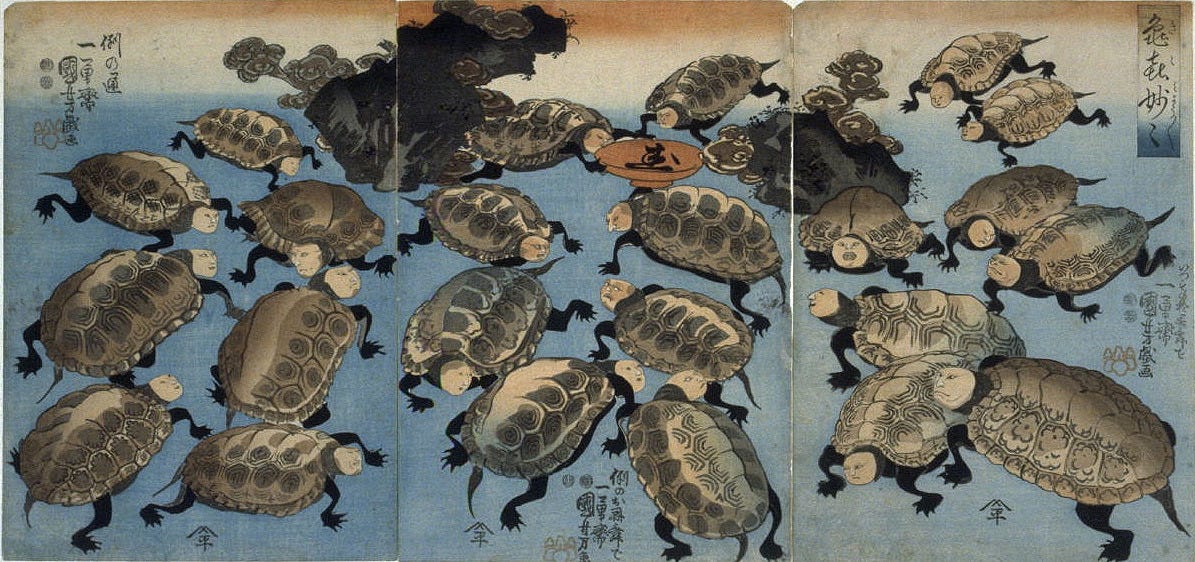
Turtles in Japanese folklore are not always serene and benevolent. One example is found in the tales of suppon no yurei, the ghosts of soft-shell turtles who return to take revenge on those who have killed or eaten them. They appear with long legless bodies, and faces with lips resembling a turtle. There are several versions of the tale and one tells of a man who owned a turtle restaurant and had slaughtered thousands of turtles to serve his diners.
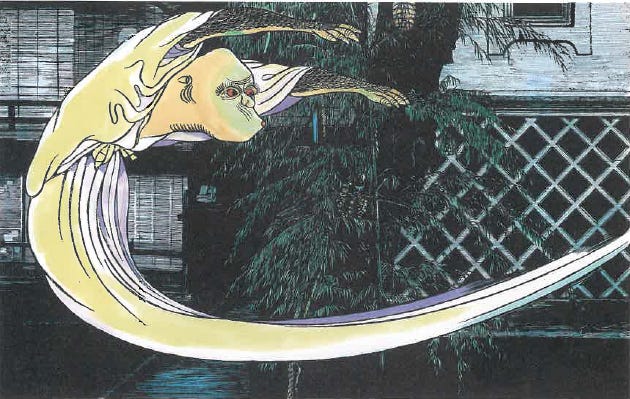
One night he was alone in the restaurant and he felt darkness closing in around him and had a sense of being submerged underwater. In the dark he reached out and felt several turtle shells. He called out desperately to his wife who arrived just in time to scare away the hundreds of turtles swarming around him. This continued to happen every night until the man had learnt his lesson. He vowed that he would not take another life, and the turtle ghosts never returned. In another version, several men visited a turtle restaurant and noticed the staff looked uncannily like turtles. Just in time they realised they were being served by suppon no yurei and fled the restaurant vowing never to eat turtle again.
Supernatural Turtles
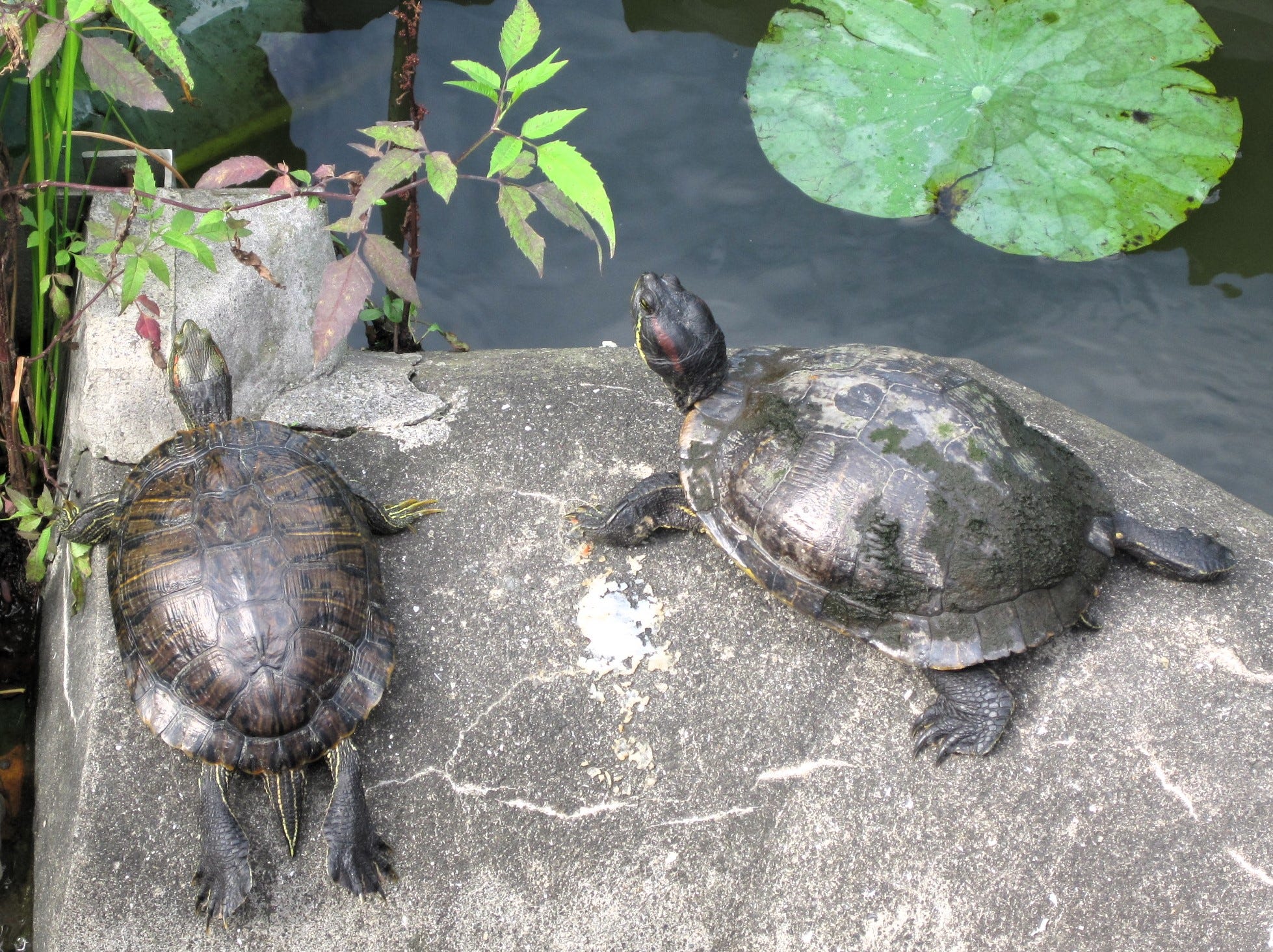
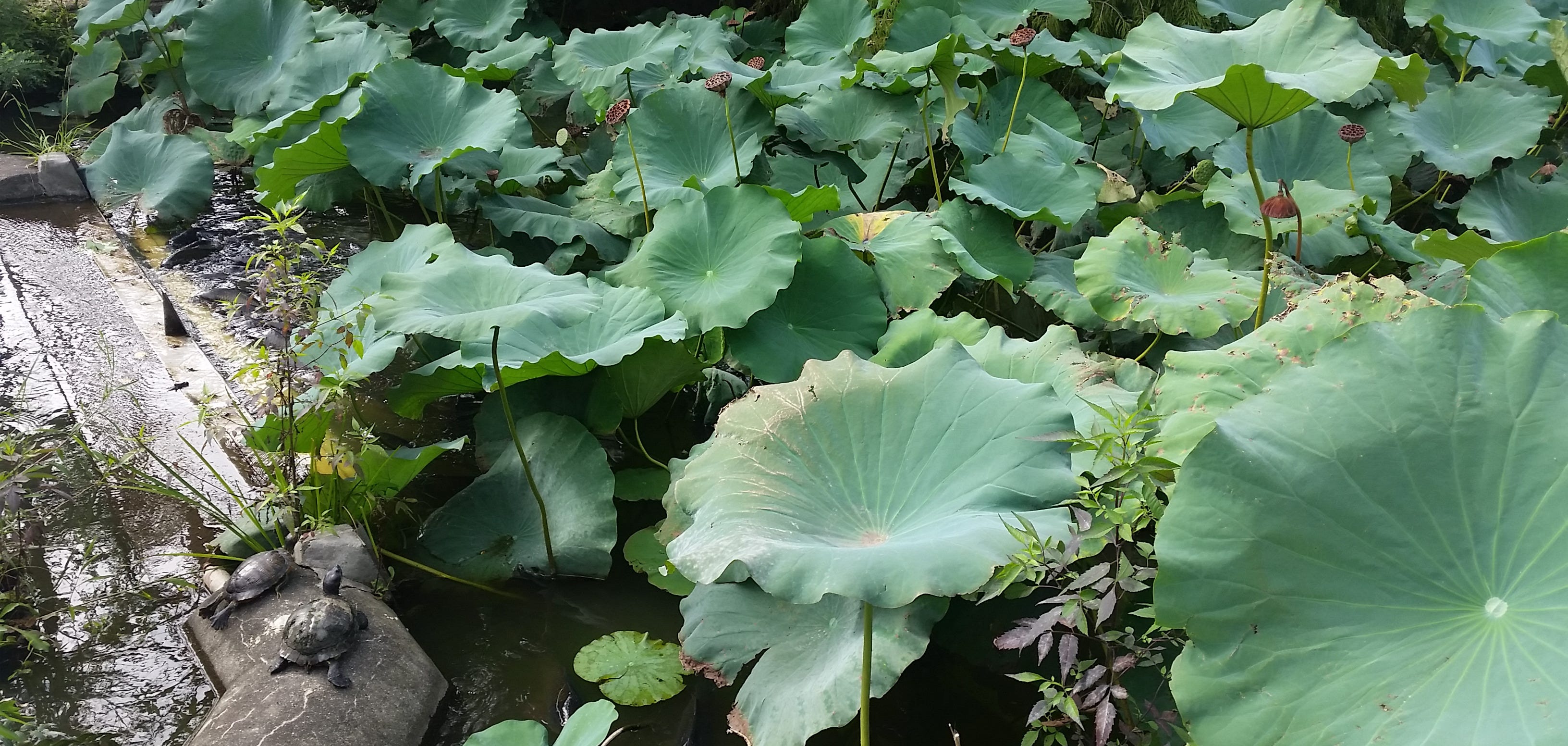
There is a belief in Japanese folklore that bodies of water have spirit guardians that can take the form of dragons, catfish, snakes or even turtles. Apparently Shinobazu Pond in Tokyo’s Ueno Park was once home to a sacred white turtle that had been brought to the pond and dedicated to the goddess Benzaiten. According to the Edo Tokyo Kaii Hyakumonogatari (translated by Zack Davisson) white turtles were believed to be a symbol of peace and could bestow endless good fortune including prosperity, good health and a long life. When I first visited Japan I saw the turtles below in the same pond.
Honengame
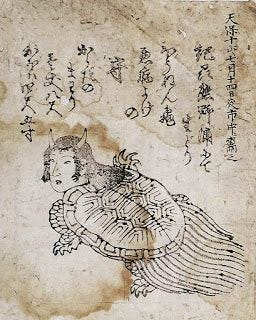
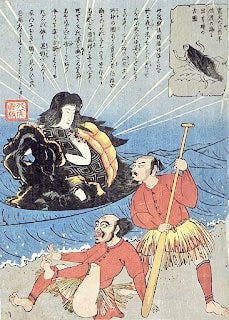
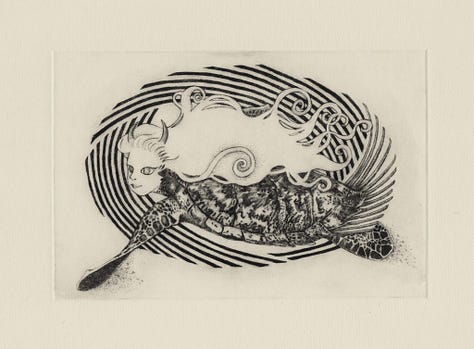
Yogenju (prophetic beasts) are yokai who appear to humans and offer prophecies, and whose images can be used for protection. The most well-known of these is amabie, which became popular during the covid pandemic. Honengame is another yogenju whose name roughly translates as ‘bumper-crop-year’ or ‘fruitful-year’ turtle. It has the body of a turtle, a long tail like the minogame, and a female human head with long hair and horns. Normally reclusive, honengame will appear when they have an important message for humans. Their glowing form will deliver the prophecy before disappearing again, and their image can be used as a charm to ward off evil. This yokai is also known as kame onna or turtle woman.
Kappa
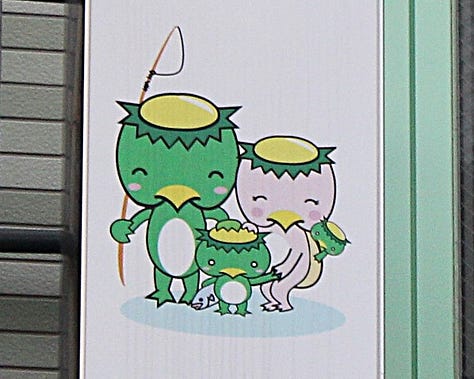
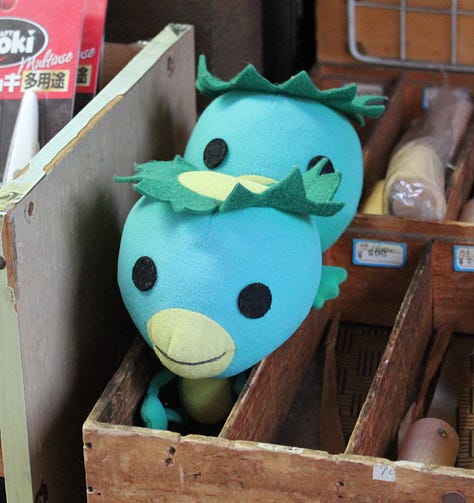
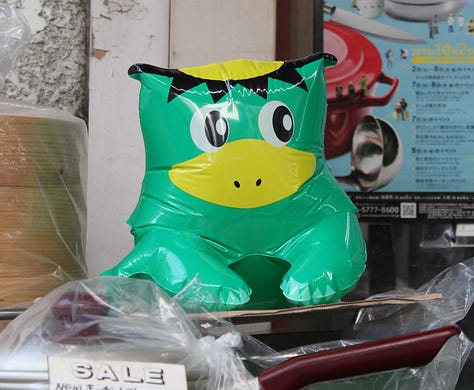
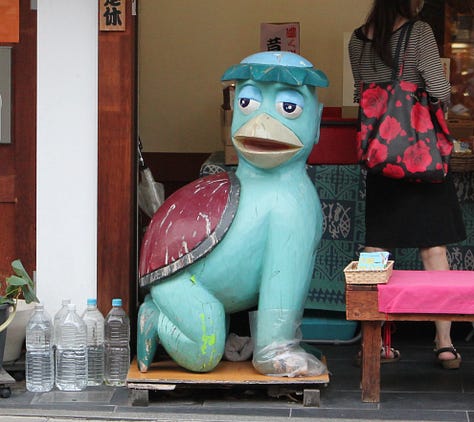
Kappa are one of Japan’s most well-known yokai. While not technically turtles, they have a turtle-like shell on their backs and resemble a reptilian creature about the size of a small child. They have green skin and a distinctive bowl-like dip on the top of their heads. Entire articles or books could be written about kappa but I will just give a very brief overview here.
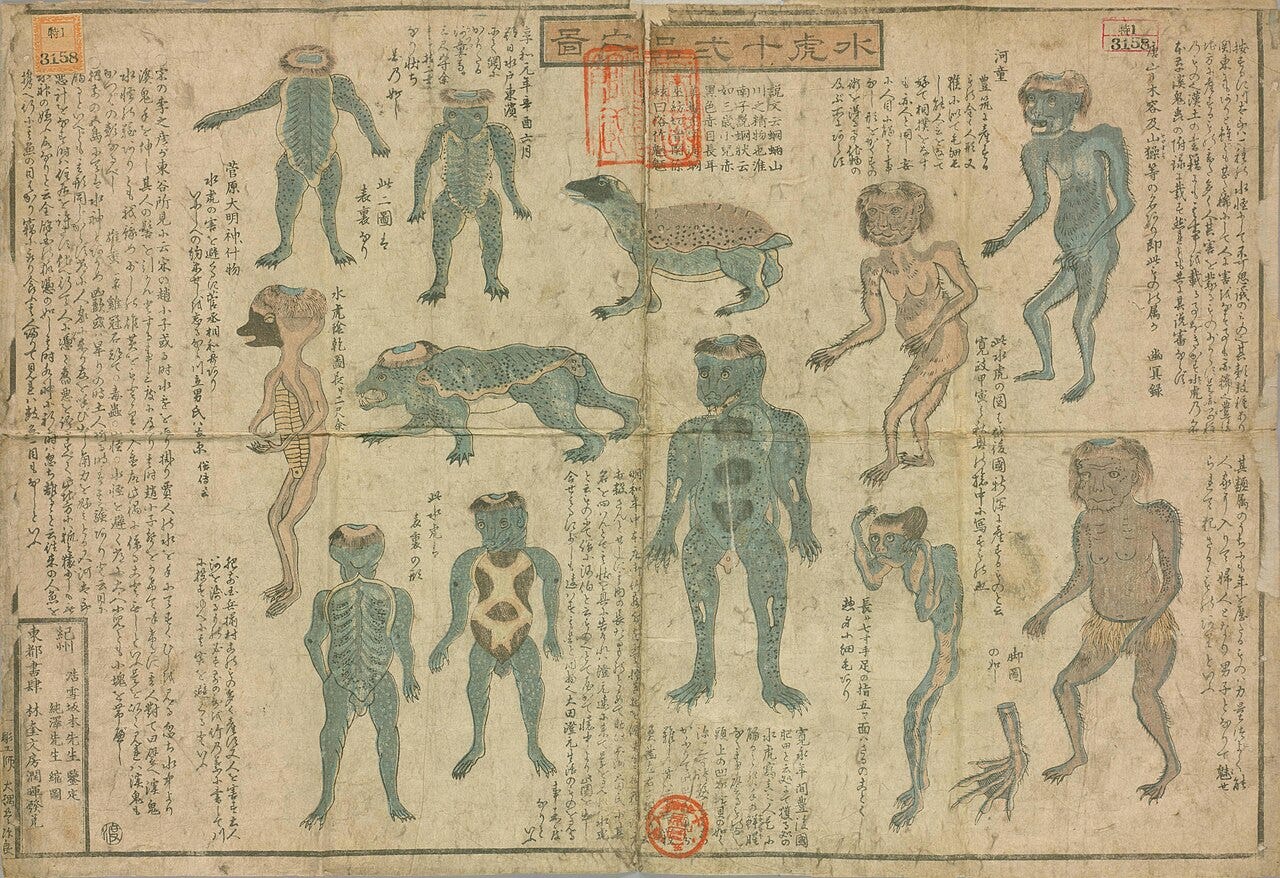
Kappa live in lakes and rivers and can be very dangerous, waiting to attack unsuspecting passers-by. If you encounter a kappa it may tear out your insides in search of a mystic jewel known as a shirikodama, or drag you to a watery death, or both. If you are near the water in Japan, be sure to have some cucumbers on hand. They are the kappa’s favourite food and can often distract them long enough to allow you to escape. Alternatively, a deep bow should do the trick. Out of politeness kappa will bow in return and the water will run out of the dip on top of their heads, causing them to lose all their energy and hopefully giving you time to run away.
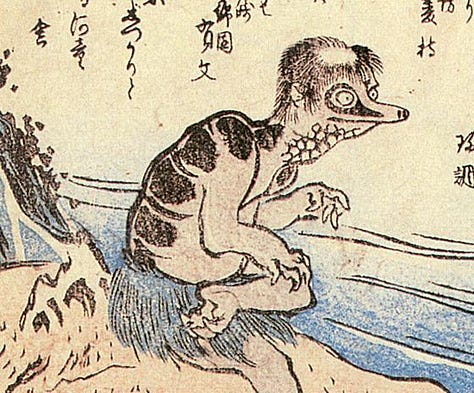
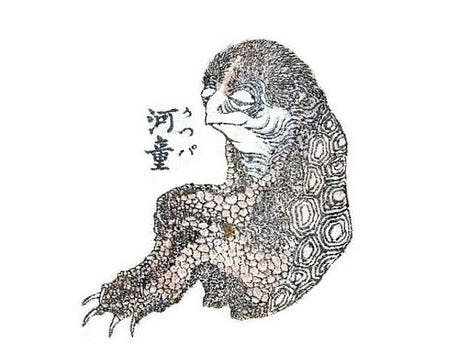
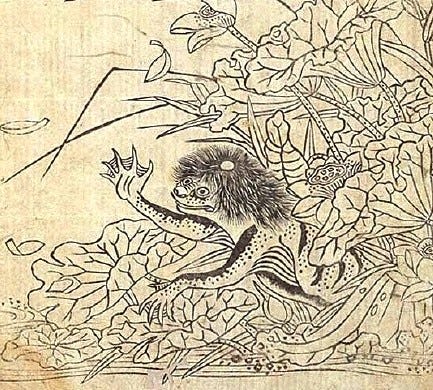
Kappa tales are ubiquitous throughout Japan. A common theme is that kappa have medical knowledge, particularly regarding the skill of setting bones. In one tale a kappa was trying to pull a horse into a river and its arm was severed by the owner’s sword. In exchange for return of the arm, it promised not to cause any more trouble and to share its medical knowledge. There are also tales of kappa offering protection from drowning and even helping out with manual labours.
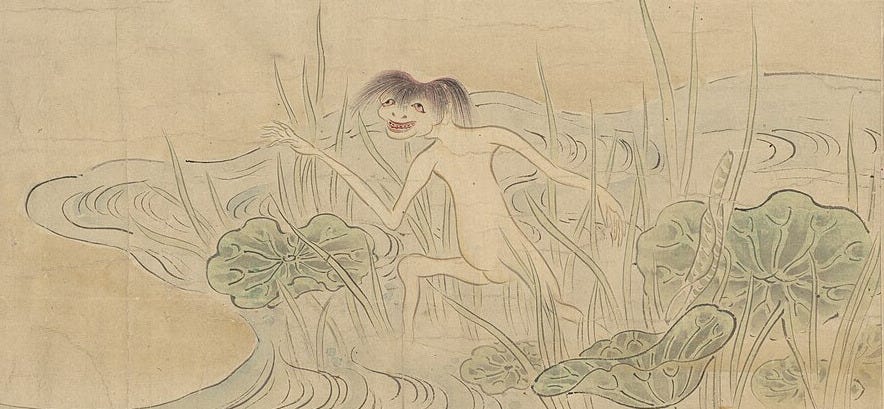
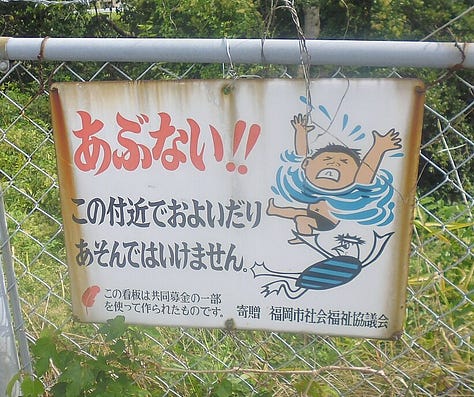
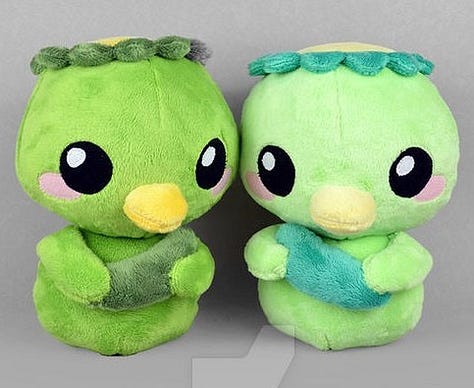
Regardless of these more benevolent traits, kappa remained a dangerous and terrifying presence in bodies of water that may have proved to be an effective way of keeping children away from water to avoid drowning. Despite the gruesome folklore, today kappa are very popular in Japan and they are often portrayed as kawaii (cute) little creatures.
Genbu
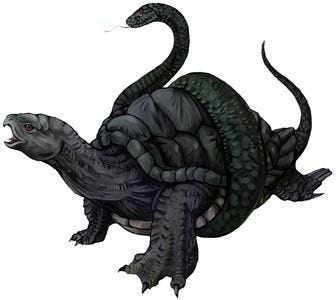
Japan adopted from China the concept of four celestial animal guardians associated with the four directions. The black tortoise is known as Genbu in Japan, which means dark warrior, and he is associated with the northern direction, winter, and the Chinese element of water. Genbu is depicted as either a tortoise-snake chimera or a snake entwined with a tortoise. While the turtle represents long life, the snake is a symbol of fertility, so together they represent both these virtues. Genbu’s home is among the constellations in the northern sky and along with the other three celestial creatures (Red Phoenix, Azure Dragon, and White Tiger) he was believed to provide protection for the ancient capital of Kyoto.
Turtles in Japanese Art
I discovered the item below at the Tokyo National Museum. It is one of the earliest Japanese mirrors featuring a scene of Mount Penglai, a mythical island of immortals. It was a popular subject in Japanese art because of the connection to longevity and usually included turtles, cranes and pine trees as symbols of long life.
Ukiyo-e Prints
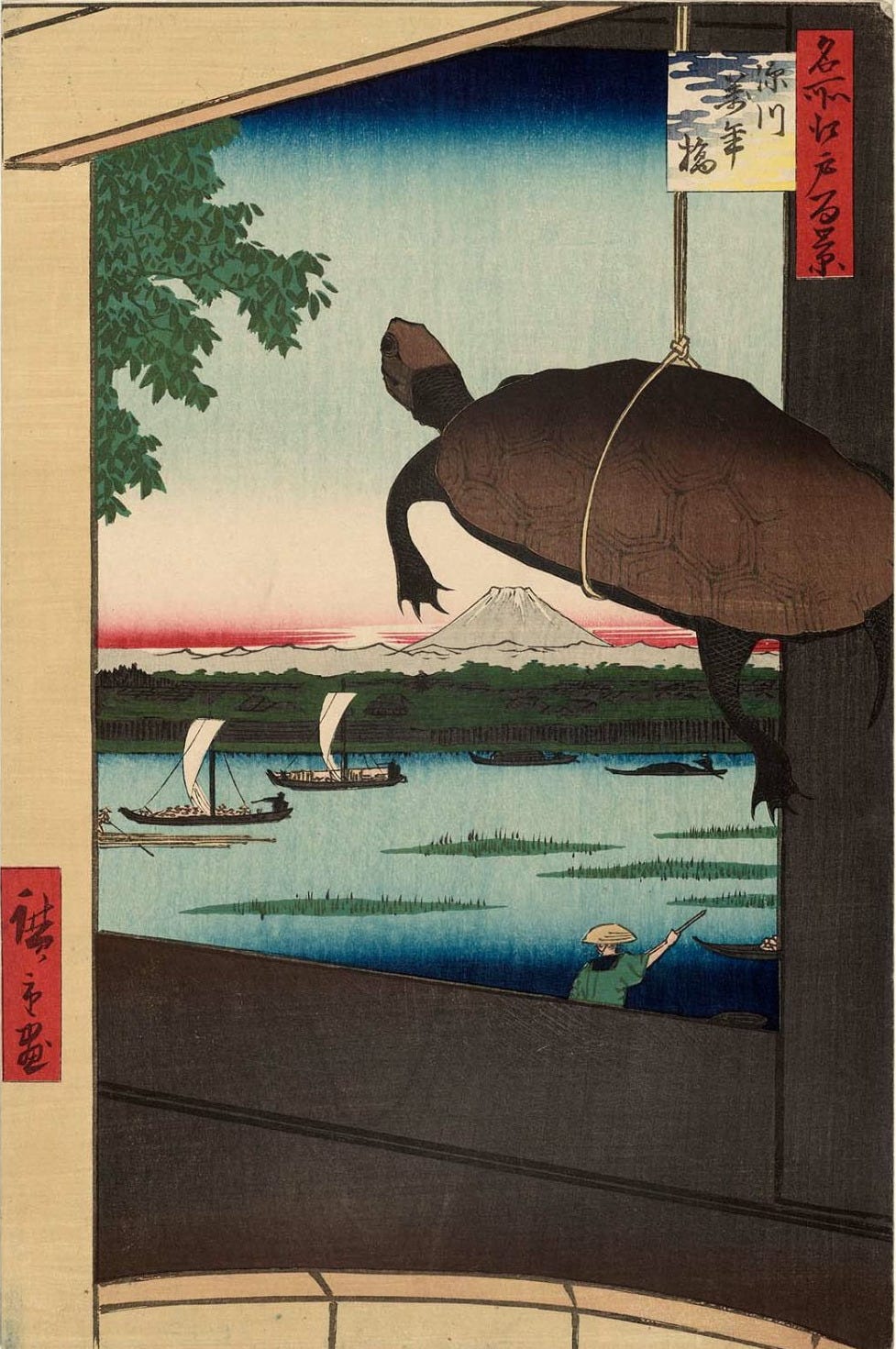
Utagawa Hiroshige’s print below is from his famous 100 Views of Edo series. According to the Brooklyn Museum the print represents longevity because ‘Mannen’ (the name of the bridge in the print) means 10,000 years, and turtles are also believed to live for this length of time. Additionally this location was where turtles were bred for sale as pets, and there was a custom in Edo that breeders sold their stock near bridges for people to release into the river in order to build up positive karma.
This triptych print continues the supernatural theme as each turtle is depicted with a human head.
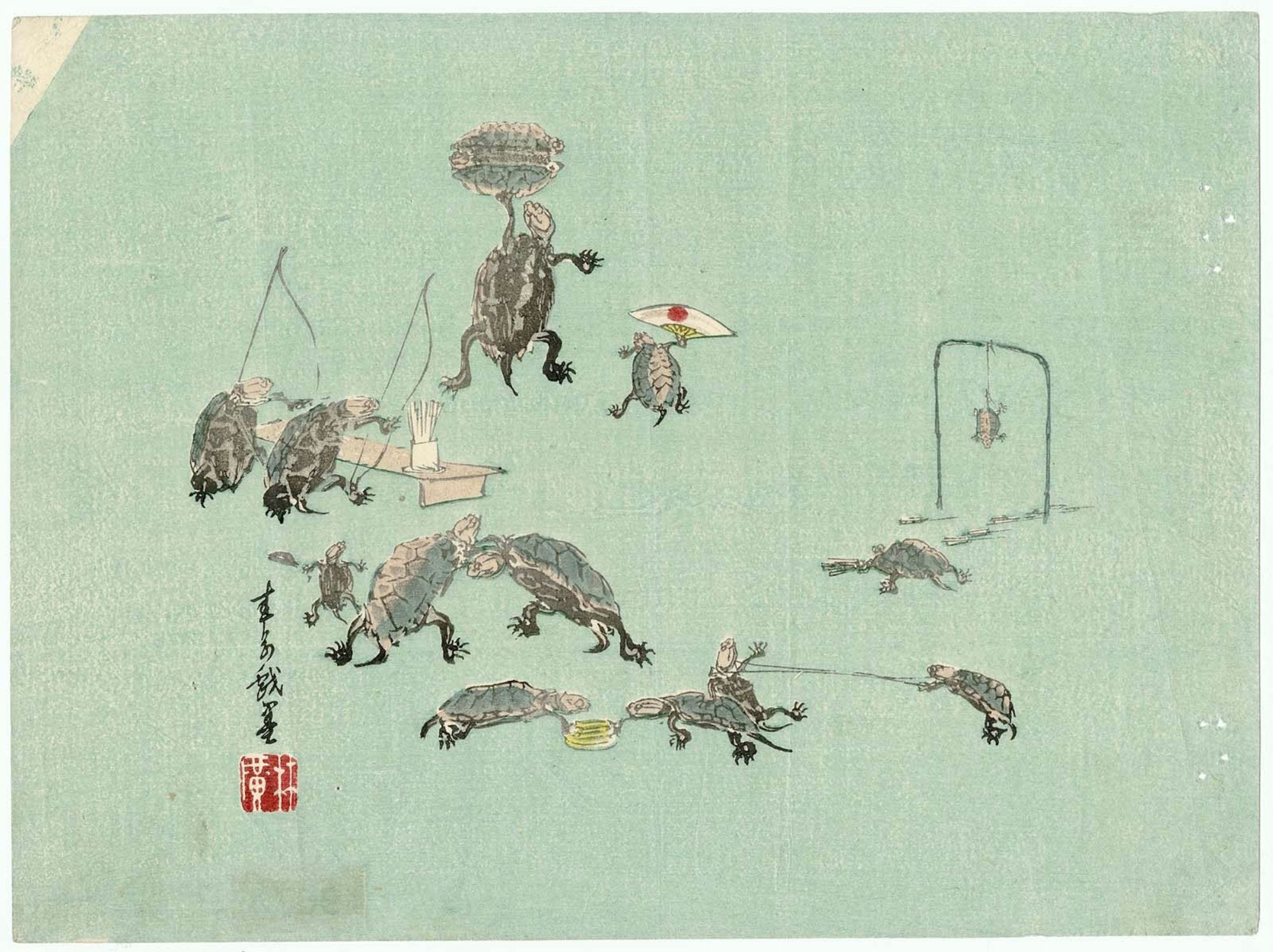
The print below depicts turtles participating in a variety of athletic contests including what appear to be archery, weightlifting and possibly sumo wrestling.
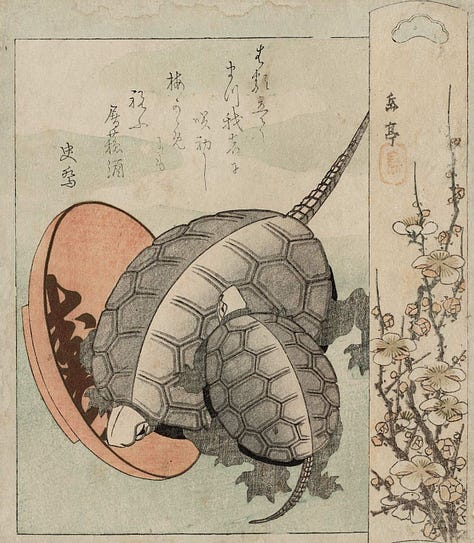
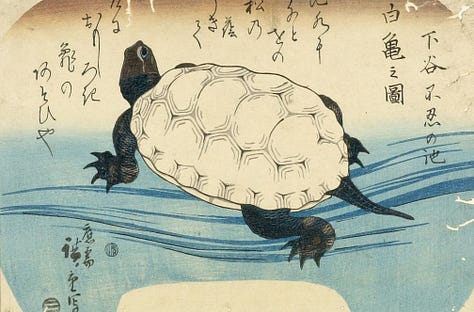
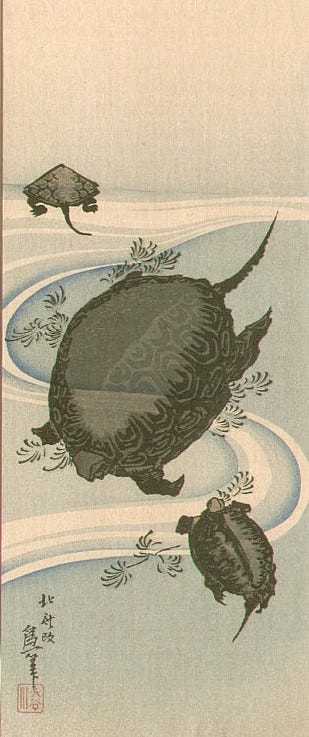
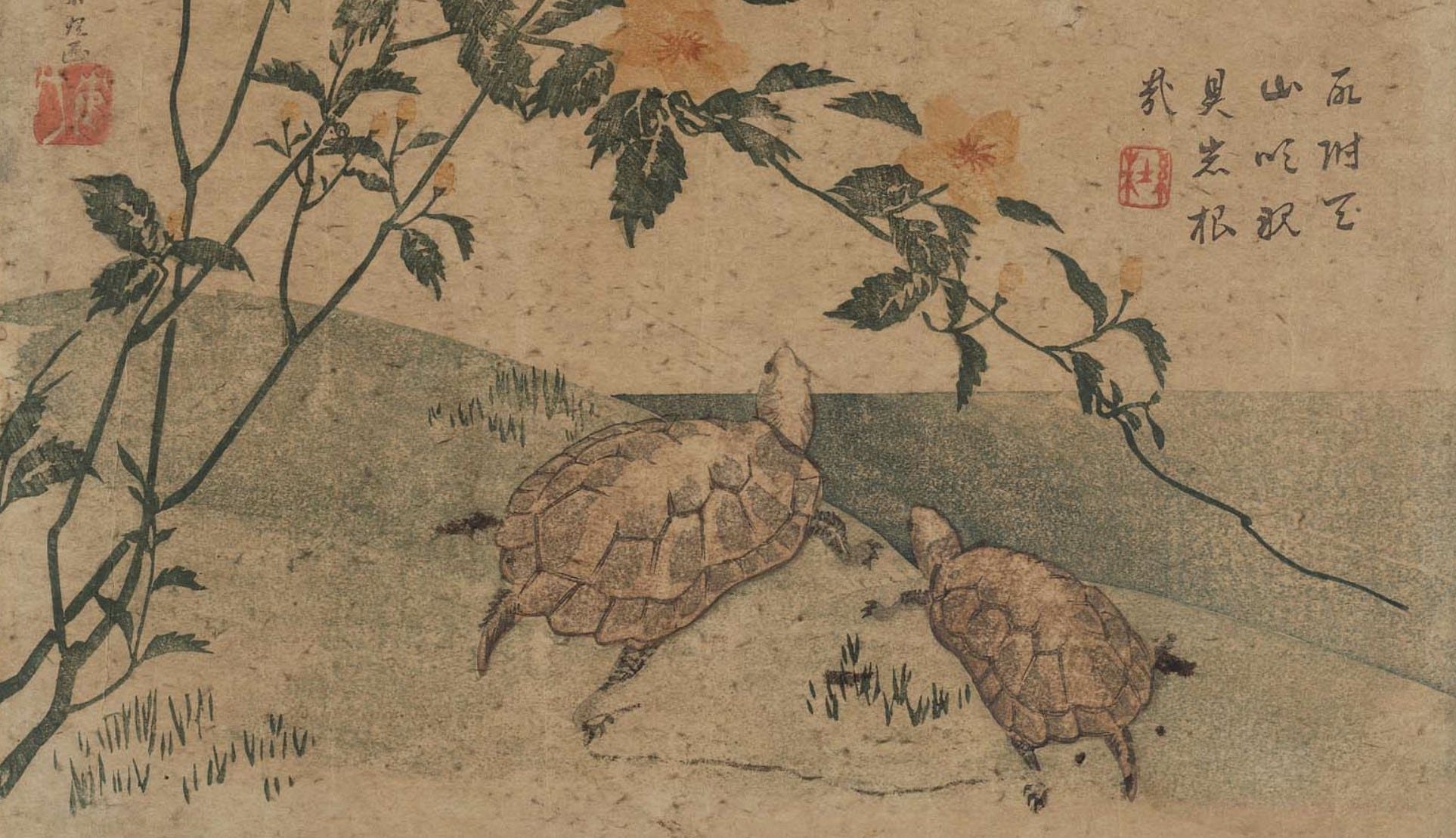
I have so many turtle ukiyo-e prints I would love to share but here is a small gallery with some of my favourites.
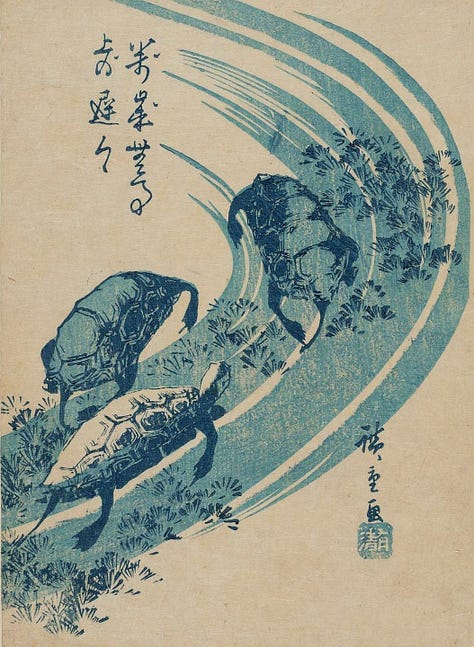
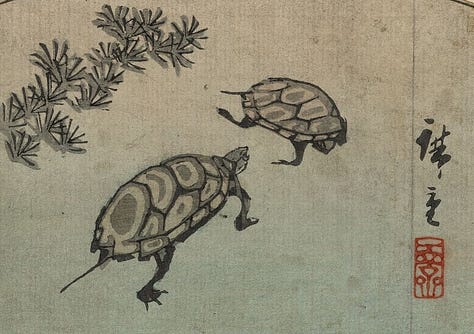
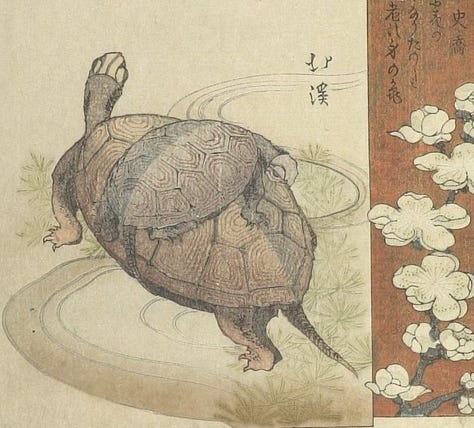
Netsuke
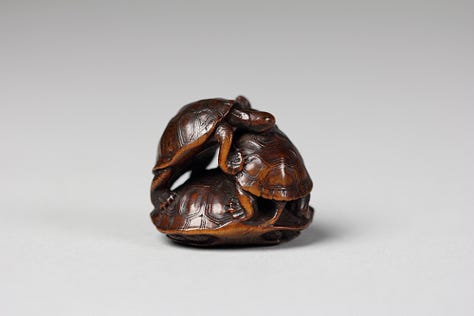
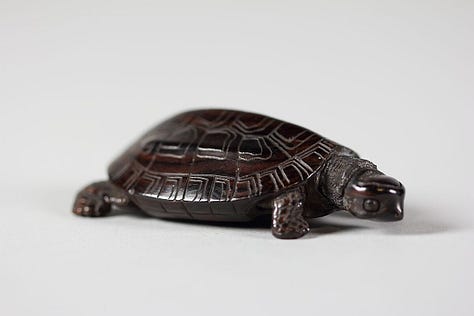
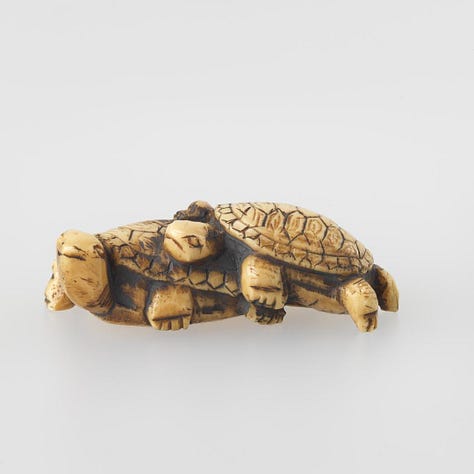
Netsuke are miniature sculptures originally used as toggles to secure pouches or small containers. They had intricate designs and were carved from materials including ivory, hardwood, and clay. During the Meiji period, western clothing was introduced and netsuke use declined, but they remained popular with collectors and are still made today. Turtles were a popular subject for netsuke carvers and several examples are shown below.
This hanging scroll depicts the lucky god Jurojin (mentioned earlier) with a minogame near his feet. As they are both symbols of wisdom and longevity, this scroll was likely designed to bestow these gifts upon the owner and their household.
Thank you so much for taking a slow wander with me to read about turtles in Japanese folklore and art. I sincerely hope you have enjoyed it. In the spirit of the turtle, I wish you good fortune, good health, and a long and happy life. This newsletter is completely free but if you would like to support my work, donations will be most gratefully received via Ko-fi.
No posts
Comments
Nothing yet. Say the first thing.
Sign in to join the conversation.