
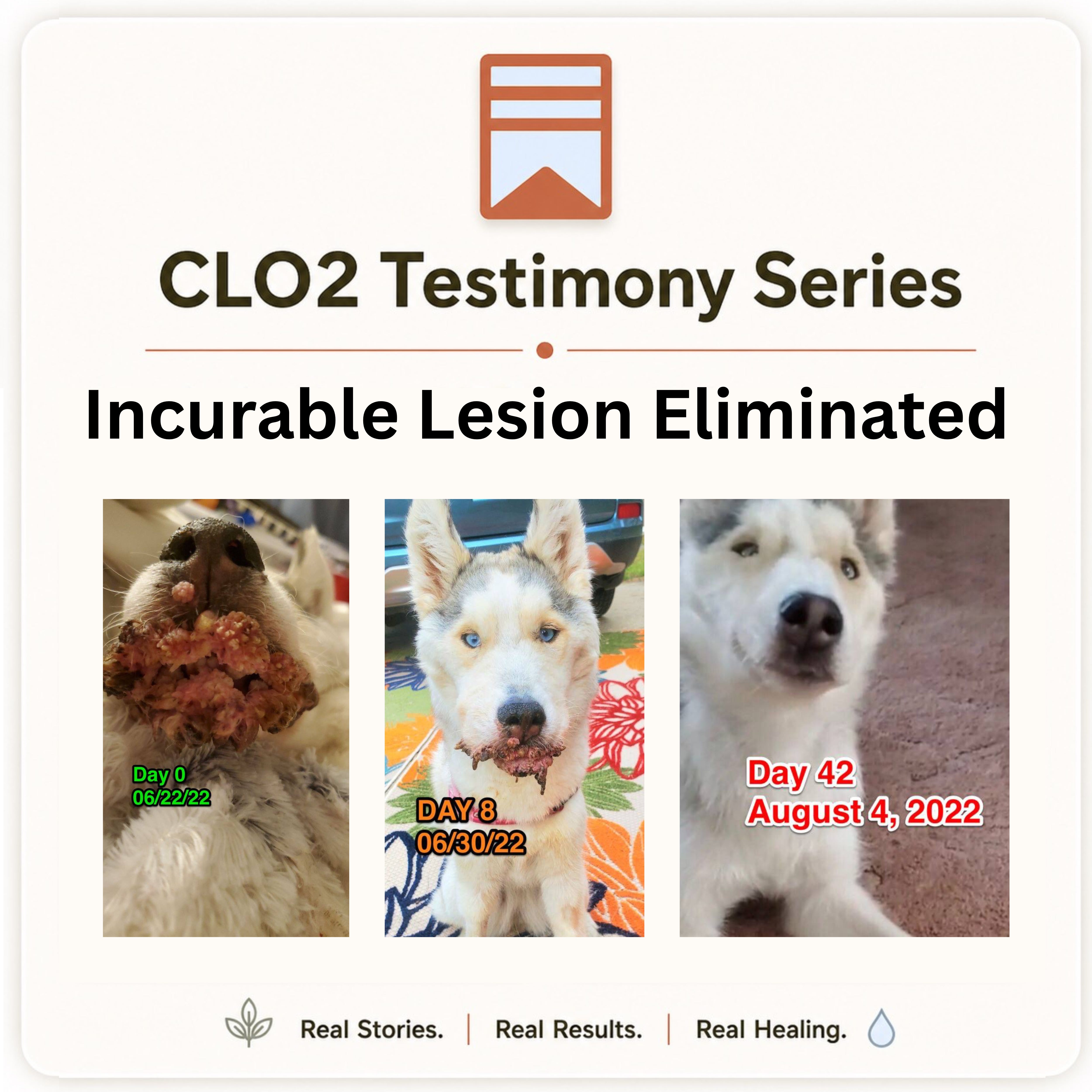
After 6 months of uncontrollable growth of the pappilomas and the veterinarian giving up on the dog, she is cured.
“1 week after beginning a CDS protocol of 3 application methods! Wow!!!! After 6 months of uncontrollable growth, the pappilomas are drying up and falling off! We have been giving her 1 Activated MMS drop 3x/day in her mouth with 10ml water (approx 1 Tbl) and then more drinking water after, with CDS 3000 ppm full i diluted spray directly on thr external and gum-line growths 5x/day, and 1 Tbl Activated MMS in a full bath for 20 minutes 3x/week. It is the 1st time in 6 months that we have seen these pappilomas shrink and dry up and some have fallen off!”
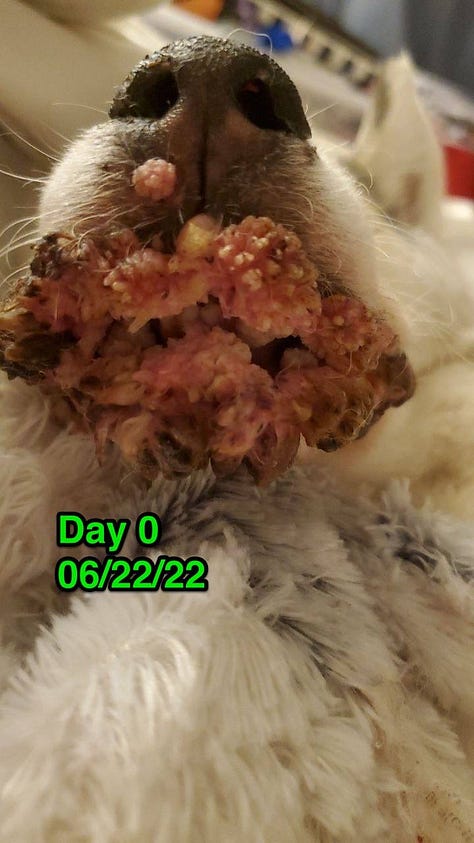
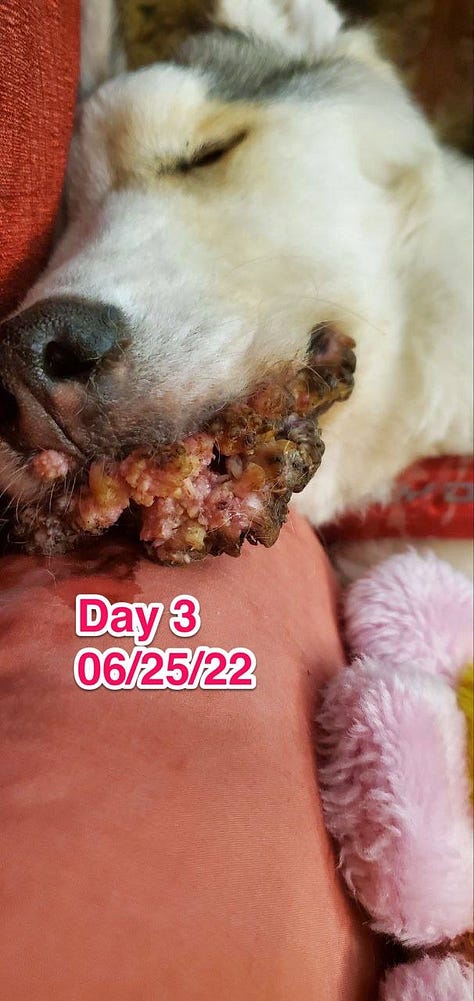
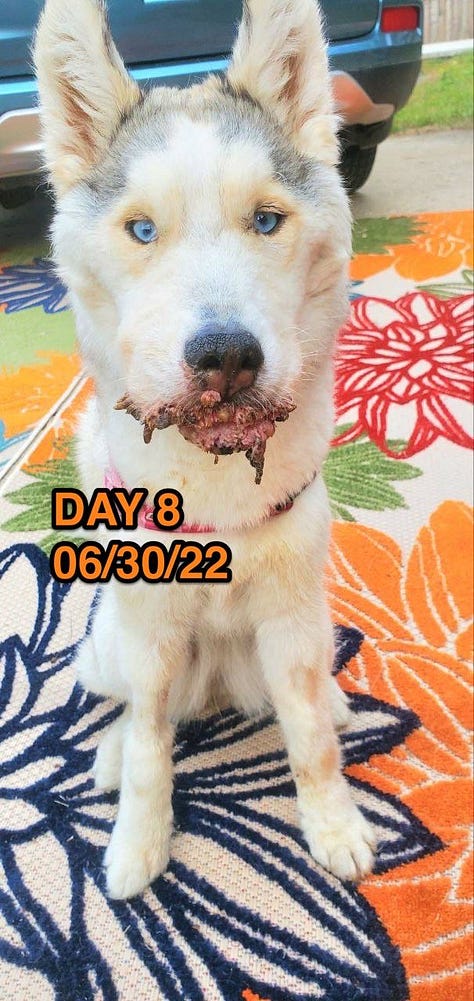
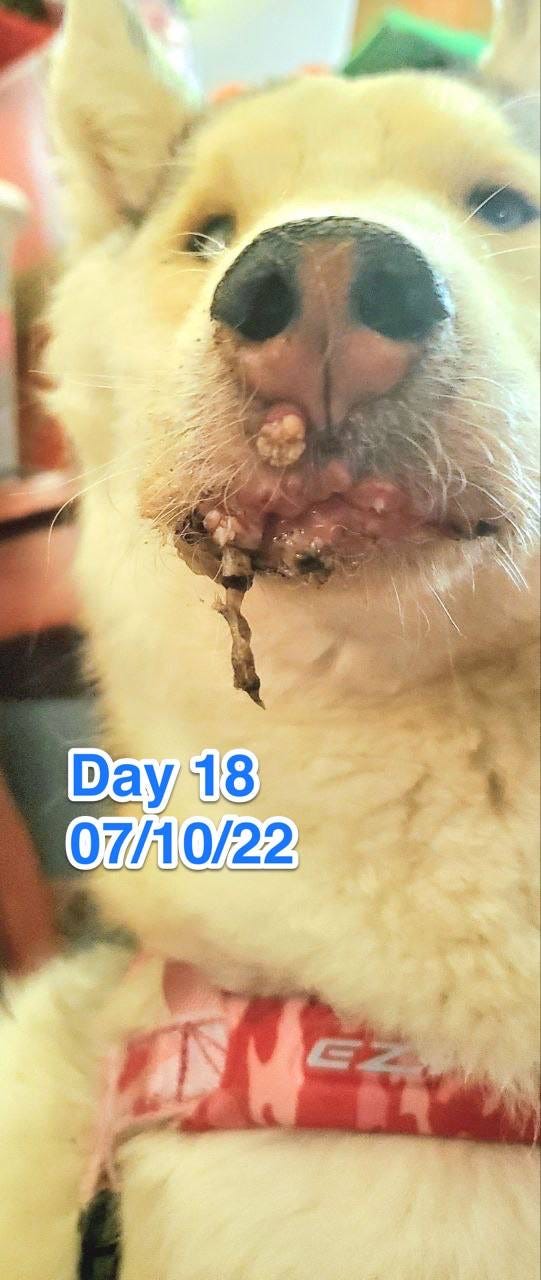
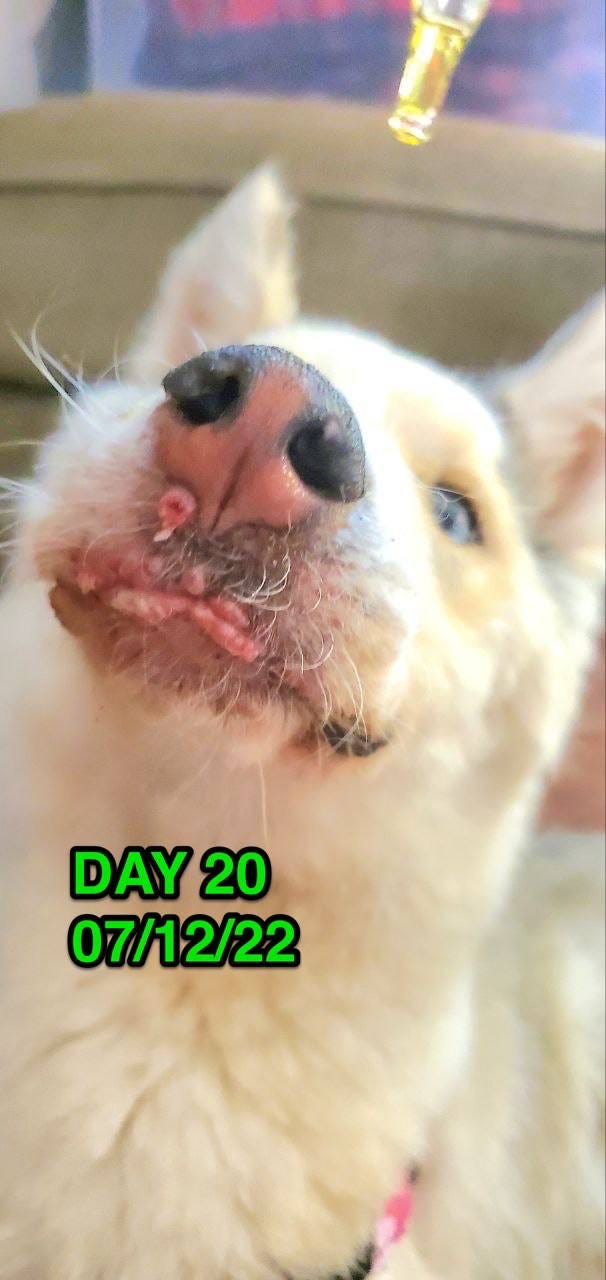
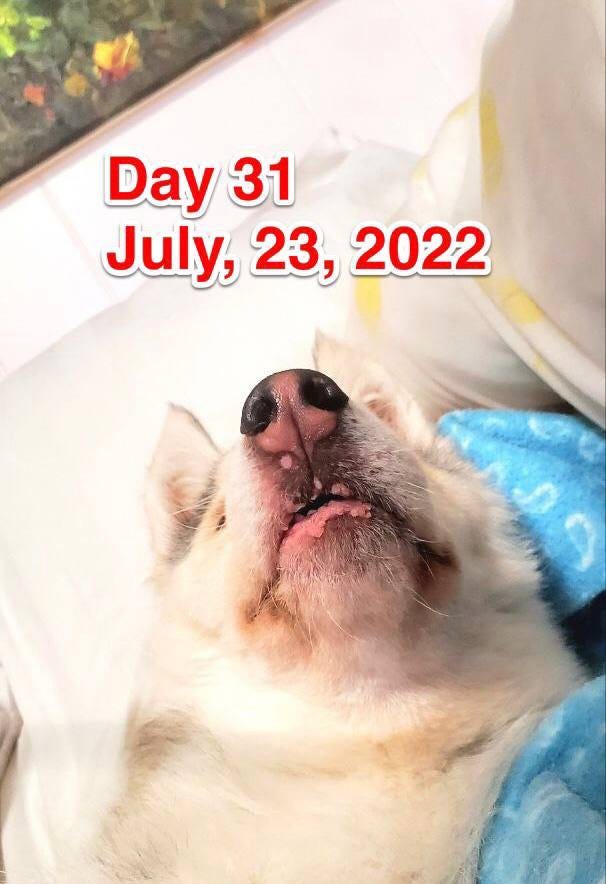
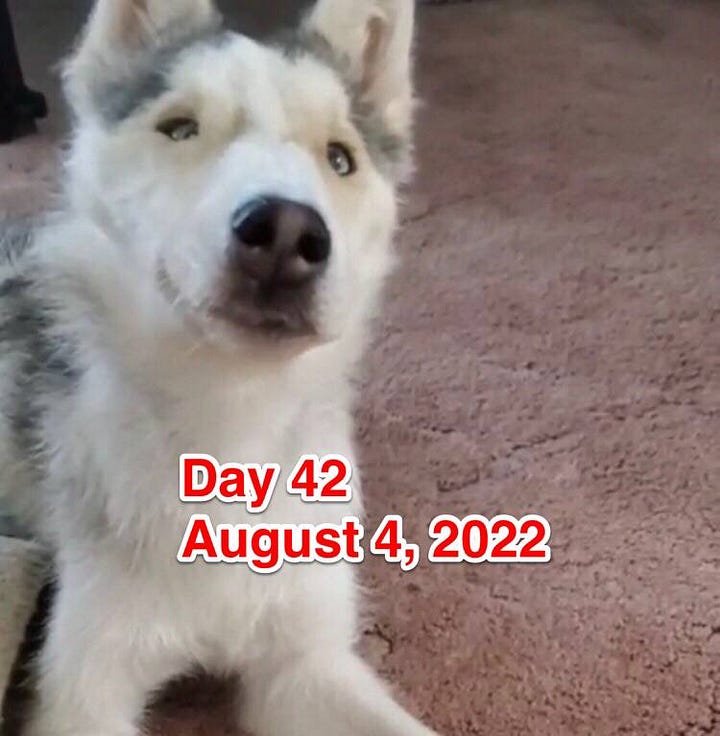
This person kept posting updates with pictures for the approximately 40 days that it took to clear the infection.
Here’s what they did:
1 Activated MMS drop 3x/day in her mouth with 10ml water (approx 1 Tbl) and then more drinking water after
CDS 3000 ppm full undiluted spray directly on the external and gum-line growths 5x/day
1 Tbl Activated MMS in a full bath for 20 minutes 3x/week.
Protocol 1000 for the oral drop-in-water dosing)
Spray Protocol for the undiluted CDS spray on external growths
Bath Protocol for the full-body MMS bath
ClO₂ inactivates viruses by oxidizing viral proteins and nucleic acids, thereby preventing viral replication, and specifically it disrupts the viral capsid and RNA, impairing the virus’s ability to infect host cells. Papillomaviruses are non-enveloped, capsid-protected DNA viruses, so a direct oxidative attack on capsid proteins at the site of undiluted 3000 ppm topical spray application is mechanistically consistent with the general antiviral mode of action described. [1]
A second mechanism that may be relevant to why the papilloma lesions might resolve: low-dose ROS acting as an immune-modulating signal rather than purely destructive agent. The reversal and resolution of the papillomavirus could result from ROS-induced mitochondrial hormesis, where low, non-cytotoxic ROS doses trigger adaptive cellular responses. For example, NP001 (a purified, pH-adjusted sodium chlorite/chlorine-dioxide-precursor drug) appears to work as a macrophage-targeted immune regulator that shifts macrophages from a pro-inflammatory M1 state toward a reparative M2 state. [2] This is mechanistically important because independent veterinary literature establishes that canine papilloma regression is fundamentally immune-mediated — CD4+ and CD8+ T-cell infiltration drives spontaneous wart clearance in dogs. [3]
If low-dose systemic ClO₂ absorbed orally and via bath immersion modestly shifts macrophage polarization and immune signaling this would align with the dog’s own immune-clearance pathway that is already documented as the natural resolution mechanism for canine papillomas.
This six-month, veterinarian-unresponsive case of papillomavirus, with extensive cauliflower-like coalescing growths shown across the Day 0 to Day 42 photos, exceeds the typical timeframe for spontaneous regression. Notably, the growths began regressing immediately after the chlorine dioxide protocols were implemented, making spontaneous regression less likely, though not entirely ruled out.
1. Ge Y, Zhang X, Shu L, Yang X. Kinetics and Mechanisms of Virus Inactivation by Chlorine Dioxide in Water Treatment: A Review. Bull Environ Contam Toxicol. 2021 Apr;106(4):560-567. https://pmc.ncbi.nlm.nih.gov/articles/PMC7904506/
2. Miller RG, Zhang R, Block G, Katz J, Barohn R, Kasarskis E, Forshew D, Gopalakrishnan V, McGrath MS. NP001 regulation of macrophage activation markers in ALS: a phase I clinical and biomarker study. Amyotroph Lateral Scler Frontotemporal Degener. 2014 Dec;15(7-8):601-9. https://pmc.ncbi.nlm.nih.gov/articles/PMC5524125/
3. Nicholls PK, Moore PF, Anderson DM, Moore RA, Parry NR, Gough GW, Stanley MA. Regression of canine oral papillomas is associated with infiltration of CD4+ and CD8+ lymphocytes. Virology. 2001 Apr 25;283(1):31-9. Full Article
Comments
Nothing yet. Say the first thing.
Sign in to join the conversation.