
I’m fascinated by spiders yet also feel a little queasy about them too. I’m trying to surpass my phobia, yet their eight legs make me anxious. They move too quickly, often running towards me for cover when accidentally disturbed making matters all the worse.
Despite this, I had dinner at a friend’s house last week and pointed out a little spider in the corner of their kitchen. “We like him”, they said together, “he keeps our fruit flies at bay and has become a good friend. He’s been here for months”. Sadly, it was too high up for a correct identification but appeared considerably small and harmless, and in fact, had a tiny fruit fly in its web ready for supper.
I’m glad they have left this little spider - they are right, he is a helpful worker and certainly earns his keep.
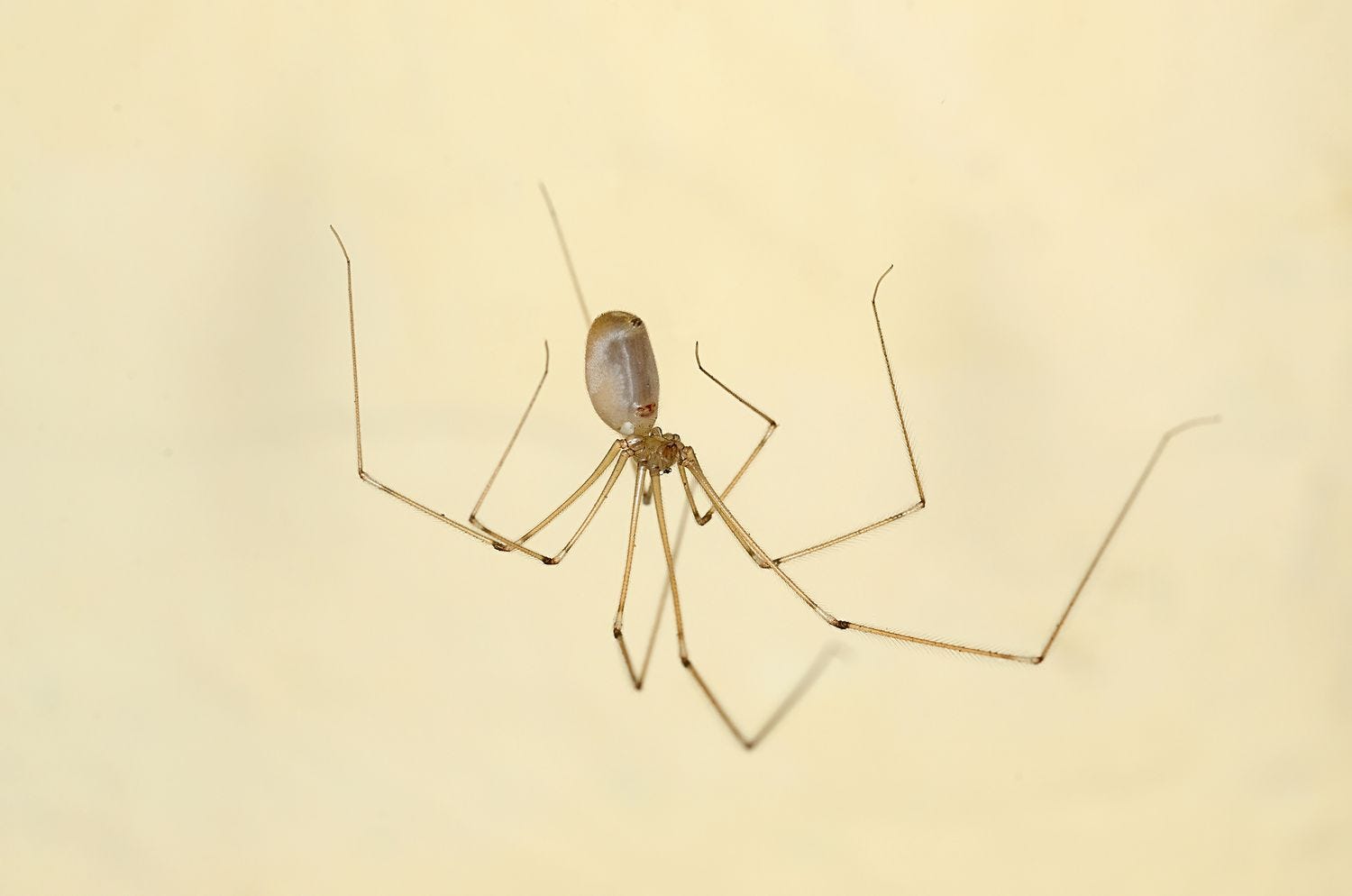
In regards to my house, I have only one spider - the charming cellar spider, Pholcus phalangioides, resting in the shadowy gap between my wardrobe and wall. I turn a blind eye to the collection of false widows which rest lazily in the hallway corridor.
Why do spiders come inside during winter?
1 - Sheltering from frost and extremes of weather
Spiders are cold-blooded and their activity slows down as the temperatures drop. Mostly UK spiders are adapted for our cold winters, hiding in bark crevices, leaf litter or evergreen shrubs.
However, why face being outdoors when they can find a warm, quiet spot inside? My allotment shed was testament to this, my mugs becoming homes for new residents and multiple times, having to break through vast spider webs to get to my potting table.
Inside, the temperatures is stable, there’s frost protection and it’s dry and of course, no predators in sight, like birds, frogs and toads, as wells as mammals like hedgehogs.
The giant house spider, my most feared spider of all, finds the home the perfect overwintering habitat. Unfortunately, if your house is shady and cave-like, you are in trouble - favouring Victorian and Edwardian houses, solid brick or stone properties, suspended timber floors and houses with cellars or underfloor voids.
2 - Autumn wandering
Autumn is their mating season and males will be on the hunt for females. Both September and October are known as “spider season” indoors and that will due to the male spiders on the hunt for a female partner.
Culprits like the giant house spider (Eratigena atrica), common house spider (Parasteatoda tepidariorum), and false widow, Steatoda nobilis are the most common to break into your homes.
3 - Accidental entry
Sometimes, a spider has moved inside accidentally. Potentially they have followed prey towards lights, or slipped between a vent or gap. They can arrive in houseplants, and most likely travel inside on my gardening uniform or bag.
Whilst researching this Substack, I found the most incredible UK Facebook group for identifying spiders and highly recommend it. I browsed on it for a long time, it was quite fascinating!
Steatoda nobilis - Noble false Widow
I have chosen to write a little about the noble false widow - they are generally feared in the UK and sadly, have a bad reputation. They are known to bite, but will only do so if it’s a last resort and feel threatened.
Their appearance certainly doesn’t help - they have a bulbous, glossy abdomen with a button-backed, dimpled appearance as if they have been polished. Their ominous and stunning pattern on their backs looking like a pale skull, leaf or swirling mask.
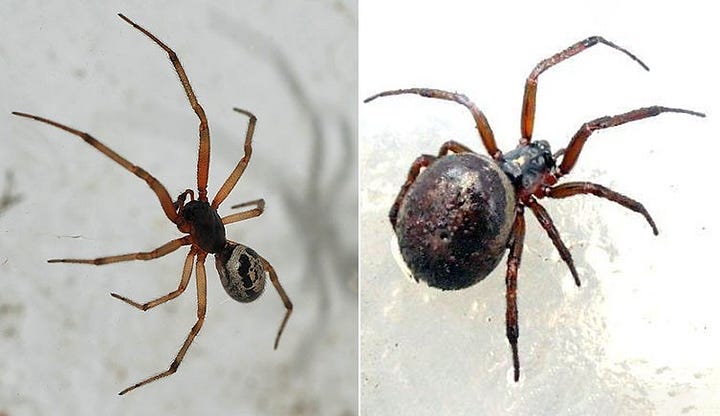
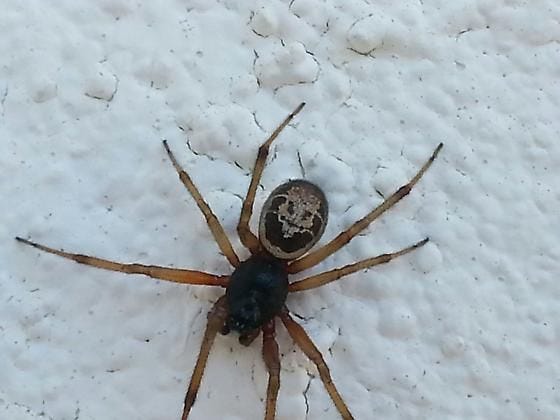
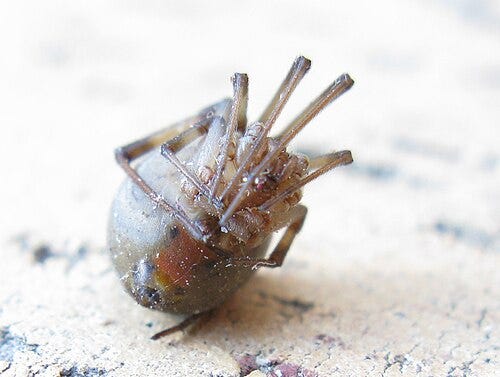
They are one of the few UK spider to play dead, known as thanatosis (apparent death) where they tuck their legs close to their body and remain limp and according to the Oxford Academic, males have been known to include this in their mating display as it’s considered attractive to the female spider.
They are perfectly harmless and act as wonderful pest controllers, feeding on insects, other spiders. This spider has little interest in you and is in fact, is quite shy and reclusive.
So next time you see a spider in your home, take some time to study it and see if it really is a threat to you. Relocate it outside if it’s a real trouble, but never ever kill a spider - they are far too intelligent and special for that!
I wrote a detailed Substack on ‘Why Spiders are so important?” last year - I’m quite pleased with this one so do take a moment to read if you are interested and want to learn more!
No posts
Comments
Nothing yet. Say the first thing.
Sign in to join the conversation.