
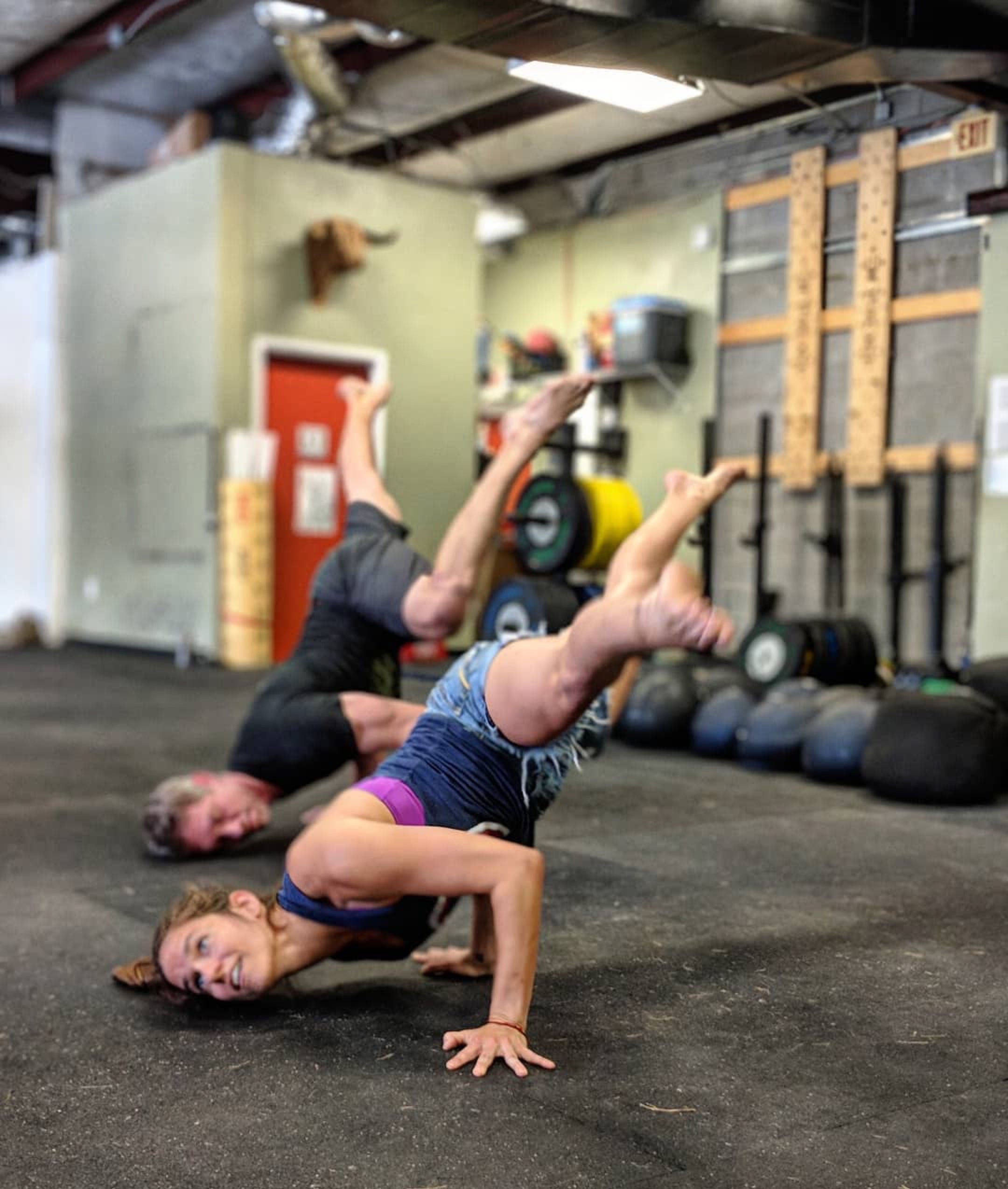
Let’s say it’s nighttime in a busy city square. It’s well lit, but from odd angles so most of the crowd are just silhouettes. I’m walking with my wife, and we get separated -- so I start to scan the crowd. I’m pretty sure that from even a moderate distance, I could pick out her silhouette from a group. But I’m 100% certain I could spot her if she’s walking.
We all analyze movement constantly because we’re looking for what the person’s body is communicating about their thoughts and mood. We often don’t even realize that we’re doing it. But it goes beyond that -- we can also recognize people just by their movement, get an idea of their past, and even get a limited glimpse of their future.
People have what I often think of as a movement fingerprint. No two people move the same. Though “fingerprint” is still not the ideal term, because a person’s movement patterns can change over time -- albeit slowly. Movement voice, maybe?
Whatever you want to call it, the way you move through the world communicates so much about you. At its most basic, we can tell a lot about a person’s general lifestyle just by how they walk -- or even just how they stand. Modern jobs that involve a lot of time sitting at a computer tend to make people hunch forward with their shoulders and upper back, something that is exacerbated further by all the staring downward at our phones. Hip flexors tend to be tighter in most western workers. Glutes are often weak.
Don’t even get me started on the lack of core stability in most people. There are endless articles about back pain, full of all kinds of theories up to and including the idea that our evolution into bipedal creatures has put strain on our spine that still hasn’t been fully figured out by nature. (For the record, I think this theory is a reach.)
The end result is a very particular set of patterns that deepen and harden as we age. There are basic patterns that seem to arise from particular lifestyles, with minor adjustments based on the variations of each person.
It goes beyond mere mechanics, though. Within the body are the motivating forces of our thoughts and feelings. When we’re frightened or sharply injured we might exhibit the startle response, where our posture collapses inward and our limbs want to fold up to protect us. When we’re angry our brows furrow and fists clench. Returning from a vacation, a friend or coworker might comment on how relaxed we appear for the one or two days where we’ve allowed our shoulders to drop away from our ears.
We wear our hearts on more than just our sleeves; the entirety of our structure exhibits how we’re feeling. Persistent negative thoughts and feelings can keep you in a shrunken state. You can exhibit the startle response from just a momentary fright, but so too can it become your normal posture if you live in a state of constant fear or even low-level worry.
Further still, there’s evidence out there suggesting that conscious efforts to change our expressions and posture can have an affect on our mood. For example, smiling even when you don’t want to may conjure more happiness. And more than one business coach has told me of the benefits of holding a “power pose.” (That is, standing confidently like Captain Morgan prior to a big presentation can help you nail it.)
In short:
The way you stand and move is heavily dictated by the real physical movements of your daily life.
Your movement is further affected by how you feel and what you think.
Conversely, how you feel and what you think may be affected by your movement.
Knowing all of this, what do you think YOUR movement voice is like? Does it mutter or stutter? Is it a whisper? Can it sing?
Movement can be a powerful diagnostic tool as well as medicine for what ails us. Our bodies can be an outcome of our lives and also a source for change.
Too often, we think we are the way we are and that’s all there is to it. But central to how I train myself and my clients is the belief that as long as we are still alive, we are capable of change and growth. We may not always have the time or capacity to go as far down the road of change as we might like, but I do believe that some kind of change in the direction we want to go is possible.
What does your movement say about you? Further, how do your thoughts and feelings show in your movement?
Or to phrase it more actively: what do you want to say with your life, and how do you want to move? These two things are intertwined, and the sooner you can recognize that the more effectively you can improve both.
Everyone has something different to say through their lives and efforts. It’s up to you to find your voice in that regard; you have to solve your own problems. But I want to make a case for using dedicated physical practice as a first step in making change, and there’s a very particular reason why.
Whenever I am confused or overwhelmed, or my mind is blank and I’m completely devoid of answers, with no idea what to do next, the one thing I can always do is take small steps to improve my health. I can take measures that will help me heal and process better. Steps like drinking more water and less alcohol. Or taking a walk.
Even when you’re in a place of limitation, like a major injury, there’s always a little something you can do. A broken leg means your arms are still available for work, for instance.
At any given moment I can become more fit, even if it’s slight.
Being more fit means access to positions of confidence. It means communicating what I’m feeling more clearly. Understanding movement seems to help me read people better, too. I can quickly assess how they're doing with just a glance.
It becomes a positive feedback loop, where physical fitness can help me feel better, and feeling better makes movement easier, and so on.
I have dealt with mental health issues for as long as I can remember. I’ve also been through the standard battery of frustrations that can arise in modern life, finding myself broke, dumped, betrayed, unmotivated, terrified, and utterly alone -- sometimes all at once. The worst thing of all after taking a big hit in life is, in my opinion, the looming question of “What the hell do I do next?”
My answer to that has long been: GET MOVING. Doing what almost doesn’t matter -- I just needed to move. I needed to not be sitting and staring at the wall. I needed to get out of my head and back into my body.
For a long time I did this by planning deliberate interruptions. Example: a regularly scheduled slot of volunteering at the animal shelter. Even just once a week. But this still has its flaws, as it relies on something external to oneself.
So as I’ve gotten older, my mantra evolved: JUST TRAIN.
You don’t need to figure it all out right now. The answers will come… or not. Change will happen, one way or the other. The passage of time is inevitable. Maybe you do need to take specific action and give particular answers about something, soon. But in the meantime, JUST TRAIN.
There’s a reason I use the word “training” instead of “exercise.” I’m not talking about hopping on a treadmill and running until I sweat out all the bad stuff. I’m talking about a physical practice of some sort, something that requires a presence of mind and moving your body through space. General exercise can be training, yes, but many other forms of movement can also fit the bill. Dance, climbing, hiking, or positional practice for a martial art. Heck, training your dog is also training for you.
While training itself won’t solve our problems, it does improve our bodies and minds in a way that provides a better basis for change.
I encourage you to think about your body and movement as representative of more than just how much you exercise. The way you walk, sit down, get up, and stand can indicate so much. Where you’ve been, what you’re thinking, how you feel, what you hope for, and more. When you’re moving about the world, what is it that you’re telling everyone? What is it you’re telling yourself?
No posts
Comments
Nothing yet. Say the first thing.
Sign in to join the conversation.