

Let me say something that might get me kicked out of the summer vacation group chat.
Summer is not automatically the best time to travel.
I know. The kids are out of school. Everybody is posting beach pictures. Your group chat suddenly remembers that passports exist. It feels like the obvious time to go somewhere.
But summer also comes with packed airports, crowded attractions, heat that can make sightseeing feel like a personal attack, and prices that will have you staring at your cart wondering if you really need a vacation after all.
Meanwhile, fall and winter are sitting right there.
Depending on where you’re going, traveling later in the year can give you better weather, fewer crowds, seasonal experiences you completely miss in summer, and sometimes better value for your money.
And for the traveler who wants the trip to actually feel good, not just look good on Instagram, that matters.
What Makes Fall and Winter Travel So Good?
First, let’s clear something up.
Late-year travel does not mean spending November freezing somewhere in a parka.
While one part of the world is pulling out winter coats, another is entering warm weather. Even in destinations where temperatures are dropping, the change in season can completely change the experience.
The real advantage is timing your trip around the destination instead of automatically timing it around summer.
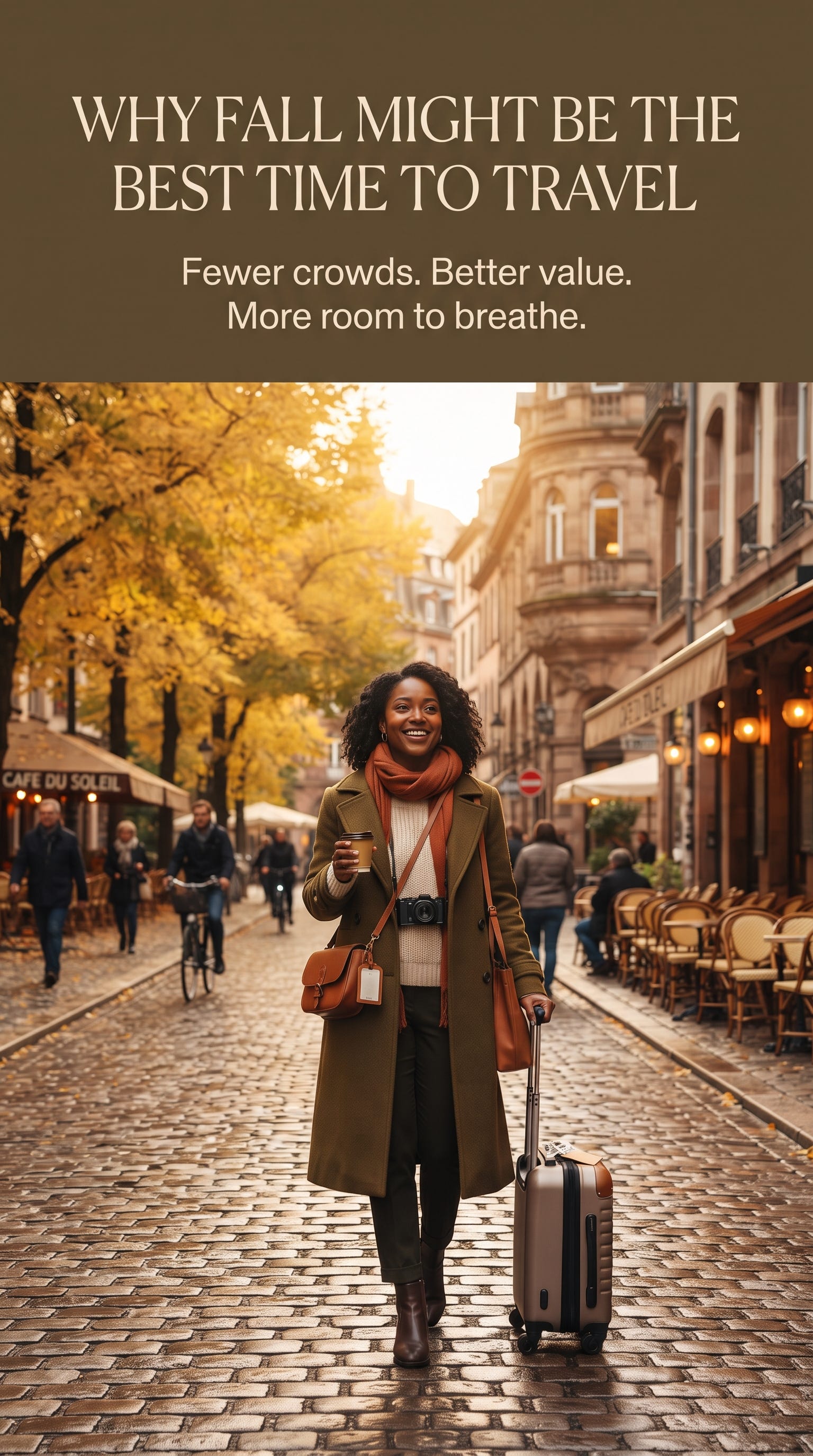
For many destinations, September and October fall within what’s known as shoulder season, the period between peak season and the true off-season. Depending on the destination, that can mean pleasant weather, lighter crowds, and better value.
The important part is that we’re not chasing cheap.
We’re chasing value.
And those are not always the same thing.
1. You May Get More Trip for Your Money
Let’s start with the obvious one.
Travel is expensive.
But traveling outside peak season can sometimes mean less competition for the same hotel rooms, tours, restaurant reservations, and experiences.
Maybe the hotel category you wanted is finally within budget.
Maybe you can upgrade the room.
Maybe you can afford the private food tour instead of skipping it.
Maybe your money goes toward an experience you’ll remember instead of paying peak-season pricing just because everybody else decided July was the only month available on the calendar.
That’s how I want you thinking about travel.
Not: “How cheap can I make this?”
But: “How much experience can I get from the money I’m already comfortable spending?”
And remember, fall does not automatically mean cheap. Demand, holidays, festivals, flight availability, and the destination itself all affect pricing.
The goal is to find the season when your destination gives you the experience and value you’re looking for.
2. Fewer Crowds Can Completely Change a Destination
Listen.
Some places are beautiful in summer.
They’re also beautiful without somebody’s entire family standing in front of you.
One of my favorite things about traveling outside peak season is simply having more room to experience where you are.
That can mean:
shorter lines at major attractions
easier restaurant reservations
calmer museums and historical sites
more relaxed streets and public spaces
fewer strangers accidentally starring in every picture you take
And that last one matters. I’m sorry. 😂
For solo travelers and women who prefer intentional small-group travel, that breathing room can change the whole mood of a trip.
You’re not racing through the destination trying to beat crowds.
You’re actually in it.
Having coffee without watching the clock.
Sitting through another glass of wine because nobody is rushing you.
That’s the kind of travel I want more of.
3. The Weather Might Actually Be Better
Baby, sightseeing in extreme heat is not luxurious.
I don’t care how expensive the hotel was.
If I’m sweating through my clothes while standing in a two-hour line, we need to reevaluate some decisions.
This is one reason fall travel has become increasingly attractive, especially in destinations where summer temperatures can make full sightseeing days exhausting. Recent travel-industry reporting has also noted growing September and October demand from travelers looking to avoid peak summer heat and crowds.
Depending on the destination, fall can give you comfortable walking weather without sacrificing the experiences you actually came for.
Winter creates another opportunity entirely.
Instead of escaping your hometown for another hot place in July, why not save that tropical getaway for January or February when you’re genuinely tired of looking at gray skies?
Suddenly that Caribbean water hits a little differently.
4. You Get Experiences Summer Travelers Completely Miss
This is where people mess up.
They think traveling outside summer means getting some watered-down version of the destination.
Sometimes you’re actually getting a completely different version.
Fall can bring:
wine harvests
food festivals
seasonal menus
harvest markets
cultural celebrations
Winter can bring:
Christmas markets
ski destinations
northern lights experiences
tropical escapes
cozy mountain stays
holiday cruises
You aren’t necessarily missing the “real” destination by traveling later.
You may be seeing a side of it summer travelers never experience.
And THAT is the kind of travel I love.
I don’t just want to say I went somewhere.
Friend, I want the trip to have a personality.
5. A Late-Year Trip Hits Different
By September, the year has been year-ing.
You’ve worked.
You’ve handled everybody’s emergencies.
You’ve attended birthdays, weddings, graduations, meetings, appointments, and whatever else life decided belonged on your calendar.
Then suddenly it’s October and we’re discussing Thanksgiving like January wasn’t twelve minutes ago.
That’s why I love the idea of having something waiting for you toward the end of the year.
And it doesn’t need to be some huge two-week international production.
It could be:
four nights somewhere warm
a cruise
a mountain cabin
a solo food trip
a small-group getaway
a few quiet days somewhere you’ve never been
Sometimes you don’t need another productivity system.
You need to go somewhere.
Sometimes, but not always. Fall can offer better pricing in destinations entering shoulder season, but airfare and hotel rates still depend on demand, events, holidays, and your exact travel dates.
That’s why I don’t want you automatically assuming October equals cheap.
Compare dates.
Look at the destination’s actual seasons.
And don’t forget that Thanksgiving, Christmas, New Year’s, school breaks, festivals, and major events can send prices right back up.
The better question is:
When does this particular destination offer the best combination of weather, crowds, experiences, and price for me?
Absolutely, if the destination matches the experience you want. Winter can be perfect for escaping somewhere tropical, embracing ski season, chasing the northern lights, exploring festive cities, or simply getting away during a quieter part of the year.
Just research before you fall in love with the pictures.
Some destinations reduce attraction hours, tours, ferries, or restaurant schedules during their true off-season.
Don’t start with somebody else’s “Top 10 Fall Destinations” list.
Start with what you want.
If you want culture and comfortable sightseeing
Think about destinations like:
Portugal
Spain
Italy
France
Ireland
If you want warmth
Look toward:
the Caribbean
Mexico
Hawaii
warm-weather cruises
If you want to embrace the season
Consider:
European Christmas markets
mountain retreats
ski destinations
northern lights trips
But here’s the part I care about most:
Don’t pick a destination because everybody else says it’s where you should go.
Ask yourself what you’re craving.
Rest? Food? Culture? Warmth? Adventure? Quiet? A little bit of everything?
Start there.
Then choose the destination.
Before you fall in love with the pictures and start mentally packing outfits, check a few things.
Look at the actual weather. Average temperatures and rainfall matter more than somebody’s perfectly edited Reel.
Check seasonal closures. Some tours, restaurants, ferries, and attractions reduce their schedules outside peak season.
Watch the holiday calendar. Thanksgiving, Christmas, New Year’s, school breaks, festivals, and major local events can dramatically affect availability and pricing.
Compare flexible dates. Moving your trip by even a few days can sometimes change your options.
Book what matters most first. If there’s one hotel, restaurant, tour, or experience that would make the trip for you, don’t build the entire vacation and then discover it’s unavailable.
Most importantly, stop assuming vacation season begins in June and ends in August.
It doesn’t.
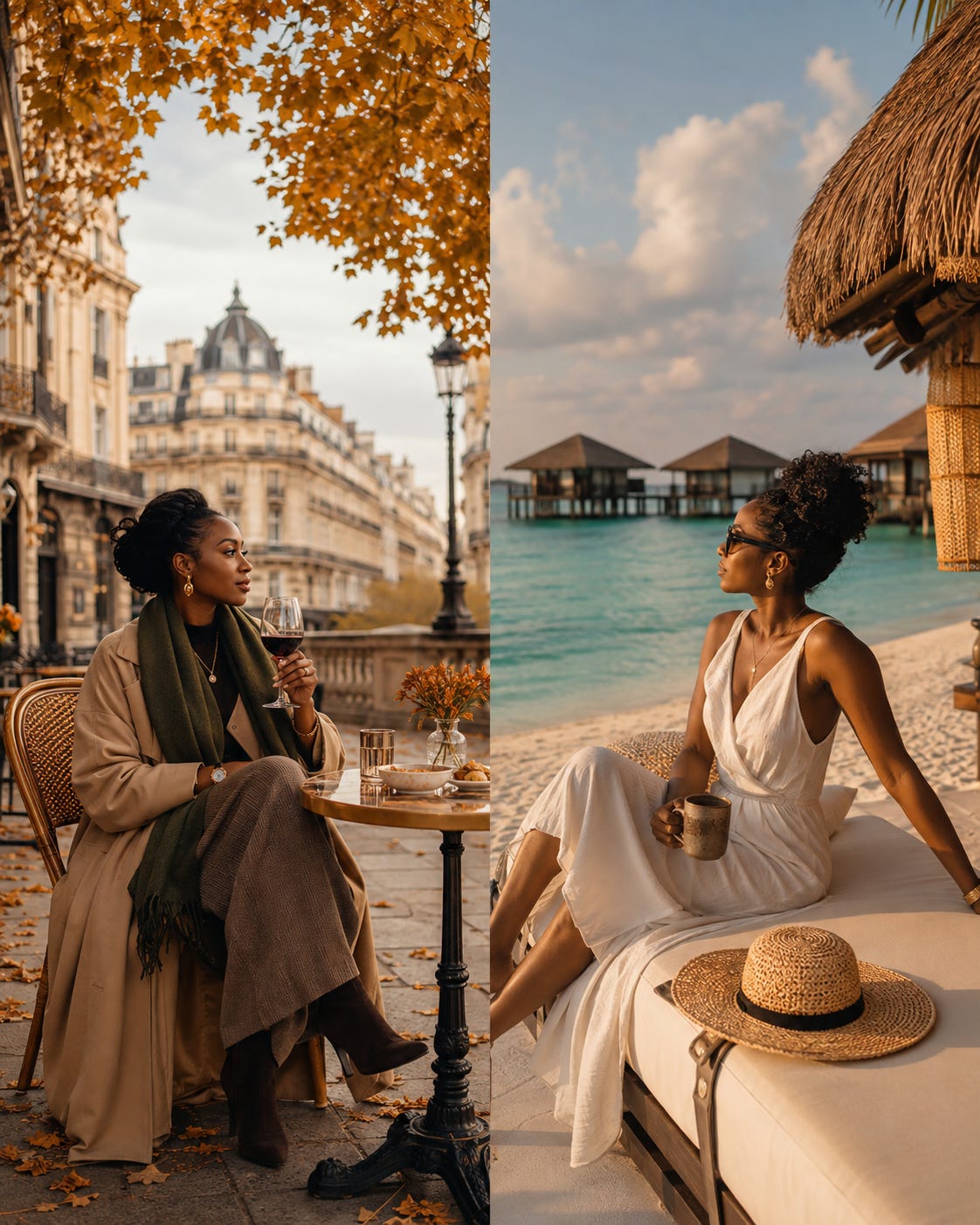
Summer will always have its moment.
But it doesn’t deserve custody of every vacation day you have.
Fall and winter can give you fewer crowds, comfortable weather, completely different seasonal experiences, and sometimes more room in your budget for the parts of travel you actually care about.
More importantly, you get to choose a trip based on how you want to feel, instead of automatically traveling when everybody else does.
That’s the kind of travel we’re building around inside Curated Passport Collective. Thoughtful destinations, beautiful experiences, realistic pacing, and trips that make sense for the woman actually taking them.
So if you’ve been thinking, I need to go somewhere before this year is over...
Baby, maybe you do.
Join Curated Passport Collective and let’s figure out where you’re going next.
Comments
Nothing yet. Say the first thing.
Sign in to join the conversation.