
Recently, a woman caught my eye at the National Gallery.
She was pushing a pram around their current exhibition on the seventeenth-century Spanish artist Francisco de Zurbarán.
The woman and I found ourselves in the final part of the show: a room entitled ‘Private Devotion’. It was full of intense depictions of religious ecstasy and sacrifice, originally intended for small chapels and private homes.
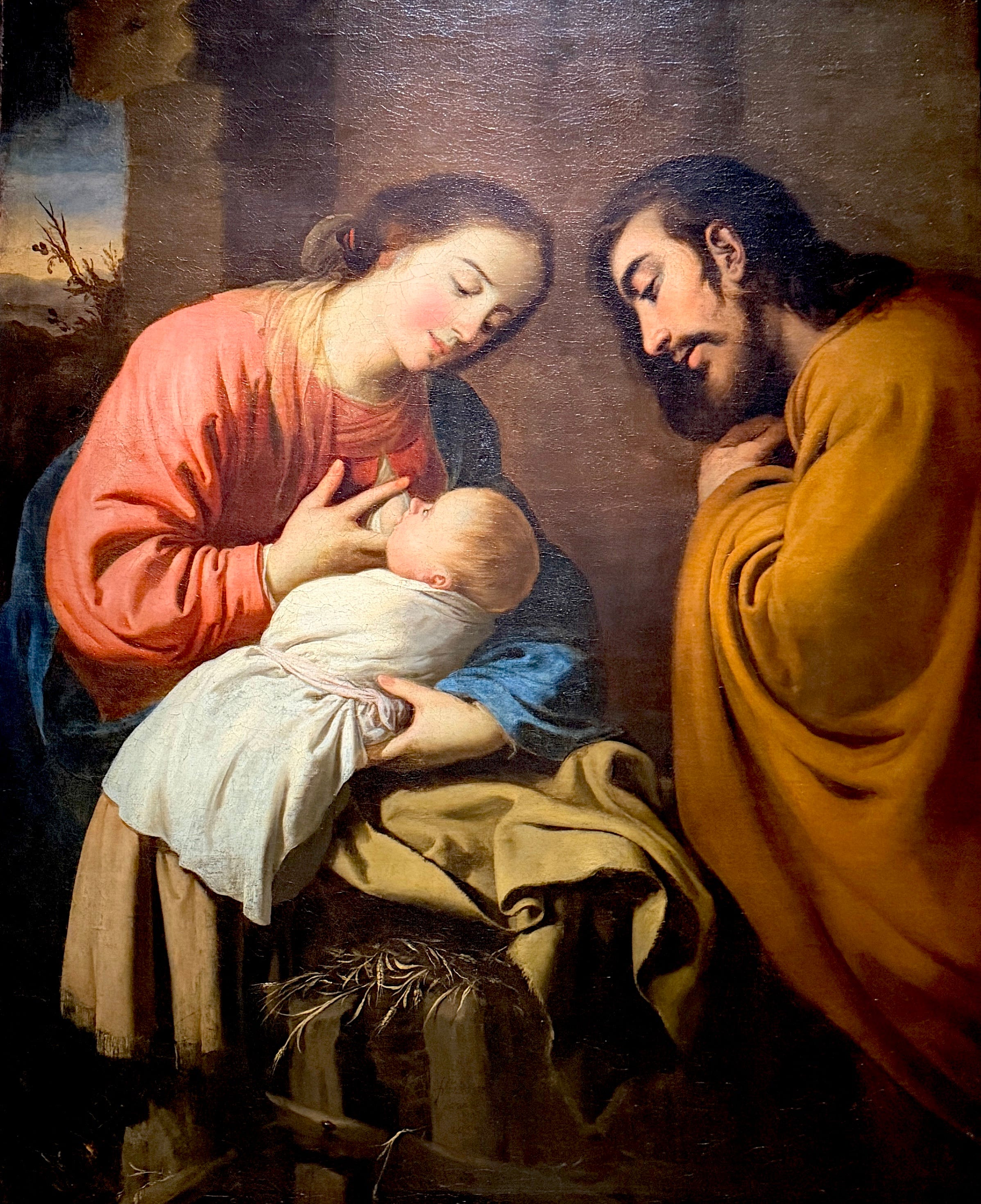
In the corner there hung a painting of the Holy Family. It was a picture of Mary, Joseph, and the Christ child. The baby is happily nursing from his mother’s breast. Outside their humble hut, the sky is orange and blue. We are in the desert.
But I was not there to see the Holy Family.
I had come to marvel at Zurbarán’s spectacular Agnus Dei. It is not a very big painting. It is a simple, soft portrait of a trussed-up lamb. But it carries a powerful aura. It is an allegory for suffering, martyrdom, and sacrificial innocence.
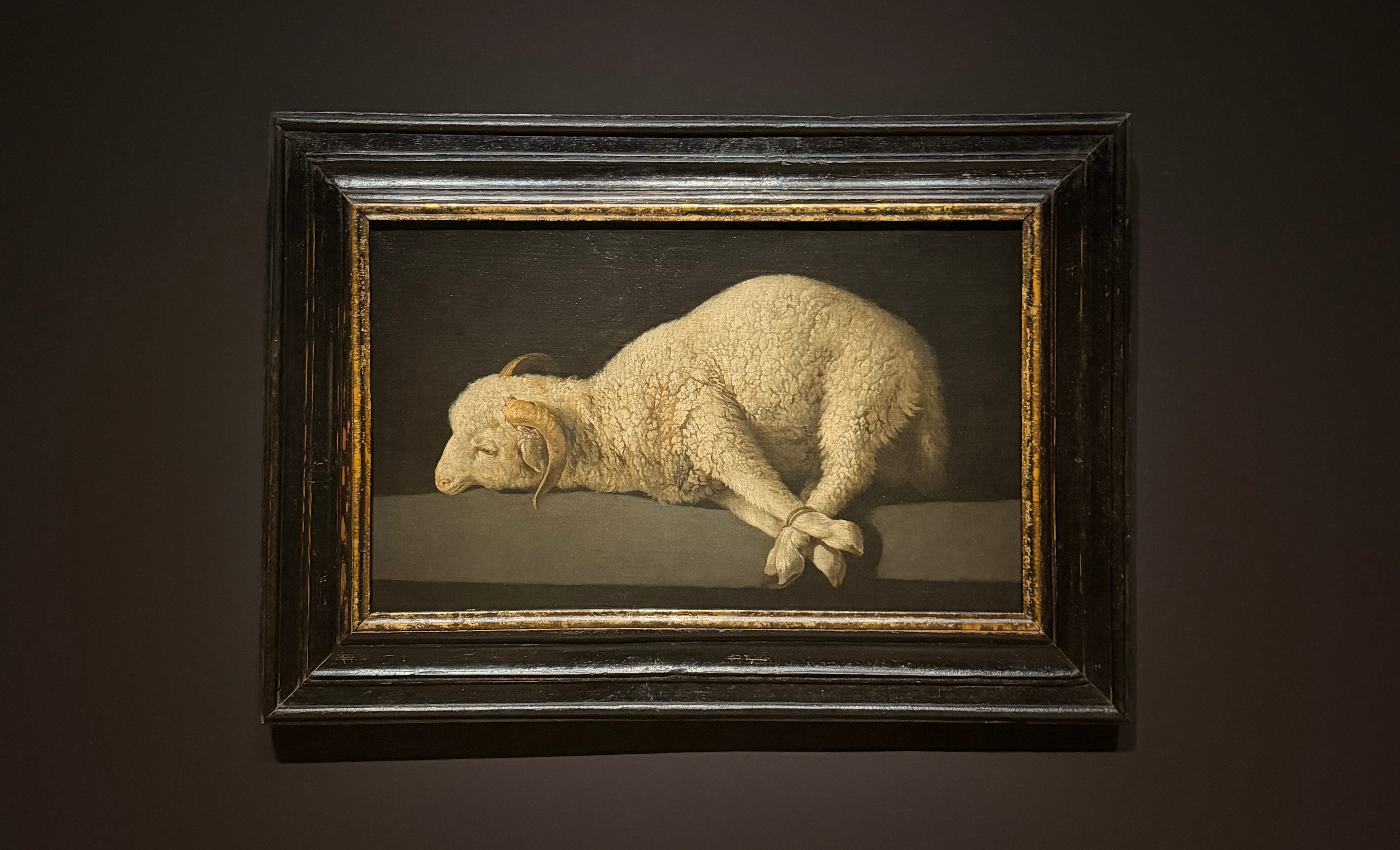
But then I overheard the woman on the other side of the gallery. She had walked straight past the penitential masterpiece, and had instead stopped in front of the Holy Family.
Cradling her baby, in a hushed, excited voice, she said something quite profound.
‘Look, there’s mummy!’
Lifting up her arm, the woman pointed to the picture of the breast-feeding Mary. For a moment, the baby was silent. The woman repeated herself.
‘She’s just like mummy!’
The baby gurgled.
I turned around, and went to get a better look.
…yes, I thought. She’s spot on.
In the lowly light of the stable, our eyes follow the mother and father as they look upon their child. He is not a precocious Christ-figure, but is instead a swaddled, vulnerable infant. There is hay in the manger and dirt on the walls. It is simply an intimate portrait of a mother with her child; yet, in that simplicity, it touches upon something universal.
I looked again at the woman in the gallery, chatting to her infant, and then back at the painting. There they were: two mirror-images. Both were domestic, and in many ways unremarkable, but they also spoke to one another in a miraculous way.
That, I suddenly realised, is how Zurbarán’s paintings are supposed to work. In his careful echoing of the natural world, in his plain backgrounds, deep shadows, and wrinkled fabrics, these paintings seek to refract the everyday through the lens of the divine.
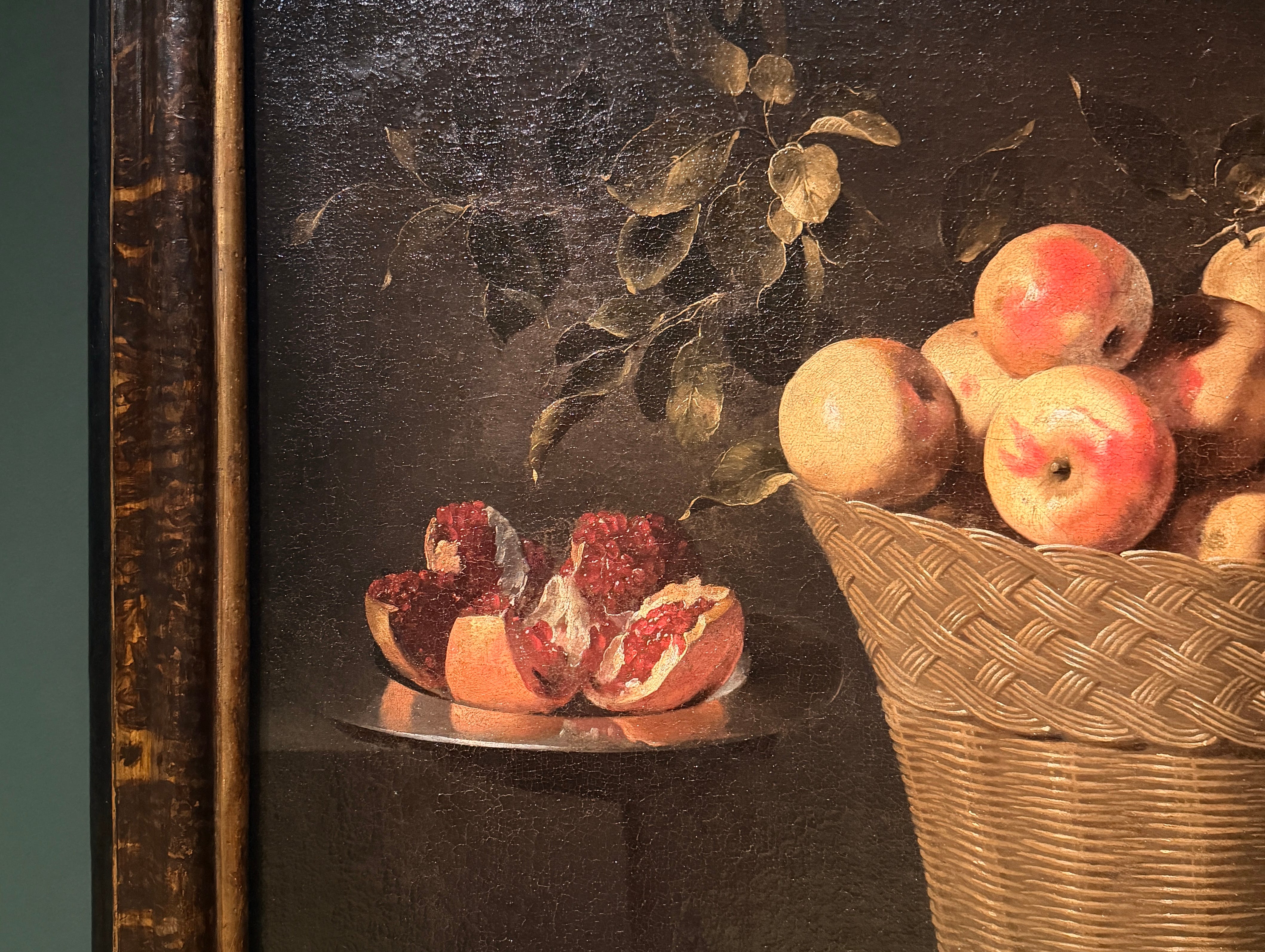
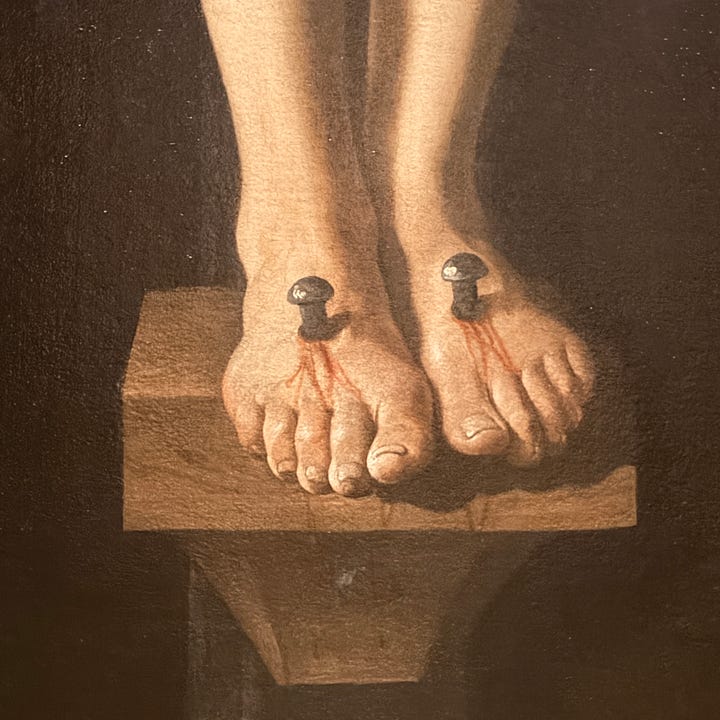
Stylistically, Zurbarán’s paintings are precise and moody. Everything in them is meditative. Though his subjects range from lowly baskets of fruit to elevated scenes from the Bible, all are rendered with the same detailed reverence. Look closely and you’ll see that he pays the same attention to a half-eaten pomegranate as he will to Christ’s bleeding wounds.
Moreover, Zurbarán is not committed to a hierarchy of genres. His still lifes and portraits give the impression that there is something epic going on beneath the surface. Humble shepherds emerge from his tenebrous canvases as spiritual archetypes. A basket of fruit represents the bounty of God. A sheep evokes the passion of Christ. A hooded monk is a memento mori — a reminder of Death.
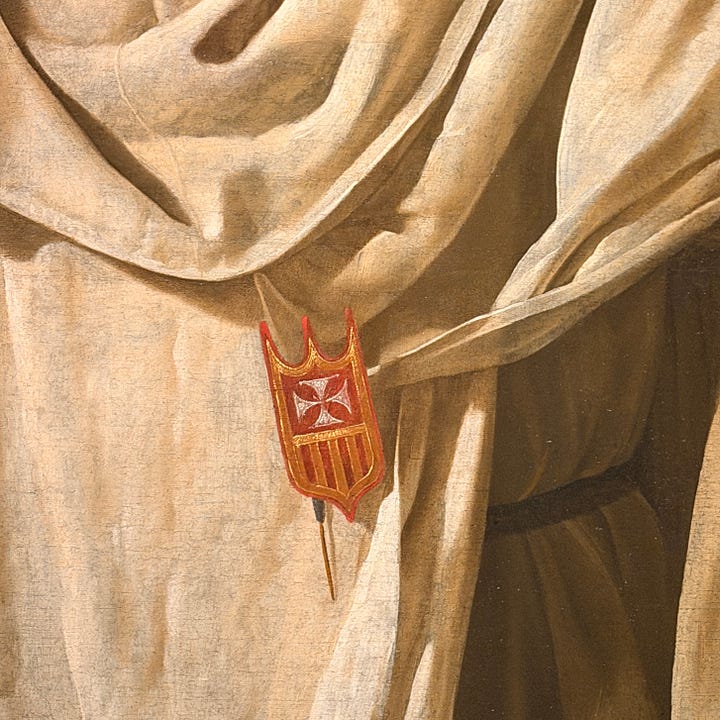
These works operate as lenses, filters, conduits. These are windows into the Catholic penitential imagination. Nothing is quite what it seems, and everything is symbolic.
More than this, though: in these paintings the process of looking becomes a form of prayer. Caught up in the rich textures of Zurbarán’s fabrics, woods, and fibres, we – the viewers — are engaged in a form of visual meditation.
One is reminded that these were never simply intended to be paintings in a gallery. These are, at their core, spiritual objects. We do not look at them, but through them.
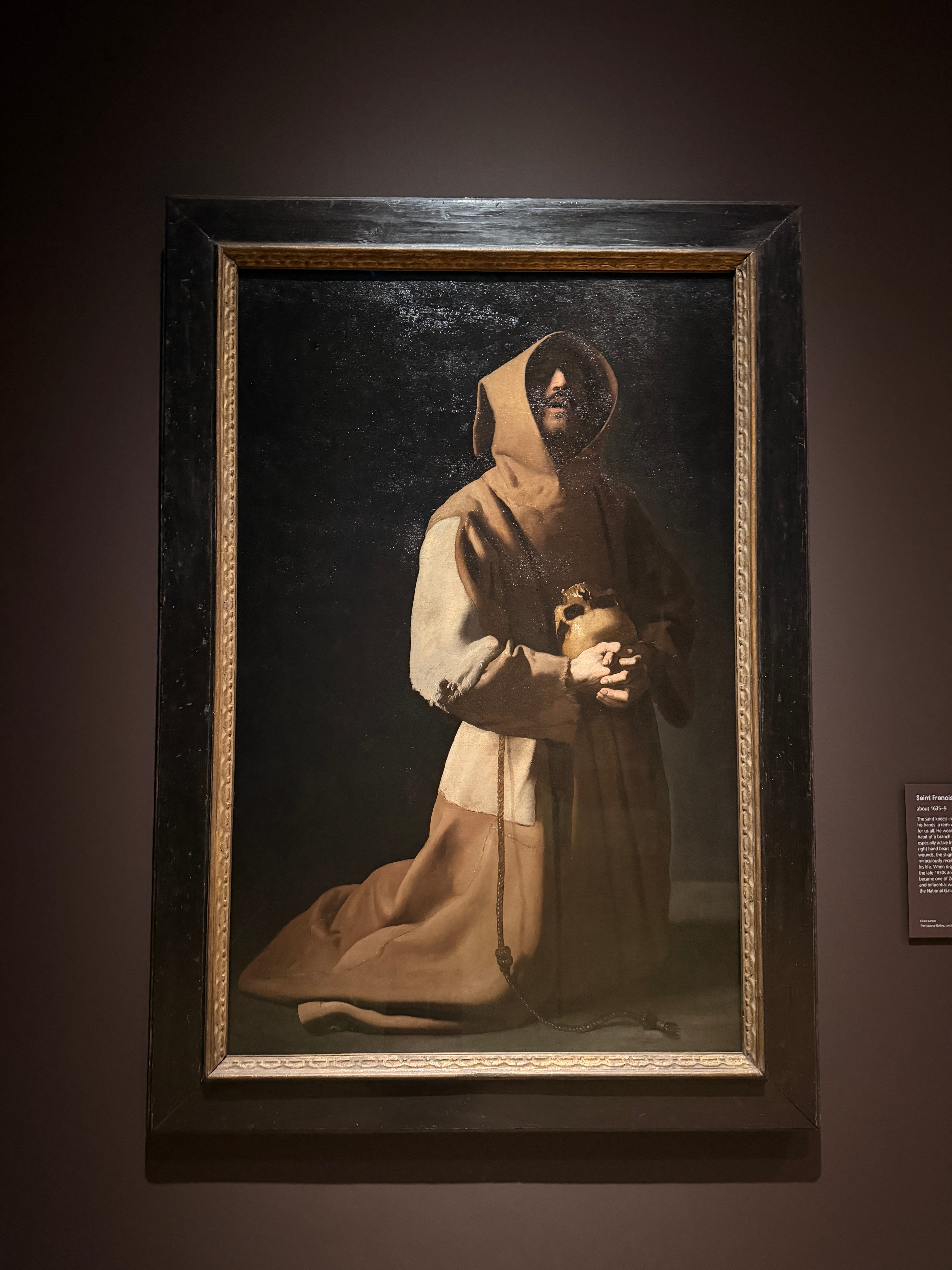
This is the first monographic exhibition of Zurbarán’s work to reach the UK, and the impressive collection does service to his Catholic seriousness.
In the high-ceilinged basement of the National Gallery’s Sainsbury Wing, these gloomy canvases have space to breathe. The lighting is appropriately low, encouraging slow, attentive looking. The atmosphere is cloistered and reverent.
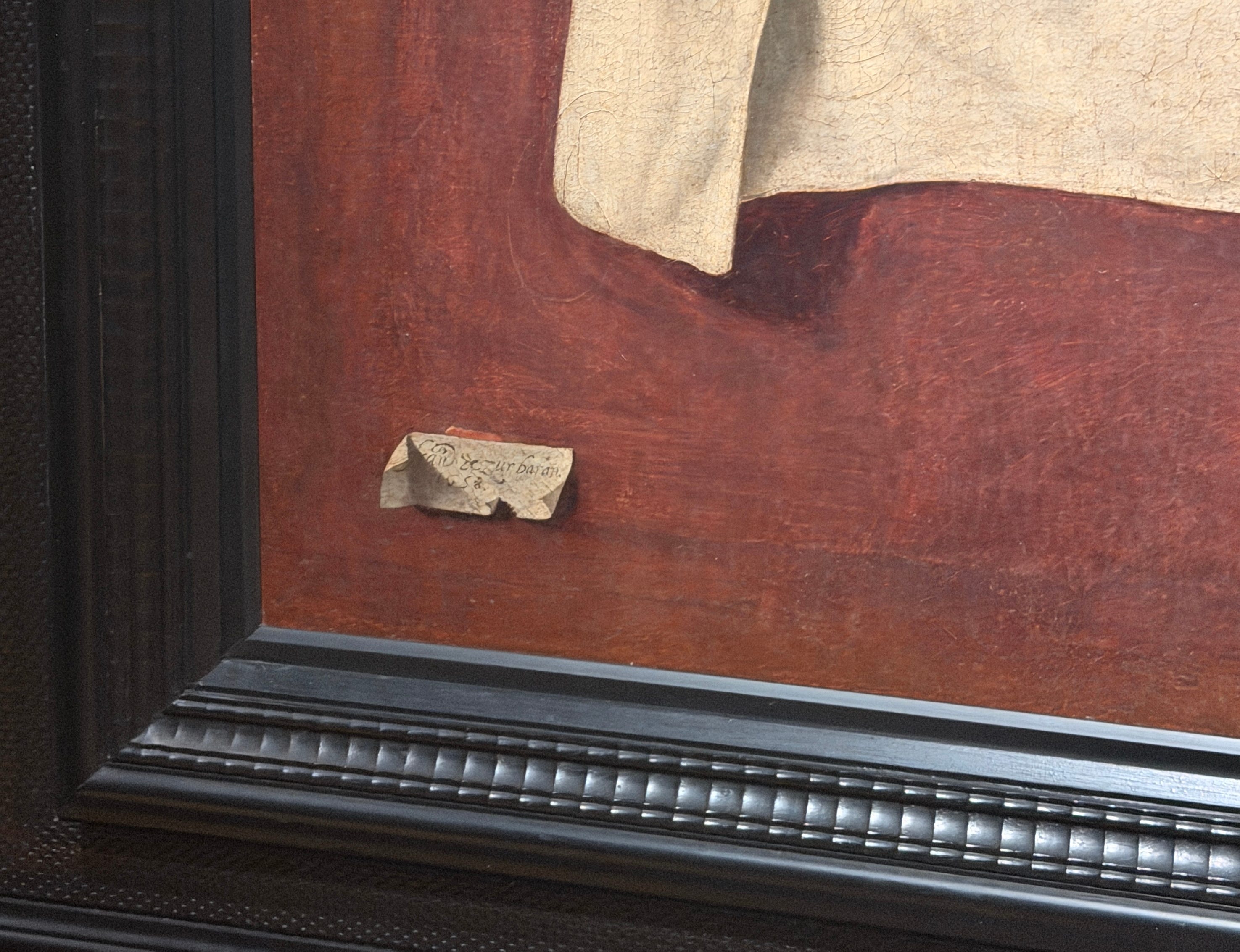
Zurbarán is sometimes called ‘The Spanish Caravaggio’, and it’s clear to see why. Through a technique called 'chiaroscuro', which employs strong contrasts of light and shadow, he manages to blur the boundaries between painting and reality. This was something the Italian Baroque painter Caravaggio was also famous for.
But Zurbarán also consciously plays into this dramatic naturalism in other ways. This is why his signatures sometimes look like they are peeling off the canvases, and his figures protrude into the space in front of them. That illusion can deepen the viewer’s spiritual experience — especially if they recognise themselves, or their surroundings, in that image.
And so, we come back to the room with The Holy Family and the Agnus Dei. The mother and child are still looking at themselves, reflected in the image of the breastfeeding Virgin.
‘Look, there’s mummy!’ she said again.
I had come to the exhibition to see the Agnus Dei. In fact, for months, I had been planning to centre this review around that painting. Yet when I left the gallery, it was the exchange between that mother and her baby that lingered in my mind.
Perhaps that proves Zurbarán's point. The divine, the sublime: these things are not just found in conventional places. The ordinary intimacy of daily life, a simple conversation between family members… that is the stuff of real profundity.
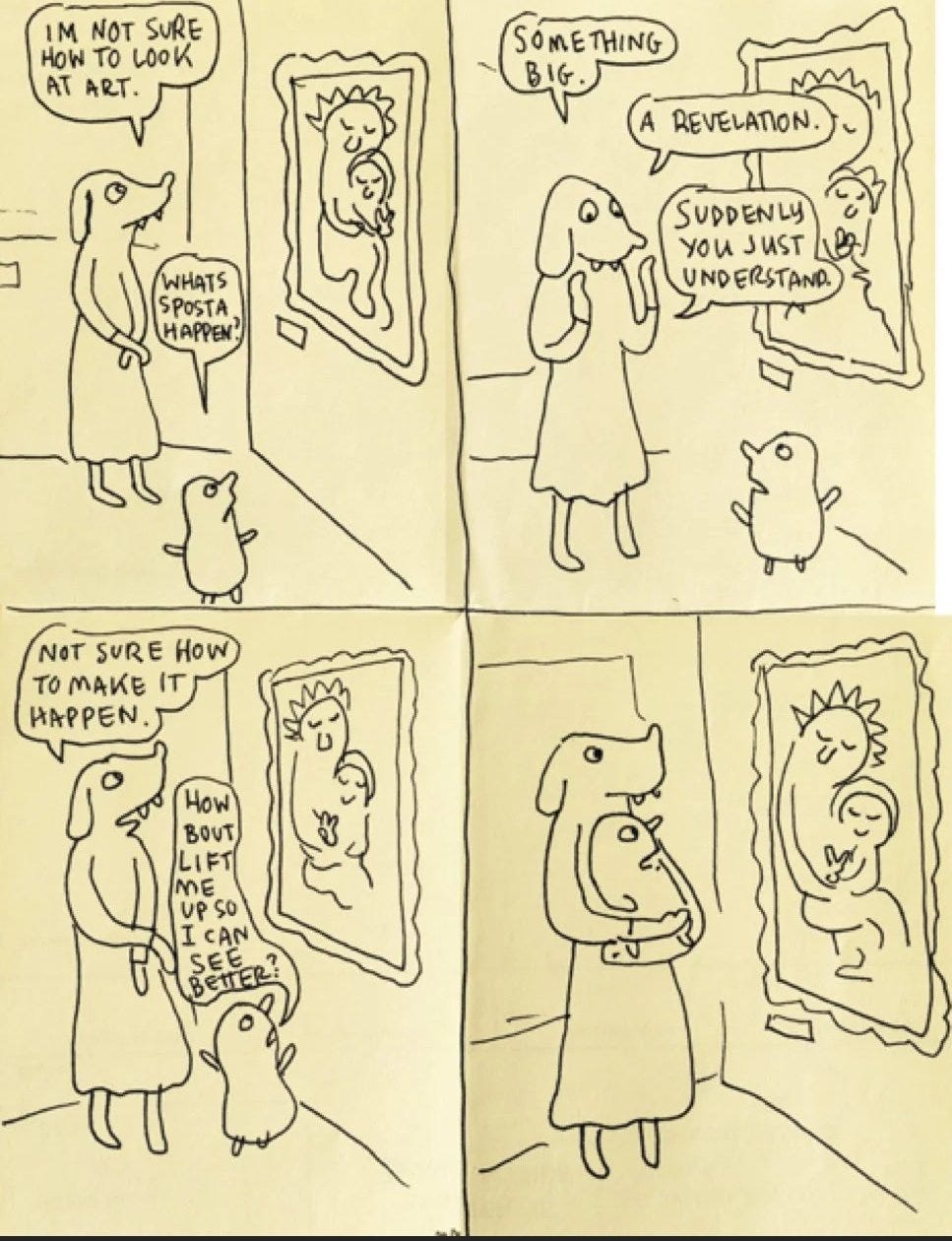
For a long while after seeing that exhibition, I’ve been put in mind of a cartoon — the cartoon I always come back to — of how to look at art. If you’ve been here for a while, you’ll have seen it before. But now I’ve seen it in the wild.
Life does imitate art, and vice versa. That is why art is so important.
Thanks for reading! If you’d like to support my work, but can’t commit to a full-time subscription, why not leave a tip?
Check out my Instagram at @culture_dumper and my TikTok @theculturedump, where I post daily updates.
Comments
Nothing yet. Say the first thing.
Sign in to join the conversation.