
The 1990s to 2008 marked a period of pop culture where a level of “vulgarity” was the norm. The coming eight years from 2008-2016 could be called the “Reddit Wave”. This is in contrast to Vulgar Wave, where pop culture catered to the taste of heterosexual males in their early adulthood. Defined by offensive comedy, conventionally beautiful women, etc, the late 2000s to mid-2010s saw a hegemonic shift. With media increasingly catering towards “nerd culture”, with shows like Big Bang Theory, Rick and Morty and pre-2016 Marvel being in the forefront. Although the vestiges of the Vulgar Wave (the beautiful women, the offensive jokes, and action) remain, the substantive relation between these things is different.
The key is a greater degree of power fantasy by the “nerd consumer” in their media franchise. Take for example the Marvel films of the times. Generally, they are quippy male lead heroes who enact their will through violence and force of will to accomplish their goals, along the way gain a love interest (nothing unusual from the previous decades) yet their relationship with the love interest is on the whole surface level given only a few scenes to merely acknowledge such a relationship exist. We also may see the occasional protest over the hero’s actions or interest, but eventually understand that it is for the greater good. Ultimately, this plays into the implicit archetype that nerds are a, they are bad at finding a romantic interest due to their interests and b, wish to be on top of the social hierarchy. Historically exemplified by movies like Revenge of the Nerds and Mean Girls.
Hence the term “Reddit Wave”, in part because of the recent stereotype as a place where users have gotten hyper-enthusiastic for a media franchise or product and at the same time defensive and demanding their consumption not being considered “high culture”. With the Obama presidency presiding over the popular reimagination of historically “nerd franchises” as more “dark and gritty” but at the same time adopting a level of self-awareness and fears of the genre's tropes (the high techification of superhero costumes or the drapification of fantasy/medieval costumes). But also, the centralising role Reddit had in nerd culture, where a specific fandom would have their dedicated website/forum, now you can be on several subreddits of multiple fandoms all on the same website. Other significant events during those era on Reddit included Obama’s AMA, which also lent credence to the website as a serious theatre of politics.
Alongside this was the emergence of the Silicon Valley bourgeoisie, which at the time was championed as a bastion of palatable visionary liberalism. Steve Jobs in his final few years, would release the iPhone,iPod and iMac, with his legacy shaping up to the nerdy chic persona of the time. Likewise, Bill Gates, though initially reviled for his nerdiness and his monopolistic practices, has changed his reputation around through his philanthropic actions. And finally, Elon Musk, the emerging darling of the Valley, plays into the relatability to the Reddit crowd the most. Portraying himself as an avid gamer and, unlike the other out of touch oligarchs of the USA whom Reddit traditionally despised, would in contrast seem approachable and engage directly with the community through an AMA. Of note is his cameo in Iron Man Two and The Big Bang Theory, indicating his popularity within their respective viewership.
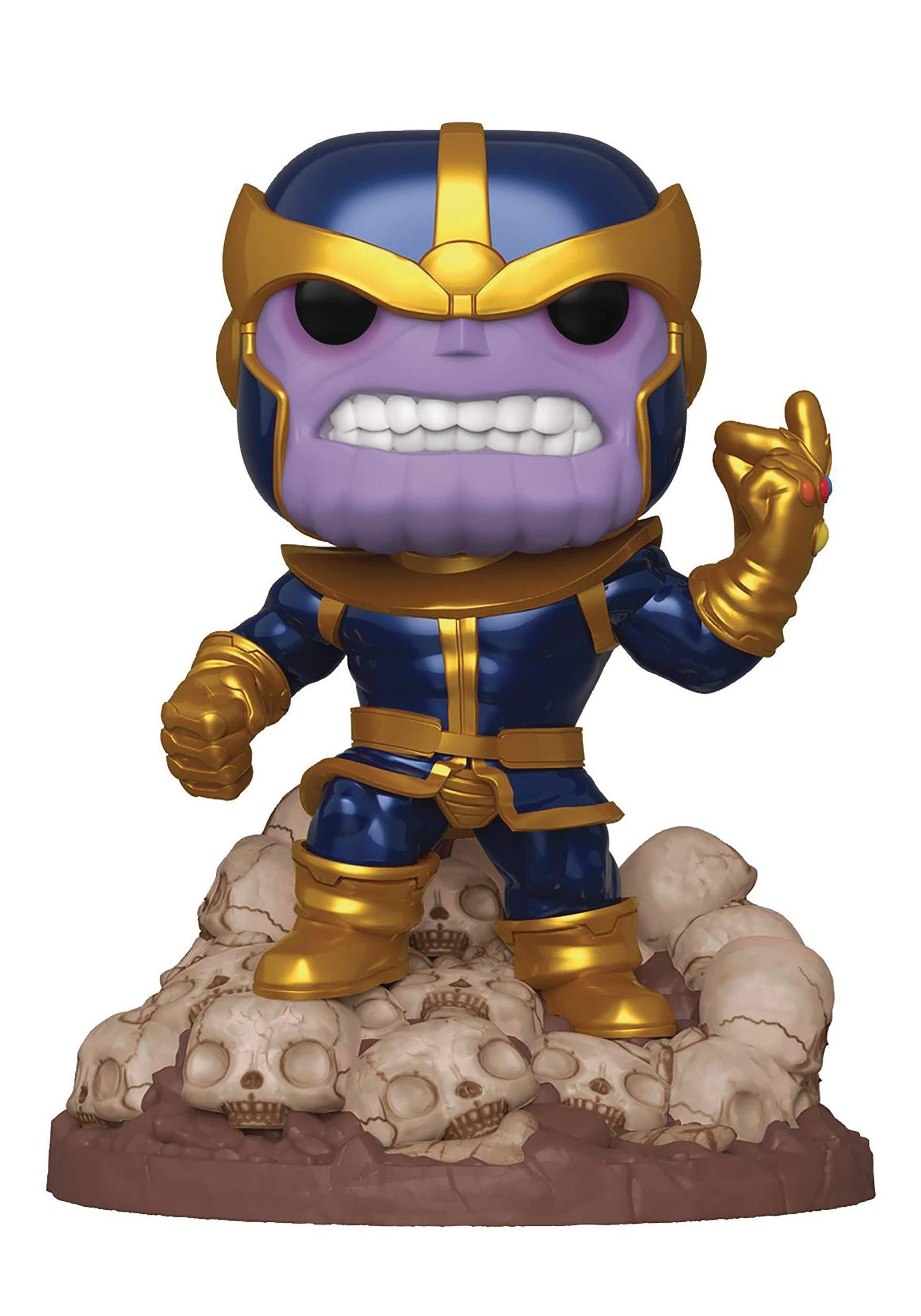
By the early 2010s, nerd culture had become the dominant culture within the new techno-bourgeosie, with Reddit itself also being a creature of Silicon Valley and actively propagating this new mode of culture within its userbase. Economically, those who grew up as nerds in the 1990s would had just entered college, if not be part of the broader consumer economy. The Reddit Wave years would also coincide with the first ZIRP period (2008-2015), where the easy access to money through low interest rates would revitalize consumer and business spending after the 2008 Recession. In combination with the previous decades of offshoring, low-cost manufacturing and Internet shopping made the production of nerd merchandise much cheaper and readily available. No longer will you have to go to the local comic store for your fandom merch when you can just easily get yours off Hot Topic or HMV. It is therefore not a coincidence that companies like Loot Crate and Funko Pop’s ‘Pop Vinyl Series’ were founded in the 2010 period.
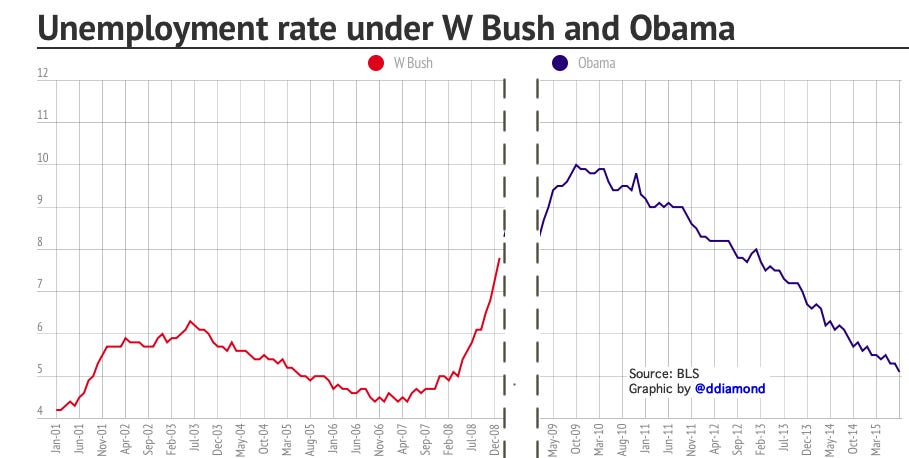
One way to interpret the Reddit Wave period is as a transitory period of creating a market for the nerd consumer base. Whilst some of this was purposeful, especially in the case of Marvel Studio’s planning for movie development. For the most part, the success of the consumer of Reddit Wave was coincidental to the market upswing of the 2010s. Still reeling from the shock of the 2008 crisis, by the end of his first term, the reduction of unemployment was making steady progress and would return to pre-recession levels by the end of his second term.
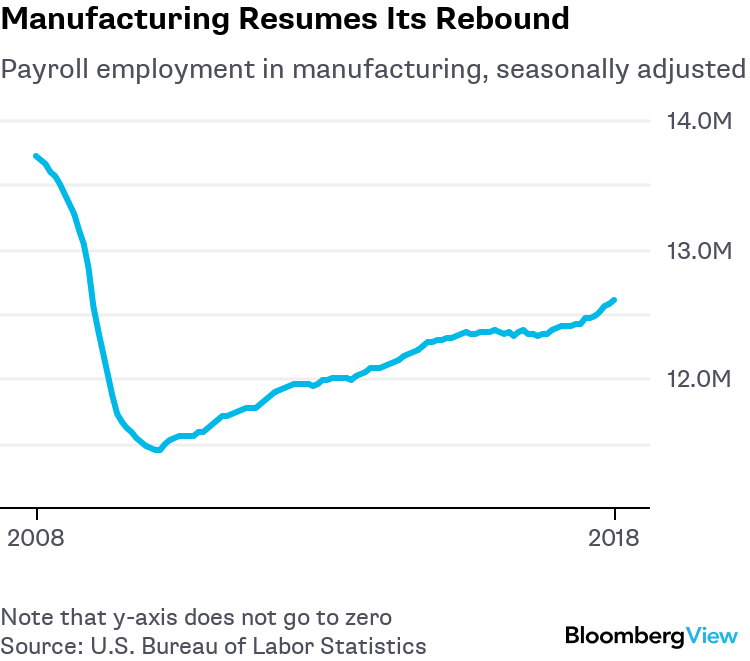
More crucial is the wage growth within the “nerdy sectors” of the economy. While wages have stagnated since 2008, this was not the case for the tech sector. By 2012, tech sector wage growth had neither suffered the massive wage dip in comparison to other industries but had been ‘outpacing them altogether’. One, therefore, must wonder if the success of Reddit Wave was largely due to its superimposition on top of the success of the nerd economy. After all, the other traditionally big consumer market driven by manufacturing jobs had already been hollowing out before the recession. By 2008-2010, had been dealt a death blow with a 16% decrease in sector employment.
Another way to view the success of the nerd consumer boom is through the lens of revenge spending. The concept was popularized during the rebound from the Covid-19 recession to explain the surge of consumer demand, theorizing that due to the suppressed demand due to societal and economic forces, when restrictions on purchasing are lifted, there would be a surge in purchases, likewise, given the context of nerd culture in the 80s-90s, where it was arguably shunned by society (as in the DND Satanic Panic) or at the very least stigmatised. There is a case of latent suppression of consumerism in that area. Furthermore, this was a time before the popularization of online shopping, and often, getting specific merchandise for the franchise you like would entail physically going to a speciality shop. Even then, there is no guarantee that the product you seek will be there. By the 2010s, when such products were not only readily available but mainstream and the label of nerd was more or less destigmatised, it could not be faulted that it was a great time to fufill your suppressed childhood indulgence.
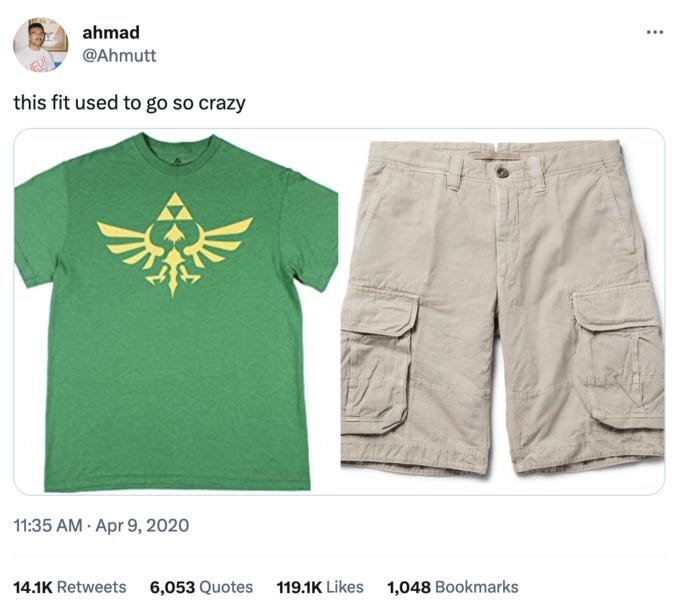
However, there was still a level of economic reservedness in the Reddit Wave consumer. Though overall demand was increasing, much of the products sold during this period were relatively low cost. The merchandise was characterised by graphic tees or mugs with the logo or character or the aforementioned mass-produced Funko Pop. Furthermore as the cinematic universe model had only been in the first two phases, there is no “forced” consumption of media projects to understand future box office events.
Only by 2016, with the first Trump presidency and the inheritance from Obama’s economic recovery, did we see the demand for more “artisanal merchandise” as well as the fruition of the cinematic universe business model. Unleashing the nerd market in all its potential.
Aesthetics and themes of the Reddit Wave
As a result of the transitory nature of building the nerd consumer market and moving towards the hegemonic cultural market from 2016 onwards, the 2008-2016 period still had some lingering effects from the Vulgar Wave years. The age and gender demographic largely stayed the same, with the core audience still being 20-30-year-old heterosexual males (although it must be mentioned that the Reddit Wave audience has much more general appeal than Vulgar Wave). Many of the tropes of Vulgar Wave had also carried on, with early seasons of Game of Thrones even embracing the violence and sex. Nor had the appeal of action movies faded, given the popularity of the superhero genre. The only major changes from the Vulgar Wave were the rebellion from careerism and offensive comedy. The latter would, unfortunately, not be discussed in this article, given that the original Vulgar Wave article gives a relatively definitive observation in the change of comedy post-Vulgar Wave, and the reasons for change in comedic style merits its own article. What is less developed is the role of careerism, as mentioned in the article, which would be further explored, as well as additional themes. But due to its amorphous and transitory nature, it will be difficult to point to a concrete theme of the era.
Perhaps the most obvious shift was the anti-careerism being a significant theme in Vulgar Wave media, more specifically, anti-office careerism. Although many today yearn for the office cubicle, back in the 90s-2000s, the office was seen as a grey and soulless environment. Many Vulgar Wave films, such as Fight Club, Wanted, and Matrix, had anti-careerist themes. Arguably, it was just a social trend of the time, with even children's movies like The Incredibles showing the banal soul-crushingness of the office environment. Yet a new trend was forming in media that embraced careerism; take for example Limitless (2011) where after taking a pill that makes one a genius he decides to join a trading firm as a way to make money. Even more of a disparity is the film Secret Life of Walter Mitty, which has similar story beats to Vulgar Wave anti-careerist films, starting with a disaffected man in the office environment secretly yearning for adventure. When given the opportunity, he takes it, reaffirming life and finding new meaning in the process. Yet what differentiates it from previous anti-careerist films is not the abandoning or destruction of the company as seen in Fight Club or The Matrix. Instead, the main character fulfils his purpose and returns to the company to finish the job. Although it is a cautious embrace of the company, it still reaffirms the pro-careerism message of the new era.
This could be down to several factors, mainly economics. Given the post-recession environment and the massive layoffs, it was easy to imagine that having a career in a strenuous economic time would be enviable. More so, given that white-collar workers were some of the hardest hit, after all, corporate America was ground zero for the crisis. But perhaps less cited is, again, the role of Silicon Valley culture in the economy. As noted in previous sections, the culture of Silicon Valley has been growing ascendant since the recession and has brought fundamental changes to office culture. Even outside the tech sector's robust employment rate and high wages. Stories of employee benefits abound, from free food to offers of freezing eggs for female employees. This was also the time when open-office designs were becoming popular. Today, many will see this as a pointless benefit that is used as an excuse from the corporate world to attract naive employees or distract from a desire for a pay raise. Back then, when the banal horror of the office cubicle was still fresh, such changes may have made careerism much more prospectable.
During the Reddit Wave, we also saw the importance of “lore” within media franchises. Although “lore” as a concept new within nerd media, given the importance of world-building in previous franchises such as Star Wars or The Lord of The Rings. It was not a necessary part of enjoying a franchise. Prior to this, much of in-universe history was viewed more as trivia or extended universe works but were not “required reading” to understand the plotline. Even Star Wars, which pioneered the multi-media model in the expanded universe, did not necessitate its consumption to be enjoyable. This is not the case nowadays, with the dominance of the cinematic universe model and with so many shows/films/comic books, each of them interlocking in plot. Keeping up with your franchise entails doing your homework.
The “lore model” really truly developed within the Reddit Wave period, most notably as a LucasFilm project, as the aforementioned Star Wars already had a developed expanded universe. But the landmark moment really was in 2008 with the Clone Wars cartoon series. At first advertised itself as a Saturday morning cartoon, over time it gained a reputation for gritty depiction of a intergalactic war. More importantly, it recontextualized the characters of the prequel trilogy into charismatic heroes. It gives the poor plot of the prequel trilogy retrospective depth, but crucially, it created a demand for characters in a cartoon show to be shown on the big screen. Although it was cancelled in 2014, the new order in Disney would inherit the expanded universe model and seems to be a complimentary fit to their sister franchise in the MCU. Their version of this was first seen in Rogue One (2016), a movie that, at its most basic level, exists to address the Death Star exhaust port plothole in the first film. But because of this recontextualization, even if it wasn’t particularly egregious, it still necessitates an addendum of sorts.
The end of the Obama administration saw another drastic change in politics; liberalism, long ascendant, had slowly lost ground to populist frustrations. Now, with the Trump presidency, it appears that liberalism is on the backfoot in the political arena. However, the liberal dominance in the cultural industry had far from reached its zenith and was still ascending even with a right-wing pushback. Nerd culture has now become a hegemonic mainstay, with yearly box office led by the MCU and Star Wars. Outside of this are the secondary players, with the DCU and Sony’s Marvel. On the silver screen, Game of Thrones had also become the most popular show with massive cultural appeal and, during its airing, was a cultural staple. Economically, things have also largely recovered, even if manufacturing had been hollowing out. For many, the horrors of the Great Recession were a fading memory, and the consumer economy had remained strong. Set to inherit this robust economy is Donald Trump, and in his first tenure, he would slash taxes and interest rates. Supercharging supply-side economics and unleashing an even greater wave of consumerism.
Next time, we will explore the contradictions between the liberal dominance of mass media and the growing strength of populist right in politics and its seeping into culture war. All the while, the consumer economy is being supercharged, and demand for nerd culture is higher than before. And how it leads to the hyper-consumerism of the “soy era”.
No posts
Comments
Nothing yet. Say the first thing.
Sign in to join the conversation.