
Organic search traffic has changed. Tim Woodall’s guest post did a really good job of setting out what’s happening and why Google is becoming a less reliable discovery engine for cultural organisations. If you haven’t read it, go and do that first.
I’m going to pick up where he left off and chip in some thoughts on how to react to the new reality.
A lot of what follows has come out of conversations we’ve been having at One Further as part of the digital strategy and content work we do. It’s a question that’s cropped up from marketing teams, heads of digital, and boards.
Now, bear in mind that nobody’s truly an expert in this at the moment. We’re all figuring it out. But here are (some of) the answers we’ve been able to come up with so far.
Roger Lynch, the CEO of Condé Nast, recently made headlines for saying this on the TBPN podcast:
Each of the last three years, we would do our budgets, and we’d put forecasts in of search traffic declining […] because we’d seen the pattern of algorithm changes. And generally those algorithm changes were negative.
Every year, our search traffic was down more than we had forecast. So last year I told our teams, “Assume there’s no search.” You have to have your businesses planned as if search is zero.
“Assume there’s no search” is one of those useful constraints to help think things through. He didn’t mean it will literally reach zero (although…), but accidental discovery is definitely getting harder. Fewer people are going to stumble across your stuff because they searched for something related to it. Once upon a time you could maybe hit ‘publish’ and hope. But not today. And tbh, it was always a daft approach.
First up, it’s worth thinking what will happen if your volume of traffic takes a dive.
The only real reason for chasing page views for page views’ sake is if:
Your content is supported by ads or sponsorship
The content is supported by funding or donations where the amount given is related to the visibility of that content.
You’re very good at converting traffic from non-brand search terms into a signup, purchase or clicks on affiliate links.
If that’s not you, then the problem is less likely to be existential (although it may be perceived that way internally – separate issue to address). If your biggest issue is that the LLMs sometimes serve up inaccurate info, count yourself lucky.
We think there are three ways to approach what’s happening:
Mitigate
Diversify
Adapt
They’re listed in order of the time, cost and effort they would take. But also in order of their likely impact. Here’s a bit more info about each.
This is about getting the basics right on your own website so you’re in the best possible position to:
Pick up as much of the search traffic that remains, and
Be referenced by the LLMs (AI Overviews, ChatGPT, and so on).
This is the same old housekeeping. Do a website audit, fix what’s broken, put some decent SEO fundamentals in place, and think about conversions so you’re plugging any leaks in the bucket.
However, also begin to me more mindful about what new content you add to your website. Provide originality and depth that an AI answer engine can’t replace. Unique archive material, original scholarship, distinctive voices. That’s where effort should go.
Keep an eye on your numbers too. Google Analytics, Google Search Console, and Bing Webmaster Tools will help here. And consider benchmarking your stats with other organisations to see how you’re doing compared to others in the sector (BetterYet is free and can help with this).
If you need to replace lost traffic or visibility, think about where else it could come from. That might mean
Paid search. If you’re an eligible charity/nonprofit and you’re not making full use of your Google Ad Grant, that should be at the top of your list.
Social media. Broadcasting event listings and hoping for reach doesn’t tend to yield great results (unless you’ve got something truly remarkable to announce). So focus on treating your channels as another meaningful way to serve, connect with and entertain audiences. Louise Cohen, our Senior Content Strategist and CC editor, has been talking about this for years, and many in the sector are already excelling at it.
Also, look beyond your brand account. The Wall Street Journal have started treating their journalists as content creators, because people follow people. M&S Food’s Director of Product Development is racking up followers at the moment. There’s a version of that for cultural organisations too.
Email. While it’s never really gone away, email’s relative importance is rising. A genuinely engaged list is worth more now than when Google traffic was effectively subsidising everything else. Give people a compelling reason to join your list.
Partnerships. Everyone operating on the internet is a small fish in a very large pond. Pooling reach with complementary organisations – joint content, shared platforms, co-produced digital projects – can replace some of the passive discovery that Google used to provide for free.
This is how Tom Loosemore, former Deputy Director of the Government Digital Service, defined “digital”:
Applying the culture, practices, processes and technologies of the internet-era to respond to people’s raised expectations.
The challenges and possibilities offered by the internet-era have shifted over time. So it stands to reason that your approach would shift too.
It means going back to first principles and thinking about what the landscape looks like, making judgements as to the direction it’s going, and thinking about how you can position yourselves to thrive in that environment.
It also means questioning some of the assumptions that have served us well to this point. For instance:
Should we be focusing our efforts on platforms that provide distribution?
How can we deepen relationships with our core audiences?
Should we look for more opportunities to monetise our content?
What’s the impact of coding becoming much more accessible?
This is by far the hardest of the three types of response, but it also has the potential to be the most impactful.
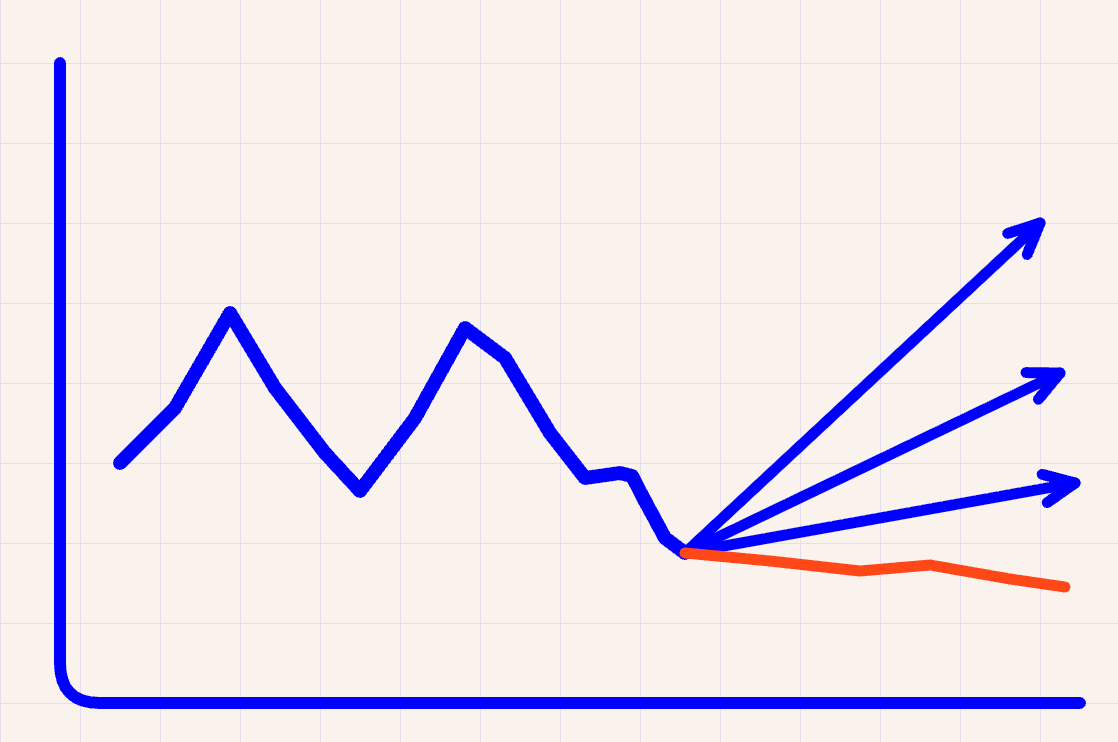
As Sangeet Paul Choudary puts it in his book, Reshuffle: Who wins when AI restacks the knowledge economy:
You don’t need an AI strategy. You need a strategy for the conditions that AI creates.
AI has created a situation where traffic for website content can no longer be taken for granted. It hasn’t removed the demand for cultural content, but meeting that demand to the level we’ve been used to is going to take a little more work.
You read it all! Share it with your content crew?
No posts
Comments
Nothing yet. Say the first thing.
Sign in to join the conversation.