
Hello all,
The great Georgina is now on maternity leave, and as her fellow content strategist at One Further, I’ll be covering the newsletter for the next while.
We have some brilliant guest contributors coming soon, and I’d love to hear if there are topics you want us to cover. What’s jangling your brain right now? Share it here.
In the meantime, allow me to introduce myself – via the medium of a classic lessons learned list. You won’t believe number 9 (you will).
Side note: this post was partly inspired by John Stack (formerly Head of Tate Online when I was an editor there), and his excellent Ten things I wish I’d known 10 years ago, which you should read too.
Just a little interview tip given to me as a young journalist on The Times arts desk.
Jump in with sensitive or challenging questions at the start, and you risk offending your interviewee and tanking the whole thing. Cover the other bases, build rapport, and then look them in the eye and ask. If it goes badly, well, it’s time to say goodbye anyway.
Can also apply to meetings.
Unless you’re paying for an ad, stop trying to flog things and start thinking about what content would make your audience’s life better – whether because it’s funny, informative, useful or other.
The fact that you need to create something people actually like, in order to build a relationship with them, seems wildly obvious, but when I arrived at Tate with my hoity toity journo sensibilities in 2014, I was surprised to learn that it wasn’t. In 2025, we’ve come a long way – but a big part of my job is still helping content people explain that to their colleagues. See point 4.
Moving into the museum world, I was attracted to strategy as an answer to chaos. There are a million things you could be doing as a digital professional, and if you try to do all of them, you end up with a whole lot of blah and a rage problem. It’s almost impossible to be creative like that.
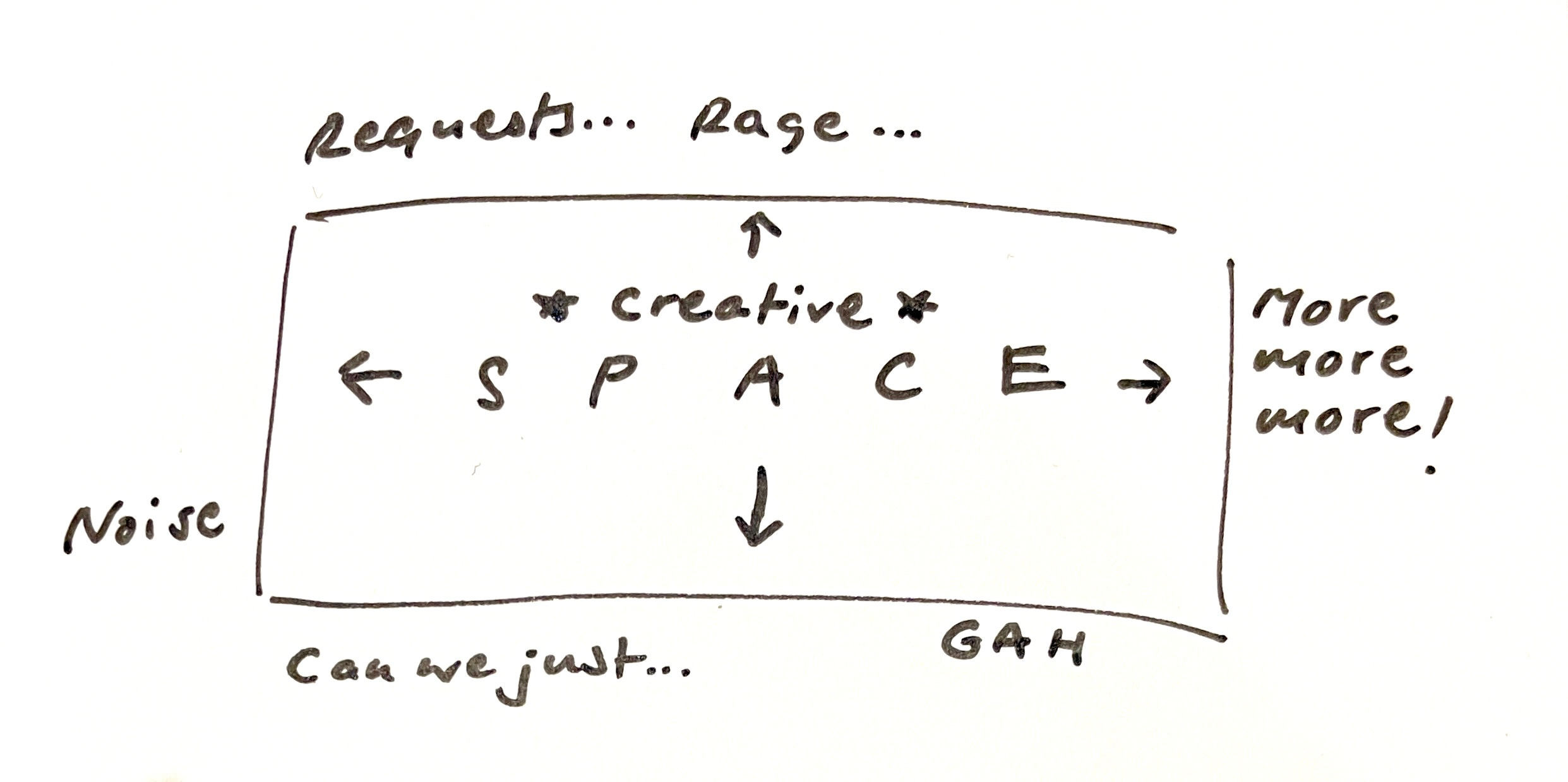
For me, the job of a content strategy is to draw the arena in which creative people can do their thing. It sets out the parameters – this, not that, because – and within them there is space to play. Coming up with ideas gets a whole lot easier when you have an edge to push off. Deliberately structuring in time for experimental thinking within those boundaries is important too.
Finding those boundaries, and the most useful form of them, is the challenge, and something I’m working on all the time. More on strategy coming soon, in a guest post from Art Fund’s Mike Keating.
If I’m really honest, as a younger content manager, I used to think the job was making the right content, and internal relationships were enablers or blockers. I had a brilliant team with no end of sparky, strategic ideas for films and posts and articles. But one department thought we hadn’t posted enough BOOK NOWs, another felt neglected and another felt our plans were just silly.
Managing these relationships was at least 50% of the job, and however good our analytics looked, the people stuff could be deeply frustrating and battering-of-spirit. Equally, there were times when my own team felt frustrated or demotivated, and that weighed on me too.
As I became more senior as a Head of Content and then moved into consultancy, I began to realise that relationships are not a side piece – they’re a big, important chunk of the work.
These days, for reasons professional and personal, I feel much more aware of collaboration as the task, and also how much it matters to make those around you feel seen and heard (while also not taking on feelings as mine to fix – personal watch-out).
But also, it’s not you. Relationships are just hard sometimes.
In 2016, I wrote a content strategy for the Royal Academy of Arts, before museums really did that. We had loads of stakeholders, too many competing demands and we were close to burn-out. As per the above, the goal was to clear a considered path through the noise, to guide content decisions.
While we involved stakeholders in finding that path, they didn’t all get what they wanted. But it turned out that the clarity about what was doable was basically as important to people as doing the thing. They felt frustrated because decision-making had seemed mysterious and arbitrary – and the strategy brought the thinking into the daylight.
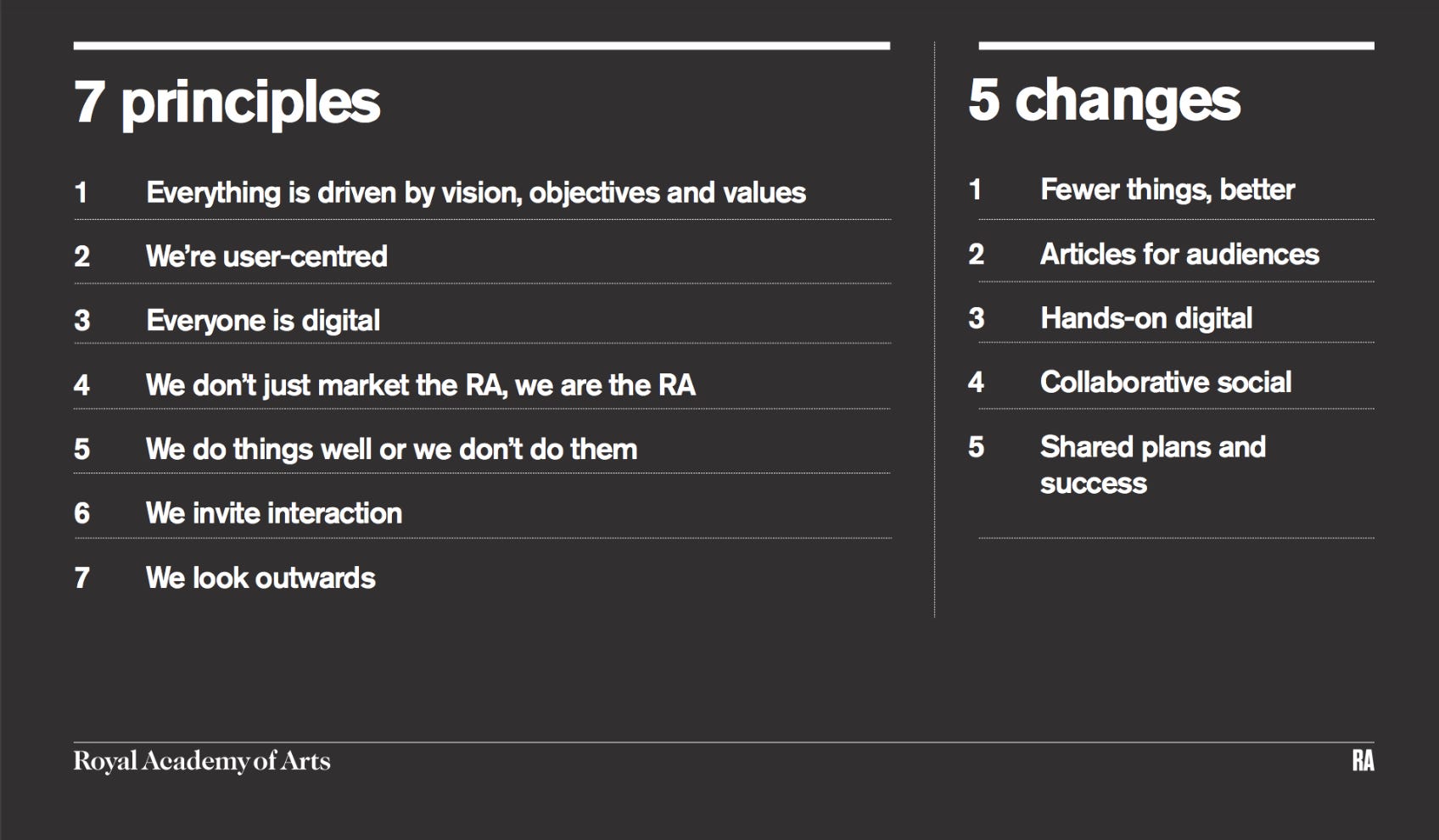
We put a lot of effort into the comms roll-out of that strategy – the form of it, what it looked like, how we told its story. That chunk of work turned out to be a really sound investment in reducing the daily drain of stakeholder friction.
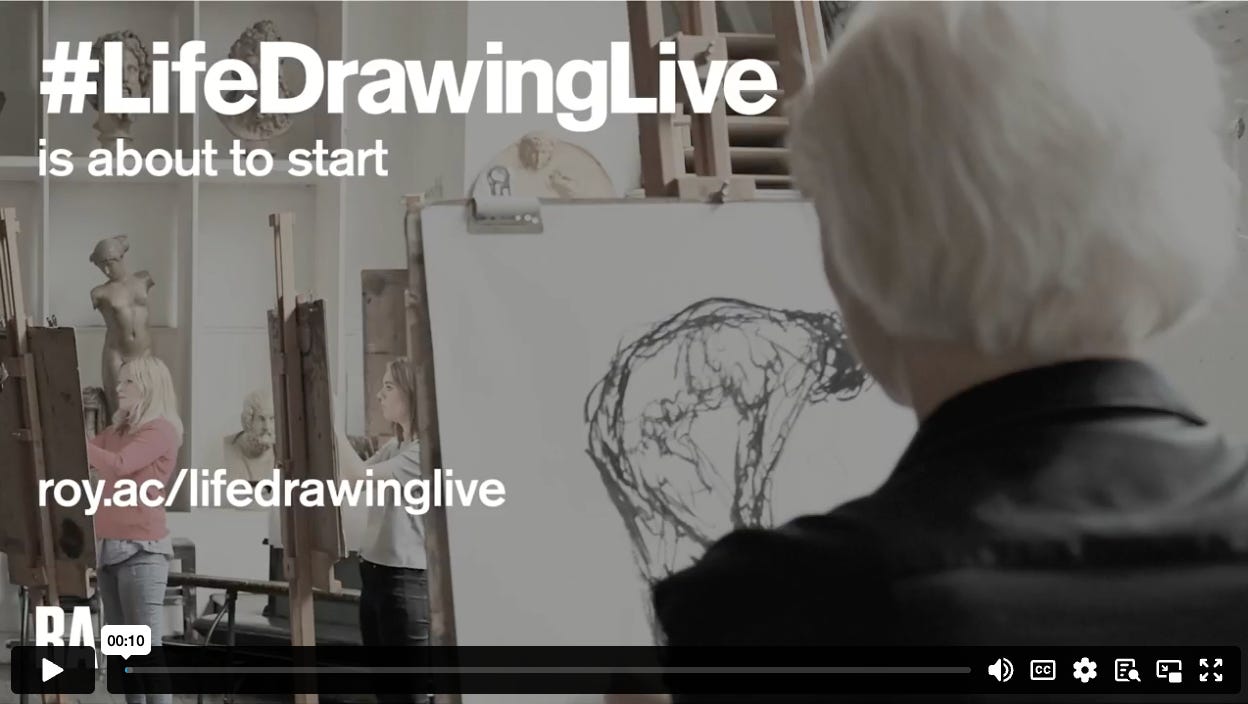
In 2017, we launched Life Drawing Live – a high-production life drawing class from the RA’s historic Life Room, broadcast on multiple channels, before Covid made online classes cool. I’ll save the details for another time, but the point is, it was a hit. Over 100,000 watched, thousands shared drawings and we knew we had something here.
After two events, the BBC approached us about collaborating on a TV series. We had a good discussion, naively disclosed what had worked and waited to hear more. A while later, a press release appeared for a new show called Life Drawing Live! We hadn’t patented the name, and had no recourse. Private Eye picked it up, at least.
Now, I hope not all humans are as ruthless as that smiling producer, but I suppose I can be a little too trusting. Anyway – my real lesson there was to stay laser-focused on pushing the things that matter, even when it’s hard. We were so busy that it was easier to put it on the back burner, in someone else’s hands – but having seen its impact, the roll-out plan should have been a priority.
Stay focused on pushing the things that matter, even when it’s hard
All was not lost. It inspired the viral #RADailyDoodle (shout out to Adam Koszary and such iconic moments as “who can draw us the best ham”) and eventually spawned a monthly paid event, Saturday Sketch Club.
But I always remember Seb Chan describing “velocity as an enabler”, when speaking about one of his projects at ACMI, and I kind of get that now.
When renovating a wreck of a house, I had to choose the position of every single light switch (I know, FWPs). How should I have gone about that, digital friends? Walked around the house to see where I expected light switches to be. Did I do this? No. Are the light switches there when I put my damned hand on the wall? No. I must now live in darkness.
I’m especially embarrassed about this, because anytime I’ve been involved in user-testing, I think jeez, this is just so useful. You think you know what people want or need, but when you actually ask them, they always surprise you.
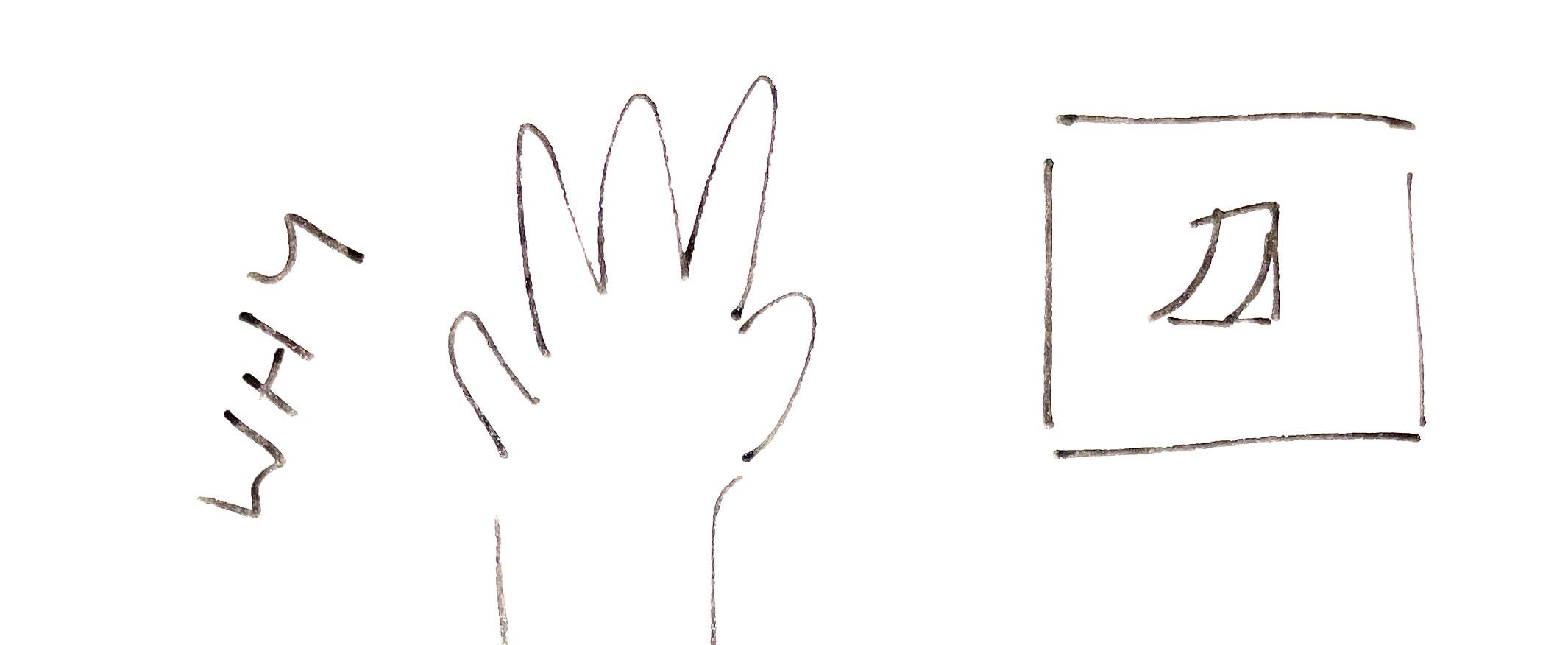
We’ve recently added content testing to some strategy projects, and I LOVE IT. I remember a participant saying “wow, this is fire” about something I thought was really boring. People are different, and sometimes getting into their shoes takes more than thinking.
Post-Covid, the potential for monetising digital content is something we talk about a lot in the arts at the moment.
I was a Digital Editor at The Times when they first put up that pesky paywall in 2010. Everyone was sceptical. Would people really pay for online content? Well – crucially, “people” didn’t mean everyone. Just 5% of the readership needed to convert in order to turn a profit. So the strategy was to monetise the most committed online readers, who could only get Caitlin Moran and their favourite columnists on thetimes.co.uk, at the expense of the broader public’s affections.
Now, in the 2025 context of the culture sector, I take two learnings from that early example.
One: whether to charge for digital content isn’t just a question of whether people will pay, it’s a question of strategy. Can you afford to sacrifice reach for revenue? Can you afford not to?
And two, if you’re considering a paid content offer, understanding your superfans is a very good place to start (which is much like the model for traditional museum membership – but that’s a whole other newsletter). Hats off to the Tank Museum, who have done exactly this.
We also have a super interesting post coming up from Caroline Schreiber, on cultivating digital fandom with Rambert Plus.
It is accurate, but it is eminently depressing – like a lorry driving around waiting for some random goods to fill it. Bananas! Teddies! Who cares!
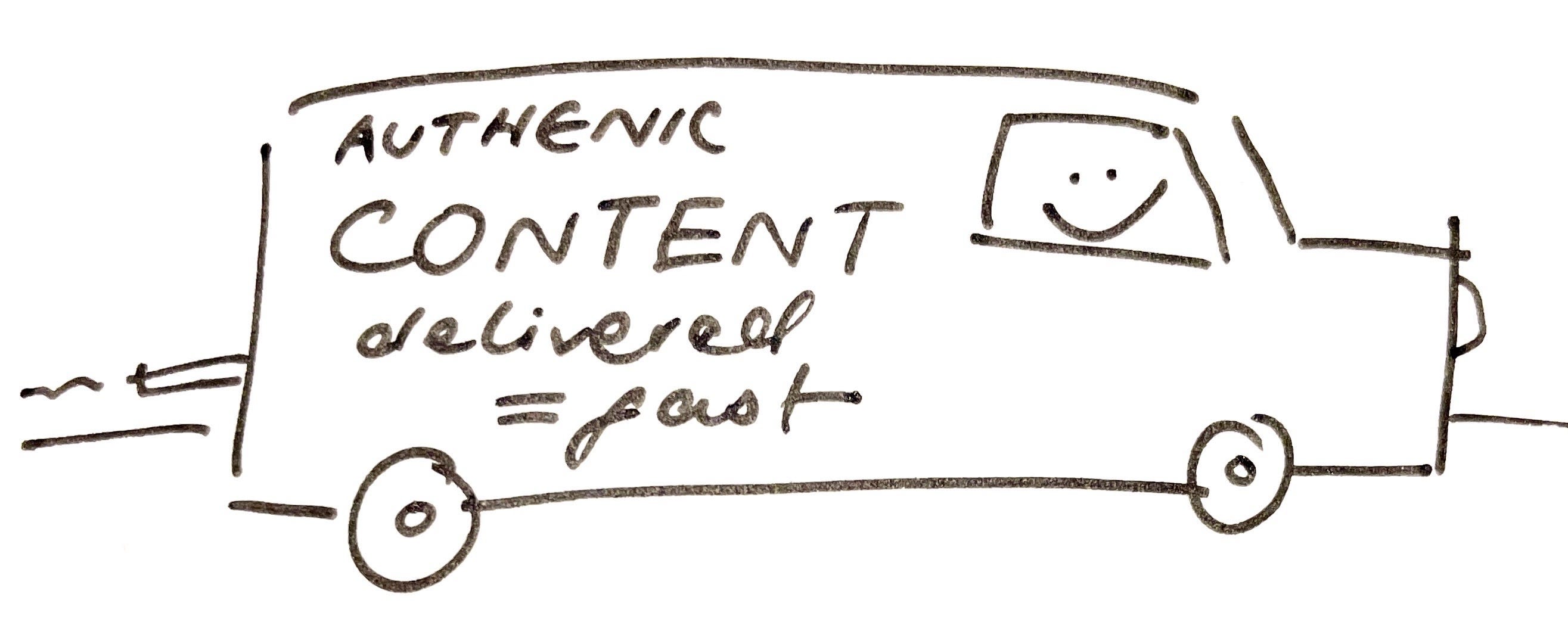
As “content” becomes more and more ubiquitous, in our sector I think the term can reinforce a chronic undervaluing of digital experiences – and also contribute to the idea that our work should be contained within the same old boxes (website, Instagram, etc).
I haven’t found an alternative, though. Ideas?
“Content”, as a term is accurate but eminently depressing. Like a lorry driving around waiting for some random goods to fill it. Bananas! Teddies! Who cares!
Thanks for reading! Did you find something useful? Tell your network
If you made it this far, thanks for indulging me friend (especially the sketches – I enjoy some pen and paper with my digital).
What would be in your list? If this sparked thoughts – or if you’re interested in writing a guest column – I’d love to hear. Leave a comment below or get in touch.
No posts
Comments
Nothing yet. Say the first thing.
Sign in to join the conversation.