
There’s something special about this delicate, fragrant plant. I’ve come across lavender farms in multiple books in my reading, and it made me want to learn more. Let’s explore!
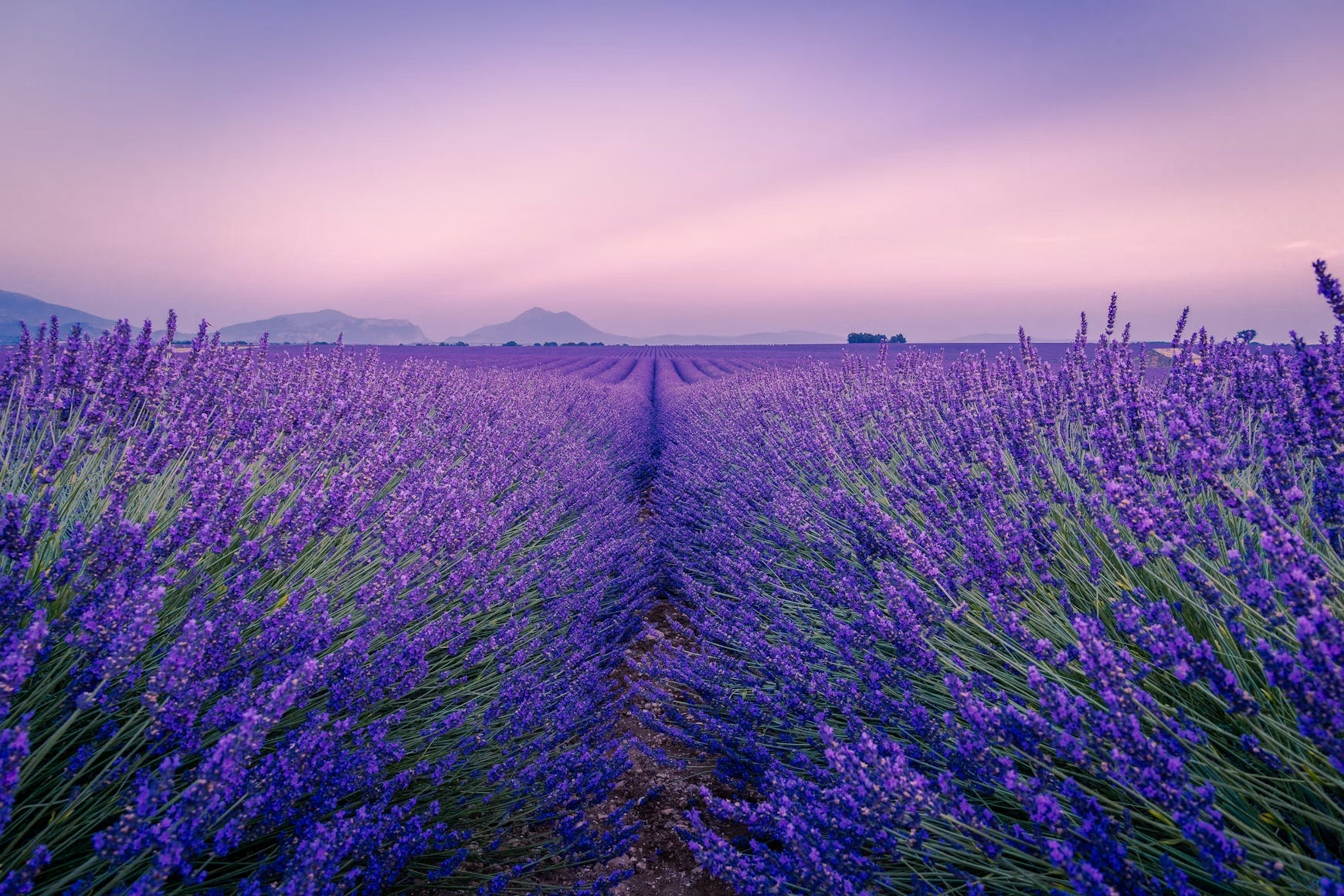
Lavender has long been woven into everyday life. Ancient Egyptians used it in mummification and perfumes. Romans incorporated it into bathing and cooking. By the Middle Ages, it was associated with love and protection. Even its name traces back to the Latin word for washing, which I find to be interesting.
I especially love that lavender is both beautiful and useful. Its scent is pleasant, calming, and refreshing. I know of many people who use the essential oil for relaxation and stress relief. It works well as a pillow mist, for instance. And it adds a special touch in myriad ways in the kitchen, adding flavor and texture to many dishes, or in the garden, where it adds beauty and repels pests.
Lavender has a long reputation in natural care for supporting both skin and overall well being. It can calm minor irritations like bug bites or small burns, and a cup of lavender tea can settle a stomach. In beauty products, it’s valued for soothing sensitive skin and supporting the scalp. It’s one of those rare plants that feels just as at home in a medicine cabinet as it does in a bouquet.
CULTIVATING
Did you know that there are more than 450 different varieties of lavender? Yowza! I had no idea. Here’s an overview of a handful of different types:
English Lavender – Classic, edible, fragrant, versatile.
Hidcote – Silvery foliage, dark purple blooms, compact.
Munstead – Violet-purple flowers, strong fragrance, small.
Betty’s Blue – Dark purple spikes, great for drying.
Royal Purple – Long stems, fragrant, retains color when dried.
Buena Vista – Blooms twice a year, dark blue flowers.
Croxton’s Wild – Light violet flowers, loose form, fast-growing.
Melissa – White-to-pink flowers, long bloom, upright.
Ballerina – Purple flowers, showy toppers, aromatic foliage.
Van Gogh – Lavender-violet flowers with pineapple-like toppers, pollinator-friendly.
Curly Top – Deep purple, ruffled toppers, prolific bloomer.
Madrid Purple – Compact, rich purple, container-friendly.
French Lavender – Fringed, camphor-scented, long bloom season.
Fernleaf Lavender – Lacy leaves, lemony scent, blooms until frost.
There’s something grounding about how easy lavender is to grow. It thrives in sunny spots with well-drained soil and is easy to care for once established. In return, it attracts pollinators like bees, contributing to a healthier ecosystem. In places like Provence, entire fields of lavender have become destinations in their own right, drawing visitors who want to experience that sweep of purple with the calming scent.
For more information, check out Better Homes and Gardens. For a thorough planting guide, check out Fluxing Well. In addition, Backyard Garden Lover gives wonderful tips for having a lavender garden blooming all season long. I found good general information at Oh My Facts. (Full disclosure: I used AI to shorten and summarize some VERY LONG lists of types of lavender into the list found above, and I edited what it produced. I had no idea there were so many!)
CRAFTING
Lavender is lovely in wreaths and arrangements, and it dries beautifully. When dried, it’s great in sachets, pot pourri, or eye masks. So many great gift ideas–I sense some lavender themed gift inspiration!
Try making a lavender sugar scrub:
1 cup sugar (white for fine texture, brown for coarser texture)
1 tbsp dried lavender buds
½ cup coconut oil
10–15 drops lavender essential oil
Mix everything together thoroughly and transfer to an airtight jar. Use within two months.
Perhaps a lavender-infused oil:
Place thoroughly dried lavender buds in a clean, dry jar. Cover completely with avocado oil. Secure the lid and store in a cool, dry place away from light for about six weeks, shaking occasionally. Then strain and transfer to a clean container. Add to a warm bath or rub into your hands for a massage. NOTE: If you want to use a lavender-infused oil in a salad dressing or some other dish, be sure you’re working with culinary lavender.
COOKING
I’m a huge Earl Grey fan, and lavender Earl Grey is delightful. Sip on some as you create a lavender-inspired dish:
Roasted honey lavender chicken from Rebecca Taig
Salmon with lavender from That’s Nerdalicious
Lavender roasted potatoes from Havoc in the Kitchen
Lavender tea bread from Reluctant Entertainer
Lemon-lavender cookies from Rania Cooks
Lavender scones from the Marble Kitchen
Lavender lemonade from Simply Recipes
Try incorporating lavender into salads–find great tips at Island Lavender. Why not sprinkle dried culinary lavender buds on top?

Have you done anything with lavender? What has worked best for you? Any different ideas? If you’ve been curious about lavender, this might be the perfect time to try something new with this versatile plant!
Fondly,
Crysti

Comments
Nothing yet. Say the first thing.
Sign in to join the conversation.