

Text within this block will maintain its original spacing when published
“Charisma is the ability to influence without logic.” - Quentin CrispI have been waiting for someone to report on the fact that among the Epstein documents released in November is incontrovertible proof that Epstein was working with hackers in Dubai to monitor and/or influence the progress of the 2016 American election on social media. Alas so far I have been disappointed, and so it has fallen to me to point this out to my readership.
Our story begins with one of the very small number of emails in the November Epstein effluence whose authorship I still have not been able to determine1 in which <REDACTED>2 asks Epstein:
“What happens with zubair's project ? Do you believe it can be used in H.clinton's campaign or the Trump's one to help her/ him win elections?”
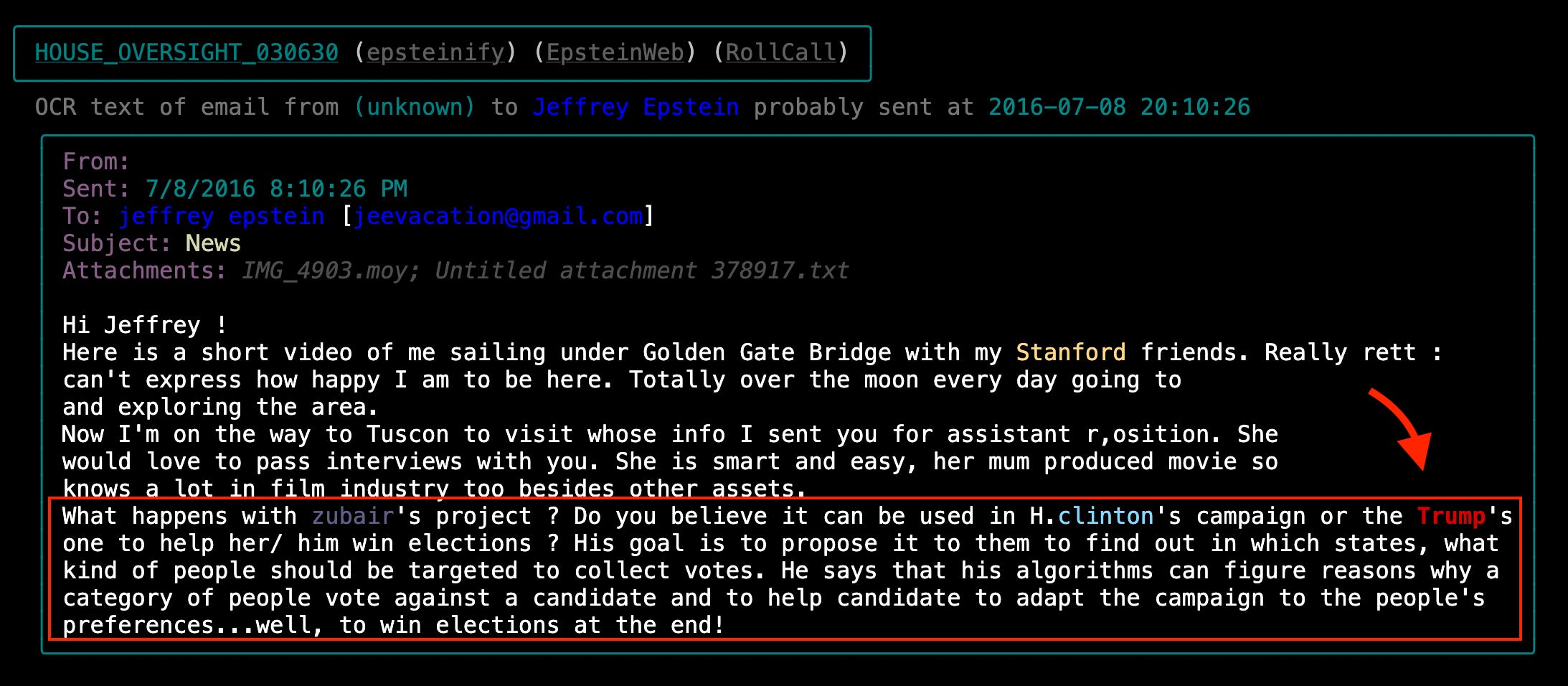
[UPDATE 2026-02-06] I now believe the author of this email to be Russian Olympic snowboarder Masha Prusso AKA Mariya Prusakova.
“Zubair” is the name we are interested in here. It turns out there are a bunch of emails and other documents in the collection that were sent to Jeffrey Epstein by a man named Zubair Khan. According to the internet (and his email signature) Zubair Khan is the CEO of a company called Tranchulas that advertises itself on Twitter as a “provider of defensive and offensive cyber security services”.
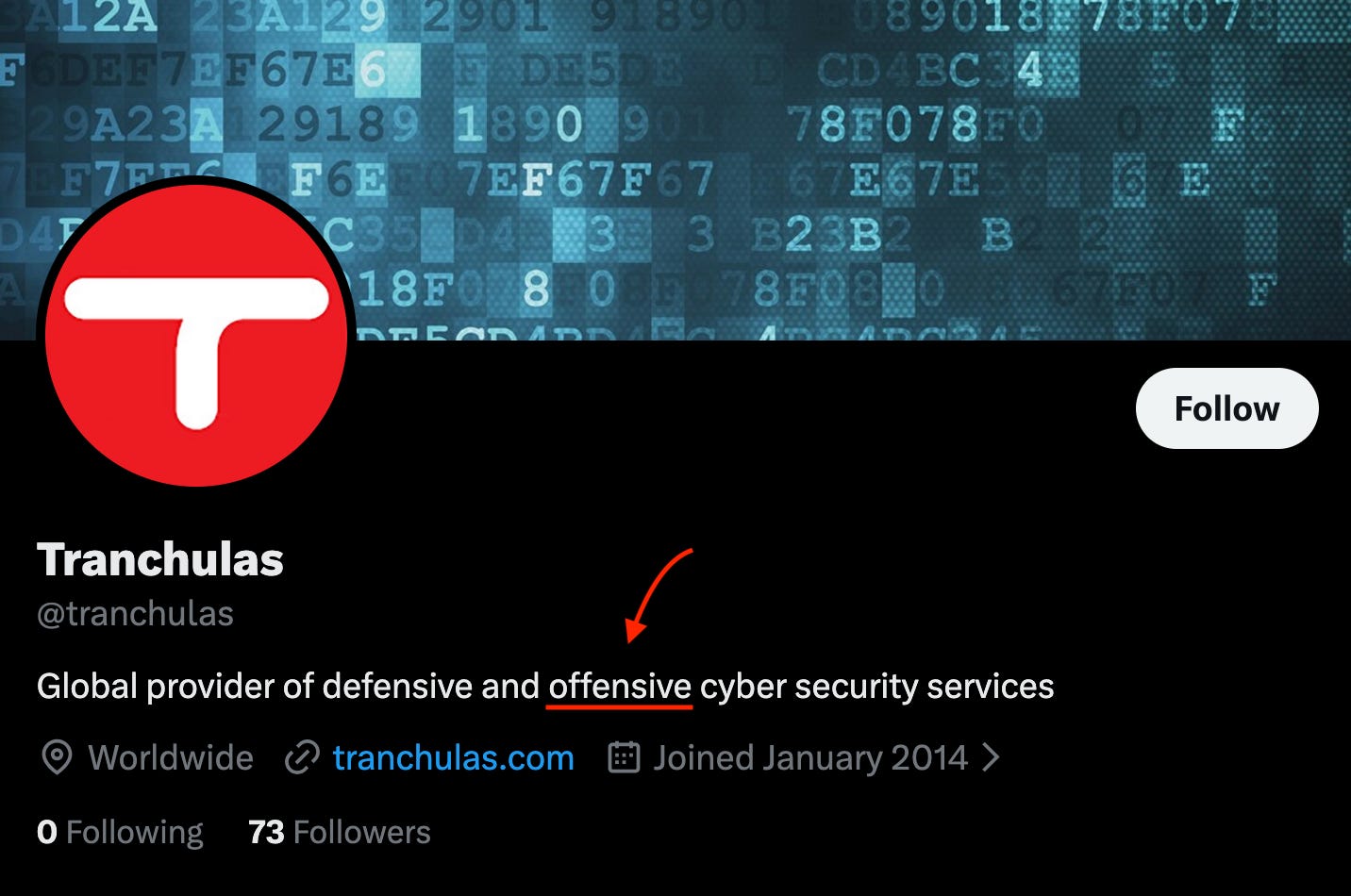
This in and of itself is what some people might call a “red flag”. While in this particular collection of Epsteinilia we only have Khan’s emails to Epstein about the social media work he was doing during the 2016 election, one is tempted to speculate as to whether those emails cover the full extent of the work a man like Mr. Khan might have done for a man like Jeffrey Epstein.
In between running Tranchulas it appears that Zubair Khan and a woman named Anya Rasulova were attempting to raise money for a new company called InsightsPod.
Rasulova appears to originally be from Uzbekistan. Here she is doing a Q&A about her experience going from Tashkent to Brown University. I will note briefly that Uzbekistan is uncomfortably close to Russia. So close, in fact, that most people assume that Donald Trump’s new business partner in his bank for criminals stablecoin venture World Liberty Financial (Andre Grachev, who did time in the Russian prison system for fraud as detailed here by Jacob Silverman) is Russian when he is technically an Uzbek. I will also note that there is a history of highly educated young women from Russian speaking regions ending up in Epstein’s circle and/or employ. Epstein’s friend David Blaine, one of the most famous magicians in the world, even wrote letters3 to America’s immigration authorities requesting a work visa for one of those women, Svetlana Pozhidaeva.
But enough about Russian intelligence operations. Why was Khan raising money for InsightsPod? Well it turns out he was telling Epstein that InsightsPod could monitor the tides of public opinion on Twitter to help political campaigns get a read on where they should focus their efforts.
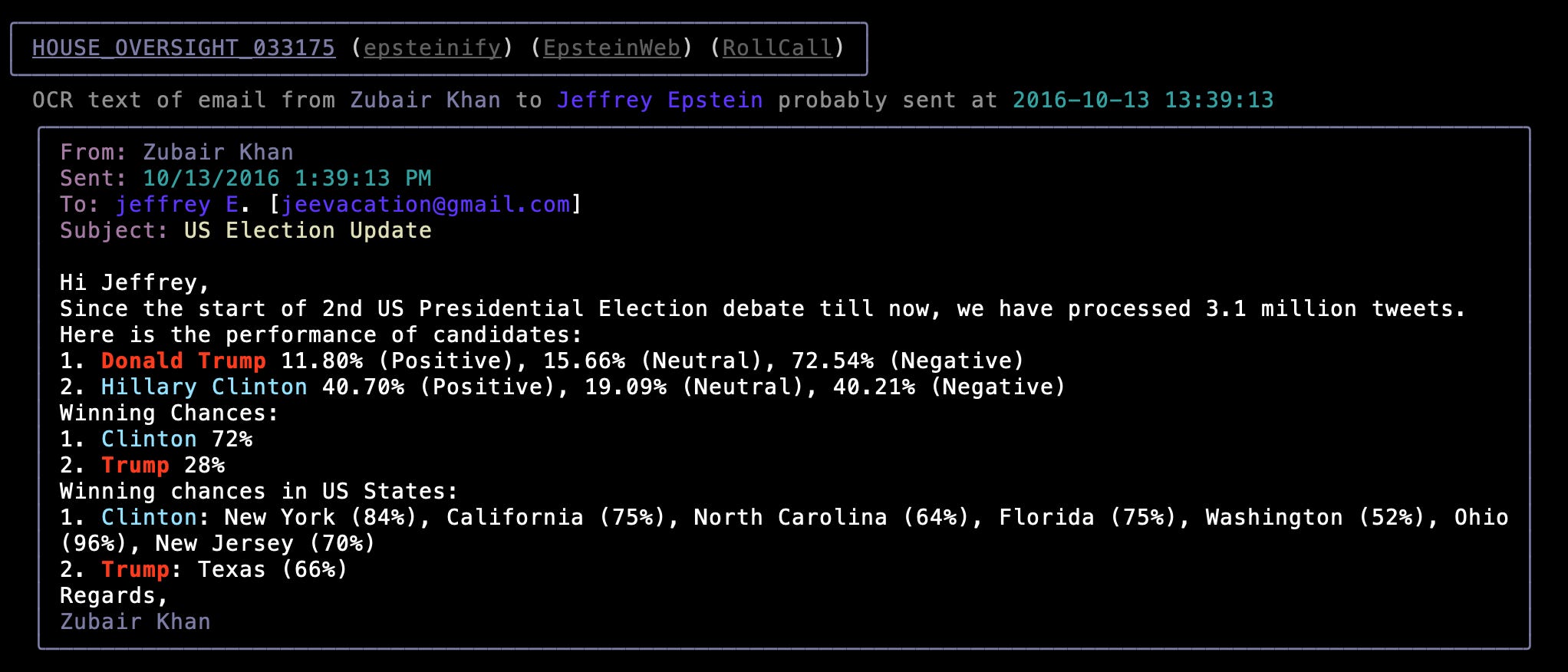
Over the course of the two months leading into the 2016 election Khan regularly emailed Epstein reports on whether sentiment on Twitter was currently favouring Clinton or Trump, often broken down by state.
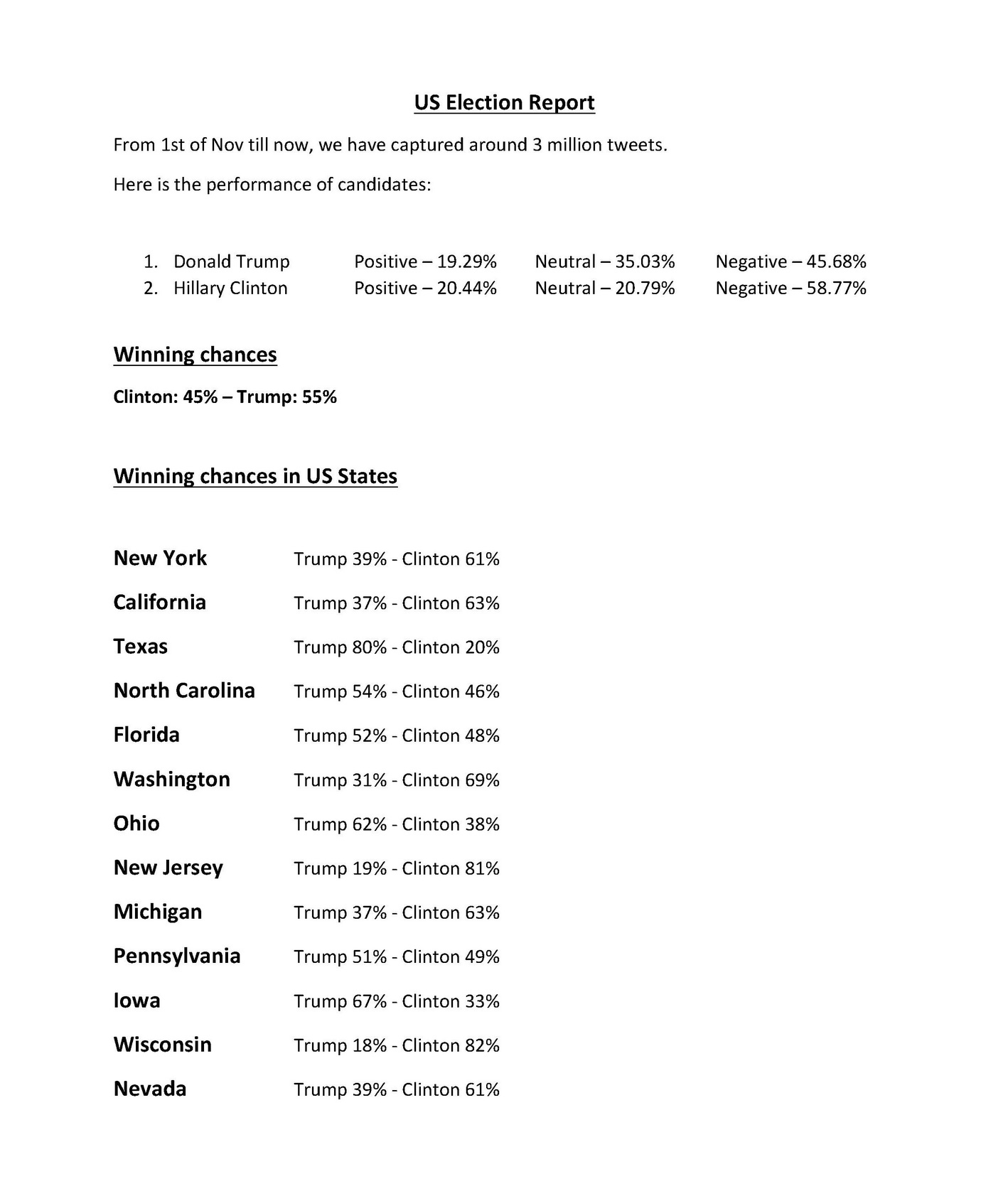
Now while it’s a little bit odd for a guy not working for a campaign to hire hackers in Dubai to measure social media sentiment about an election he’s not personally participating in it’s definitely not unheard of for finance people to seek out alternative data sources that might help them get a read on future events that will have an impact on their investments. So while all of this was interesting to see, I was only mildly alarmed about all of this until I stumbled on the InsightsPod pricing model.
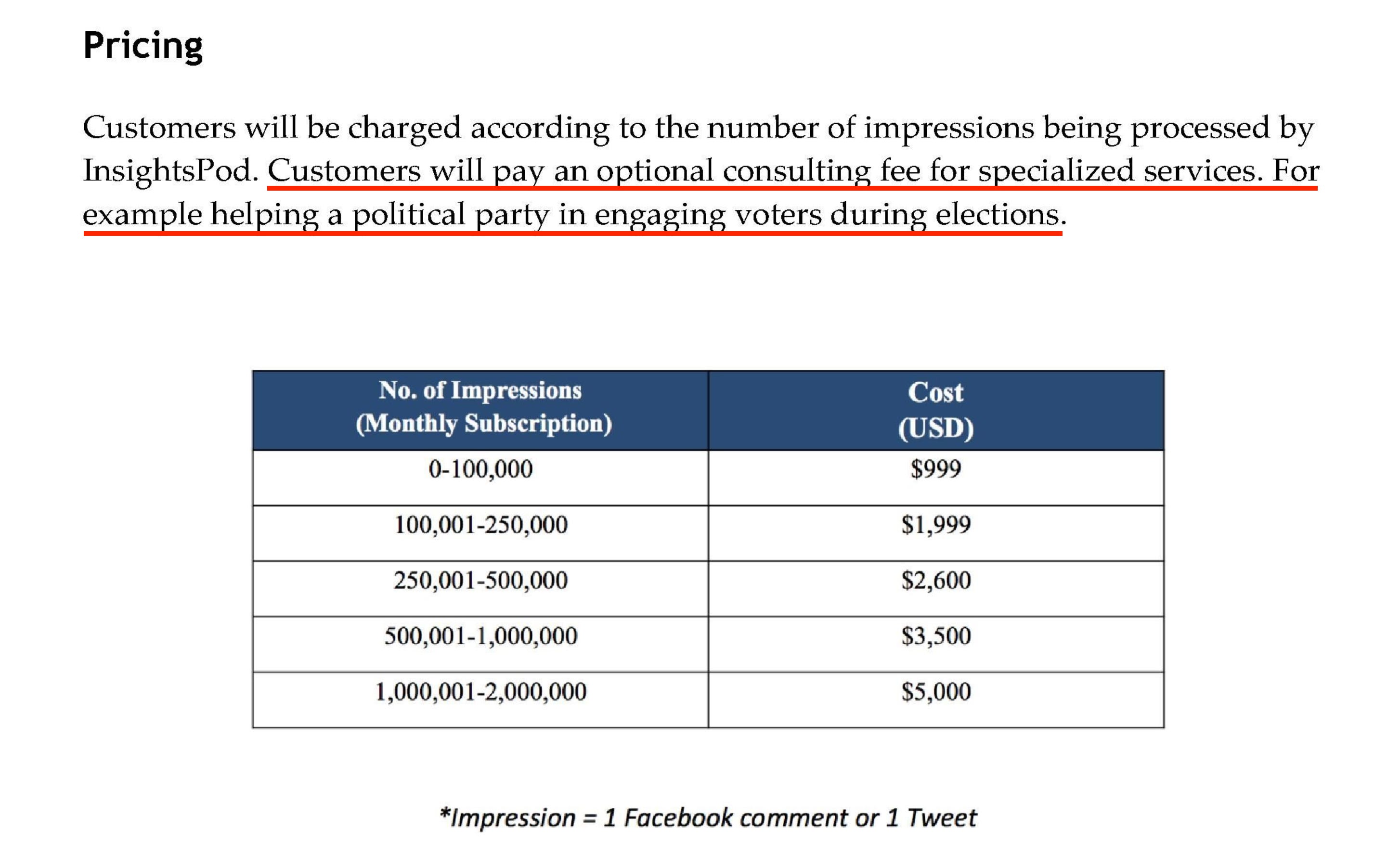
This is what you might call an “interesting” pricing model for something purporting to be an analytics platform. Think about it - how is this supposed to work? If you are doing analysis on a hashtag like #Brexit (which Khan apparently did, the results of which he sent to Epstein early in their correspondence to prove the efficacy of the platform) does your monthly price go up when a lot of people are posting about it? Is InsightsPod proposing to limit the amount of tweets it will analyze for you if you don’t pay enough?
Maybe this is all just poorly thought out. But there is a potentially more sinister explanation for this pricing model suggested by the preceding sentence about “specialized services”, which is that Khan was planning to create social media posts for InsightsPod’s customers, not just analyze other people’s posts. In other words, he could have been planning to run a social media bot farm - the oft-maligned “Russian bots” that were the subject of a lot of heated discourse in American politics after the 2016 election.
Now nothing in the InsightsPod reports Epstein received about the 2016 election suggests that InsightsPod was actually creating fake posts at that time. There are, however, enough facts on the ground to make me raise my eyebrows about their future plans.
The pricing model. Paying on a cost per post basis makes a lot more sense if you’re creating posts than it does if you’re just monitoring sentiment.
The fact that Khan’s cybersecurity company Tranchulas provides offensive cybersecurity services suggests that the man is accustomed to engaging in what might best be called “morally ambiguous” lines of work.
The company was proposing to base itself in Pakistan. Khan himself operates out of Dubai. Not to be racist or anything but social media companies operated out of Pakistan and Dubai by people from Russian speaking countries don’t have an exactly stellar track record as far as being above board. That goes double for cybersecurity companies operating out of those locales and by citizens of those countries.
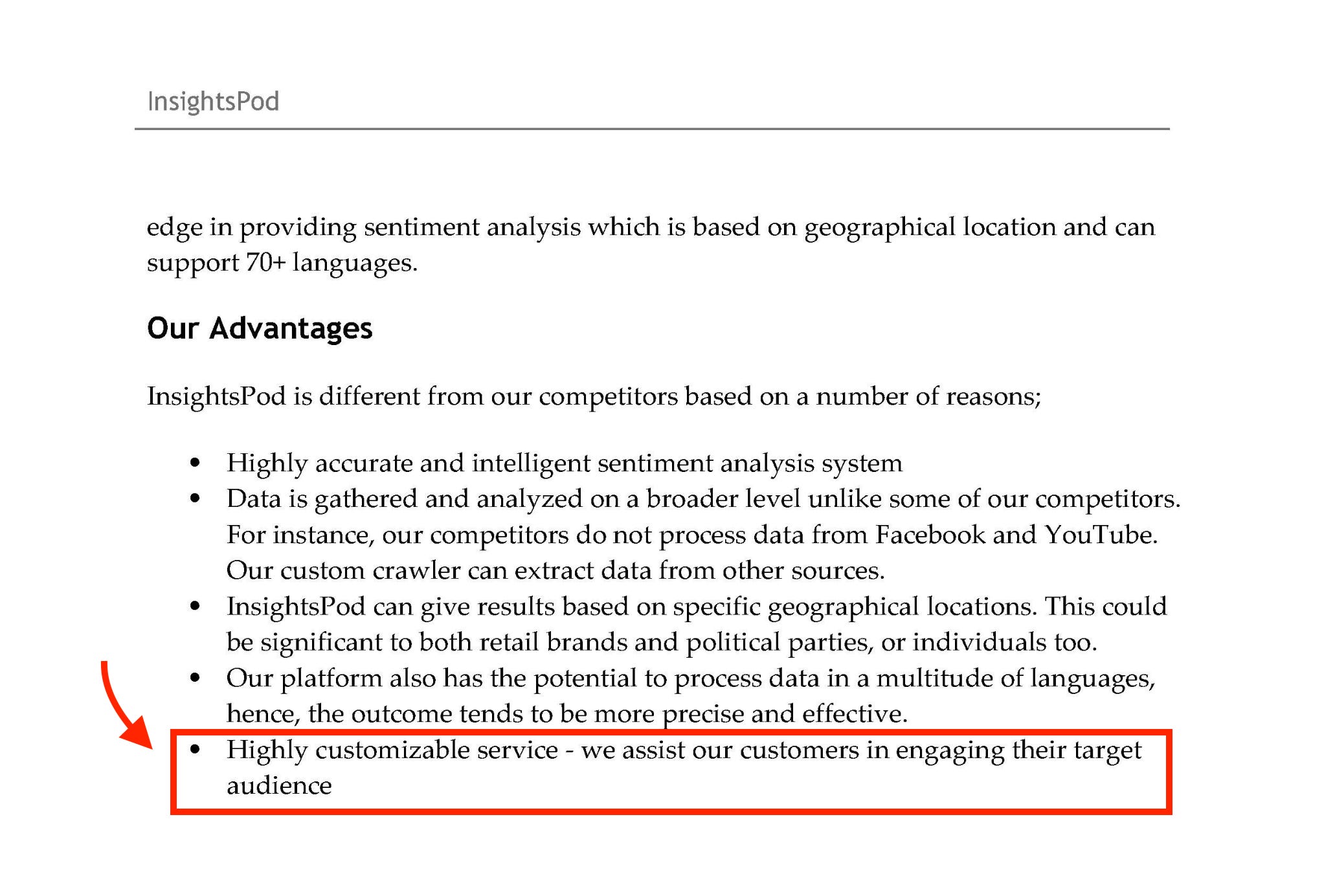
The company’s business plan repeatedly alludes to the fact that InsightsPod could help customers engage with their audiences via “specialized” or “customized” services that are left unexplained.
Epstein only started getting regular reports from InsightsPod about the ebb and flow of electoral Twitter vibes three months before the 2016 election. Even if Epstein had written InsightsPod a huge check immediately after he was introduced to Zubair Khan they couldn’t have scaled up their operation quickly enough to make any difference in 2016. There’s also the fact that InsightsPod was an objectively tiny operation. Even if Khan and Rasulova’s intentions were purely malign the amount of money they were seeking to raise was so small that it wouldn’t have allowed them to create a “Russian bot farm” of a size that could do much to sway elections in a population as big as that of the United States.
But…
Epstein was alive for 3 more years after the 2016 election. I’m 100% sure he didn’t lose interest in influencing vibes on the internet when the American election election ended. Quite the contrary - ever since he was forced to place his mugshot in sex offender registries all over world Epstein had developed an extremely keen interest in “online reputation” services. In fact he had already hired no less than three4 providers of those services by the time he was introduced to InsightsPod.
Apparently most of the reputation management services Epstein hired sucked at their job - that or Epstein had unrealistic expectations about what could be accomplished in terms of improving the Google search results of humanity’s most infamous pedophile. Either way Epstein wasn’t getting the results he wanted. In fact Epstein was so dismayed by the fact that the first page of Google search results for his name was still pedo-centric even after his online reputation had been “repaired” that he got in a fight with the guy he hired in 2010 about the size of the bill.
(Incidentally that guy he hired in 2010 was his own sort-of-brother-in-law Al Seckel who organized the Mindshift conference where Epstein was apparently first introduced to crypto bro cum child abuse specialist Brock Pierce before falling off a cliff or faking his own death a few years later. But that’s a topic for a different post.)
From what I see in Epstein’s emails it seems pretty clear to me that the first few attempts at repairing Epstein’s online reputation were pretty amateurish. The service providers had no social media clout of their own to deploy and seem to have been mostly manually creating web pages about Epstein’s educational philanthropy5 that link to each other and issuing press releases. That kind of manual approach to Google search result hygiene definitely doesn’t work any more and for a guy like Epstein it wouldn’t have worked in 2015 either - it just takes too much time for humans to create and boost enough content to have a fighting chance of knocking links to salacious stories about sex crimes on the front page of major newspapers off the first page of search results for a given person.
But you know what can create and boost enough AI slop6 content to not only influence the algorithms on twitter but even have a profound political impact and maybe even do mortal damage to the entire concept of “shared reality” itself?
Social media bots. And they don’t have to be deployed in America, which by dint of its sheer size is a pretty tough market for influence operations. Epstein was active in a ton of middle eastern and African countries, all of whom would present soft targets for even an operation as small as InsightPod. And even if InsightsPod itself didn’t go on to great things - Khan says near the end of the email correspondence we’ve been allowed to see that he plans to close up his influence operation and return to selling offensive cybersecurity services - the very fact that a guy like Epstein was exploring ways to influence public sentiment on sites like Facebook and Twitter is something I personally find Very Alarming.
This is part five in an series of posts about Jeffrey Epstein’s connections to the crypto industry. (Part 1, Part 2, Part 3, Part 4). Clicking the “like” and “restack” buttons or sharing this article with a friend is always appreciated.
Substack is trying to be Twitter with a product called “Notes”. It’s pretty cool but not everyone looks at it so I’m reposting some recent highlights at the bottom of some of my Substack “Posts”.
On Russian and Iranian money laundering operations:
On Iranian weaponry:
On Venezuela:
On the war between Cambodia and Thailand:
On the causes of the war between Cambodia and Thailand:
On the future of banking:
On right wing alternatives to sites like YouTube and Amazon:
On hiding money:
On corruption:
On more corruption:
On even more corruption:
On Epstein’s enemies:
On price predictions:
On gamification:
On Telegram:
I have been obsessing over deanonymizing the redacted emails and I am pretty sure I have attributed far more of the emails than anyone else. Out of 2,182 emails there’s only 54 whose author I haven’t been able to determine. You can view the attributed and highlighted emails grouped by counter-party here or chronologically ordered here.
<REDACTED>, who seems to be both quite young as well as female based on the content of the emails, seems to also have sent Epstein a follow up email about Zubair a few months later in October. One possible candidate based on timing of some other emails is Heather Mann. Another significantly less likely candidate is Masha Drokova.
There’s three drafts of David Blaine’s immigration letter in the November Epstein files and “Svetlana” is only fully redacted in one of them.
Not including InsightsPod, that we know of, so far. I suspect there may be many more. The ones the emails confirm are Al Seckel (Epstein’s sort-of-brother-in-law) in 2010, Ross Gow (Acuity Reputation) in 2011, and Tyler Shears in 2014.
The Jeffrey Epstein VI Foundation.
Technically AI hadn’t been invented yet so it was more Mechanical Turk slop than AI slop at the time but the two kinds of slop are not really all that different in the end.
Comments
Nothing yet. Say the first thing.
Sign in to join the conversation.