
Content Warning: This write-up discusses rape, racism, and other triggering topics. Reader beware.
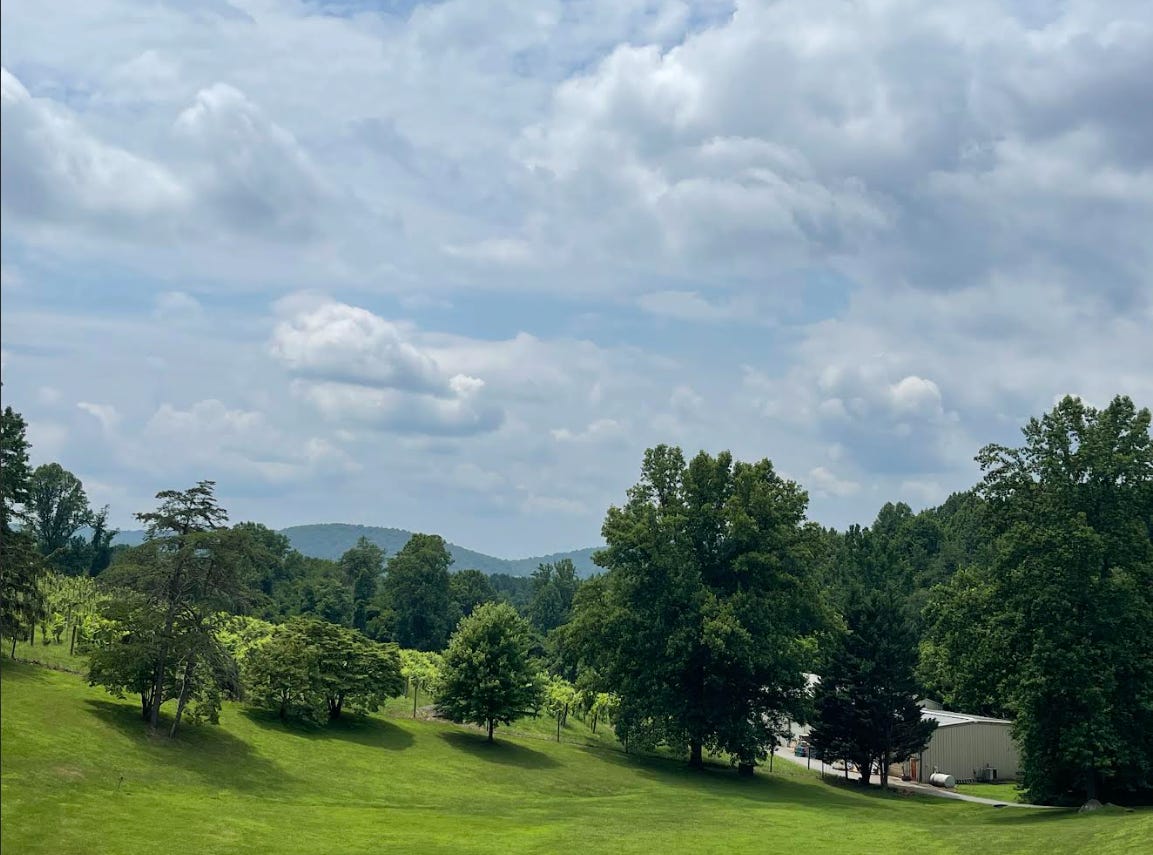
These bi-weekly best reads round-ups are probably my favorite pieces to write, as I have the pleasure of showcasing other amazing writers on Substack. I usually do these write-ups on Saturdays. But I was away this weekend in Virginia’s wine country—a much-needed break—so I am getting to this one now. This time around, it was difficult to determine my favorites, as I read so many great pieces, and that’s why the list is longer, so bear with me. Nevertheless, please make sure to check out all these Substackers’ work and smash those subscribe buttons if you aren’t already subscribed to these folks. With that said, let’s jump into it!
The first piece is titled “#MeToo All Over Again, and Forever Until We Stop Enabling Violence Against Women & Elevating Abusers in Power” by Elizabeth Silleck La Rue, Esq.
Silleck opens with several personal stories, one of which is about how she was almost raped when she was around the age of 19. This event reminds Silleck of when she was a young girl and “play wrestled” with two other girls, most likely to learn how to ward off potential attackers in the future.
Silleck goes on to discuss a DARVO, consent, and other critical things related to rape culture. A critical read. Check it out.
Next up is a piece by Jon (Jonathon Carrington) called “The Cost of the Token Black Friend.”
In the opening, Carrington describes an image of himself in a picture, surrounded by all white people at a 2012 high school reunion. He writes about the picture, “It is a picture that lives rent free on my phone for a reason. Look at me just cheesing and hanging right on in there. Lord, have mercy.”
He speaks of how this “strange” event—the high school one—has a way of “collapsing time,” as if to the others there, you haven’t changed much, but that isn’t the case for Carrington. Far from it. He left this all-white conservative suburban space in southern Virginia for Washington, D.C., where he wound up at Howard University.
Before he left for Howard University, however, he came to understand the signals in this overwhelmingly white space.
White people would tell him he was “different,” not like “the others,” which he now understands what they mean. And he had become “the Black friend” there.
And while people speak about the “loneliness” experienced in these all-white spaces, Carrington points out, “[w]e talk less about what happens when you enter rooms full of people who look like you and realize that you learned Blackness in reverse.”
Read on to learn what else Carrington ruminates about in this insightful essay.
The third piece is by Phil BeLight, and it’s titled “Dear White People, I Need You to Listen.”
BeLight doesn’t mince words in his opening lines when he says matter-of-factly, “Dear white people, I need you to shut the fuck up and listen for a minute, because I am exhausted by how many conversations around race never actually become conversations.” He proceeds to explain how these conversations occur, they become personalized, and the actual discussion about centuries and centuries of the structures and the systems of racism, which are intertwined with colonialism, capitalism, and patriarchy, gets lost, and that frustrates him and other Black people, understandably so, to no end.
He adds that white people somehow think that if they tie it to a white individual’s value, whether or not they are good or bad, it disproves these systems of oppression. As he rightly points out, it doesn’t. He continues, “Systems don’t become systems because every individual inside them behaves identically; they become systems because they create incentives, expectations, protections, and consequences that extend beyond any one person.”
He then goes on to explain why he feels unsafe in white spaces in light of the murder of Nolan Wells. He explains the justified reasoning by him and other Black people:
When I hear Black people say they don’t want to be alone around white people, I don’t hear irrational paranoia; I hear pattern recognition. I hear generations of people trying to explain what it feels like to navigate spaces where the greatest uncertainty isn’t always whether one individual intends harm, but whether anyone else will meaningfully intervene if harm does occur.
The piece is a critical reminder of why white people, again, as Belight tells those of us who are white, need to shut the fuck up and listen, and recognize the lived experiences of Black people, and, in this case, understand why they do not feel safe alone in white spaces.
The fourth piece is by Tara Knight ⚢, and is called “They Said I Would Be Safe.”
Fair warning: this piece is a difficult read, but intellectually challenging and well worth it. It starts with a trans woman, a young one, young in the sense of age and having recently transitioned. She has just arrived in a city with virtually nothing, and that’s when she meets a seasoned trans woman who has a “shoebox” filled with vials of estrogen, which the young woman desperately needs, among other things. This seasoned, knowledgeable trans woman, Rae, is at the center of a community circle. As mentioned, she has the vials for the neediest trans women in the community, she gets them jobs, she gets them places to live, and she gets them into the group chat. She’s also a rapist.
The trans victim’s situation is problematized even more in its complexity by how the politics in this country, the wave of anti-trans paranoia, have demonized the entire community. An absolutely stunning piece, worth reading every word.
5. The final piece is by A. Eevie Bateman and is titled “Julie Roginsky Got Me Fucked Up.”
This piece was written in response to Julie Roginsky, the founder of the non-profit Lift Our Voices and a Democratic strategist. She has been credited with passing landmark federal civil rights legislation in the wake of the #MeToo movement, which the now deceased, traitorous, genocidal war-hawk Senator Lindsey Graham supported. Big whoop. That does not give him a pass for being an atrocious human being and damaging the lives of millions of people here and abroad. He should not be celebrated or credited for anything. Period.
Bateman had no patience for Roginsky’s praise of Graham, and she let her know that. Mind you, Roginsky has over 180,000 subscribers on Substack, and she sent a nasty note to Batemen, where she had the audacity to say, “I pray that you never get sexually harassed or assaulted at work or that no one that you care about does.” Yes, read that again. A woman who has spent her career defending other women from being raped and sexually harassed said that.
As Bateman notes:
She assumed I was untouched. She assumed wrong. I survived childhood rape and LOADS of sexual assault as an adult. Most women have. One in four, but the numbers are probably much more than is reported. But, she should know that. Right? I have written about surviving domestic violence and sexual assault in depth. And I had to read a “professional communicator” — a woman who has built an entire public identity around protecting women who speak up about workplace abuse — reach for sexual violence as leverage in a comment thread. Because I criticized a senator’s voting record and her choosing to defend him.
The piece is a wild ride and absolutely calls Roginsky into question. Being a Democratic strategist, however, I can’t say I’m the least bit surprised.
Stay tuned for my next round-up! I hope you all enjoyed these pieces this time around. Again, make sure to smash those subscribe buttons. Until next time, stay safe and stay alert!
Further Reading

Comments
Nothing yet. Say the first thing.
Sign in to join the conversation.