
Everybody wants to be ready when the lights come on.
When the gym is packed.
When the rivalry gets emotional.
When the fourth quarter gets tight.
When the conference tournament begins.
When the assigner decides who can be trusted with the next game.
But you do not become ready in that moment.
That moment only reveals how ready you already are.
Long before the opening tip, your season is being shaped by the work you are willing to do without a crowd, a whistle or an evaluator.
It is being shaped by the habits you repeat.
The rules you study.
The film you face.
The body you prepare.
The relationships you protect.
The details you handle when nobody is reminding you.
The first buzzer may start the game.
But it does not start your preparation.
And if your goal is to still be working when the final buzzer of the season sounds, the foundation has to be built now.

Officials often talk about wanting more confidence.
We want to look confident. Sound confident. Make decisive rulings. Handle coaches without hesitation. Step into bigger games and feel like we belong.
But confidence is not a switch you flip in the locker room.
Confidence is evidence.
It is the evidence your mind collects from your preparation.
You studied the rule, so you can explain the ruling.
You trained your body, so you trust your legs late in the game.
You watched the play, so the action no longer feels unfamiliar.
You rehearsed the conversation, so your words are available when emotions rise.
You have already been in difficult environments, so pressure does not feel like an emergency.
That is real confidence.
Not pretending you have every answer.
Not forcing a stronger voice.
Not hoping the game stays easy.
Preparation removes the need to perform confidence because the work has already placed it inside you.
So if you are waiting to feel confident before you begin preparing, reverse the order.
Prepare first.
The feeling will follow.

You cannot control how many games you receive.
You cannot control which partners are assigned with you.
You cannot control traffic, weather, the level of play, a coach’s personality or whether an evaluator walks into the gym.
You cannot control who gets promoted before you.
But you can control your attitude.
Your effort.
Your rules knowledge.
Your fitness.
Your appearance.
Your composure.
Your communication.
Your response to feedback.
Your preparation for the next possession.
Every minute spent obsessing over an uncontrollable is a minute taken away from something that could actually move you forward.
That does not mean disappointment is not real. It means disappointment does not get to run your development plan.
When you feel frustrated about an assignment, a closed door or another official’s opportunity, ask yourself one question:
What is still mine to improve today?
Then go do that.
“I want more games.”
“I want to work college basketball.”
“I want to become a crew chief.”
“I want a postseason assignment.”
Those are real ambitions. But they are outcomes—not instructions.
An assigner controls the assignment.
You control the behaviors that make you assignable.
That is why every outcome goal needs a process beneath it.
Instead of only writing, I want to work the playoffs, define what becoming a playoff-level official requires from you:
Read five case plays a day.
Break down two film clips a day.
Complete three purposeful training sessions each week.
Ask one trusted official to review a recurring weakness.
Track the feedback that appears more than once.
Schedule a monthly check-in with an accountability partner.
Now the goal can coach you.
Make it visible. Put it somewhere you will see it.
Make it specific. “Improve my rules knowledge” is vague. “Study five case plays every weekday” gives you a target.
Make it measurable. If you cannot track it, you will eventually negotiate with it.
Make it challenging but realistic. A goal should stretch you without becoming fantasy.
Give it a deadline. Someday is where good intentions disappear.
Then give somebody permission to hold you accountable.
You do not need a person who will applaud every plan.
You need someone who will notice when your choices no longer match what you said you wanted.
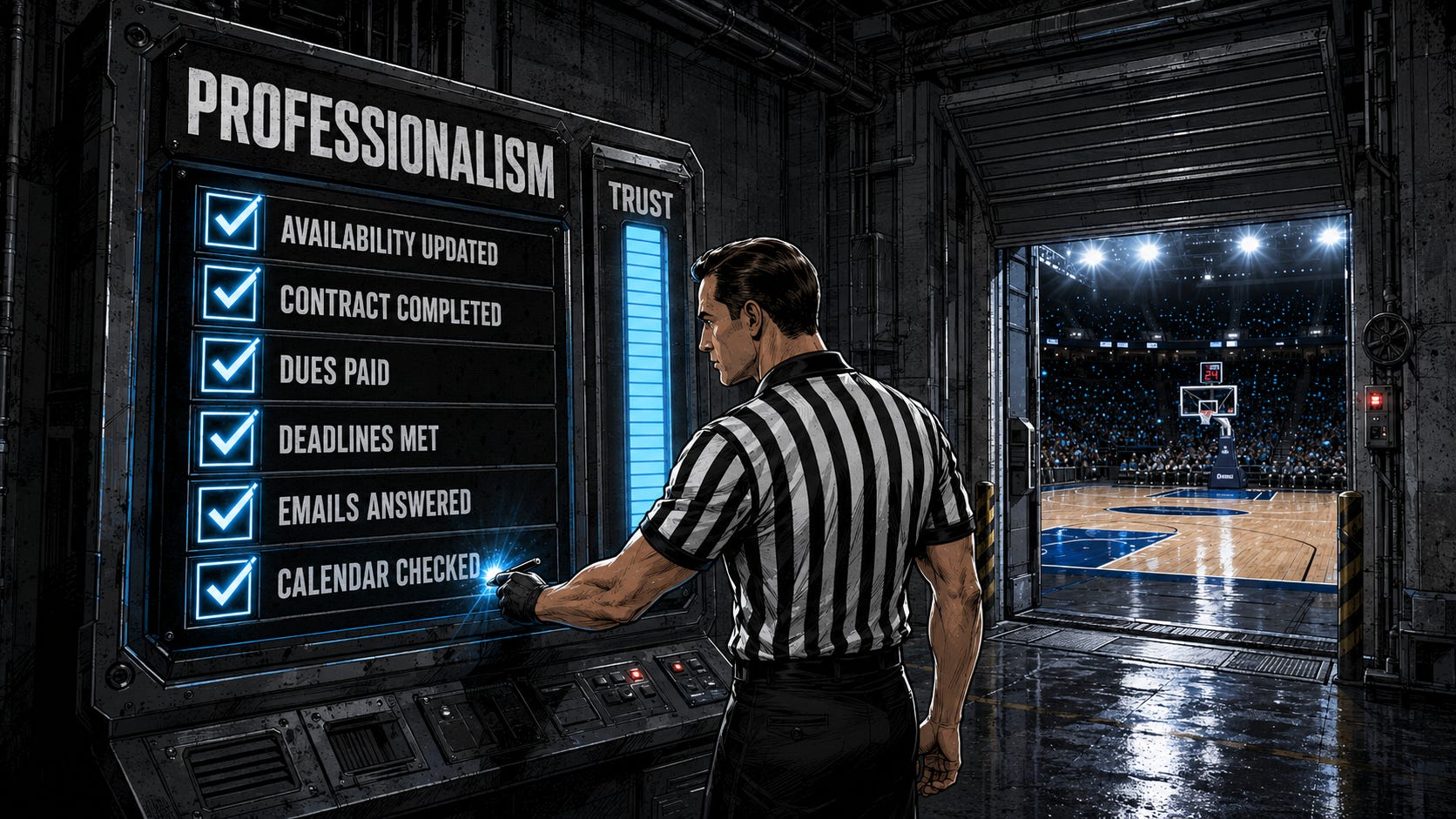
Some officials think their value is determined entirely by how well they call plays.
Play-calling matters.
But you cannot show your judgment in a game you lost because you failed to handle the details.
Availability not updated.
Contract not completed.
Dues not paid.
Clinic deadline missed.
Email ignored.
Double-booked date discovered after the assignment arrived.
These mistakes do not look dramatic, but they quietly damage trust.
Assigners are managing hundreds of moving pieces. The official who constantly needs another reminder becomes another problem to solve.
Do not build your professional life around your memory.
Build a system.
Use a primary calendar. Add every assignment immediately. Share necessary dates with your family. Set reminders before deadlines. Double-check your blocks. Create one place where you can see the entire season.
The goal is simple:
Be easy to assign and easy to trust.
Your administration is part of your officiating.
Handle it like a professional.
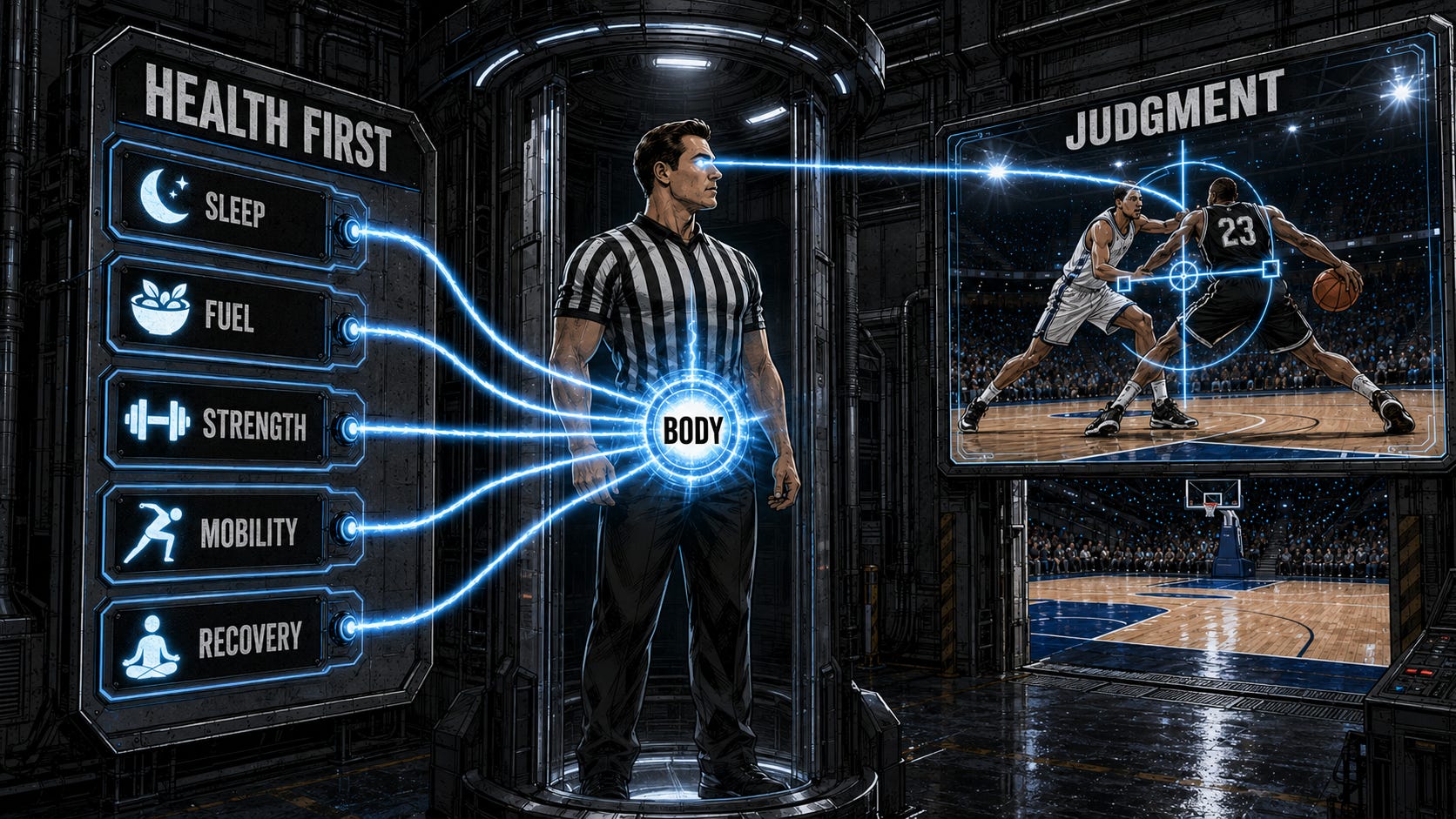
Physical preparation is not separate from play-calling.
When your body begins to fail, your attention usually follows.
A tight hamstring steals focus from your primary defender.
Poor conditioning makes the next transition feel faster than it is.
Fatigue shortens patience, weakens communication and turns small problems into emotional ones.
You may understand the game mentally, but if your body cannot keep you connected to the play, that knowledge cannot help the crew.
Do not wait for the first scrimmage to discover what your body cannot handle.
Build gradually:
Train strength so your posture and movement hold up through contact, travel and repeated games.
Develop cardio that reflects the changing speeds of basketball.
Work on mobility so you can move freely instead of compensating around pain.
Prepare convenient food options before the schedule becomes chaotic.
Hydrate before you feel behind.
Recover on purpose instead of treating exhaustion like proof of commitment.
The goal is not to crush one heroic workout and spend four days recovering from it.
The goal is to create a body you can depend on repeatedly.
Your season rewards durability, not occasional intensity.
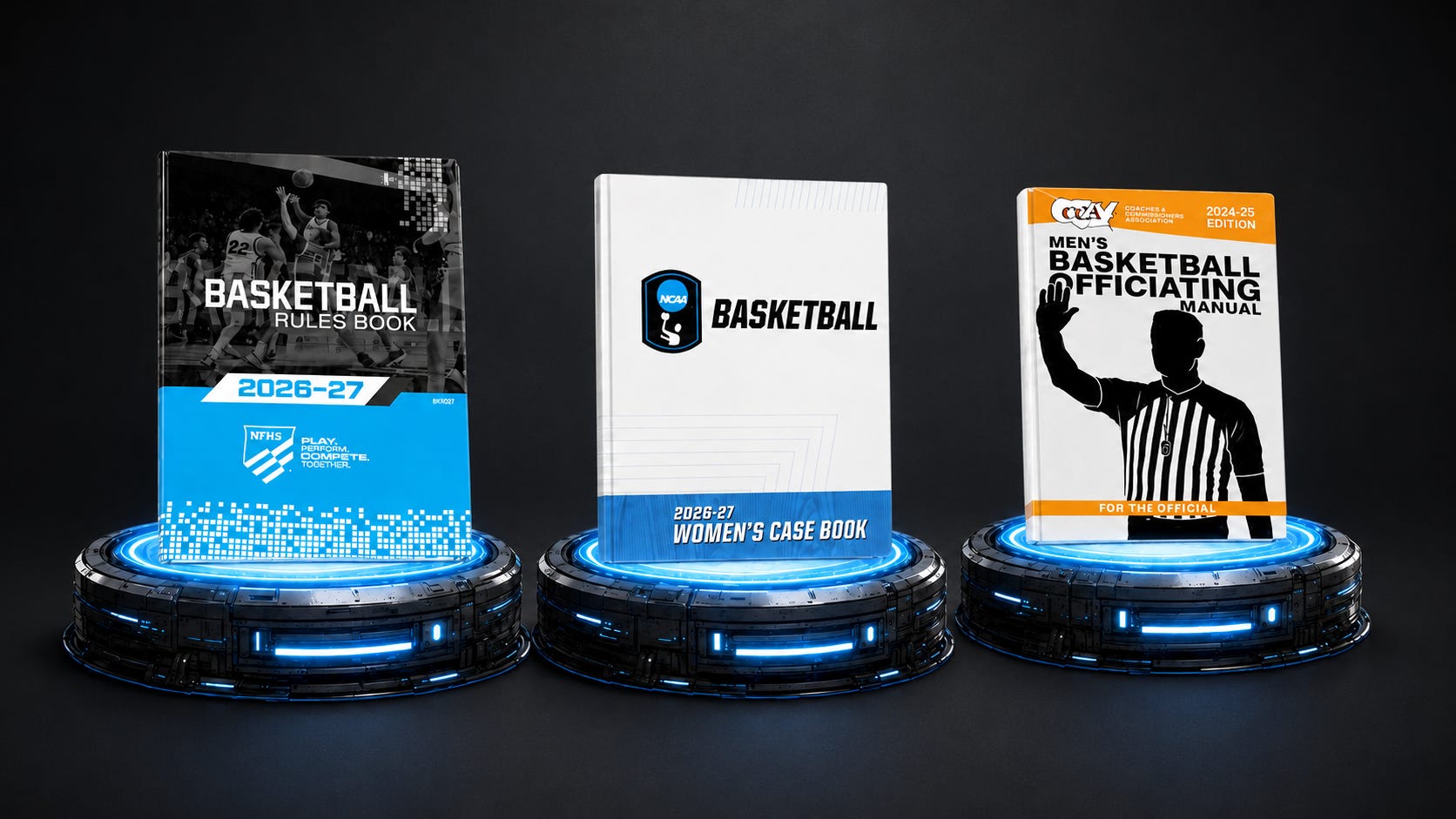
Passive reading can create the illusion of preparation.
You recognize the words. The section feels familiar. You close the book believing you understand it.
Then the play happens at full speed and you cannot retrieve the ruling.
Attack the rule book.
Turn information into decisions.
Read a case play and explain why the ruling is correct.
Create your own play from the rule.
Write a five-question quiz and send it to your study group.
Build a short presentation on the rule you struggled with last season.
Match film clips to the appropriate rule and case references.
Pause a play before the whistle and commit to a decision.
Then defend it with more than “That looked right to me.”
At higher levels, players and coaches are sharper. Your partners are more proficient. The explanations must be clearer. Guessing becomes more costly.
Knowing the answer is valuable.
Knowing how you arrived at the answer is what makes you dependable.
Watching basketball is not automatically film study.
Film becomes development when you watch with intention.
Choose a lens:
Was the official connected to the primary defender?
What information was available before the contact?
Did the position create an open look or force a guess?
Was the ruling supported by the rule?
What did the official’s body language communicate afterward?
What would I have done, and why?
Study your own film for truth.
Study stronger officials for models.
Study difficult plays for recognition.
And do not limit yourself to comfortable clips where you already know the answer. The plays that create disagreement are often the plays that expose the next layer of your understanding.
Two purposeful clips every day will do more for you than two hours of random basketball once a month.
Small work compounds.

Officiating can feel lonely.
You drive alone. Process difficult games alone. Wait for assignments alone. Carry disappointment home to people who love you but may not fully understand the profession.
That is why your circle matters.
Find mentors who have experience at the level you are trying to reach.
It is okay to have more than one mentor.
It is okay to outgrow a mentoring relationship with gratitude and seek guidance for the next stage.
But do not only look upward.
Mentor somebody behind you.
Teaching forces you to clarify what you think you know. It makes you verify information before you pass it along. It turns your experiences—including your failures—into a shorter learning curve for someone else.
You need trusted peers too.
People you can send the ugly clip to.
People around whom you do not have to protect your image.
People who will challenge your ruling, question your interpretation and still support your growth.
That circle may include two people or ten.
The number matters less than the honesty.
You can move quickly by yourself.
You will go much farther with people who refuse to let you lie to yourself.
Your family experiences your season too.
They experience the late drives, changed plans, long weekends, missed dinners and the emotional weight you bring home after a difficult game.
Do not make the people who support your dream feel like they are competing with it.
Communicate the schedule.
Include them in the journey.
Check in from the road.
Be present when you are home.
Protect the career that pays your bills, too. Most officials do not referee full-time. If your employer gives you flexibility to leave early for a game, honor that flexibility by handling your responsibilities.
And protect yourself.
A long season is not survived through sacrifice alone. Sometimes the professional decision is to block a night, eat a real meal, sleep at a reasonable hour and reconnect with the parts of your identity that have nothing to do with a whistle.
Rest is not a lack of ambition.
Recovery protects your ambition from burnout.
If you hope to still be standing at the final buzzer, you have to take care of everything that carries you there.

Officiating will humble you quickly.
A breakthrough and a rejection can arrive in the same season.
A championship assignment can be followed by a brutal camp game.
A great evaluation can be followed by silence.
One door can open while another closes.
Do not let the high convince you that the work is finished.
Do not let the low convince you that your story is finished.
The promotion is information.
The rejection is information.
Neither one gets to define your entire identity as an official.
Process the disappointment. Lean on your people. Pay attention to your self-talk. Learn what the moment can teach you.
Then return to the work.
There is always another possession.
There is always another way to grow.
There is always a next win worth building toward.
You do not need to read 50 pages of the rule book, watch 20 hours of film and run a half-marathon this week.
That is not a plan.
That is a short path to burnout.
Start with something small enough to repeat:
One rule.
One case play.
One clip.
One mobility session.
One prepared meal.
One honest conversation.
One updated calendar.
Do it four days.
Then five.
Then six.
Consistency creates distance.
The officials who improve the most are not always the ones who create the most ambitious plan.
They are the ones who keep the promises they make to themselves.
Do not wait for the perfect routine.
Build a repeatable one.
Do not wait for motivation.
Create evidence.
Do not wait for the first game to become the official you want to be this season.
Start now.
Before the season begins, sit down and answer these questions honestly:
What outcome do I want—and what daily behaviors would make me ready for it?
Which three parts of my development are fully within my control?
What repeated feedback from last season must become a training priority?
What system will keep my blocks, contracts, dues and deadlines organized?
What will I do each week for rules, film, fitness and recovery?
Who is qualified to mentor me toward the next level?
Who can I help with what I already know?
Who has permission to challenge me when my actions do not match my goals?
How will I protect my family, work and health during the busiest part of the season?
What is the smallest action I can begin today and repeat tomorrow?
Write the answers down.
Put them somewhere visible.
Share them with someone you trust.
Then begin.
The schedule will come.
The tests will come.
The hard games will come.
The question is whether the version of you who meets those moments is being built right now.
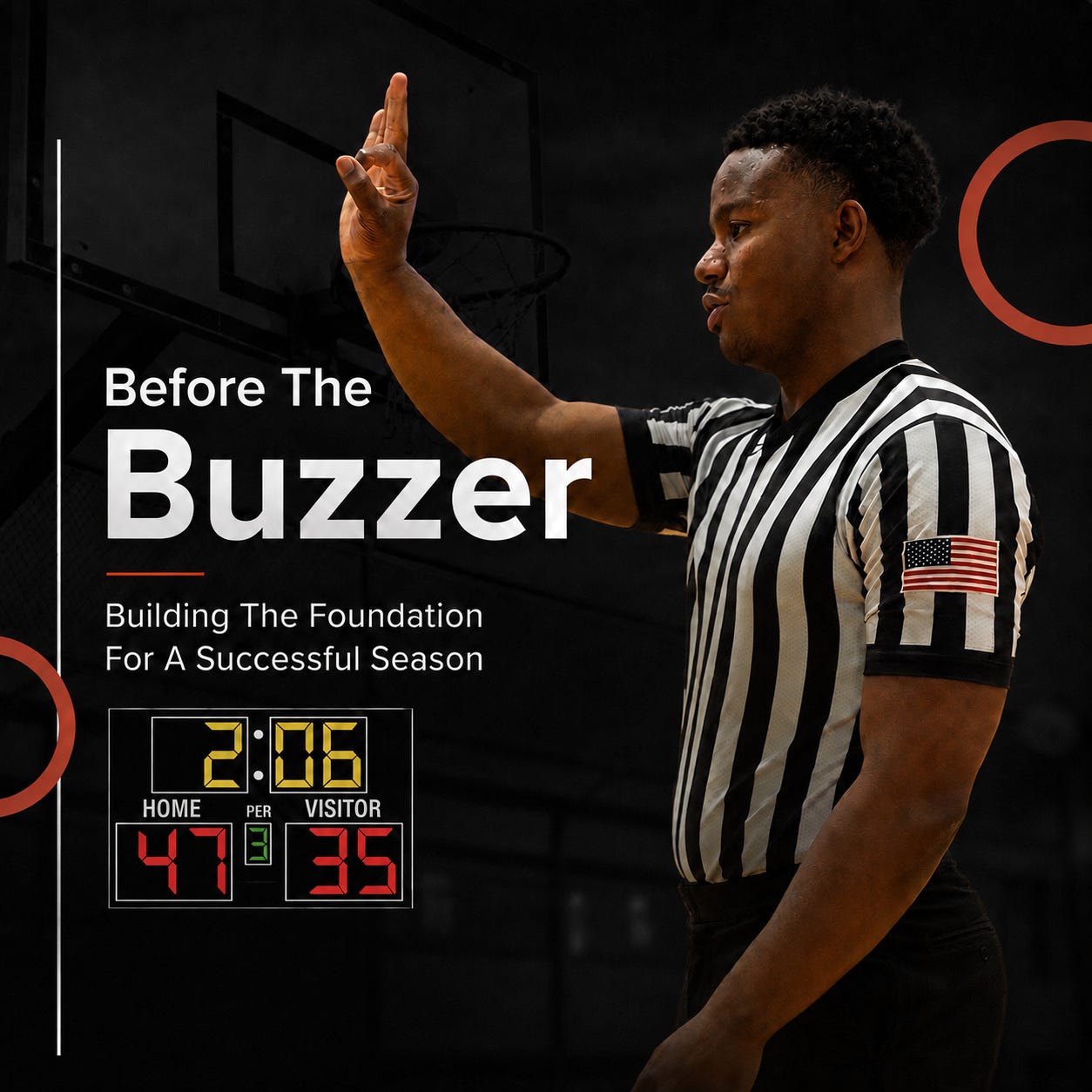
These lessons came from Montrell Cade’s Crown Refs presentation, Before the Buzzer: Building the Foundation for a Successful Season.
Montrell recently earned an opportunity in the Big Ten and several other conferences. But one of the most valuable moments of the conversation was not about the promotion. It was his honesty about learning soon afterward that he was no longer a candidate in the NBA pipeline program—a goal he had pursued for years.
One opportunity placed him on a career high. One decision brought him back down.
His response captured the heart of this entire article: never get too high, never get too low, lean on your community and keep working toward the next win.
That kind of transparency is why the full conversation is worth your time. Montrell does not just share what officials should work on. He explains the routines, systems and relationships that have helped him build a strong foundation for his own career.
🎧 Listen to the full Crown Refs podcast: Before the Buzzer: Building the Foundation for a Successful Season — Montrell Cade
👑 Want year-round rules study, film breakdowns, live calls, mentoring and a community committed to helping officials grow? Join the Crown Refs Community.
Serve the Game.
Comments
Nothing yet. Say the first thing.
Sign in to join the conversation.