
Social media has become the way to stay in the loop. News and long-form commentary, official government and corporate communications, educational content, professional development—it’s all on social media. Thing is, social media is also destroying lives and tearing society apart. Enter Apricot.
meta
recsys
This blog has been quiet for a few months now but I’ve been busy working on a new project. It’s time to take the covers off and show you what it’s about.
What’s Apricot?
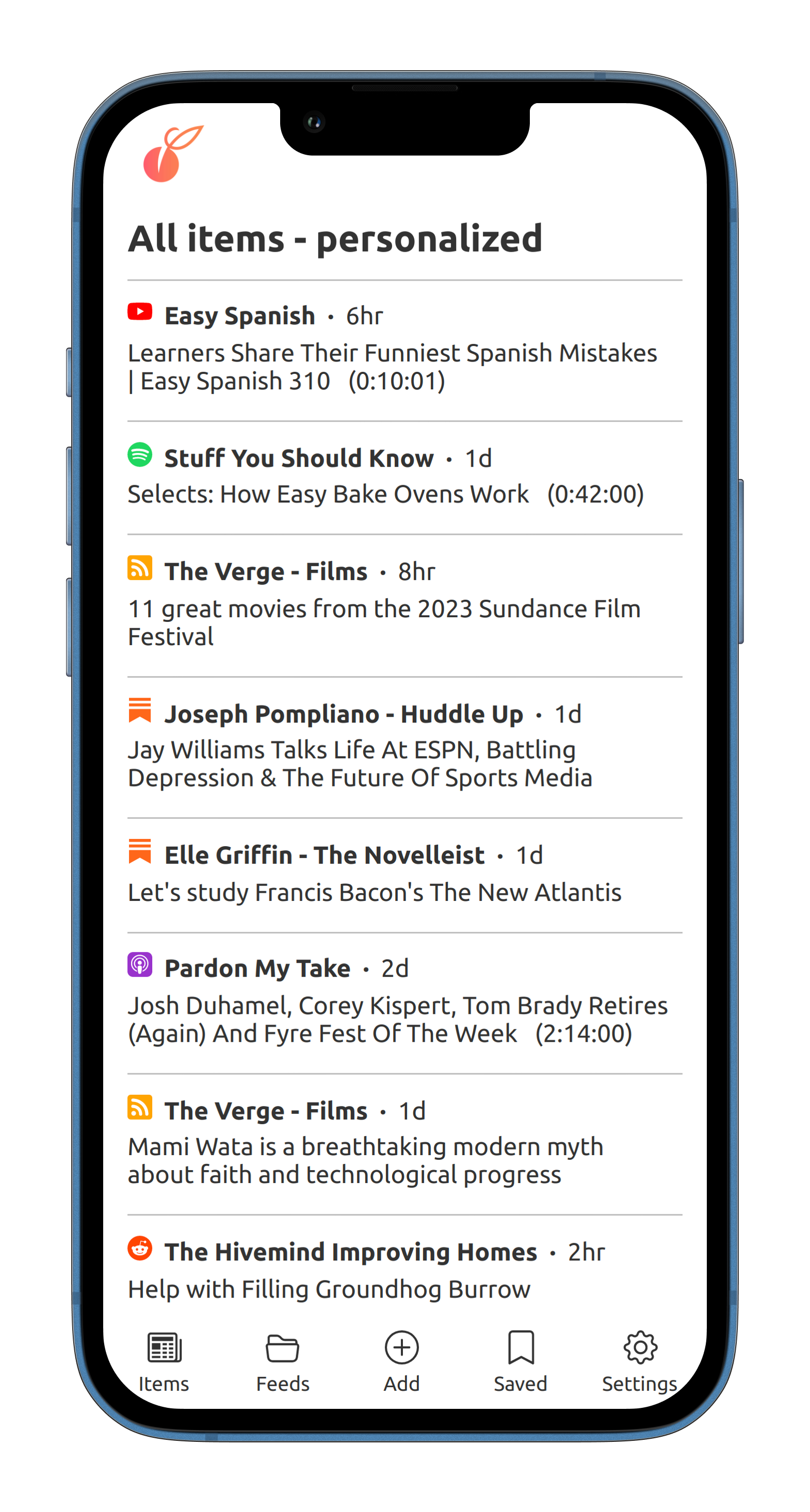
Apricot is a very simple service for subscribing to and browsing content from the web. Here’s how it works:
- Add your favorite sources: newsletters, podcasts, YouTube channels, social media, or RSS.
- Scroll through items in a combined feed, sorted so the most relevant stuff comes first.
- Click an item (e.g. a Spotify podcast episode) to open it on its original platform (e.g. Spotify).
- Swipe an item to save it for later.
That’s it. For Apricot, though, the why is more important than the what.
Enter Apricot
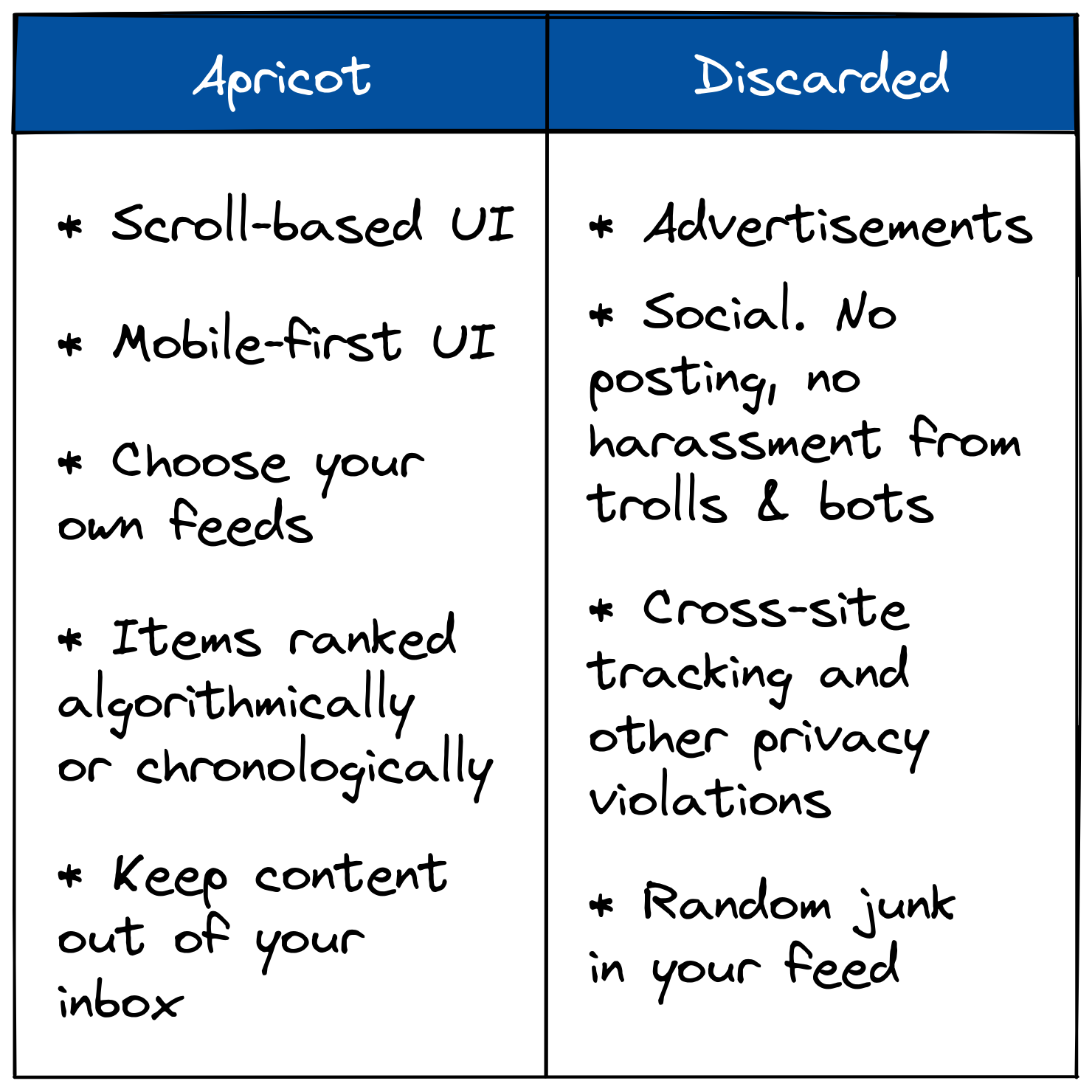
Apricot’s basic hypothesis is that we should be able to un-bundle social media. Let’s identify and keep the good parts and throw out the toxic stuff.
What’s the good stuff? Apricot keeps three core aspects of social media:
Content aggregation. You shouldn’t have to get email or push notifications from individual sources when there’s new content; it’s good to have a consolidated service for this.
Users choose their own content sources, unlike, for example, a newspaper.
Apricot is a mobile-first interface where the user simply scrolls a single column to see more content.
The rest of the social media experience is discarded.
Most importantly, the ads-based business model; when it’s ready, Apricot will be a paid service. Since we don’t serve ads, we don’t need to track what users do elsewhere on the web. Frankly, we’d rather not know. And we don’t need to keep users addicted to the site to maximize engagement. In fact, Apricot encourages users to click out of the site to view items on their original platforms.
Apricot also does away with the conversational aspect of social media. Users can’t post on Apricot, which means you’ll never have that sickening feeling of watching bots and trolls coming after somebody you follow, let alone coming after you personally.
What about Data Science?
Apricot is not a “data science-first” project. That said, it was inspired in part by my experience following data science content around the web. Plus, there are a lot of opportunities for ML-powered features. Some that come immediately to mind:
- Ranking items in a user’s feed
- Recommending new feeds
- Summarizing long-form content to get more of a Twitter-style card instead of just the headline.
- Grouping or de-duping items with the same content, e.g. a podcast on both Spotify and YouTube.
Wrapping up
It’s early days for Apricot, so I’d love to hear your feedback—what features would be most useful for you? Sign up at https://theapricot.io and give it a spin!
Comments
Nothing yet. Say the first thing.
Sign in to join the conversation.