
critic of political economy is supported by your subscriptions and donations. If you aren’t already you can become a paid subscriber on Substack or make a one time donation of a ★🚩revolution🚩★ here . If you’re Canadian, you can email me at criticofpoliticaleconomy@proton.me to set up an account and pay with etransfer, as this avoids fees and taxes for me and the exchange rate for you.
The premises from which we begin are not arbitrary ones, not dogmas, but real premises from which abstraction can only be made in the imagination. They are the real individuals, their activity and the material conditions under which they live, both those which they find already existing and those produced by their activity. These premises can thus be verified in a purely empirical way. - Karl Marx and Friedrich Engels, German Ideology (1845)
Critics (and many Marxists) alike often interpret Marx’s historical materialism in a crude deterministic sense, in which materialism is identified with a physicalism which believes that only “real material processes” determine social life. Combined with the fact that the “economy” in the modern sense of the word is what people have in mind, Marxian materialism is often reduced to economic determinism. However, this is the wrong way to think of Marx’s method, and in fact, this crude empiricism repeats much of the false materialism Marx attempted to critique himself.
Instead, Marx and Engels view their method of scientific inquiry as being materialist because it starts from real and undeniable premises of social existence. They don’t start their analysis from assumptions of what is human nature or divine rule, but rather from attempting to analyze real social subjects, their social relations and the material conditions in which these exist, both of which they are products and producers. All human history is, in its most abstract sense, that of really existing or concrete individuals. Furthermore, all human social existence is defined by the need to engage in production and reproduction of social relations. The fact that humans physically exist somewhere, and that their physical existence must be reproduced, is thus a central premise.
Often when people think about the central role of production played by Marx, it’s often reduced to again this contemporary notion of the economy and the role of the “factors of production”. Even worse, they fall into the liberal understanding of “economic interests” in a crude individualistic sense, which ultimately reduces the influence of production to the desire of classes to consume more. This is then argued to represent the interest and motivations of all social actions.
Instead, the Marxian centring of production is, in the first instance, more so about the premises of human life in general, and that of a given historically society. In all of human history, human beings exist within nature and must reproduce themselves physically through appropriating and transforming objects of nature. Together, these individuals must reproduce themselves materially through social organization, and this socio-material basis is truth for all human societies. This exchange between humans and nature in the physical reproduction is the process of metabolism.
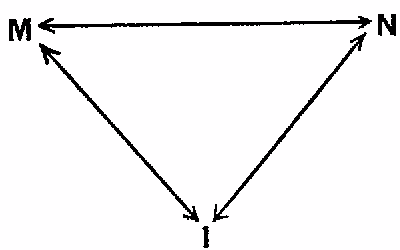
How is this metabolism realized? Through labor or productive activity. Labor, as human productive activity in general, is a defining characteristic of human existence. Thus, the labor process, is the means through which the material exchange of humans and nature is mediated. This general and transhistorical labor process is production in general, a fundamental premise of human social existence. The conscious and voluntary transformation of external nature by human beings is the most general characteristic of labor, and a power that defines human beings. We are not merely capable of reproducing ourselves, but have the cognitive capacity to reproduce ourselves in various different forms. In this sense, we are human-subjects, endowed with the ability to organize and regulate the form in which our reproduction takes.
However, it’s important to note that material (re)production does not refer to the mere biological reproduction of humans, but rather, the entire mode of life. This totality includes in it our political, economic, legal and ideological relations, which together constitute a social-material reality. This is often why debates regarding the value of labor power are so confused. Many Marxists think that the reproduction of a worker is about the mere physical/biological reproduction of an individual, a useless abstraction that is incoherent when one attempts to describe it. In practice, it is through class struggle that the socially determined needs of capital and labor are realized, and this changes throughout capital’s historical development.
This abstract determination, the fact that humans act upon the external world and shape it in their own image (while being shaped by it) is added to the fact that productive powers are a historical development. One of the greatest fallacies of liberal-capitalist propaganda is the notion that “great individuals” or entrepreneurs are someone “self-made”. In reality, we are all in debt to those who came before us, both those who have made great innovations and inventions, but also to those whose years, decades and centuries of objectified labor, provides the basis for our modes of life. These transhistorical realities of socio-material existence which are valid for all modes of production take on historically specific forms. These forms speak to overall configurations of human social relation. The particular form which this transhistorical mode of reproduction takes is referred to more commonly as a historically given mode of production.
Whether you understand production in its immediate sense, that is, the production of goods and services (i.e., use-values), or you understand it in its general sense (i.e., the production/reproduction of society as a whole), it is always an unbreakable unity of physical and social processes. Here is part of the reason why there’s much confusion over these terms. Often people confuse the material for meaning solely the physical and therefore try in some bizarre way to abstract from social relations. But human social relations are always physical, i.e. always material. And it is impossible to think about them not as such.
Rather, the reason that Marxian analysis provides a much more powerful methodological framework than most of mainstream social science is that it inserts history. The notion of thinking of trans historical and historically specific determinations allows for us to keep what is always the case, the unity of the social and the physical, but also for us to identify which determinations speak to which social outcomes and properly identify causality within a historical totality.
Identifying a concrete mode of production connects the most basic elements of human existence with history. This often posses a problem however, for social scientists, especially those in political economy. Untangling the historical specificity of socio-material facts, whether they are general transhistorical parts of human relations (such as the labor process) or particular historical parts (such as commodity exchange in capitalism) is a key task. This is also important because our analysis cannot externalize social facts. Often, analyses attempt to explain things outside of human social relations. This is common with reference to a priori “human nature”.
Understanding modes of production within their totality through articulating how socio-material elements function in unity with one another is the central goal of Marx and Engels scientific inquiry. They take as their object social relations, the concrete form in which human subjects together, through their interaction, production and reproduce themselves. In this sense, the production and reproduction of life is always and fundamentally both material and social. It is material because it is grounded in the concrete existence of humans and nature, and social because it involves the interaction between several subjects.
The final point to summarise is the importance of attaching consciousness to our analysis. We already know that the form or mode of social production is more than just the mere biological reproduction of subjects. It’s rather the entire totality of cultural, political, ideological and legal relations which through their unity reproduce a mode of life.
However, it’s important for Marx and Engels to also understand how we engage with the process of inquiry itself. Why? Because our modes of consciousness are themselves determined by socio-material relations. Our conceptualisations of the world, our ideas, our perceptions, our words, are not externally pre-existing objects, but themselves social products. The study of the development of consciousness and the subjectivity produced by our mode of production is crucial for material analysis.
Thus, we must take care to analyse cautiously, as we will see, the immediate appearances of things of which we wish to identify and define in our theories of human existence. As the saying goes, if essence and appearance perfectly coincided, if all there was to know was what you immediately can perceive and experience, there would be no need for science. This is as true for biology and physics as it is for all social sciences.
Thus, let’s quickly summarise the relevant points for understanding the Marxian approach to social sciences as based on the “real premises” of human existence. First, all human relations are material relations. That is, they involve the concrete production and reproduction of everyday life in a historical specific form. Second, all human relations are social relations insofar as they involve the necessary interaction between multiple subjects. Third, socio-material relations are and their reproduction does not refer merely to the biological processes in a crude physicalist sense, but rather, the reproduction of the totality of social relations, which include economic, political, ideological forms of existence. The totality of these relations and their reproduction is thus the reproduction of society as a specific mode of production. Finally, social relations produce specific forms of consciousness which cannot be merely taken for granted as ready made for scientific analysis. The forms of consciousness must be critically deconstructed in order to understand the difference between the appearance and essence of social relations. These for me are the fundamental elements of historical materialism.
If you enjoy my work and want to support it, the best thing you can do is like, repost and share it on other platforms. The most important thing is that people learn something from my work! You can also become a paid subscriber on Substack or make a one time donation of a ★🚩revolution🚩★ here . If you’re Canadian, I accept e-transfers by email instead of going through Stripe, this avoids fees and taxes for me and the exchange rate for you.
Comments
Nothing yet. Say the first thing.
Sign in to join the conversation.