
Hello loves. Miss you, and wishing you all a healthy and peaceful new year.
I haven’t written! Zack and I went on a big trip in September to the UK and France and got home on October 7. My travel blabbing didn’t feel right to share in light of the scale and escalating horror of the destruction in Gaza. And then I got out of the habit of writing… you know how it goes.
In the last few months I’ve started taking an SSRI, had a birthday, went to California a couple of times for work and then to San Jose del Cabo and Houston to see family. Zack’s sister moved to Singapore! I’ve been going to the gym and movies a lot. The SSRI is cool—I think it’s helping with regular seasonal depression and motivation to do things like cooking, making life plans and staying in touch, calling my reps, etc.
Have you heard about Naomi Klein’s new book, Doppelganger: A Trip into the Mirror World? It was the best thing I read last year1. Klein—a leftist activist and social critic—has been confused with conspiracy theorist Naomi Wolf over and over again over the past decade-plus. She uses this mirroring as a framework for digging into many of the dissociative trends and conspiracies that make up the last few years of politics and culture. She finds patterns in the left → right shift happening in health and wellness, COVID denialism, and so much more.
There’s a particularly harrowing moment where she’s talking to someone about COVID who says frankly that she thinks people who get really sick from it should just die. Klein illuminates what’s at stake when we write off ideologies or populations as opposites to be destroyed, negated, and ignored. We all know this is a problem on the right—they’re ghouls—but she implicates liberals in this too. All of our canceling and exceptionalism.
About a third of the book is a deep dive into Israel and Palestine, perhaps the longest-running example of this mirroring and vacillation between victimhood and villainy, truth and lies. It’s not a light or uplifting read but I do wholeheartedly recommend it.
I’ve been thinking (and despairing) about how little words and action seem to matter, even though I know they do. From Isabella Hammad:
Unfortunately, what people write or post on Instagram does actually matter. The war on Palestinians has always been a war of language, a war of propaganda and PR. It is a project that has relied on western military support since its inception. Without the consent of western publics and without that military support, Israeli apartheid would not survive. So these do matter. Language is not small, even though, in our hearts, of course, what actually matters most is this terrible brutal waste of human life.
Klein referenced this quote from Mike Davis in her book (emphasis mine):
…One of the simplest but most abiding lessons from dissident generations past is the need to speak in the vernacular. The moral urgency of change acquires its greatest grandeur when expressed in a shared language.
Indeed the greatest radical voices — Tom Paine, Sojourner Truth, Frederick Douglas, Gene Debs, Upton Sinclair, Martin Luther King, Malcolm X, and Mario Savio — have always known how to appeal to Americans in the powerful, familiar words of their major traditions of conscience.
One extraordinary example was Sinclair’s nearly successful campaign for Governor of California in 1934. His manifesto, “End Poverty in California Now,” was essentially the program of the Socialist Party translated in New Testament parables. It won millions of supporters. …
We need to understand what demands have the broadest appeal while remaining radical in an anti-systemic sense.
I’m taking these notes forward into 2024.
*
Like many of you, I’ve been reading and learning a lot about the history of US militarism in the Middle East and Northern Africa. I also found artist Hillary Mushkin’s fabulous project Incendiary Traces late last year, which connects the landscape of Southern California to national identity, security, and war.
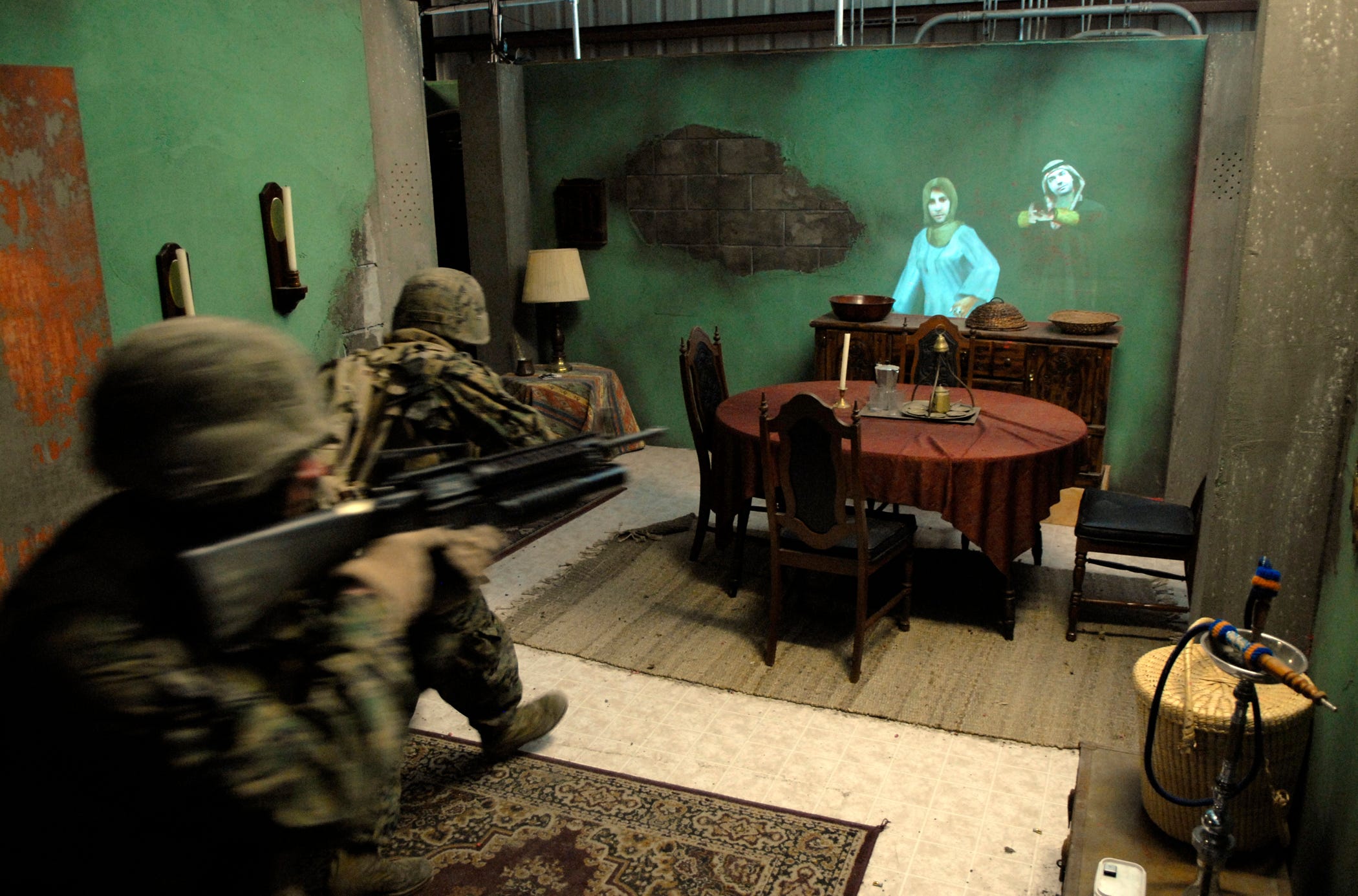
I grew up in 29 Palms, California, near the US’s largest Marine base. Outside the base are twelve hyper-realistic mock towns spanning roughly 1,200 square miles of the Mojave. They call the region “Artropia” and, for over thirty years, have used the towns as training grounds for war (first Iraq, and then Afghanistan).
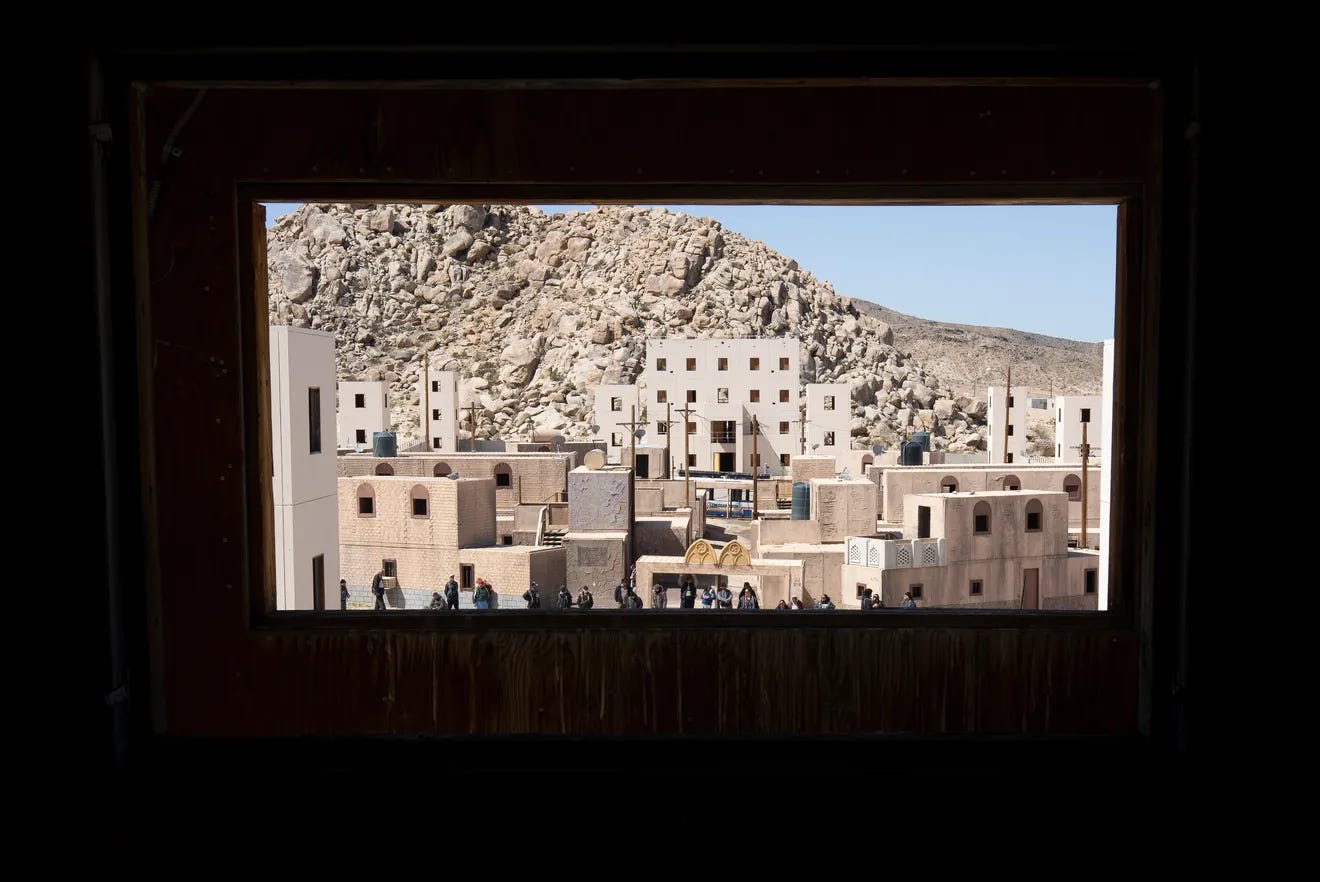
Mushkin points out that these training environments are hyper-simulations of being in the military. Role-playing, performance, and “realistic” environments simulate the conditions of combat without actual combat; “civilians” and “enemies” are part of a highly scripted and stylized theatre production.
This simulation of combat in the Middle East is connected to a history of simulation in the landscape, too—take, for example, palm trees. Palms were first imported to California in the 1700s when Catholic priests were establishing missions along the coast. Later, in the Victorian era, palms were planted to brand the region as the utopic, inevitable conclusion to American expansion.
As Southern California grew in the mid-twentieth century, developers sought to capitalize on tourists looking for sunshine, and so they aligned themselves to fantasies of the Middle East and Northern Africa. Date palms were imported to the Coachella Valley in the late 1880s, and they thrived. Before Coachella the festival, the low-desert cities of Indio and Palm Springs were famous for their date festival and Middle Eastern-themed tourist attractions and beauty pageants. Streets were renamed after Mecca and Cairo, themed shopping complexes sprung up, and dates were packaged and sold in little pyramid boxes.
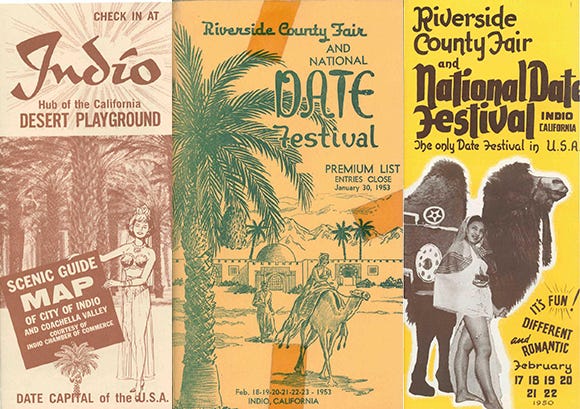
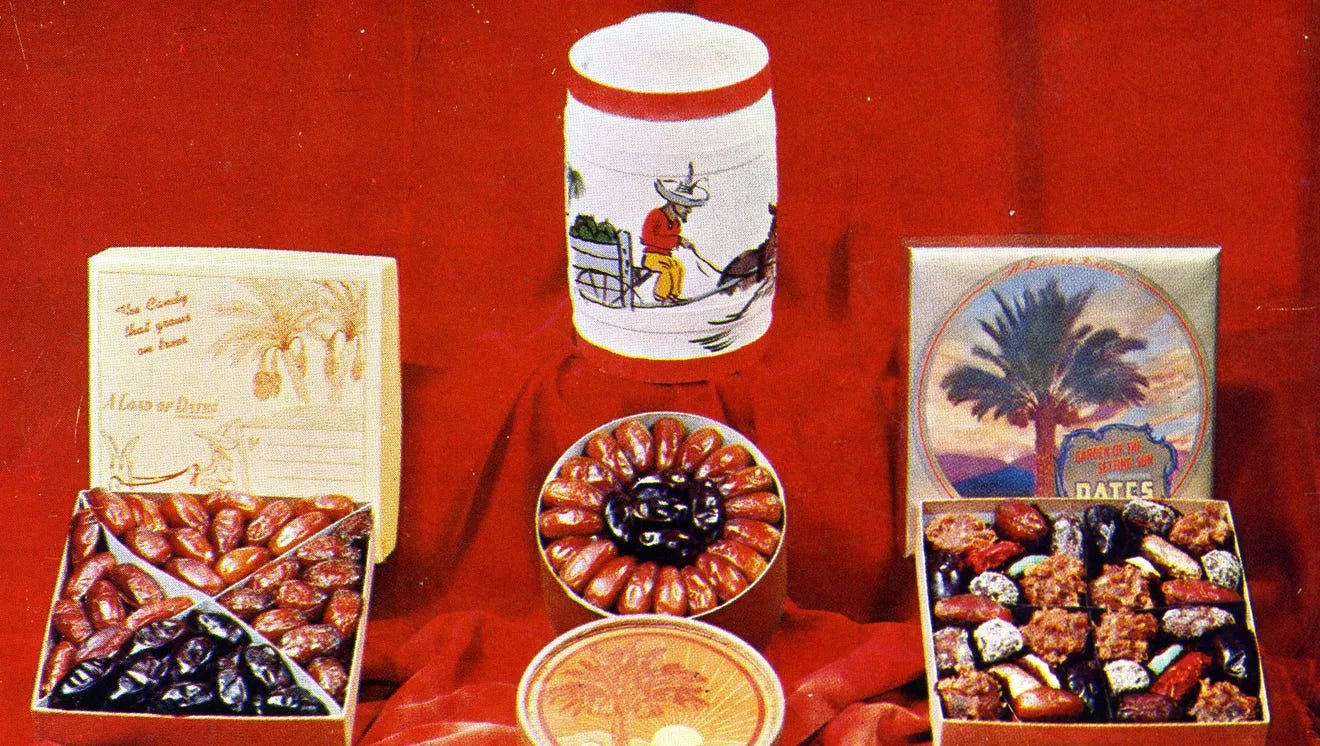
It is wild to map this boosterism through to the totally horrifying state of things today.
Sending love to you all, please take care.
Thank you to Natassja and Steve, my favorite readers, for the recommendation. 🖤
No posts
Comments
Nothing yet. Say the first thing.
Sign in to join the conversation.