
For Michael Tanner and those who were part of his story
One of the great joys of human life is to understand and be incorporated into another person’s world. We write stories with our lives, and we seek to be characters in the tales of others. But we also know that the very thing we seek can crush us. It can shame, humiliate, ignore. We can be the heroes in other people’s stories, but we can also be the villains, clowns, jokers. Even when things go well, the other world holds the ultimate trump card—its own inevitable demise. When a world in which we figure dies, part of us literally dies with it. When a story we are a part of ends, part of our story ends too.
Sometimes—often times—this is too much, and we must seek solace elsewhere. Rituals can fill the gaps, or temporarily plug them. It is a real credit to religion that it understands our need for ritual, and often provides just what we need. Nothing does this better than the singing of hymns. For me, they console not primarily for their praise of the divine, but rather for their poetic depiction of the problem that we wish the divine to solve: The constant hum of human alienation and conciliation. The dominant theme of the hymn is the central struggle of being human; the struggle of being lost and found, lost and found.
While ancient medicine had its quirks, it is striking how similar it is in method to modern medicine: Seek out chemicals that, when ingested or otherwise applied to the body, have a positive impact on health. Ancient chemistry, unfortunately, was not so close to modern chemistry. This forced ancient producers of pharmaceuticals to focus on the macro rather than the micro. The result was a lot of ointments, perfumes, and balms.
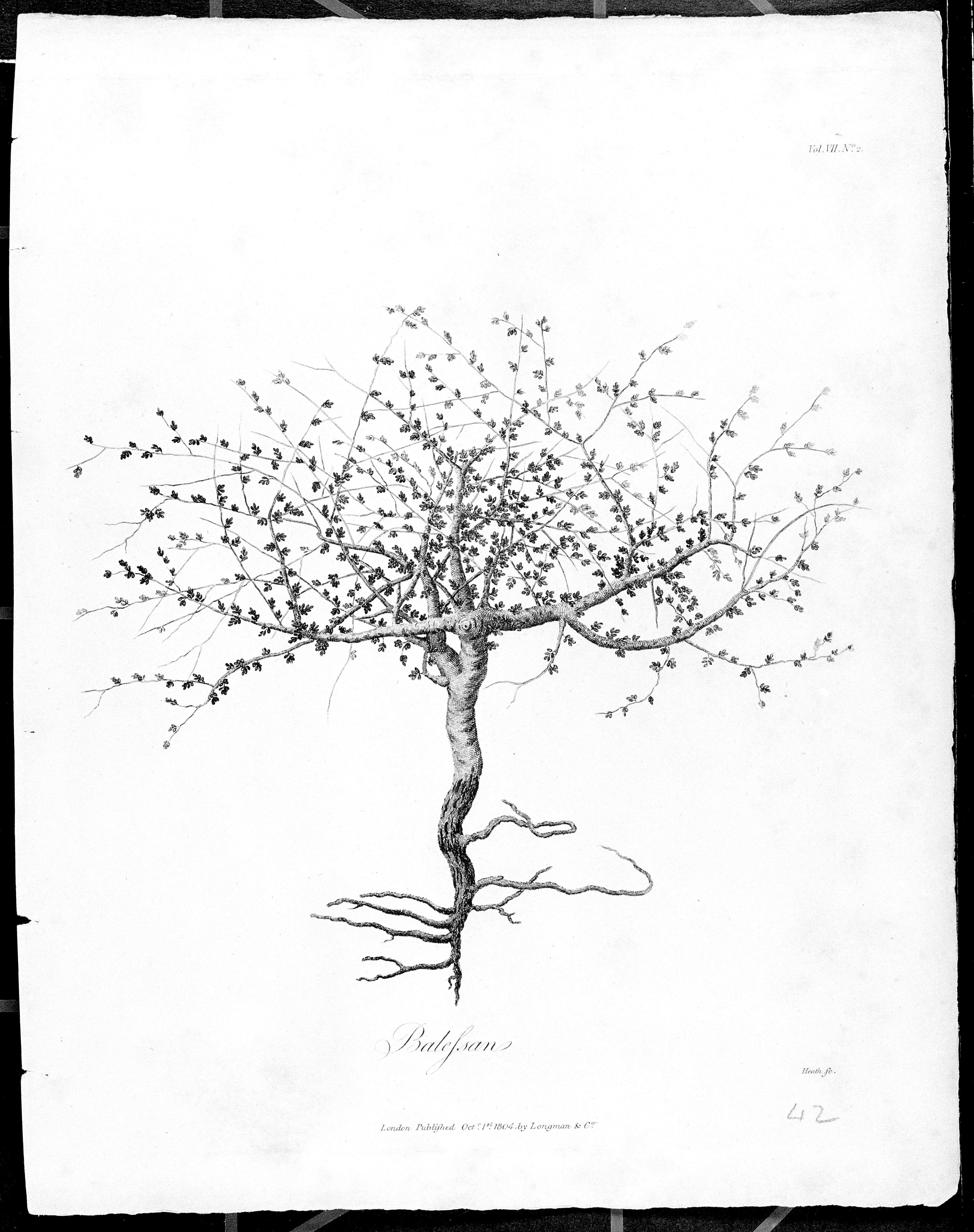
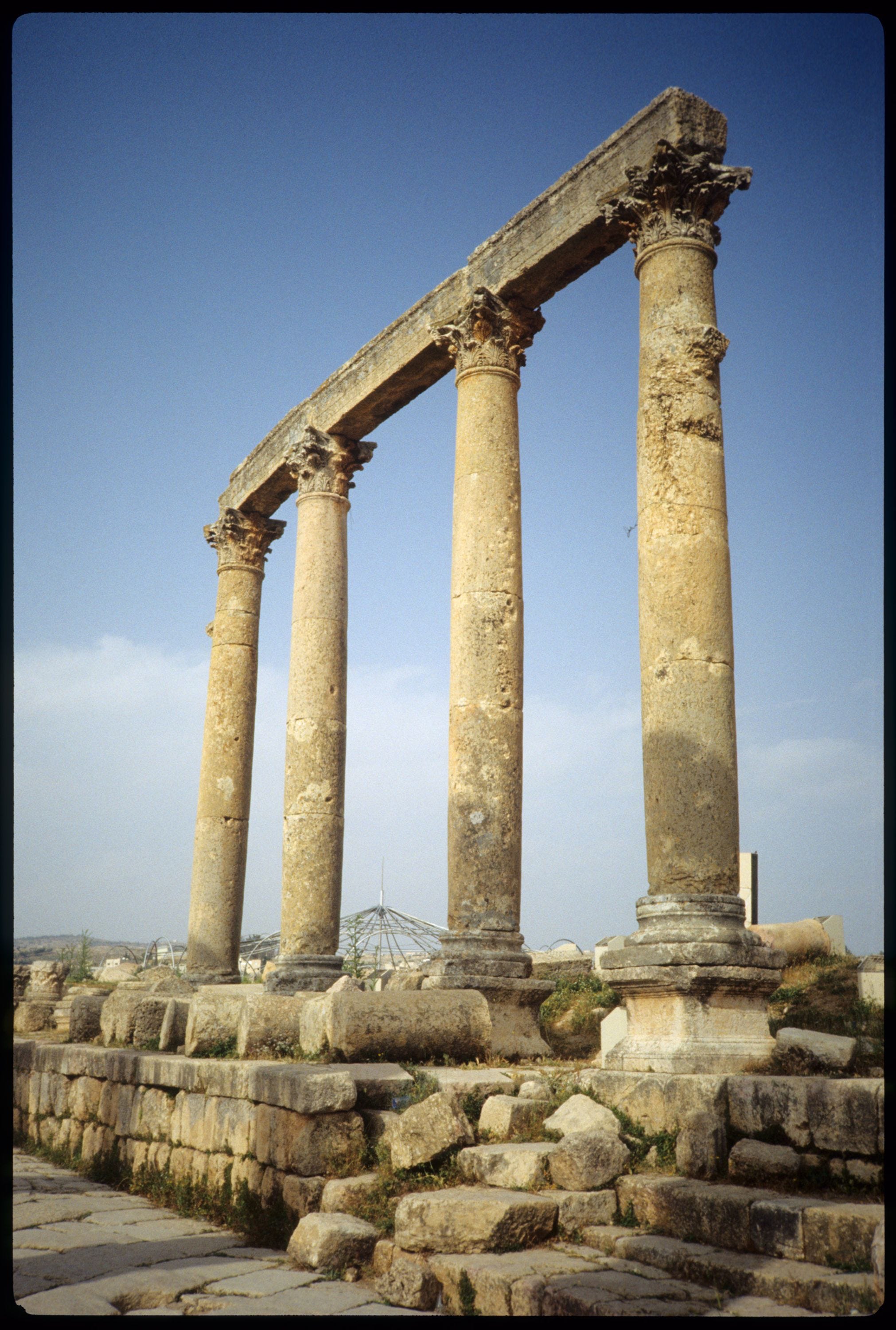
As is still the case, these were highly sought out, and access was largely restricted to the rich and famous. Some of them were of Biblical note. One was the perfume made from the shrub Commiphora gileadensis, so called because it was produced in Gilead, a name that could easily be found in Star Wars, but which refers to a real place now in Jordan.
This perfume is mentioned several times in the Bible, always reverentially. Perhaps its most significant Biblical role is as one of the precious gifts the Queen of Sheba gave to King Solomon.
The United States is home to one of the grand hymn traditions—the spiritual. Most of these hymns were written communally while engaged in slave labor. They are a direct response to a deep and profound alienation. Despite this, they are, on the whole, extremely hopeful. The strength of spirit required to create beauty in such circumstances is remarkable, bordering on literally unbelievable. (It is reminiscent of the poplar trees tended by the prisoners in the Dachau concentration camp.).
Spirituals not only offered up hope and a reminder of beauty to those engaged in their oral tradition, they also offered up a path of resistance. The institution of slavery intentionally destroyed most traditional African culture amongst the enslaved, replacing it with Christianity. Spirituals purify those Christian ideals whilst blending in African musical culture. The songs often starkly reveal the hypocrisy of the institution, in a way that is hard to object to if you are the one who taught them those ideals (of course, integrity from the slavers could not be counted on).

Gilead’s balm was medicine for the body. It’s not clear how well it worked, but its cultural role was as an aid to bodily functioning. When Tyndale assembled the King James bible, the perfume started to take on a more metaphorical significance. Tyndale is the one who coined the English expression ‘the Balm of Gilead’. This was in the course of translating the passages discussed above.
There are three passages that mention the balm; two of those passages straightforwardly refer to the actual medicinal substance. A third is more metaphorical. When Jeremiah hears from God what the Babylonians will do, he laments, “Is there no balm in Gilead?” What he asking for is not medicine for the body, but a mediator of reconciliation.
This metaphorical medicinal image has been powerful, showing up, for example, in Edgar Allen Poe’s “The Raven”. It has also been a consistent theme in various hymn traditions. The most famous of these is the spiritual “There is a Balm in Gilead.”
“There is a Balm in Gilead” recognizes that we are not just open to bodily harm. Our distinctively human harms run along a different dimension. The apothecaries in Gilead might have a balm for our surface wounds, but this won’t cure all.
It is simple in form. To quote its lyrics is beside the point; the proof is in the singing. To really sing it—or really hear it being sung—is to recognize the need for this existential balm. And one does not need to buy into its underlying metaphysics to receive its consolatory benefits. The problem it is addressing has the peculiar feature that genuine hope that it has a solution brings along with it its own sort of solution. Being open to there being a balm in Gilead has its own medicinal benefit.
The modern world has increasingly turned to science as the arbiter of life. It sets the boundaries of what is possible, legitimate, serious. Religion has receded, seen as the realm of superstition, oppression, charlatanism. These characterizations don’t completely lack merit. Ancient medical scientists would be amazed by the power of our chemistry, happy to trade their smelly ointments for our sanitized compressed powders.
But the ancient theologians should not take such a sanguine stance towards science’s power to address their problems. Science can tell us something about the predictions of some of the theologians, can debunk some of what they were trying to explain, but its limits are hard. Humans have material problems—boy, do we ever—that science can help with. It can provide the original balm. But to think that it can provide an existential balm is a serious mistake. To deny the theologians this point is as bad a mistake as defending the ancient medical scientists.
That there is an existential balm of Gilead is an open question. The tragedy of intelligent life might be that it makes us aware of a sort of meaning that the world cannot deliver. Science is incapable of answering this for us. Religion might not offer the truth, either, but it is at least considering the right questions. It also recognizes the need for a different type of medicine, one that offers us glimpses of a hope for some sort of redemption. For that one can be grateful, independent of metaphysical predilections.
Comments
Nothing yet. Say the first thing.
Sign in to join the conversation.