
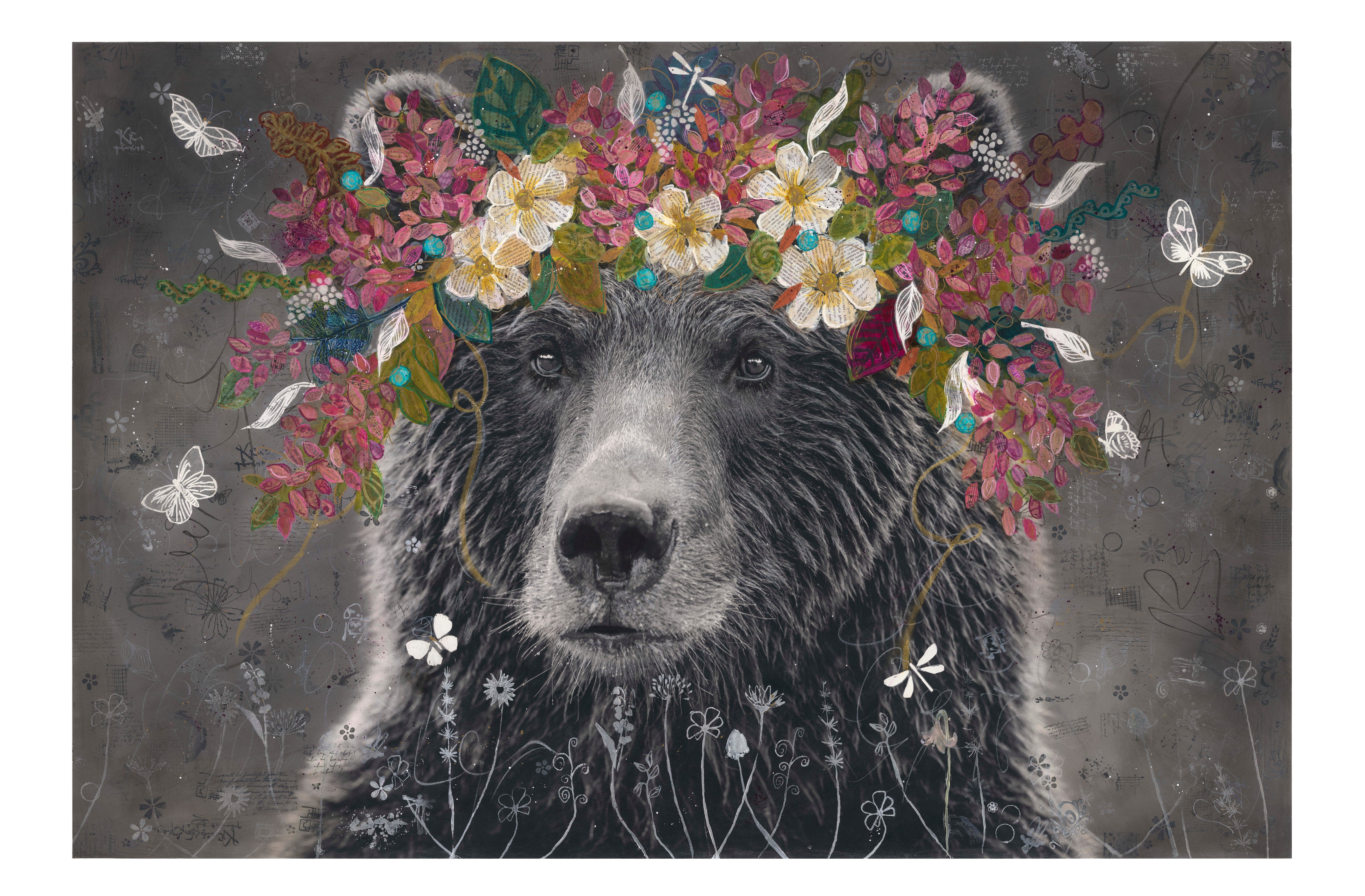
I found a new kind of happiness the first time I went looking for bears. I did not go alone, since I was practically a city girl and knew nothing about them. Instead, I went with a man who has spent his life photographing bears and other wild animals. Paul Nicklen built a successful career as a photographer not only because he loves and understands animals, but also because he knows how to survive in the wilderness and appreciate the drama and beauty of the wildest places on Earth.
For years, Paul traveled to the far north for National Geographic assignments to find bears. When we started dating and building a life together, he let me join him in places like Alaska, the Yukon, and the wet, green coast of northern British Columbia. We went to places where the roads end, into land that still belongs to the animals, and we waited. That is what looking for bears really is: waiting. We sat still in the cold and drizzle with our cameras ready, hours passing by, learning to read the land as the bears do, following the salmon streams, berry slopes, and old trails pressed into the earth by paws.
Paul, now my husband and the best wildlife photographer I know, taught me almost everything I understand about this life. He showed me how to sit silently in a landscape until it forgets you are there, how to wait for the moment when the light and the animal come together, how to approach something huge and wild with respect instead of fear, and how to leave it just as you found it. He brought me into his world and into the discipline of his craft.
Standing beside him in that country year after year, surrounded by wildlife living their own lives, has been one of my greatest joys. Although much of what I write here is a way of processing my grief over the wild places and species we are losing, thinking back on those days does not bring the familiar pain of loss that has accompanied decades of working to protect our planet. Instead, all I feel is pure happiness, the kind that leaves you smiling at old pictures when no one else is around.
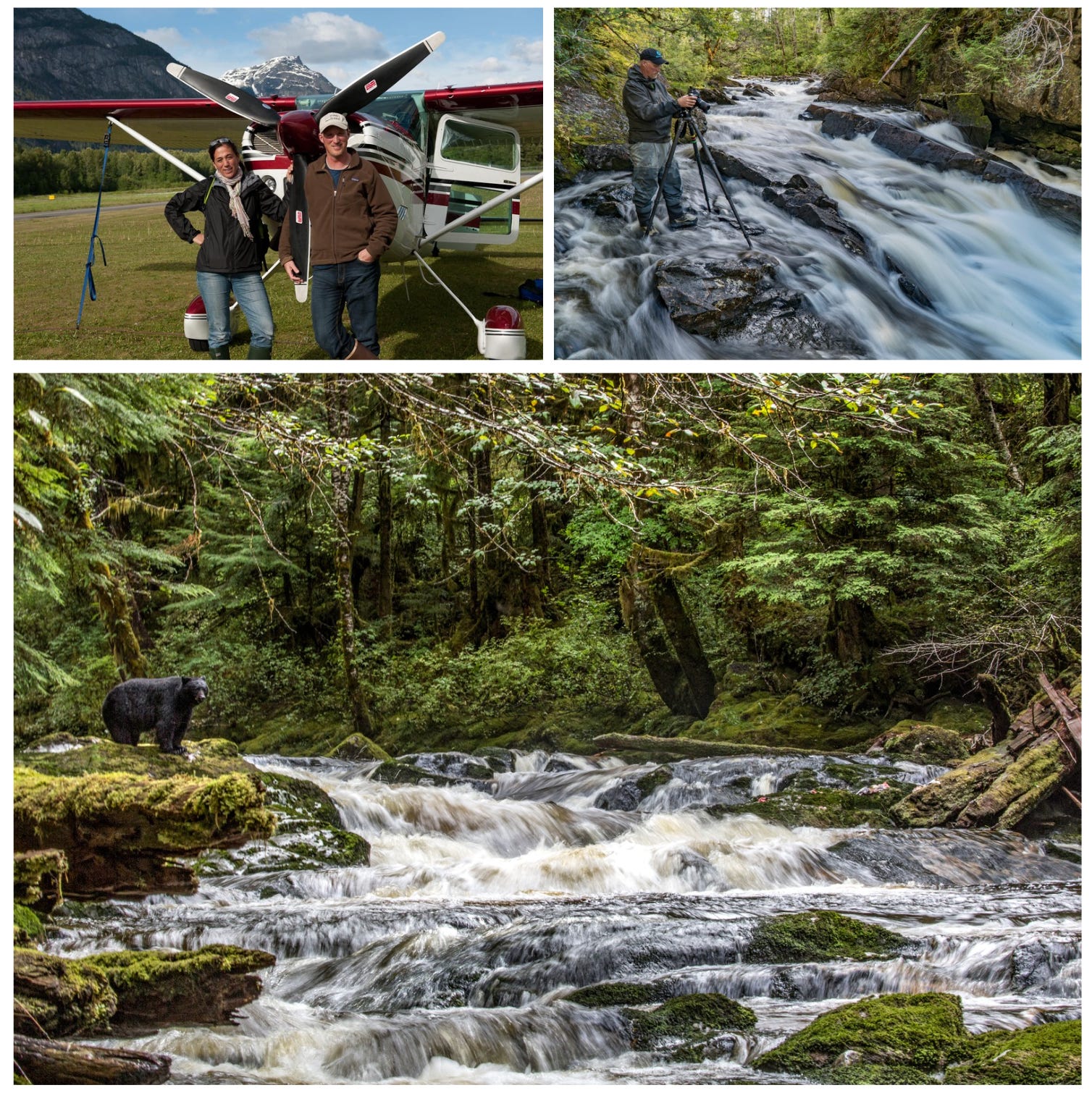
And then there is the bear. When it turns its great head toward you, you feel as if you are being measured by a being much older and calmer than yourself. It studies you for a moment, determining whether you might be a threat, and then it goes back to the more important work of salmon and berries. Under that brief spell, you realize for the first time your true size, and any sense of human importance evaporates right there on the riverbank. Nature is a most honest mirror.
The first time I experienced this was at the end of a long day’s walk deep in the heart of the Great Bear Rainforest, a dark, dripping dream of a place on the northern coast. Paul was there for National Geographic, photographing spirit bears, the rare white Kermode. I came as president of the International League of Conservation Photographers (ILCP) to take my own photos of the Gitga’at First Nations, who were protecting their homeland from an oil pipeline and had asked for our help. I have always loved nature, but at the time I was still just a city girl and felt completely out of place. I followed Paul in waders three sizes too big, carrying my own cameras and tripod, while he trekked through the forest as if he belonged there. He was patient and kind, but I knew even then I was secretly being tested, and he was trying to gauge if I could keep up in this world.
Our hike ended when we walked around the trunk of a huge tree and saw a large male black bear on the other side. Paul turned to check if I was scared and found me standing there in those oversized waders, crying. But my tears did not spring from fear. They streamed down my face in pure, ecstatic joy. I had never seen a bear before, and in that moment, I was sure I was looking at the most magnificent creature in the world.
Years later and I have since encountered many, many bears in the wild. Each one of those encounters was just a precious and new to me as the last. Over time I learned the power of these animals, their remarkable intelligence, and how wonderfully expressive they can be. They also have come to symbolize the start of a relationship that grew into a whole new life. So when my husband asked if I would paint one of his bears, my answer was an immediate yes.
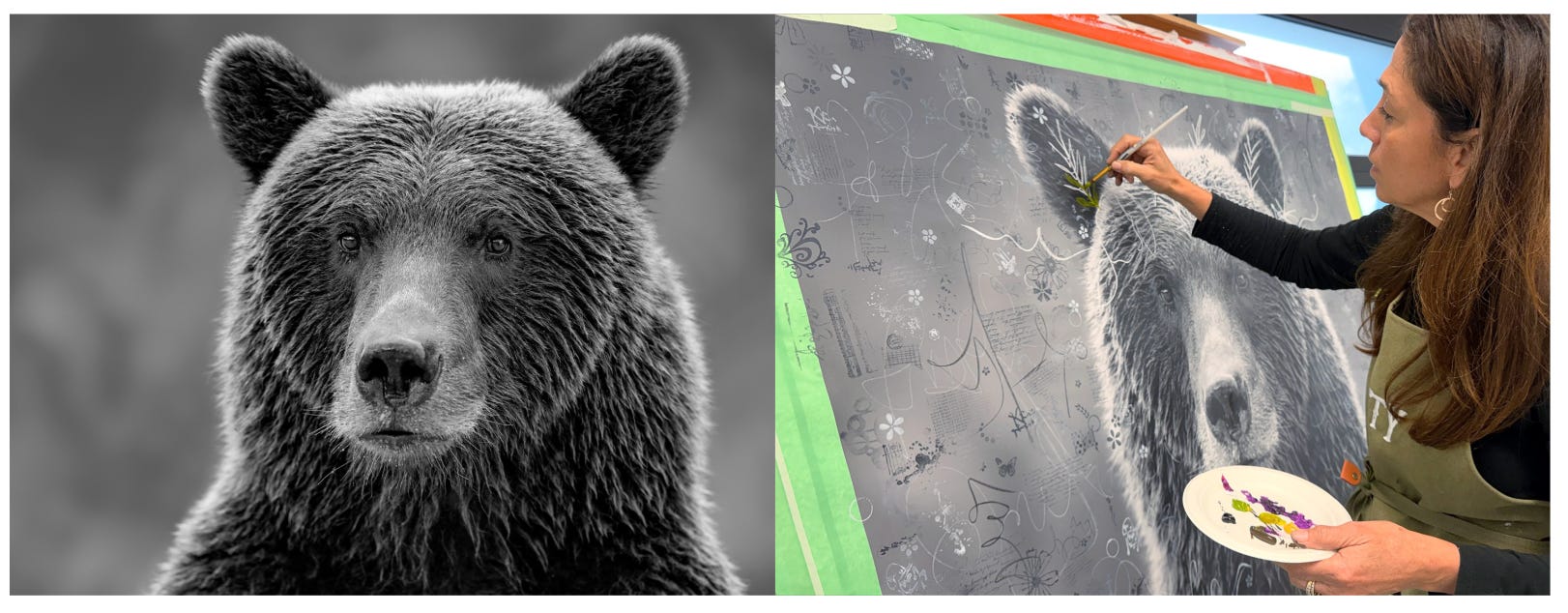
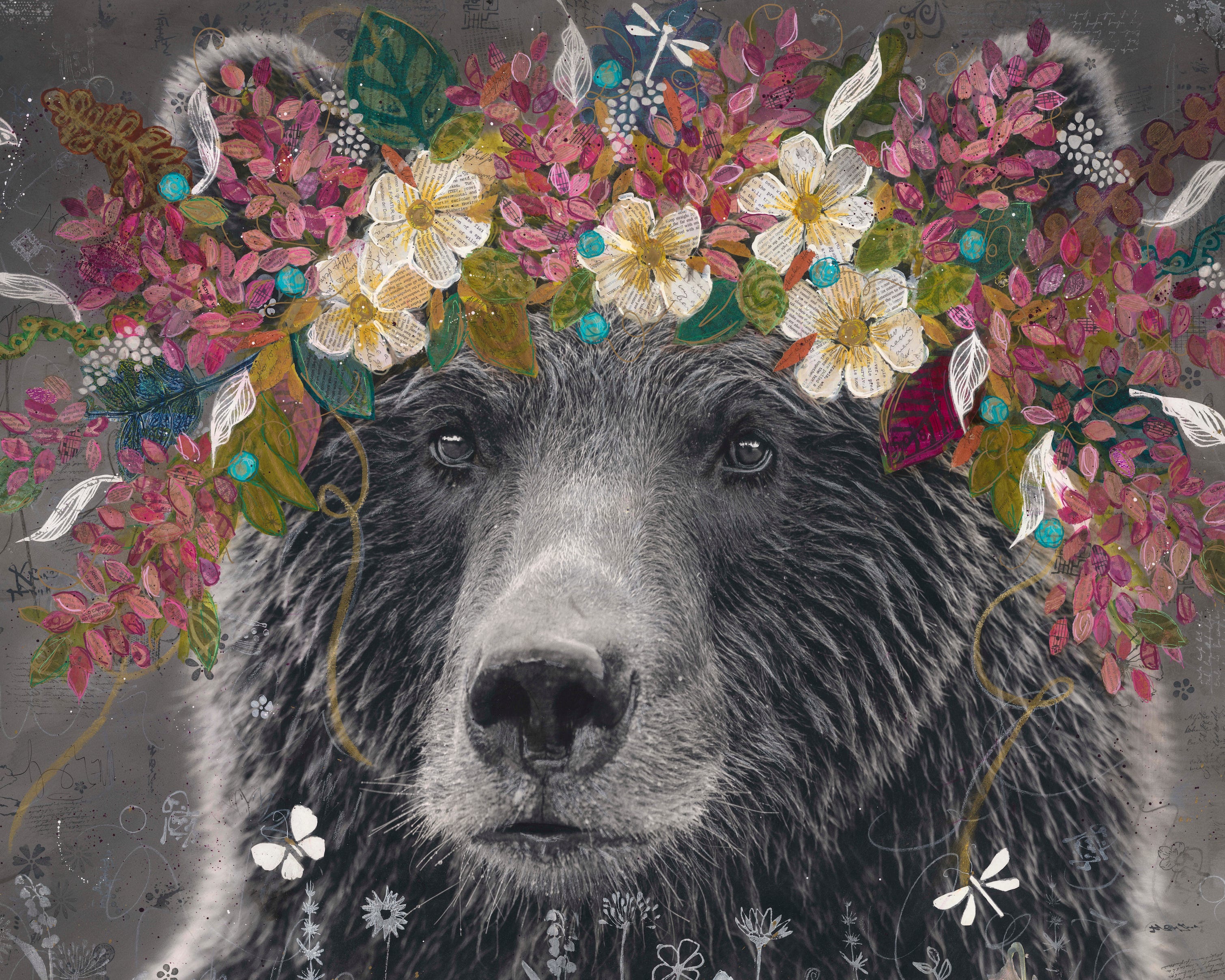
The photograph we chose together was of a beautiful female grizzly, her gentle eyes and soft muzzle captured perfectly through Paul’s unending patience. He gave the image to me, and then I did what I have been learning to do at the easel; I took his photo of that great gray face and crowned her with flowers. It is the first work we have made together, Paul’s eye and my hands, and that is why it means so much to me. Everything I love is in it, the north, the cold, the years, the man, the waiting, and the animal. I placed the blossoms on her head as you would for a queen, a bride, or someone dearly departed, because to me she is all three: sovereign, joined to that wild land, and mortal in a world where people in distant offices decide how many of her kind will survive.
The portrait of the bear we chose is of a powerful predator, a mother, and a single, vulnerable life at the edge of where her species is protected. In Alaska’s preserves, such as Katmai National Park, bears gather along coastal rivers to feast on salmon and prepare for the harsh winters ahead. But once they leave the safety of the park, many go on to be killed by hunters or shot from helicopters in an indiscriminate, state-sanctioned cull.
The argument in defense of these killings is that reducing bear populations is the only way to help caribou recover, but it is hardly a sustainable solution. A changing climate, along with roads, mining, and oil development, poses a far greater threat to caribou. Yet those realities rarely make it into city halls or the closed-door meetings between politicians and powerful industries. Instead, it is easier to keep drilling, keep expanding, and keep shifting the blame onto the bear, an animal that has lived in balance with North America’s ecosystems for millennia.
I named her Osa Mayor, the Great Bear. It is the name of the constellation that has guided travelers home for as long as people have looked to the night sky, afraid of the dark. I want this bear to be more than the animal who can be hunted, starved of salmon, or pushed from her last mountain. Like the stars above, I want her to become the bear made permanent, lifted out of reach and placed within the cosmos. I know I cannot follow her into her mountain forest and protect her, but on the canvas I can at least show that she was here, that she was truly magnificent, and that she was born to be crowned.
Keep up with my latest work, exhibitions, and upcoming events including book signings, speaking tours, and panels.
No posts
Comments
Nothing yet. Say the first thing.
Sign in to join the conversation.