
Trust is integral to team success.
Trust that a teammate will pass the ball to an optimal location, trust that even the unluckiest shooters will eventually find rhythm, trust that the surrounding defense won’t fracture and collapse.
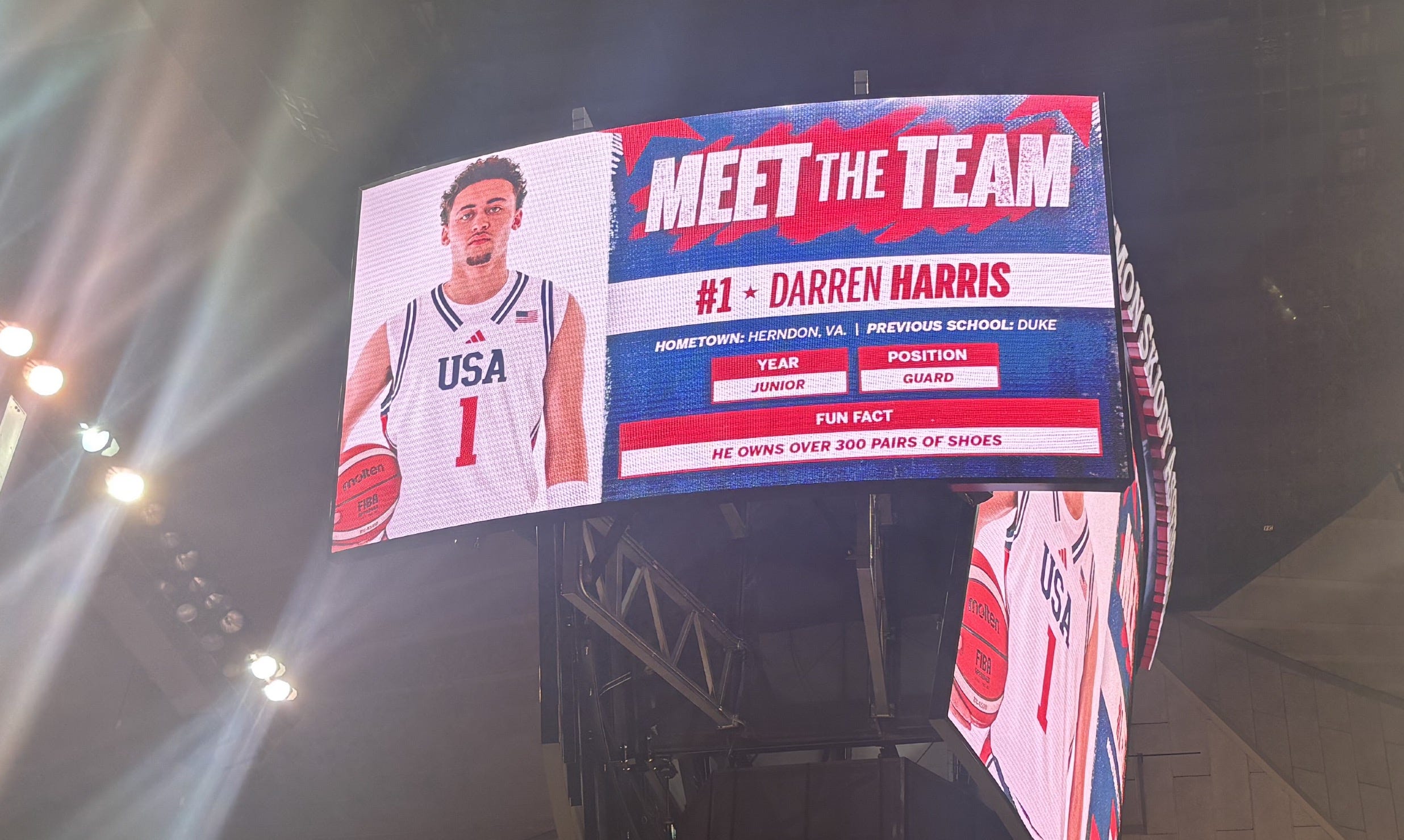
To properly play alongside Duke transfer guard Darren Harris, one must trust.
After all, Harris doesn’t exactly serve as a soft safety net. His skillset and playstyle, while possessive of major upside, are also rather risky. Hence the necessity of trust.
Harris, first and foremost, is a perimeter shooter. At his best, Harris assigns any spot around the arc to be the launch site of his next missile, and in one sweeping motion, receives swing passes or kicks from teammates, takes aim and hits his target.
That’s not Harris’ only avenue to success, but chances are, a possession that ends with a 3-point attempt from an open Harris is a successful one, even if the shot doesn’t fall every time. After all, Harris specializes in perimeter shooting. When the valve is turned on, it’s on. When it’s off, trust must arrive in reinforcement.
For example, at the 2026 FISU America Games in Peru, Harris shot 7-of-22 from long range over the course of four games, averaging 8.5 points per game. Only Villanova transfer Bryce Lindsay and freshman Prince-Alexander Moody attempted more triples than Harris, but Harris connected on only a handful.
That’s not unusual, especially in unfamiliar settings like an international event on another continent. Still, it’s a reminder that although the 3-point line is a place of ample upside, it also tends to end possessions. If 3-point shots aren’t falling, they become especially risky, while simultaneously amplifying the value of offensive rebounds.
Harris isn’t the only shooter on the roster, of course, and if multiple guards are firing away from long range, it’s critical that bigs between the blocks generate second chances on the glass. Indiana is fortunate, then, that its roster includes a greater sense of size than it did a year ago.
“We just have more versatility in what we’re maybe able to do and focus on,” Indiana head coach Darian DeVries said about personnel differences between last season and this one, “so we’ll still be heavy on threes, but now we have more guys that can get paint touches, more guys that we can put into the post.”
Last season, the Hoosiers lived and died by the 3-point line. Indiana enjoys more versatility on offense this time around, but Harris likely resembles the playstyle of last year’s roster more than anyone else. On some nights, a string of triples will assist in tipping a close result towards the side of the Hoosiers, and on other nights, steadfast inaccuracy and subsequently wasted possessions could doom a comeback bid or exacerbate a blown lead.
In short, the shots may not always fall.
In year two at Duke, Harris shot 36.3% from the field and 33.3% from around the arc, scoring an average of 3.3 points in 9.7 minutes per game. The year prior, Harris averaged only six minutes per game and shot 36.6% from the field and 22.7% on triple attempts.
Harris couldn’t quite secure consistent minutes at Duke, and perhaps in part because of that, he transferred to Indiana. Bloomington, in theory, ports greater opportunity for the sharpshooter.
This team and its fans must trust that although the 3-point shot won’t always fall for Harris, it eventually will, possibly in large quantities. Equally important is this team’s faith that Harris will take complete advantage of the prime opportunities presented to him in Bloomington.
After all, once the ball is in the air, there isn’t much to do besides box out and trust.
Comments
Nothing yet. Say the first thing.
Sign in to join the conversation.