
The great Monty Python asked a great question: What have the Romans ever done for us? If you want to see it for yourself again, you do so here.
As the impassioned speaker gets carried away, from the audience there is a suggestion:
“The aqueduct”
He stops in his tracks: “What?”
“The aqueduct”
So he acknowledges, grudgingly: “Oh, yeah, yeah, they did give us that, that’s true, yeah”
There is another suggestion from the audience: “And sanitation”
Hmm, he has to acknowledge this too: “Oh yeah, sanitation. Remember what the city used to be like. Yeah, all right, I’ll grant you, the aqueduct and sanitation are two things the Romans have done.”
“And the roads”
Cannot be ignored, “Well, yeah, obviously the roads, I mean, the roads go without saying. Don’t they? But apart from sanitation, the aqueduct, and the roads?”
“Irrigation”
“Medicine”
“Yeah, yeah, fair enough”
“And the wine”
“Yeah, yeah, that’s something we’d really miss”
Which brings me to an obvious next question, What have the arts ever do for us? Let’s see…
Creativity is uncertain. If you are going to do something original, you cannot be certain that you can do it (you can hope and suspect) and you cannot be certain how relevant people will react to what you create. The former creates anxiety and self-doubt, the latter a sense of reputational risk (Are they going to think this is silly? Will they think I am stepping on toes?; ‘they’ being who ever happen to be important evaluators and decision makers, from teachers and mentors to critics and reviewers and bosses).
Yet, Vincent van Gogh said, “I am always doing what I can’t do yet in order to learn how to do it.” Pursuing challenges builds skills and confidence and it increases the chance of experiencing flow, a state of consciousness Mihalyi Csikszentmihalyi who first described it called optimal experience (Note to self. Write about creativity and flow. Stay tuned. That would be a nice way to start a new year).
And the wonderful Georgia O’Keeffe said, “I’ve been absolutely terrified every moment of my life; and I’ve never let it keep me from doing a single thing that I wanted to do.” Discomfort does not need to stop us in our tracks. If you simply cannot become comfortable with discomfort (whatever that means anyway), be like Georgia O’Keeffe.
The curve of confidence is not smooth even for the most eminent artists, but they accept it. Pablo Picasso called Paul Cezanne “the father of us all”. If you had doubts, consider the roller-coaster Cezanne was riding when he wrote:
“It is so fine and yet so terrible to stand in front of a blank canvass.”
“The greater the artist, the greater the doubt.”
“Painting is damn difficult. You always think you’ve got it, but you haven’t.”
But also:
“The awareness of our own strength makes us modest.”
“With an apple, I will astonish Paris.”
Indeed, research shows creative confidence is the lowest at the start of the process (“in front of a blank canvass”) and greatest just as we are approaching the end (and about to astonish Paris).
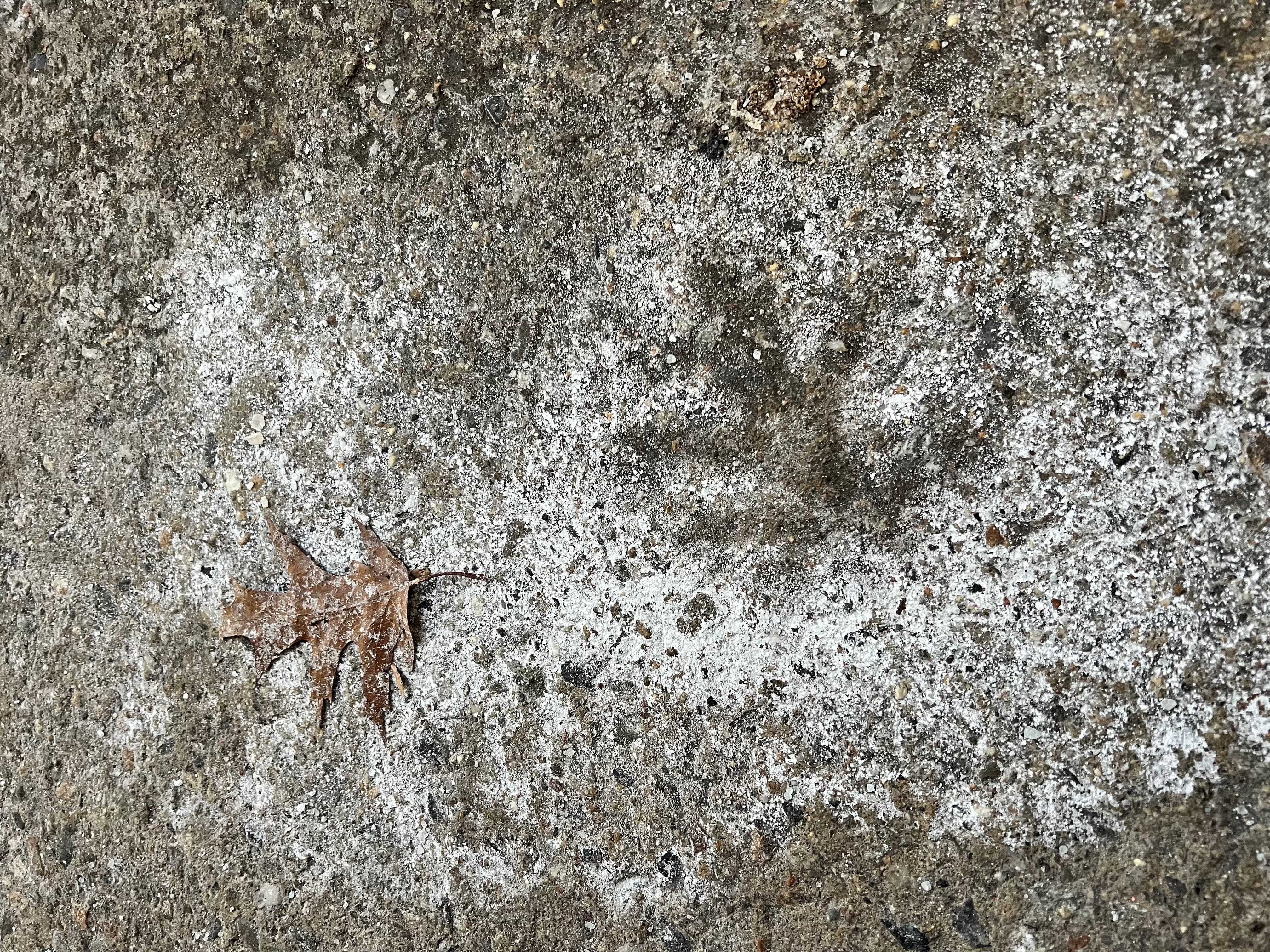
Inspiration comes from everywhere and it comes from non-obvious places. Leonardo da Vinci wrote in The Treatise on Painting, “I will not omit to introduce among these precepts a new kind of speculative invention, which though apparently trifling, and almost laughable, is nevertheless of great utility in assisting the genius to find variety in composition. By looking attentively at old and smeared walls, or stones and veined marble of various colors, you may fancy that you see in them several compositions, landscapes, battles, figures in quick motion, strange countenances, and dresses, with an infinity of other objects. By these confused lines the inventive genius is excited to new exertions.”
That is just beautiful. Sometimes I wish we still spoke like that.
Artists look and notice. And they collect. They collect objects they find fascinating or intriguing. Picasso’s studios were cluttered with everyday objects like old newspapers, wrapping paper, or bits of clots, but he also had a collection of African masks and sculptures from Oceania. And they became inspirational.
Designers stockpile bits and pieces for future use, sometimes incorporating them into their work years later. Writers do the same thing. In Anthropocene Reviewed, John Green talked about using the Notes app on his phone as a depository of observations that can become a spark.
When I asked artists in a study what emotions they feel in the process of daily work on turning their ideas into something tangible, they talked about joy, happiness, and excitement, but also frustration, sadness, and anxiety. They did not think of emotions as something to put aside, but to draw on, whether that be creating a story by imagining what is going on in a life of a woman looking overwhelmingly sad walking in front of their house or expressing the calm of a snowy day in a painting.
The power of emotions to fuel creativity is not limited to artists. Artists may express what they see directly, but the rest of us can use emotions to point us in the direction of needs to be addressed or opportunities to be pursued. Notice your students are bored or detached? Time to try something new. You are frustrated by a work process? Perhaps it could be redesigned.
An artist in my study said, “Failure is the most common experience in creation. I’ve done enough pieces to know that failure, feelings of uncertainty, can be overcome in ways that are not always immediately visible.”
Of course, they did not enjoy failure. But they knew it is part of the process. It is part of any creative process, but artists understand that it does not necessarily indicate a lack of ability or capacity to create. Rather, it is something to overcome and manage. And they know that when stuck, two big kinds of strategies help. The first is to step away and come back to the work in a new sitting. And the second is to use all the ways we know how to open our thinking, “I follow methods learned in school: do the same theme/idea/ composition again in a different size, material. I may take a picture of the painting, print it out in smaller size, cut it up to re-arrange the composition, etc.”
These are not the only things the arts have ever given us. Not by far. But it is a good place to pause and ponder and take to heart.
An index of sorts. The Creativity Choice has more on:
Uncertainties and risks in creative work: Chapter 2
Finding inspiration and identifying problems: Chapter 5
Harnessing the power of emotions to optimize creativity: Chapter 6
Dealing with creative blocks: Chapter 8
Comments
Nothing yet. Say the first thing.
Sign in to join the conversation.