
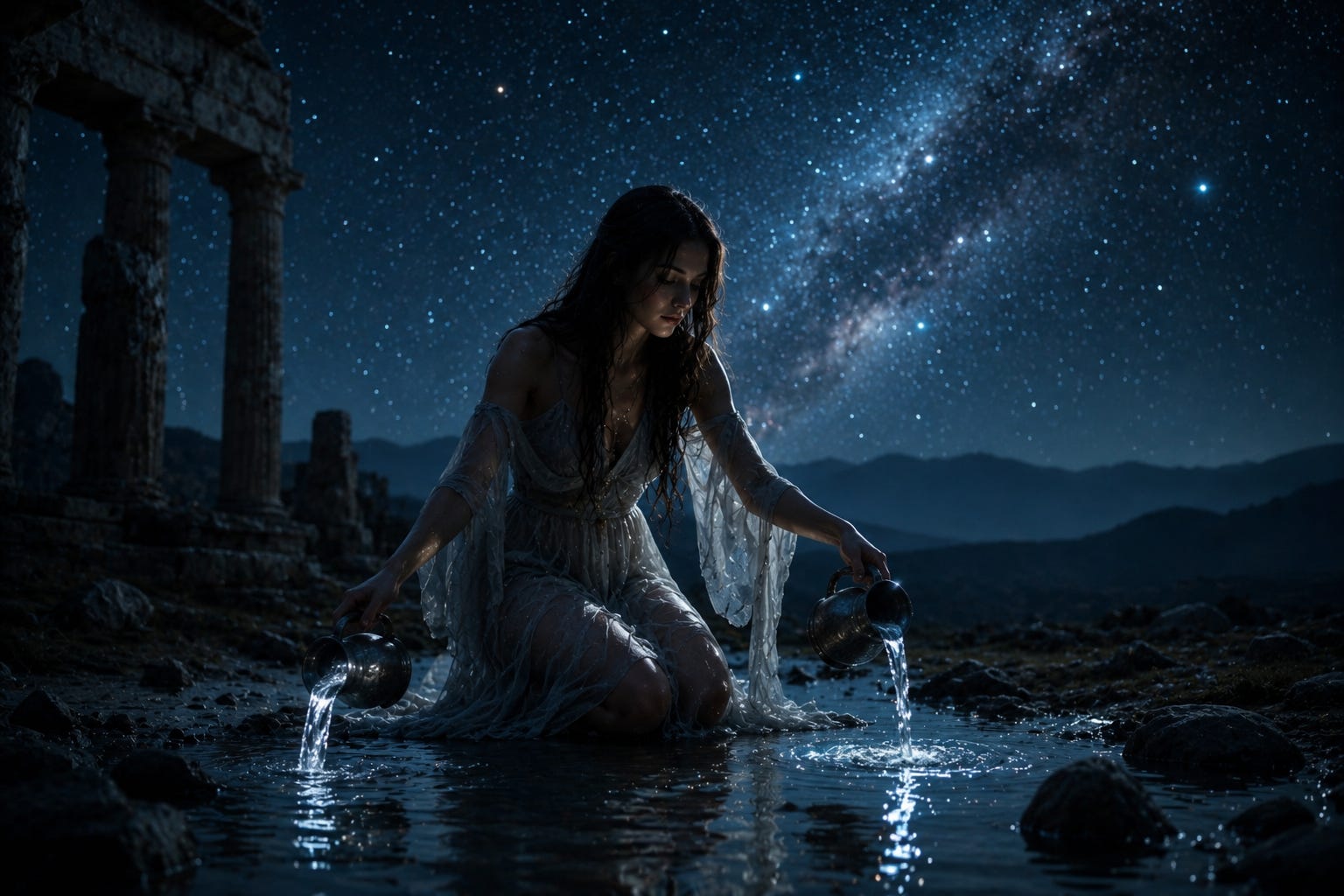
The Star is a card that really captures the imagination of a lot of people. It’s often thought of as one of the most magical cards in the tarot deck, representing hope, renewal, calmness, and healing.
When The Star shows up in a reading, it’s like a breath of fresh air, helping people let go of their worries. It offers a little spark of positivity even when life gets tough.
But there’s something important about The Star that many fans might overlook: where it comes from. This beautiful card rises up from the chaos of The Tower. Understanding its place in the tarot story changes everything.
The Star isn’t just a light in the darkness; it’s a promise that good things are on the way after the upheaval that The Tower brings. It encourages us to heal and find comfort after the storm.
This is where the first misunderstanding kicks in. The Star doesn’t pop up during the good times. No, it shows up after a major fall.
It shines through the gaps left when everything you believed in gets shattered. It comes out once the things you built your life on fall apart. After the image you leaned on stops giving you the support it once did.
What’s left after this collapse isn’t a boost of confidence. It’s actually a pretty deep sense of vulnerability.
This card really gets what hope is all about. Hope that comes before tough times feels bright and full of potential, like a burst of sunshine. But hope that shows up after everything’s fallen apart carries a different vibe.
It’s more low-key and delicate, kind of like the first flower that pushes through the ground after a rough winter. It steps lightly, careful about what’s around it.
When life has knocked you down in ways that leave a mark, your trust in what’s certain changes; it gets mixed with doubt, turning into a shadow of how it used to be. The Star really connects with this idea.
It’s not just about showing happiness. What really stands out is the raw vulnerability. The figure in The Star is completely bare: no armor, no walls, and totally unmasked. A lot of people don’t realize how scary that can be. This is especially true after going through survival mode.
When you’ve been in survival mode, you build up a tough exterior. You learn to protect yourself in different ways:
Emotionally, by putting walls around your heart
Mentally, by making your mind a fortress
Physically, by toughening up against danger
Socially, by keeping people at arm’s length
Protection becomes the top priority. The Star raises a crucial question: What happens when that instinct to protect starts to turn into feeling really isolated?
These days, the whole recovery scene often paints a picture of people bouncing back as:
Bright
Confident.
Victorious.
But let’s be real—the reality of recovery is usually filled with a lot of doubt and uncertainty. You find yourself second-guessing your choices all the time, with nagging doubts popping up in your head.
Your emotions feel exposed, leaving you raw and vulnerable. With so much unpredictability about what’s next, it’s hard to know who or what to trust.
But being in this vulnerable place doesn’t mean you’ve failed. It’s a reminder that you’re just being human.
That realization isn’t just some random thought; it’s a real wake-up call. The Star isn’t about the usual clichés we hear like:
“Everything happens for a reason,”
The promise of feeling peace right away,
The idea of being emotionally complete,
The search for spiritual enlightenment.
We have to face the fact that the Tower has really fallen. The grief is a heavy burden to carry, and the loss has changed you in ways that can’t be undone. Your body still holds the memory of what you went through.
The Star represents that important moment when you begin to get it: Even with all the destruction, you’re still here; you haven’t completely disappeared.
And to be honest? That realization is a lot more complex and layered than most people are ready to accept.
This is where the conversation takes an interesting turn, diving into the often-overlooked side of survival. People often talk about the strength it takes to get through tough times, but they rarely consider how deeply those experiences can affect someone’s mind and emotions.
Survival often makes you super alert, with your mind always ready for whatever might come next. It can leave you feeling emotionally drained, like a heavy weight that sticks around long after the crisis is over. Finding moments of peace can feel really tough, often clouded by the fear that something could go wrong again at any moment.
Those who have gone through trauma might find themselves stuck in a loop of waiting for the next disaster to hit. This isn’t about being weak; it’s more about how we adapt to tough situations that leave us on edge.
The Star represents the tricky space between just getting by and actually learning how to live well after something tough happens.
This idea is at the heart of my upcoming book, Survival Isn’t a Victory, where I dig into the important difference between just surviving and truly recovering. They’re two totally different worlds, each bringing its own sets of challenges and insights.
It’s not about being certain or not about being perfect. And it’s definitely not just about having “good vibes.”
Instead, it’s about:
Finding softness after tough times
Opening up after feeling alone for a while,
Being real and breaking through illusions,
Having the guts to truly live life without pretending you’re untouched. And that last part? It’s often tougher than most people think.
The Star isn’t about blocking out the wounds of your past. It’s about the journey of showing up again, even with those scars. Sometimes, that’s where real bravery comes in — not just surviving the chaos…but letting yourself really live after it, without shutting down emotionally.
If you’re interested in exploring these kinds of discussions beyond tarot — diving into survival, identity, emotional patterns, healing culture, and dealing with the messy space between crashing and bouncing back — check out The Grey Area Unfiltered. New podcast episodes drop every Tuesday at 12 PM ET.
Some kinds of hope might look tough, but they can actually be way more delicate than they appear.
No posts
Comments
Nothing yet. Say the first thing.
Sign in to join the conversation.