
Good morning and welcome back to Creative Parenting Club.
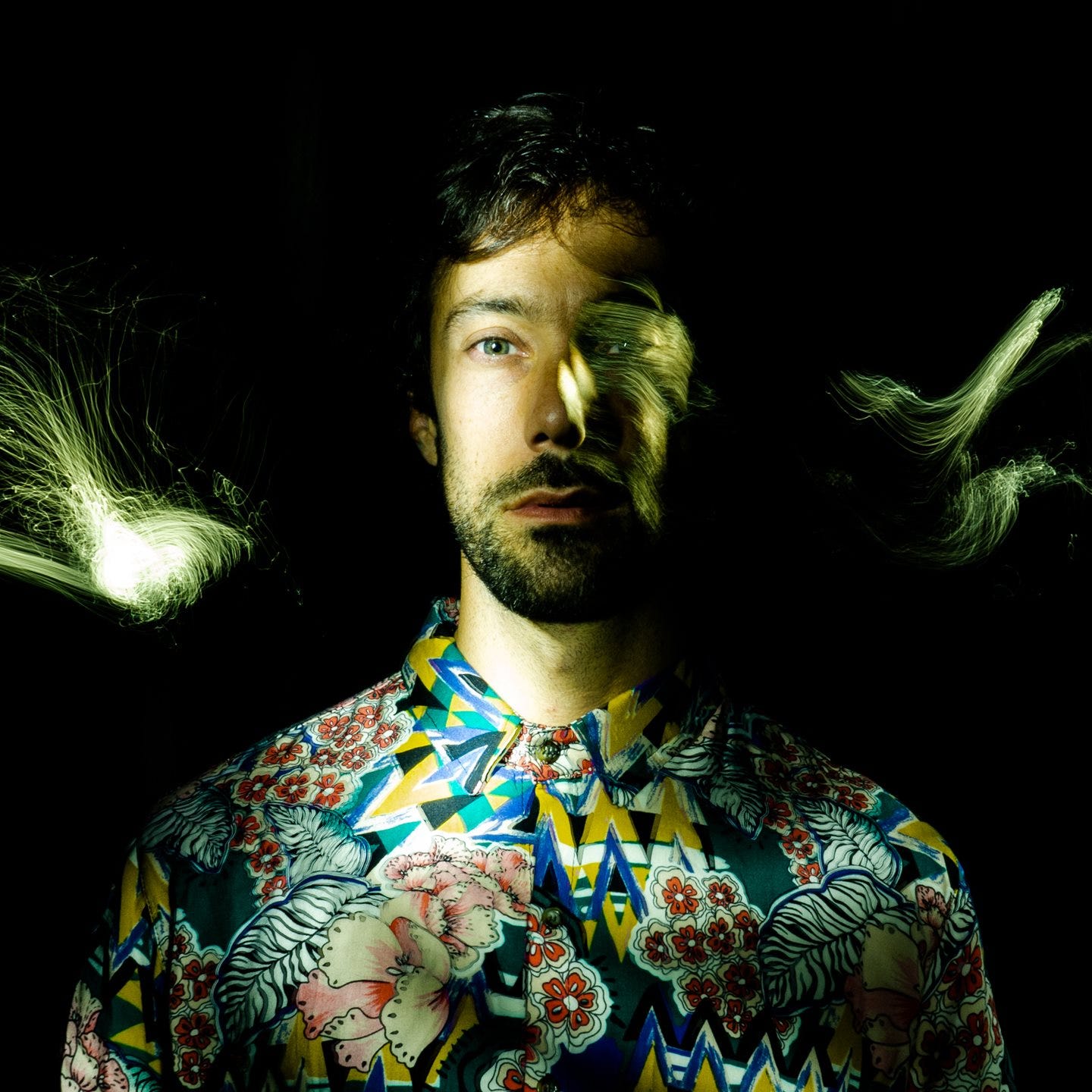
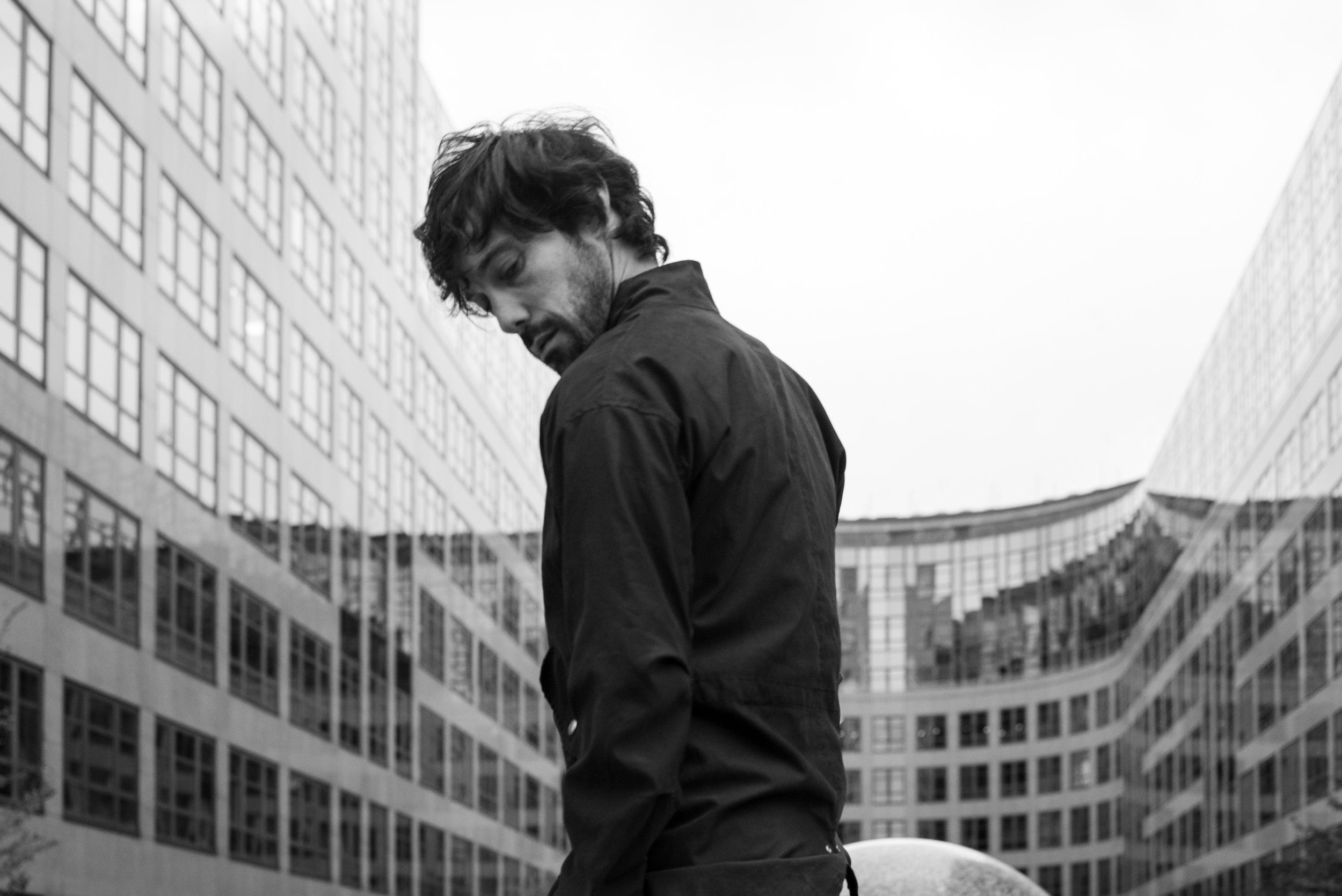
This week on CPC, we’re sharing a new episode of the Creative Parenting Podcast featuring Christ Burstein, also known as Los Cabra, a DJ, music producer, and founder of the Friction Department.
Christ Burstein has spent years touring, organizing events, and working deep inside nightlife culture. A few years ago he became a father and, like many creative parents, found himself questioning long-standing routines, priorities, and professional paths.
In this conversation, Christ talks about balancing a creative career with family life, the lack of time for music, and the internal tension of stepping back from a profession shaped by night work and constant movement.
If you haven’t yet read our previous interview, Strong enough for fatherhood, you can find it here, featuring Rodrigo da Matta on fatherhood, presence, and creative work:
The full episode is available at the top of the page. A shortened interview follows below.
[Creative Parenting Club - Diego Ain]
We are live here at the Creative Parenting Club. And today we’re talking to my dear friend, Christ Burstein, also known as Los Cabra. Welcome, Christ.
[Christ Burstein]
Thank you for the invitation, my dear Diego. Here we are.
[CPC]
Christ, for the people who don’t know you, where are you from and where are you living now?
[Christ]
I’m from Buenos Aires, Argentina. I have lived in Berlin for the past seven-eight years, with some breaks, as I would take the winters off to escape. But now I have a baby. There’s not so much escape from winter.
[CPC]
So you answered half of the next question, which is: how many kids do you have? You have one. And how old is he?
[Christ]
So far, I think I have only one. We never know. But yeah, it’s only one, and he’s two years old.
[CPC]
And is he in this terrible two, or not yet, or not at all?
[Christ]
He’s getting there.
[CPC]
What do you do professionally, Christ?
[Christ]
Well, I used to be a DJ producer. Now I’m mostly a father, with some little creative moments around.
[CPC]
Yeah, we all know that. That’s exactly the core of this conversation. What does creativity mean to you?
[Christ]
Creativity, for neurodivergent people, is a way to show who we are. It’s not only a way of expression. It’s a way of being, or at least the way we want other people to see us. Because creative people base this on passion, we do this because we like what we’re doing.
[CPC]
And what role does creativity play in your life?
[Christ]
Expression and feeling seen. Being transparent. A link between what we think, what we feel, and what we are.
Because normally rationality brings us to other spaces. We need to fit into society. We need to fit into so many traditions that are all around. And sometimes it’s not easy, because creativity does not follow society’s rules.
Sometimes it’s complicated to bring that level of new ideas and thinking out of the box, when there are so many things already established.
Besides my music, I also started a new project called the Friction Department. It’s about conflict prevention and resolution in high-stress environments. This is something we see: normally, in work environments, we are not who we really are. We put on a mask to fit into the structure.
But if there’s no transparency, sooner or later that explodes.
[CPC]
How do you incorporate creativity into your family life?
[Christ]
I think it’s everywhere. Mostly with kids. We as musicians, make music, noise. We bring simple, silly things into our day-to-day life. Even when we hear a kid song, I tell my son what we’re doing or what we want to do with music that he knows. We bring it into our day-to-day things. And I think that creativity comes on that level.
[CPC]
And I’m curious, which language do you speak with him?
[Christ]
A specialist told us that I have to speak only in Spanish, so he knows he needs to direct the language to me. His entire life is in German, and he’s grabbing some English here and there.
[CPC]
How do you find time for creative passions while balancing family life?
[Christ]
Honestly, really bad. Because there are so many other things we have to do.
Something I stopped doing is producing music. The creative world, the industry, is based on doing things and putting things out. That was my business model in the past. I made music, I put it on big labels, big artists played my music, and then I got shows. My money came from shows.
Now, music in the industry is not that important. There are many other factors: social media, networking, showing yourself, mechanical royalties, distribution. The music itself cannot bring as much as it did in the past.
So I started feeling that it’s pointless to make music, at least with the goal of putting it out to get shows. If you have a hit, it works. If you reach the right person, it works. But it’s not like before.
My creativity is suffering from it. Also because I don’t have physical time. I cannot make extra hours at night, so I have to make extra hours during the day. I wake up between five and six in the morning to have two or three extra hours before the world starts rising.
It’s extremely hard. When we’re on stage, we are us. There’s no mask. It’s our hearts, our passion, our soul on that stage. With kids, when there are many other important things, we lose a bit of that.
[CPC]
One thing I would suggest as a friend is not to leave music as an activity in your life. Not as a profession. That helped me find peace with my new lifestyle. Even though I didn’t abandon music, it helped me find peace with the idea that I could drop everything business-wise and still be okay, because I wouldn’t drop music as a passion.
Music, for me, is therapy. So don’t leave music out. You can leave the business aside, but not the music.
[Christ]
I totally agree with you. I value these conversations a lot. I agree in theory. I will try to make it work in practice.
Now the baby is two years old, and I think this is the time to start going back slowly. I’m back on touring and playing music. The time to sit down and produce music will come. It’s just not today.
[CPC]
I think the most important part is the mindset. If the conversation with yourself is that you’re giving a break because you have a small kid, then you don’t suffer.
You know you’re coming back to it at one point. That’s healthy. The problem is when you break up with it.
[Christ]
I don’t know. In every relationship, you never know if you're going to miss your ex-girlfriend. So let’s see how it goes.
[CPC]
Becoming a parent, did it change your relationship with money?
[Christ]
It changed my relationship with time more than money. I want to believe that money is a consequence, not a goal. If I get a million euros, my life wouldn’t change that much. Maybe a bigger flat, but not much more. I was poor before. I’m poor now. Same, but different.
It changed how I think about the business side of art. I relax more with music, because when passion and income come from the same pipe, one of them suffers. If you follow your passion completely, at some point you have to adjust to reality.
[CPC]
How do you incorporate your kid into your creative life?
[Christ]
I try to take him to as many concerts as possible. I have a turntable. I let him choose the vinyl and put it on. We listen together.
[CPC]
What is one regret you have about having kids?
[Christ]
Romanticizing the process of having kids. We romanticize things. We see things how we want to see them, not how they are. We think partnership is about love and nice things. Then reality comes.
Having a kid is duties. Who takes care of what, when, and how to keep this person alive.
We didn’t think enough about having no family around. In Argentina or Brazil, people help us when we need. Here, people help when they can.
If I could go back, I would think more clearly, without rainbows and unicorns.
[CPC]
What is the biggest challenge you face as a creative parent and how are you navigating it?
[Christ]
The biggest challenge is not being able to take the time to make music, even though I know it’s good for me. When you take music as passion and as escape from day to day life, you give it space to heal you. You leave the studio and think, this is not what I need to do. This is what I want to do.
The challenge now is that I have to think about how to keep this family alive. Making music is not part of that at the moment. I found a balance by playing music as a DJ. Because I’ve been doing this for so many years, I can go on autopilot.
The fear is losing understanding of the crowd. That already happened after months of not playing. I didn’t understand who my crowd was and what I needed to give at that moment.
So the biggest challenge is taking time to do what I know is good for me.
[CPC]
How would a solution to this challenge look like? Imagine you have a magic wand. A real solution.
[Christ]
To have a clear structure. To know that for X amount of hours per week I can dedicate time to music. Not to look for ways of source of income. Just to make music. To do jams that go nowhere.
[CPC]
So the challenge is having time for yourself.
[Christ]
Yeah. At the moment I don’t have time for myself. Because of the baby, I stopped touring. I used to tour seven or eight months per year. I started the Friction Department, and my source of income shifted.
It also works on the guilt level. Immigrant mindset. You need to produce. Taking time feels like a privilege. Something I don’t deserve.
[CPC]
What is one thing you hated when your parents told you, but you find yourself saying the same thing?
[Christ]
Be careful. Don’t do that, you’re going to fall.
It creates fear. Kids explore through controlled risk. I try not to say it, but at the same time I try to keep him alive.
Saying “be careful” doesn’t make them careful. My parents said it all the time.
You grow afraid of everything. Sometimes letting them experience works.
[CPC]
What is something you need to work on in yourself in the context of family life?
[Christ]
Set up boundaries and put myself first in the equation. Because if we are not okay, the environment is not okay.
For the past two years, I put my wife and my baby before me. I always remember that on a flight you need to put the mask on yourself first, because if you die, the kid also dies.
I’m just getting to an understanding that if I’m not okay, my circumstances and my surroundings are not okay.
It’s important, even if it sometimes breaks your heart, mostly with my partner. We have to be first and prioritize ourselves. And that is something I’m working on.
[CPC]
What kind of things are you doing to work on it?
[Christ]
Self-reflection, asking questions.I question everything. The more I know, the more I realize that I know less.
I question myself and others to understand the situation and get to the root of what I’m doing. We are very reactive. You hit me, I hit you back. You scream at me, I scream back. I try to go a couple of layers behind that and ask why.
When I have problems at work or in my partnership, I look for the root cause. Sometimes it comes from childhood, insecurities, fear of acceptance, or neurodivergence. When you address the root cause, the symptom goes away. The symptom is a consequence.
It’s not about having answers. It’s about having the right questions.
[CPC]
If you had to guarantee that your kid learned one thing, what would it be?
[Christ]
I’m a second-generation immigrant. Parenthood was different then. I didn’t have a lot of hugs, kisses, or validation that what I was doing was OK.
With my kid, I want to provide the basic needs, but I never want him to say he didn’t have enough kisses and hugs.
If I can teach him one thing, it’s this: express how you feel. If you care about someone, say it. If you’re uncomfortable, say it out loud. Don’t keep it inside.
What we keep inside becomes a pressure cooker. Even if you keep it low, sooner or later it explodes. And when it explodes, it paints all the walls. It’s very visual. But it’s real.
[CPC]
What are you proud of in your family life?
[Christ]
My kid gets hugs and kisses every day. I’m proud that I don’t follow how society expects me to behave with my kid.
[CPC]
Thank you, Chris.
[Christ]
My pleasure.
Thanks again to Christ for taking the time to talk with us. If you’d like to follow Los Cabra, you can find him on Instagram.
How do you deal with the situation of stepping back from your creative work because of family responsibilities? We’d love to hear your experience in the comments.
If you’re a creative parent with a story you think fits here, or if you know someone whose experience would resonate with this community, we’d love to hear from you. Share your story with us.
We’ll be back soon with the next edition of Creative Parenting Club.
Until then, take care.
Comments
Nothing yet. Say the first thing.
Sign in to join the conversation.