
Good morning and welcome back to Creative Parenting Club.
This week on CPC, we’re joined by filmmaker Jamie Effros and actor Jake Hart, creators of the short film Big George, for a conversation about creative work, family life, and how those two constantly reshape each other.
What makes this episode especially interesting is that Jamie is not a parent, yet he created a deeply personal story about fatherhood based on the lives of artists around him. Together with Jake, who stars in the film alongside his daughter, the conversation moves beyond the film into the realities behind it.
We highly recommend taking 15 minutes of your day to watch this touching short film about the challenges of a creative parent.
We talk about creativity as instinct, about building a life around what you care about even when it is unstable, and about how parenthood shifts your relationship to ambition, time, and responsibility, as well as the less visible side of creative careers and what success actually means over time.
Press play above to listen to the full conversation, or continue reading below for the shortened transcript.
In our previous episode, we spoke with Emo Rugene, a DJ, community builder, and father from Kenya who has been living in Berlin for more than a decade, about resilience, cultural roots, and raising confident kids while building creative communities.
Thanks for reading and for being part of the Creative Parenting Club.
[Creative Parenting Club - Diego Ain]
And we are live. Welcome back to the Creative Parenting Club. Today is a very special episode because we have two guests at once, which we have never had. And one of them is not a parent. So you must be asking, what this person is doing here.
Well, Jamie is the director, and the writer of a very beautiful short film called Big George. We also have the protagonist here, Jake, who is a parent.
[CPC]
Big George is a very beautiful and inspiring film. And we could start by discussing a little bit, to give context to people about the film. Jamie, would you like to jump in and give a brief overview?
[Jamie Effros]
Yeah, sure. Thank you so much for having us, and having a tourist (not a parent) like myself. It is a pleasure. It is an honor to be here with all you breeders. I hope to be one of you.
[CPC]
Before you start, Jamie, I would like to say that we made this exception. Do not ruin it by saying all these amazing things you do with all the free time you have. Just be careful not to hurt our feelings with all your freedom. (laughs)
[Jamie]
Too late. No, I promise to keep it to a minimum and just keep talking about how lonely I am. (laughs)
So Big George is a short film about an actor in New York City who has made his living as a George Clooney impersonator for most of his career. During the pandemic, he gets dropped by his agent, and he is spending the day with his nine year old daughter, trying to justify to her, but really to himself, why he is still living this dream of being an artist and being an actor and a creative person in general.
So it is at once a love letter to artists and creative people, and a discussion of why we do the things we do, how we pass that down to the people that we love, and how we tell them that this is important, even if it is hard and even when it is hard.
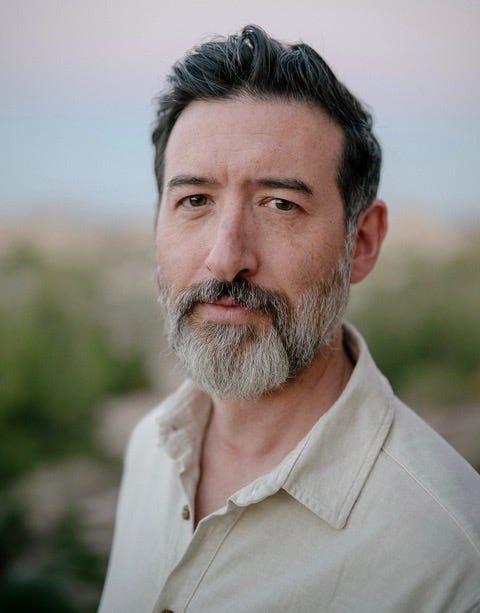
It is also about the compromises that we have to make with our families and our passions, constantly weighing those different parts of our lives and where they meet.
And where they met for me in this project was that I have known Jake for a long time. We have been performers in New York, and I started to shift towards the filmmaking side of things. We had always wanted to make something together.
It was not until after the pandemic, when we were having a gathering to bring creative people back together and get things moving, that a friend of mine said, who is your friend over there, Big George, Big George Clooney. Because Jake gets the George Clooney thing all the time, and has forever.
And I was like, that is the way in. That is where we start. That is the idea.
I had always wanted to do something for him and his daughter Beatrix, who is an incredible actor in her own right. And that is where the idea started to take off.
Then Jake and I started going through ideas. I would send him drafts, and he would send me ideas. Some of the real parenting material ended up being more of a co-writing situation. Because I was like, this cannot fully be my voice. I do not know what this dynamic really is. And this is your daughter.
So there was a lot of give and take in how it came to be.
[CPC]
Man, it is beautiful. And we could definitely use your intro as the intro of our whole project. Everything you described, this dynamic of struggle and pursuing dreams grounded in family life. Jake, I saw that you wanted to say something.
[Jake]
Yeah, I was just going to add something.
Something that I love about being invited by you and by this group to talk about the movie is that we did not know it was going to be a father-daughter story.
Initially, the idea that Jamie mentioned involved a lot of back and forth. We moved really fast on this project, discussing what it means to be in this business, what it means to be a working artist, and the sacrifices that come with it.
It turned into a father-daughter story on an idea Jamie had one day of wanting to include Beatrix. And as we developed those story ideas, it became something larger and more universal.
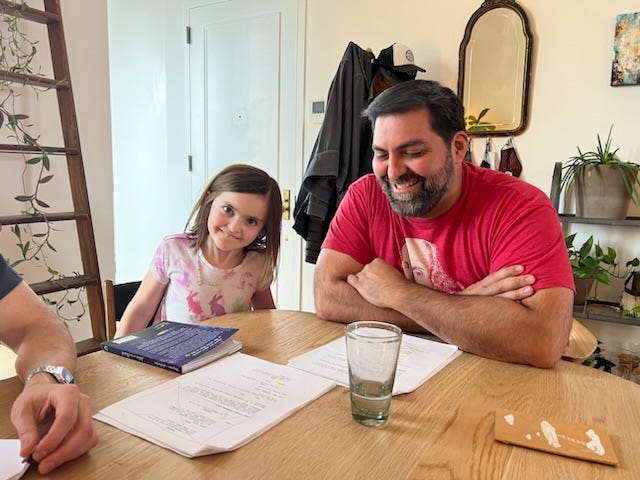
And I think if it had just been a short film about actors and acting, it would not have reached as many people as it did, or been received the way it has been.
And I think it became something about how sacrifice and need, and what you want, is a part of being a parent. It is a part of being a human being.
[CPC]
Yes, I totally agree with that. I have been studying this for many years, the mechanics of connection in content.
If you make a movie about actors, only actors and a few curious people will engage. But when you add a parent-child relationship, that becomes one of the most universal aspects you can have in a story. So it was a very smart move, even if it was not planned.
And it is a beautiful film. I want to go back a little bit to something you mentioned about success, because I think this is very present in the film and also in the lives of many people who work in creative fields.
There is this idea of success that is very visible from the outside, but internally it can feel completely different. And I think many people can relate to that.
[Jake]
Yeah, absolutely.
I think one of the things that is very tricky about being an artist is that there are very clear external markers of success, but they are also very unstable.
You can have a moment where everything looks great from the outside and still feel completely disconnected from what you are doing. And then you can have moments where things are not working in a traditional sense, but you feel much more aligned with yourself.
And that is something that takes time to understand. Because at the beginning you think success is something very concrete. And then you realize it is something much more personal.
[Jamie]
And it is also something that keeps changing. What you think is enough at one point in your life is not the same later. And I think that is part of what we were trying to explore in the film. This constant adjustment of expectations.
[CPC]
Yes, and I think that connects very much to parenting. Because when you have a child, your priorities shift. And things that used to matter in one way start to matter differently.
[Jake]
Yeah, completely.
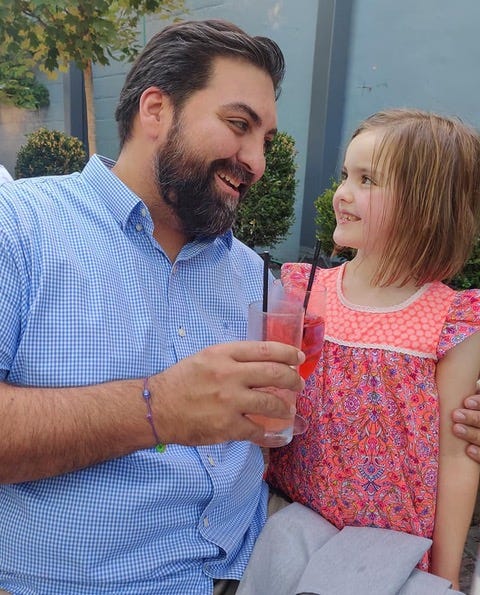
I think that is one of the biggest shifts. Because before you can define success only in relation to yourself. And then suddenly there is someone else. And that changes everything.
It changes how you think about time. It changes how you think about work. It changes how you think about what actually matters.
[Jamie]
And I think it also creates a different kind of honesty. Because children are very direct. They are not interested in your narrative about yourself. They are just reacting to what is real. And that forces you to confront things in a different way.
[CPC]
Yes, that is very true.
[Jake]
It is. That is also why working with my daughter on this project was so interesting. Because there is no pretending. If something is not real, it does not work.
And that also changed how I approached my own work. Because I realized that when something is honest, people feel it immediately. And when it is not, it falls apart just as quickly.
So it was a very direct kind of feedback.
[Jamie]
And it brings you back to something very simple. Which is just being present. Not trying to control everything. But just responding to what is happening. And allowing things to unfold instead of forcing them.
[CPC]
Yes, and I think that is something many people struggle with. Because we are used to planning and structuring everything.
[Jake]
Definitely. Because we are used to trying to control outcomes. And parenting does not really work like that. You can guide things, but you cannot control everything.
And that is something you have to accept over time. And the more you accept it, the easier things become. Because you stop fighting reality and start working with it.
[CPC]
Jake, how was it working with your daughter?
[Jake]
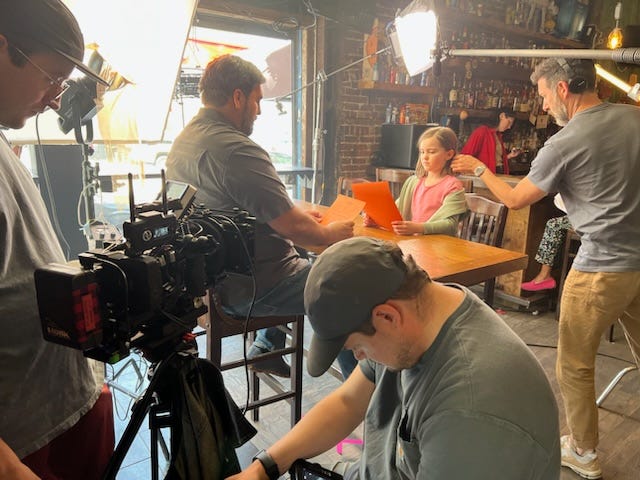
She was nine at the time. She had some experience. A video of her dancing went viral and she got attention from that.
But I did not want to push her into the industry. I wanted her to remain a child. So I let her explore things when she wanted.
And for this project she was very natural. Honestly she is better than me on camera. And I learned a lot just by observing how she approaches things.
[Jamie]
That dynamic was perfect. Jake has spent his whole life trying to be an actor. She just exists. The camera loves her and she does not try. And that contrast created something very real on screen.
[CPC]
Where are you from?
[Jamie]
I am from Virginia, near Washington, DC. I have been living in New York for over twenty years.
[Jake]
Oakland, California. I grew up moving a lot. Fourteen places in seventeen years. My mom raised three kids alone. We eventually moved to Seattle. That changed my life. My brother sent me music and that was my entry point. And I started recording and experimenting. I have been around microphones since I was fifteen.
[CPC]
What does creativity mean to you?
[Jamie]
It is lifeblood. That is the first thing that comes to my mind. It is how I function in the world. The only thing I know for sure is that I am going to make things until I die. Because I am compelled. It brings me so much joy. It connects my natural curiosity to this impulse to build.
I think creativity, in its most basic form, is something innate. I talk about this a lot with parents and with people who are not parents, especially artists. That creative impulse comes from the same place in us that wants to create a child. That is where we are hardwired to create, because we are hardwired to create life.
There are artists who spend their whole lives making art, and those works become their children. They keep making them again and again. And then there is everything in between.
It is such a basic impulse. And the times when I have been able to tap into it fully are the times I feel most alive. That is what it is for me.
[Jake]
I like that you made it something neat and clean like that. Because I think most artists would say they got into it to get laid. But you are saying they got into it to get laid so that they could make a baby, which is much nicer and more full circle. I agree, though. (laughs)
Without going too deep into it, I think my path into creativity came from a very unstable childhood. Like many people, I had my version of childhood trauma. And the way you cope with that takes many forms. For me, creativity was always my safe place.
Because my imagination and the things I did creatively were the things that made me happy, I started using them as a way to communicate. First jokes, then theater, then sketches, then filmmaking, then original work, then cabaret. It became the most honest way I could express myself. More honest than I could be in any other part of my life.
At some point, that became a conscious decision. I decided I am going to do what I want in this life. Because the alternative is doing something I do not care about, making money, and slowly destroying myself. Or I can make things I love, maybe earn something from it, maybe not, but at least my days feel full.
There is something Jim Carrey said that stayed with me. His father was the funniest person he knew, but he worked as an insurance salesman, sacrificing his happiness. Then he got laid off, and everything was gone. And Jim Carrey said you can spend your whole life doing something you hate and still fail. So why not try to do something you love. That stayed with me.
[CPC]
I love what both of you said. It connects to this idea that the path is more important than the arrival. That is why we ask this question. Creativity is not just for artists. It is an attitude. It is a way of looking at the world. That is what we want to show. That it is available to everyone, not just people in the arts.
One question I am curious about. What do you both do professionally?
[Jamie]
Jake and I met doing voiceover work in New York City. That mostly means recording voices for commercials. The voice you hear telling you to buy something. That is what has fueled most of our careers.
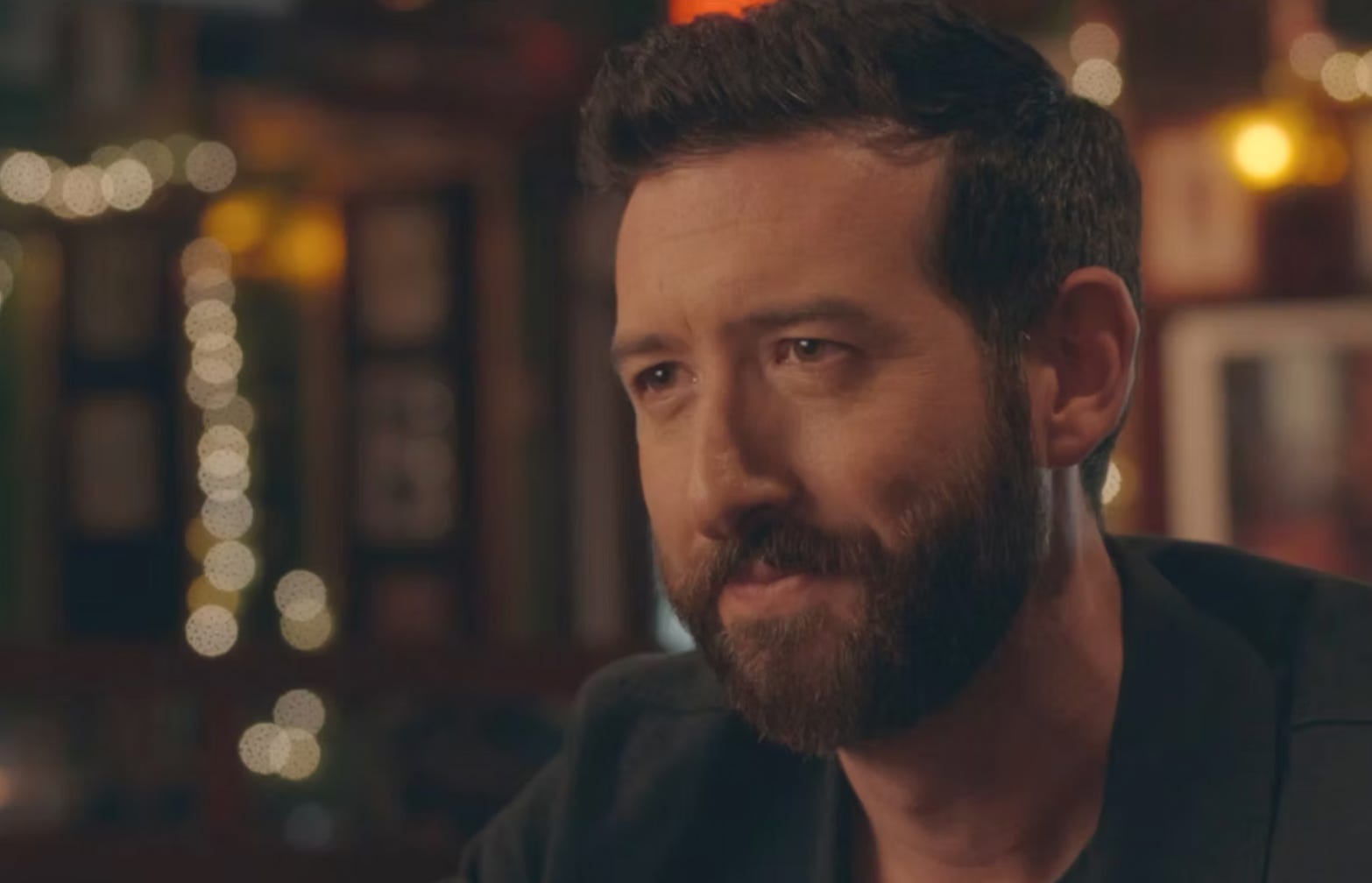
We have also both done theater. I started early because I knew it was a way to make a living. That led to on camera work, commercials, small TV roles, and off Broadway theater. And just working consistently over time.
[Jake]
Yeah, I would say the same. Most of our careers have been built on commercial voice over work. Thousands of campaigns.
I also started in theater. I was eleven when I did my first musical, The Wizard of Oz. I played the Cowardly Lion. What I remember most is not even the show, but the audition. There were hundreds of kids, chaos, noise, and I remember thinking this is a battlefield. I loved that feeling.
My mom supported my creativity. She had wanted to be an artist herself but was not allowed to pursue it. So when she saw that in me, she encouraged it. At one point, I was going into politics. I had everything set up. And then I realized this is not my life. So I walked away from it and went into acting.
I always knew I wanted to do voice work. I had been recording things since I was young. I moved to Seattle in the early nineties, which was a huge moment in music culture. I started experimenting with recording, working with microphones, making music. Since I was fifteen, I have basically always been around a microphone. That is why I ended up in voiceover.
[CPC]
Let’s move into family. What is one regret you have about having kids?
[Jake]
It is going to sound simple, but it is true. I wish we had more kids. That is my only real regret.
Something shifts when you have a child. When I held my daughter for the first time, everything became clear. I will still be an artist. I will still have my own desires. But my purpose changed.
Now I think about everything in relation to her. What she will think about me in the future. What she will remember. That changed how I act, what I say, how I move in the world.
[CPC]
That is beautiful. Biggest challenge as a creative parent?
[Jake]
Money. It is always money. That is the main challenge.
[CPC]
And how do you deal with it?
[Jake]
Step by step. There is this idea I love. If money is your only problem, you do not really have a problem.
I grew up poor. We had moments where we had to pawn things to pay rent. But we were fine. And now I have a decent life. Not rich, but stable.
I know that even if things change, we will figure it out. Because we have each other. Most problems are things you handle day by day. You keep going. You adjust. That is really it.
[CPC]
I love that. Thank you both so much. This was an amazing conversation.
[Jamie]
Thank you for having us. And if people watch the film, anything they can do to share it helps.
[Jake]
We are grateful for anyone who watches it and connects with it. That is all we want.
[CPC]
Go watch Big George. Thank you both. See you next time.
We’re grateful to our guests for sharing this conversation so openly. If you’re curious to explore more, take some time to learn more about Jamie and Jake and watch Big George.
Listening to this podcast, it invites a simple but not easy question: what does success actually mean to you right now, and how has that changed over time, especially since becoming a parent?
Share your thoughts in the comments.
Thanks for reading and for being part of the Creative Parenting Club.
Comments
Nothing yet. Say the first thing.
Sign in to join the conversation.