
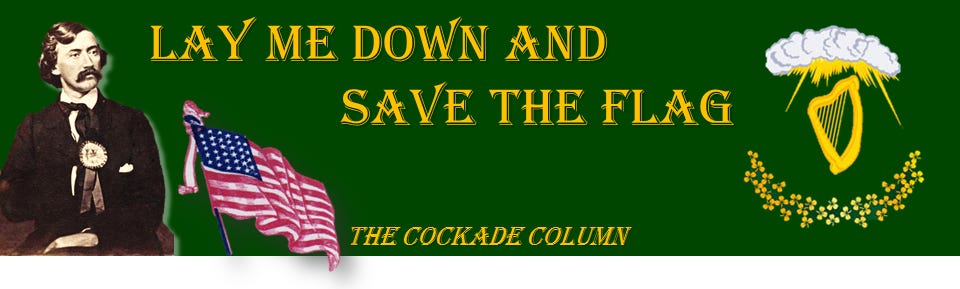
Every cockade has a story to tell. Sometimes the cockade leads to a story about an event. Sometimes it leads to a story about a person. I have a photo in my collection of a famous Irishman wearing a cockade... and he has quite a story!
Many men have won fame in dying gloriously. This Irishman did too. But he was already famous for being a hero before that. Loved by his men, respected by his enemies, Colonel Mulligan of the 23rd Illinois was an honorable, devout, talented -and fascinating! - man.
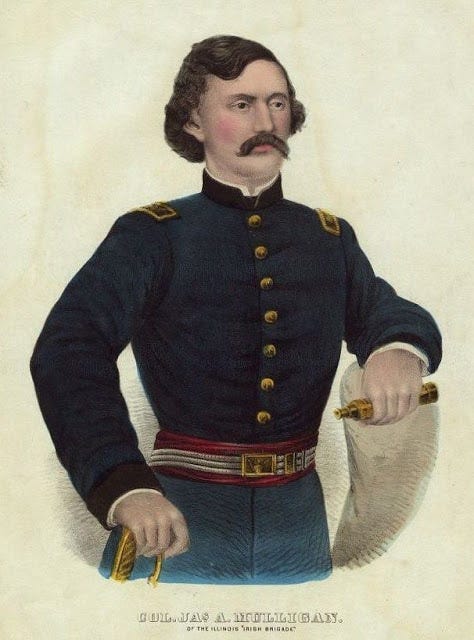
James A. Mulligan was the son of Irish immigrants and a successful lawyer in Chicago and later, Washington D.C. In addition, he apparently had a talent for engineering, which may have been what led him to join John Lloyd Stephens for a year in Panama. What was going on in Panama in 1851, you ask?
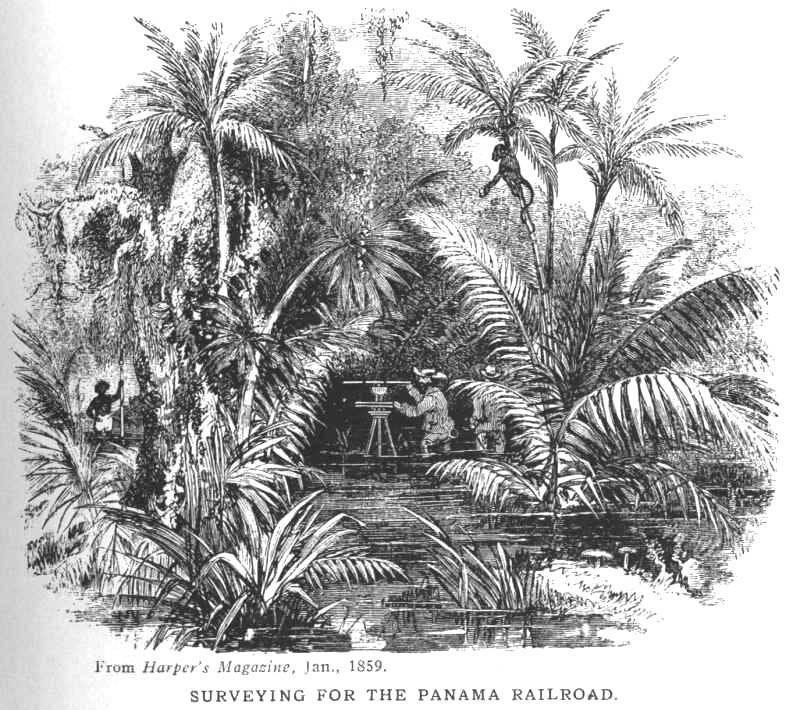
The Panama Railroad Company was building a railway across the Isthmus of Panama (where the Panama Canal now is). Sounds like a fun little project, but it turned out to be a massively huge undertaking. If you’re curious about it, start with this website to read more about the amazing feat of engineering it truly was. (By the way, U.S. Grant was also involved in this history-making project.)
But that wasn’t all Mulligan was interested in. Besides law and engineering, he also was involved in military activities. Mulligan was 2nd Lieutenant in the Chicago Shield Guards, an Irish militia unit.
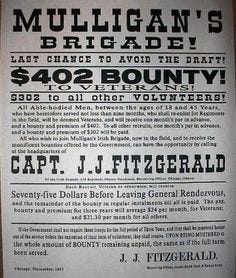
When the Civil War broke out, Mulligan presided over a meeting of Illinois Irish militia companies. These companies banded together to become the 23rd Illinois Volunteers and Mulligan was made Colonel. The unit is sometimes called “Mulligan’s Brigade.” And that’s where he earned the title of “Hero.”
Missouri was a battleground of violently opposing forces during the war. Hearing that Lexington, Missouri was going to be attacked by Confederates, Mulligan used his engineering skills to fortify the Union forces.
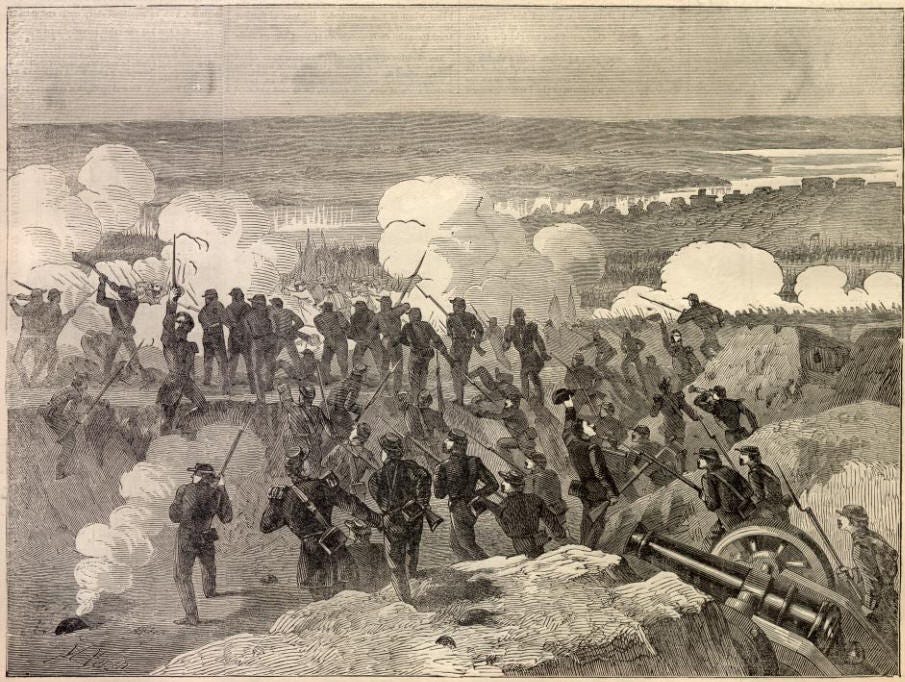
Assaulted by a force four times his own, Mulligan held out for nine days, waiting for reinforcements which never arrived. The Confederate forces finally forced his surrender by a novel plan. They used huge bales of hemp soaked in river water as a moveable breastwork. The bales could be moved forward with the army, and the soaking prevented the Federals’ heated shot from setting them on fire. This, incidentally, is why the Battle of Lexington is also called the Battle of the Hemp Bales.
Mulligan was finally forced to surrender, but the Confederate General Price was so impressed with him that he gave him an escort back to Chicago.
And thus was born Mulligan’s title, the “Hero of Lexington.”
Col. Mulligan’s next assignment was commander of Camp Douglas. This was an infamous Union prisoner of war camp, known for its inhumane conditions and high death rate. Mulligan instituted reforms such as allowing in ministers and doctors, and letting local townspeople help with relief for the budget-strapped prison.
Mulligan went back to regular service in mid-1862 and fought in many battles including Harper’s Ferry, Moorfield, Greenland Gap, Gettysburg, Williamsport, Hedgeville, and Petersburg Gap.
His next major assignment was the construction of Fort Mulligan in West Virginia, a structure that even Confederate General Early praised.
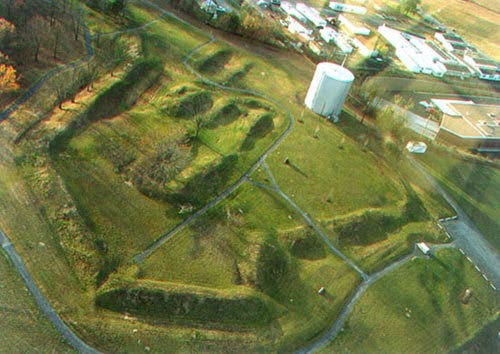
Mulligan would meet Early’s forces in the Battle of Leetown, Virginia, where he once again fought with skill and bravery. Covering Sigel’s retreat before Early, Mulligan managed to delay the Confederate forces for nearly a day against overwhelming odds.
Col. Mulligan’s final fight was the Second Battle of Kernstown. Confederate forces under General Early would ultimately defeat the Union troops here. As Mulligan was calling for a retreat of his forces, a Confederate sharpshooter mortally wounded him. Sharpshooters also wounded his brother-in-law, who was holding the flag.
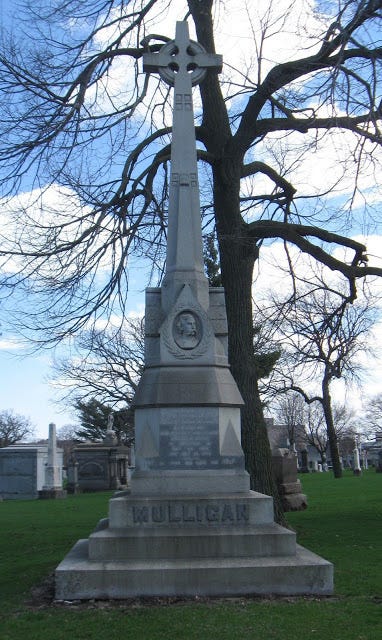
As his soldiers rushed to carry him off the field, the firing became too hot for them, killing many. Mulligan refused to incur any more losses and ordered his men, “Lay me down and save the flag.” They obeyed.
Victorious Confederate forces carried Mulligan to a nearby house where he died two days later.
Mulligan’s Chicago funeral was massive, local sources reporting it was second only to Stephen Douglas’s funeral three years earlier. His funeral procession took an hour to pass by. After his death, money was raised for a magnificent tombstone which carries his most famous words:
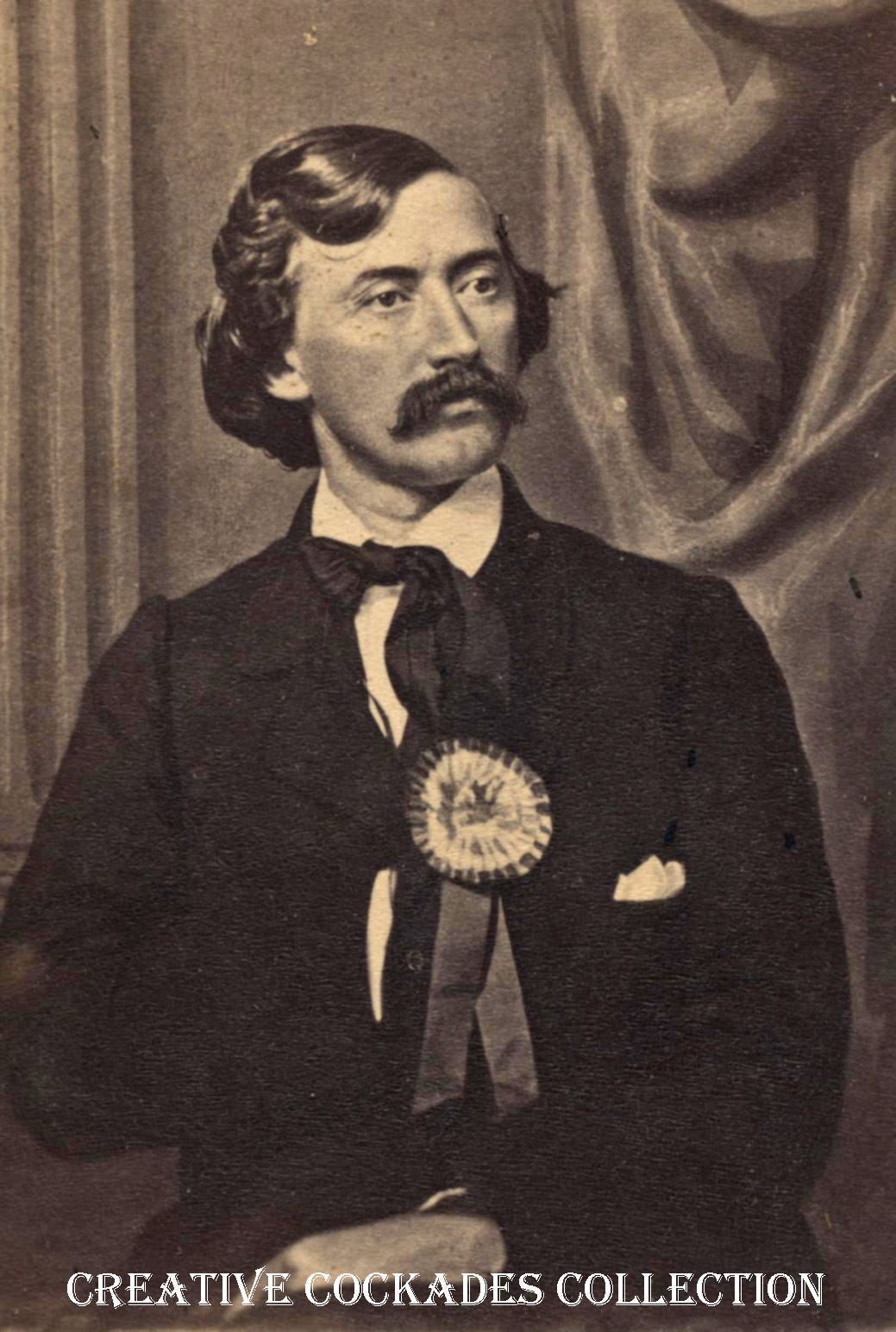
This is the photo in my collection that started me researching Col. Mulligan’s life. There is no date on the photo, so I can’t say for sure what his cockade stands for. But knowing his patriotic fervor and Irish pride, it could be either a Union cockade or an Irish cockade. This is an Irish Brigade cockade in my collection - it could be something similar to that.
If you want to read more about Mulligan’s life, I found this blog entry helpful. In our modern culture that desperately needs good heroes, Mulligan gives us a historical example of courage and selfless sacrifice.

Do you have Irish heritage you want to celebrate? Check out the Irish Cockades in my shop! And of course, I have cockades for Scots, Italians, French... as well as the good old USA!
It’s been crazy busy and fun this spring, working on so many different orders! I hope y’all are having a great year so far. Now I’ve got to go get busy making more cockades. As the old Irish proverb (supposedly) says, “You’ll never plough a field by turning it over in your mind!”
Happy Spring!
~Heather
Comments
Nothing yet. Say the first thing.
Sign in to join the conversation.