
Dear Friends,
This week’s featured story takes us to Old Cairo, where, on blistering summer afternoons, a group of teenagers gathers inside a 250-year-old stone house to do something radical: slow down, put away their phones, and learn geometry through traditional Islamic craft. It’s a place where centuries-old patterns aren’t museum pieces—they’re living knowledge, passed down hand-to-hand, cut by cut. It’s a hopeful reminder that the future of craft often depends on how generously we share the past.
While we are happy to offer this story to everyone for free, we’ll include a gentle reminder here that your paid subscriptions help us continue producing thoughtful, original articles like this one, and to continue paying our contributors fair market rates. So if you haven’t done so already, please consider supporting our work with a paid subscription.
We hope you’ll enjoy reading, “How Cairo’s Kids Learn Geometry: With a Chisel,” written by Pauline Bartolone.
We always welcome your thoughts and suggestions, which you can offer in a comment, by tagging us in Substack Notes, or via email. Thank you for reading and sharing our stories, for supporting our work with a paid subscription if you can, and for being such a loyal part of the Craftsmanship community.
Sincerely,
Todd Oppenheimer
Publisher & Editor-in-Chief, Craftsmanship Magazine
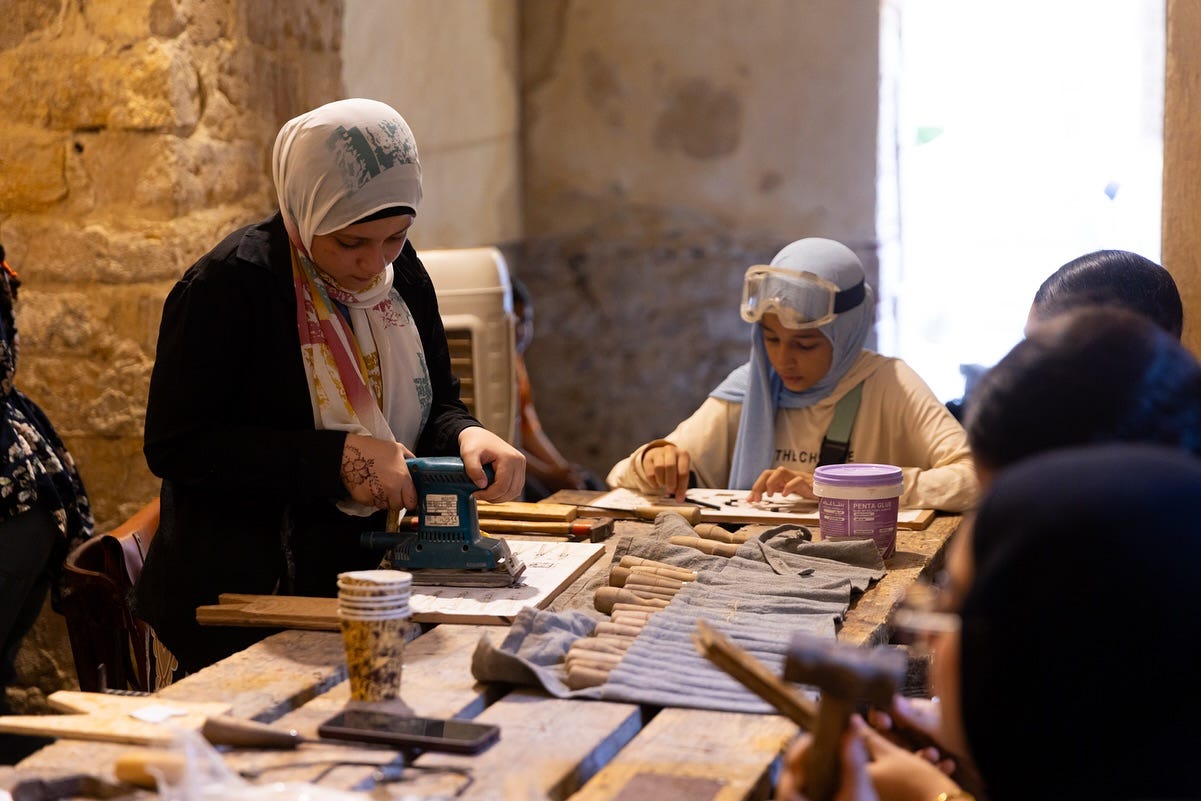
In one corner of Old Cairo each summer, in the working-class neighborhood of Al-Darb Al-Ahmar, at least a dozen kids find respite in a stone-cooled, 250-year-old house called Bayt Yakan. During the 19th century, the historical building was owned by an Egyptian dynasty. Today, its restored bare walls and tall open doorways serve a specific purpose: inspiring kids to put down their phones and study traditional Islamic craft.
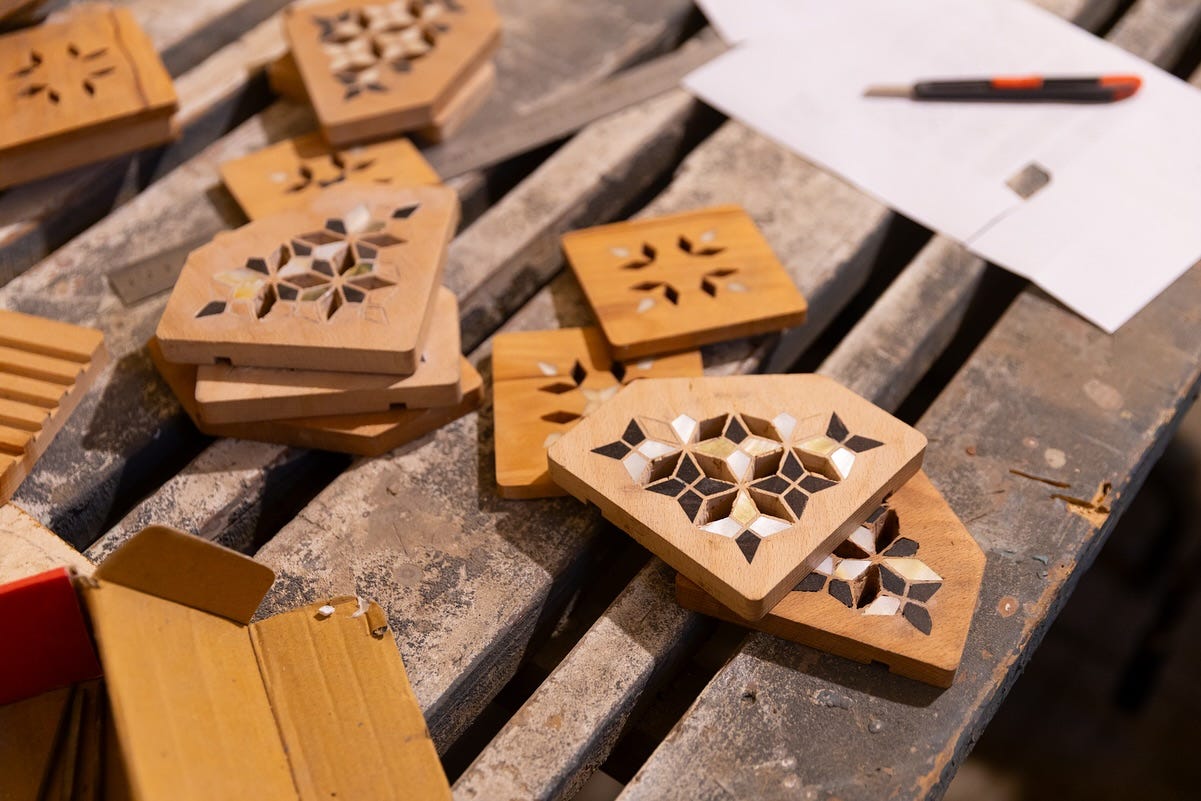
“They’re very eager to learn,” says Ibrahim Waheed Salem, the wood craftsman who taught a 6-week course this past summer on wood inlay, the methodology used to ornament wood or other materials by creating and filling in recessed patterns.
Waheed says learning ancestral techniques and designs comes naturally for these teenagers, partly because, simply by living in this UNESCO World Heritage-listed neighborhood, they’re already surrounded by history.
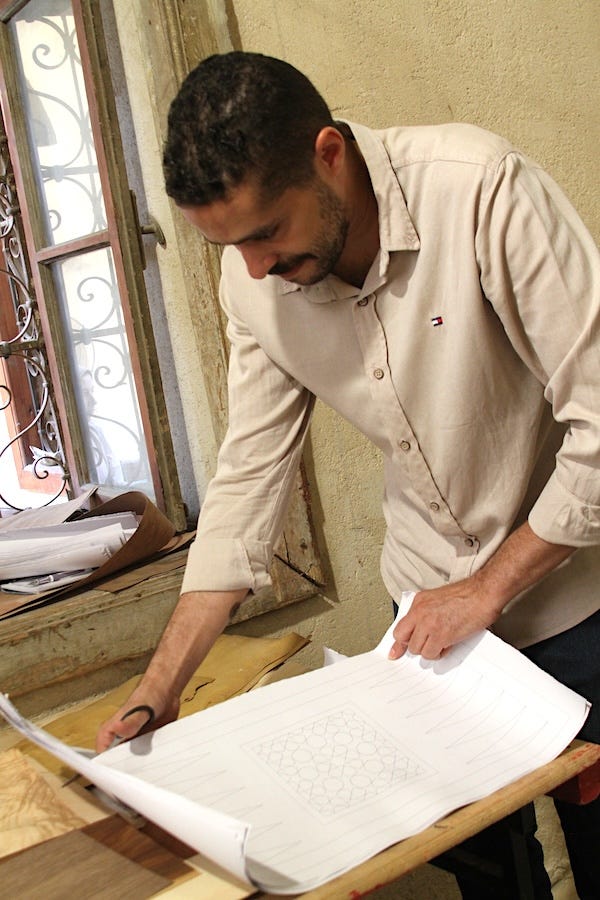
“They know the stories behind this street, this mosque,” Waheed says in Arabic, through an interpreter. “They are very connected to the place.”
Waheed is one of the graduates from the Jameel House of Traditional Arts in Cairo who have taught Islamic-inspired, centuries-old crafts such as Arabic calligraphy, brass inlay, and stencil printing at Bayt Yakan during the past two summers.
The program for working-class women and children is the latest initiative of the Jameel House, founded in 2009 as an international collaboration between the Egyptian Ministry of Culture; Community Jameel, a philanthropic arm of the Jameel family in Saudi Arabia; and the School of Traditional Arts in London (which Craftsmanship profiled several years ago in an article entitled, “King Charles Redefines Originality.”)
Anyone who studies Islamic Art (or Egypt’s ancient pyramids) is familiar with the repeating patterns, symmetry, and sharp angles inherent to the region’s aesthetics.
“ We don’t want this to vanish,” Waheed says. “ All the history, all the techniques and all the work that’s been done before.”
“[Geometry] is a pathway of understanding the beauty of Cairo,” says Clea Daridan, head of arts and culture at Community Jameel.
Cairo became a cultural center of the Islamic world largely because of the region’s art during the Mamluk period (12th to 15th centuries A.D.). Yet today, people are often stumped about how craft artifacts were created back then.
“Many of the craftsmen, they died with secrets of the crafts,” says Waheed. Even in workshops where those secrets have been kept alive, Waheed says, not all tradespeople are “generous” about passing on their skills anyway.
When Dr. Khaled Azzam, director of the London-based School of Traditional Arts, helped found Jameel House in 2009 (as Craftsmanship’s article pointed out), the Egyptian native believed it was crucial to build the school’s curriculum around geometry. The reason stems from a fundamental (but often forgotten) theory behind many traditional arts called “sacred geometry.”
The concept of sacred geometry derives from the fact that geometric patterns can be found in all sorts of objects in nature—from a flower to a seashell, a crystal, even an apple core. The ancients considered the symmetrical beauty in nature’s patterns to be God-given, and thus sacred. When Azzam visited artisans in his Egyptian homeland, he noticed that many, even some considered “masters,” had drifted away from their craft’s geometric traditions. To Azzam, that trend was almost a sin, causing an artisan’s work to lose its aesthetic powers.
At Jameel House, Waheed learned wood inlay as a way to preserve geometry’s secrets and pass them on. Before studying for two years at Jameel House in Cairo, Waheed had a fine arts background and a wood furniture business. But his Jameel House training set him on a new path to keep traditional Egyptian arts alive.
“ We don’t want this to vanish,” Waheed says. “ All the history, all the techniques and all the work that’s been done before.”
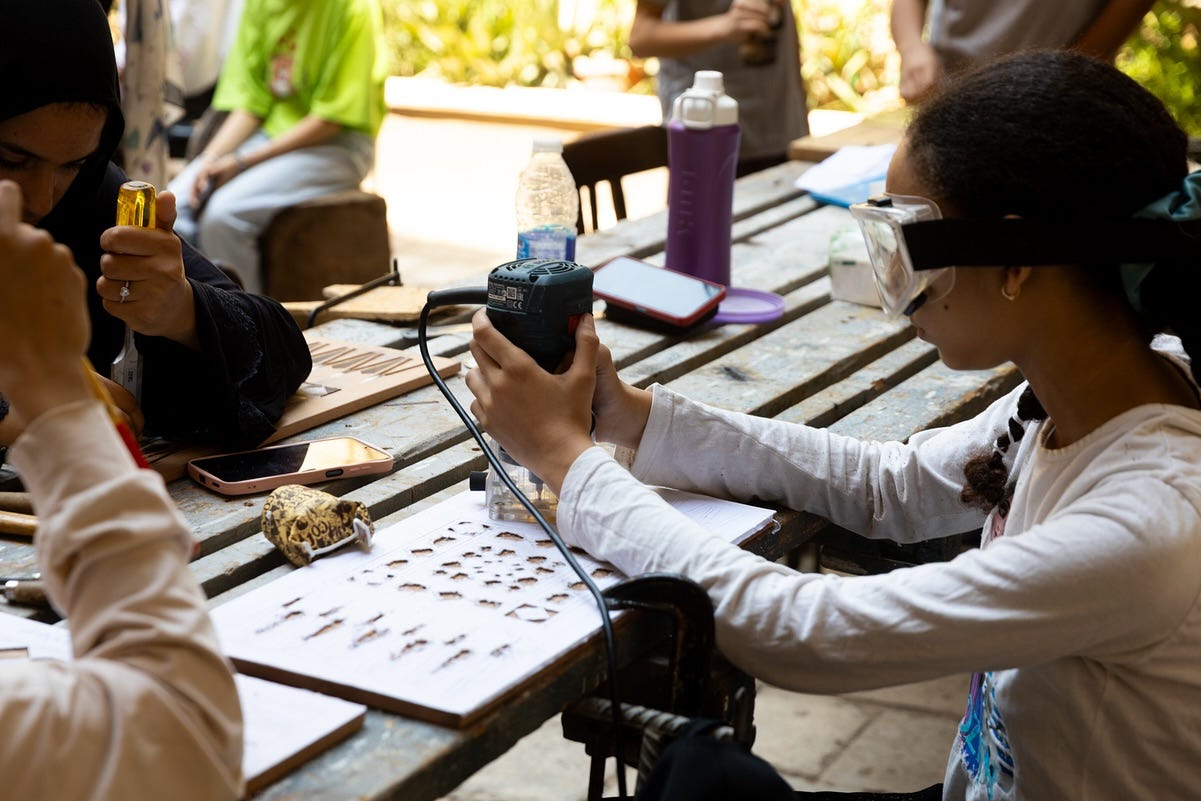
Teaching geometry at a craft school can be challenging, says Daridan, but only when students don’t see the value. “The tension is more around slowing down and taking the time,” she says. To understand what she meant, on a Saturday afternoon last July, I watched a class at Bayt Yakan, where Jameel graduates are teaching.
To begin the class, Waheed took teenaged boys and girls (seated at a long table where they were separated by gender) through the first steps of creating a backgammon set. “They were very surprised when they saw the design,” he says about his choice for the wood inlay surface for the game. It was a motif he borrowed from a ceiling at Bayt Yakan.
Waheed then laid out thin sheets of wood, cut from a sycamore, olive, or walnut tree. The wood was to be cut and chiseled as part of a two-month-long process to create the board game, which the students could then bring home or sell.
The inlay design is complicated, but many of these kids were familiar with its concepts, having attended workshops here before. To make sure the students can carry on the core principles of their culture’s tradition, even if the final designs are more modern, their learning is steeped in geometry, just like Waheed’s was at the Jameel house.
Those mathematical principles are considered so fundamental, in fact, that an entire workshop for the Al-Darb Al-Ahmar students focused on how to apply geometry to craft. “It gives you the skill of how to design and how to implement,” Waheed says, “ This is the beauty of it.“
Cairo’s New Brass Revivalists
·
Mar 6
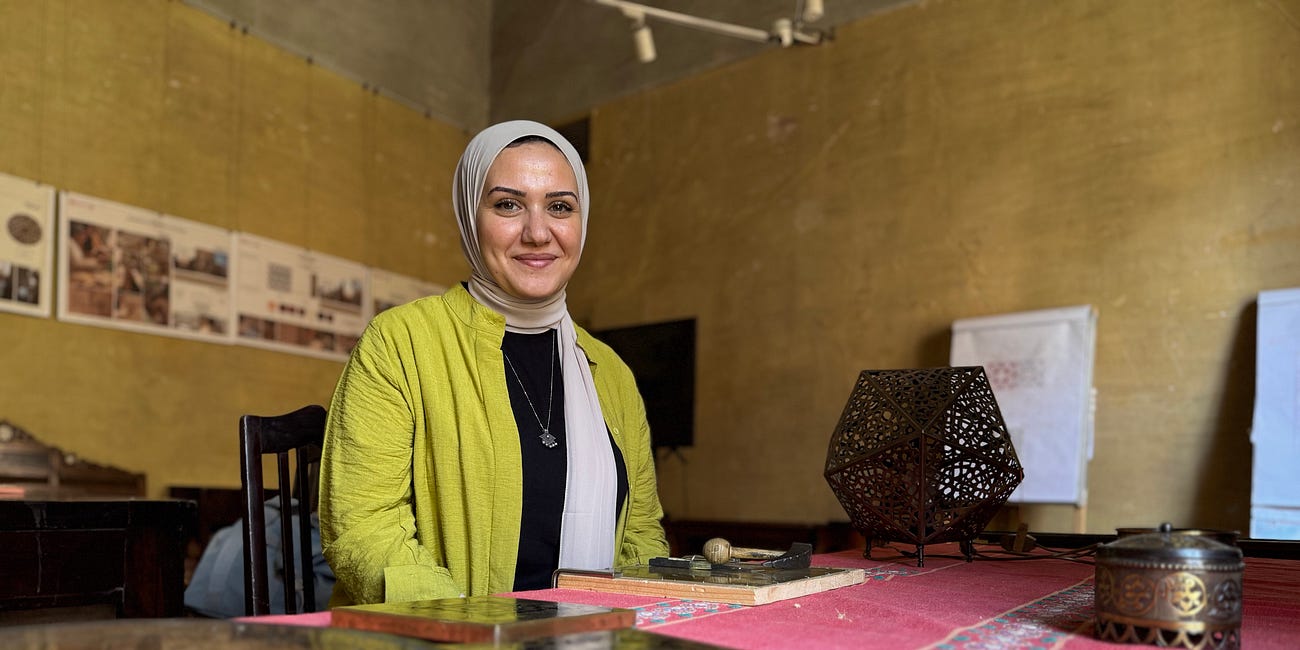
In a city once known for its fine brasswork, Noha El Qahwagy is one of just a few Egyptian artisans crafting traditional brass pieces by hand today.
Comments
Nothing yet. Say the first thing.
Sign in to join the conversation.