
Until a few months ago, my Instagram feed used to be full of advice about how to improve my prompt engineering skills and get AI to write content for me. There was usually a ‘statutory warning’ about how I would be left behind if I didn’t keep up.
Currently, the trend seems to be moving towards enabling social media users with AI tools for detecting AI slop on these platforms. And it is up to the artists, writers, and content creators to defend their work and themselves.
Overall, it seems like a move in the right direction, although it feels double-faced. What is expected now is that content creators should be ready to prove a negative at any time. This means keeping an ongoing record of how they create every piece of work, adding even more overhead for anyone who does creative work while also creating supporting content. Not to mention that it takes even more time away from the creative work itself, if that’s even possible.
If you like my newsletter, please consider sharing it with a friend. ♥️
In general, an artist or creator is someone who loves the process of creating. Fast results hold little appeal to brains that inherently enjoy the process. It is not easy to outsource someone’s unique creative process to AI.
On the other hand, the expected skill set of an artist, maker, or author has expanded considerably. Today, we are expected to build a sizable following, manage social media, photograph our work, handle marketing, edit videos, create content, teach, and even entertain, all while producing meaningful work.
Practically speaking, many of the creators you follow may be using AI tools at their discretion for one or more of these tasks, or for intermediate steps that help speed things up.
Social media users will have more access to handy tools that detect AI slop. Text-based AI detection tools are trained to recognize patterns in writing. AI-generated images may carry invisible watermarks that can be detected by AI tools on social media platforms.
But if you think about it for a minute, these detection tools are also AI-based, and like any AI software, they are prone to making mistakes. Yet we are relying on these tools to critically judge someone’s work.
Walter Benjamin’s famous 1936 essay, The Work of Art in the Age of Mechanical Reproduction, discusses how an original work of art acquires a unique history through aging, damage, repair, and changing ownership, and consequently develops an “aura” of its own,.
The question at hand is: how do we maintain our ability to determine authenticity in the age of AI?
Perhaps, instead of relying entirely on AI detection tools, we can look for work-in-progress updates, behind-the-scenes glimpses, personal stories, and interactions through social media to get a sense of a creator’s process and voice. Our own natural intelligence, along with judgment and discretion, can come in handy too.
As a non-native English speaker who mostly read and wrote the language but did not converse in it until I was an adult, I agonize over my English grammar. I am constantly wary of sounding both too ostentatious and not polished enough. But I also cannot stop learning, loving, and playing with new-to-me words and phrases. Things that sound right in my head often seem out of place when typed out on a screen. :)
For these reasons, I have taken to using AI to lightly assist me with grammar, punctuation, and overall cohesiveness in my essays.
There is also something deeper. I don’t really consider myself a writer per se. While writing my newsletters, I often imagine sitting and chatting at a table full of knitters, project in hand. It is therapeutic for me, and generating them with AI would defeat the purpose.
“Tedha Hai Par Mera Hai” was an advertising tagline for a spicy corn-and-lentil snack named Kurkure in India in the 1990s. Tedha means crooked or misshapen, in Hindi. So the tagline loosely translates to, “It’s wonky, but it’s mine.” Those ads celebrated imperfect yet heartwarming family relationships and eccentricities.
I think I can say the same about my writing as well as my craft.
It may be imperfect. It may have quirks. But it is mine.
And I hope you enjoy it that way.
Where do you draw the line between using AI to help you create and using AI to create for you? I always enjoy learning from your perspectives.♥️
To let me know you liked what you read, you can also press the little heart icon at the bottom of the newsletter. ♥️ If you're reading this from your inbox, you may need to wait for Substack to open in your browser before your like is registered. Thank you.
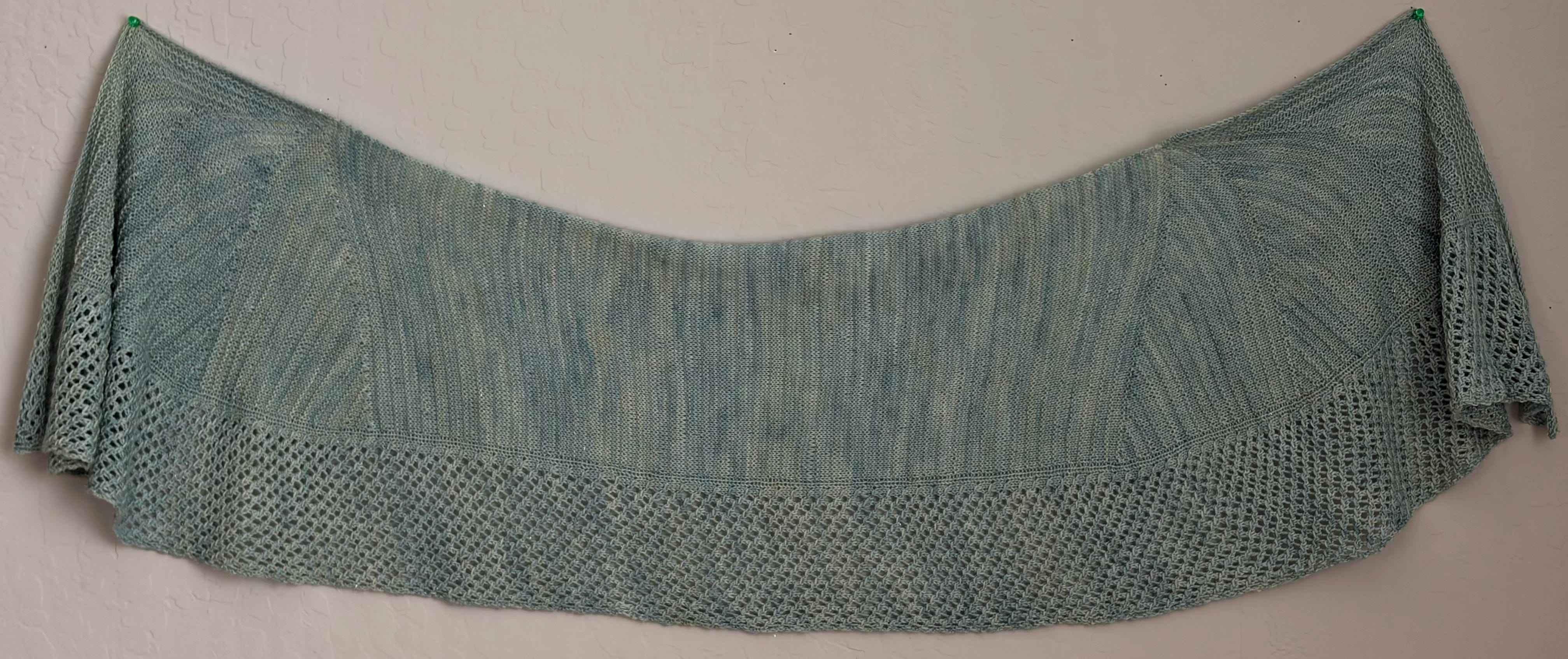
I am planning to publish Neha Shawl later this month. Please keep an eye out. ❤️
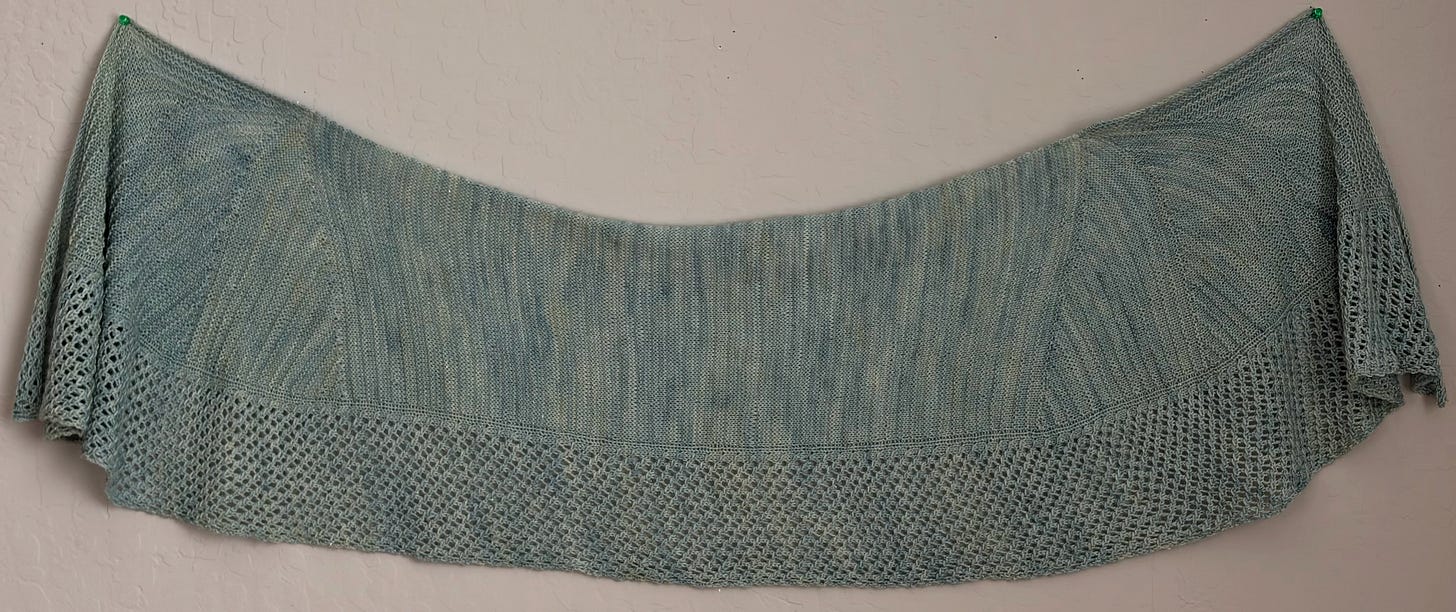
Coming soon: Neha Shawl My testers are finishing up their versions of Metro tee and I am plannign to release the pattern late September. ❤️
I am currently working on two new designs. - Nickel Vest and Indu Shawls. I have done most of the pattern writing work for these designs but working on the samples slowly. I had shown some sneak peeks of these designs in previous newsletters. ❤️
I will be teaching 2 classes at Vitrual Knitting Live, this September. Registration for these classes are open here currently.
There are spots left in my September classes at Fillory Yarn. Please check Fillory Website if you are interested.❤️
Finished reading 📖
Mother Mary comes to me - Arundhati Roy
Currently reading 📖
Don’t call it art - Austin Kleon
Until next time,
Kavitha. ♡
Currently, this newsletter is free to subscribe. If you like my work, please consider these other ways to support:
Click the ❤️ at the bottom of this post. If you are reading from your email inbox, this will open substack in web browser. Please allow it to open and make sure you see the red heart.
Occasionally I share affiliate links to products and services. If you click on those affiliate links and make a purchase within a certain time frame, I'll earn a small commission at no extra cost to you.
Share your thoughts in comments. I am here for the conversations. I hope you are too!
Introduce this newsletter to a friend!
Buy my patterns. I hope you find something you like.
I accept any of these with immense gratitude. Thank you!
Comments
Nothing yet. Say the first thing.
Sign in to join the conversation.