
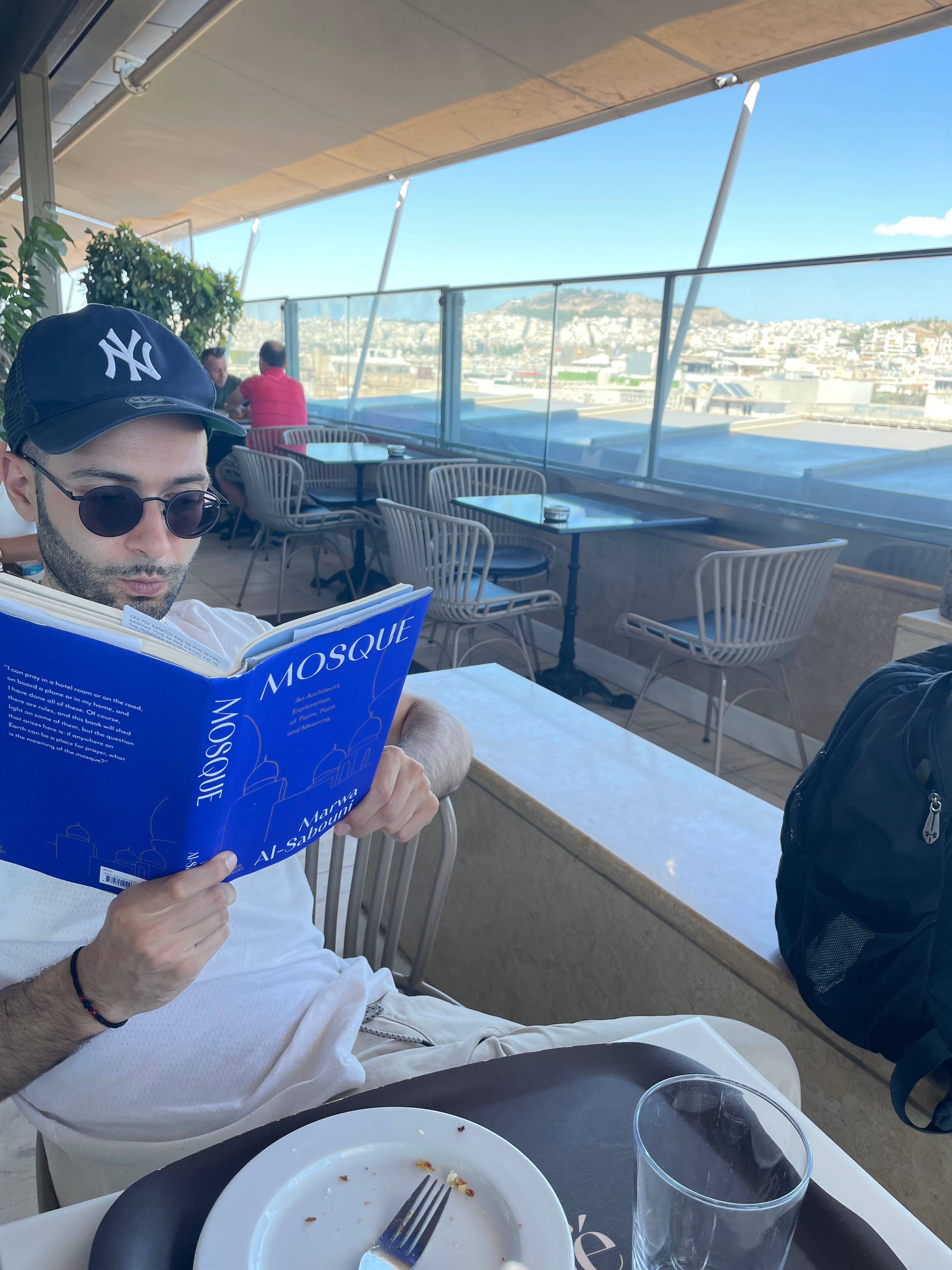
Arrive in Malpensa airport. Six hours til my bus to the outskirts of Milan arrives. Navigate a quick roundtrip train ride to the center of the city to kill some time. Made my way to the train terminal only to find out trains were not running due to a strike. Pause to celebrate Europe’s esteem for the cause of labor…and to lament the fact that this also enables them to be lazy and for their public works to be inefficient and unreliable.
Lunched on subpar airport pizza and peach EstaThe. Checked the label, fearing the globalization of America’s use of artificial ingredients had reached Italy: sucralose (sigh), but no high fructose corn syrup or artificial peach flavoring (relief). Airport full of hijabis and their husbands and numerous children. Bus to small town.
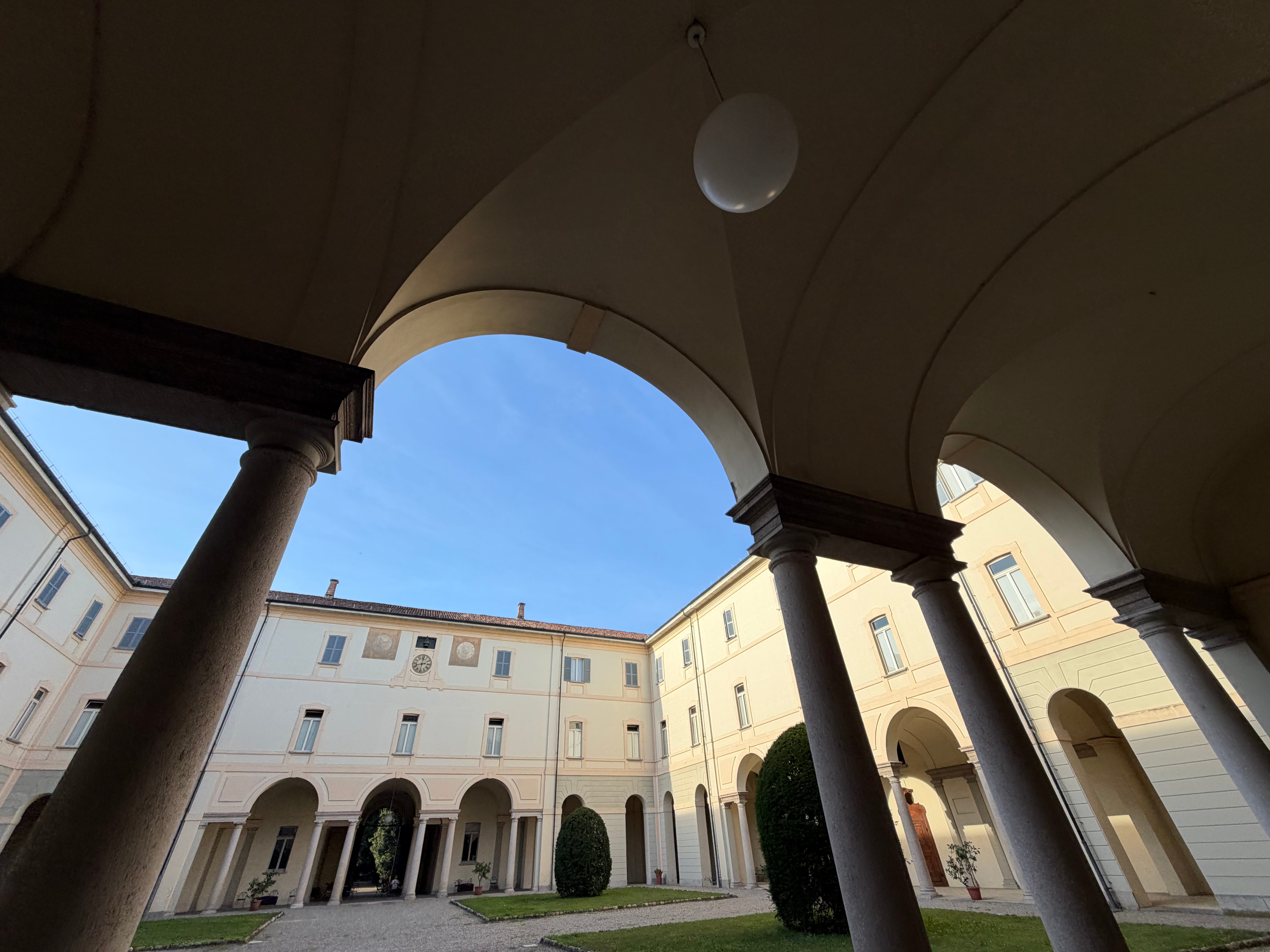
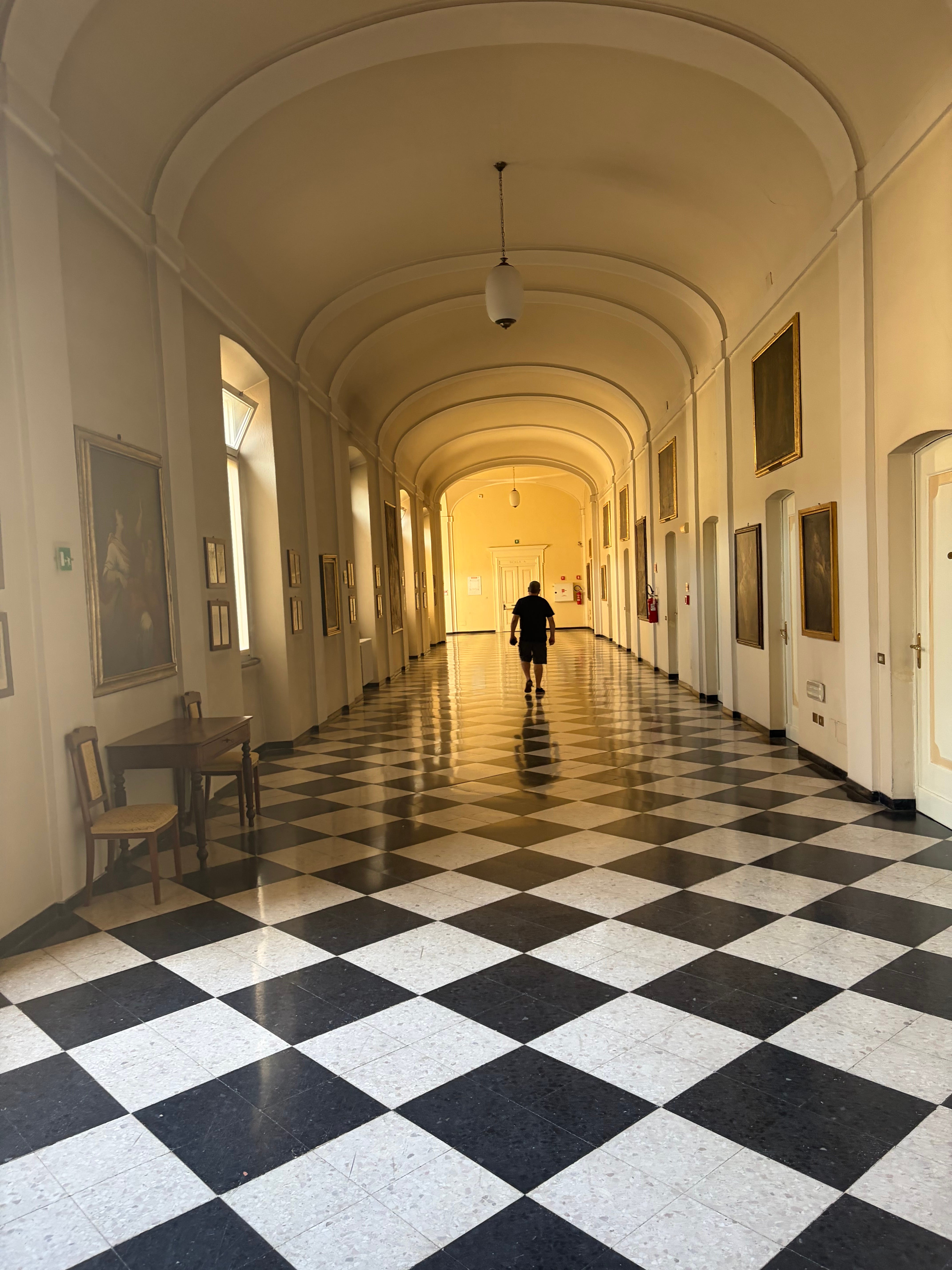
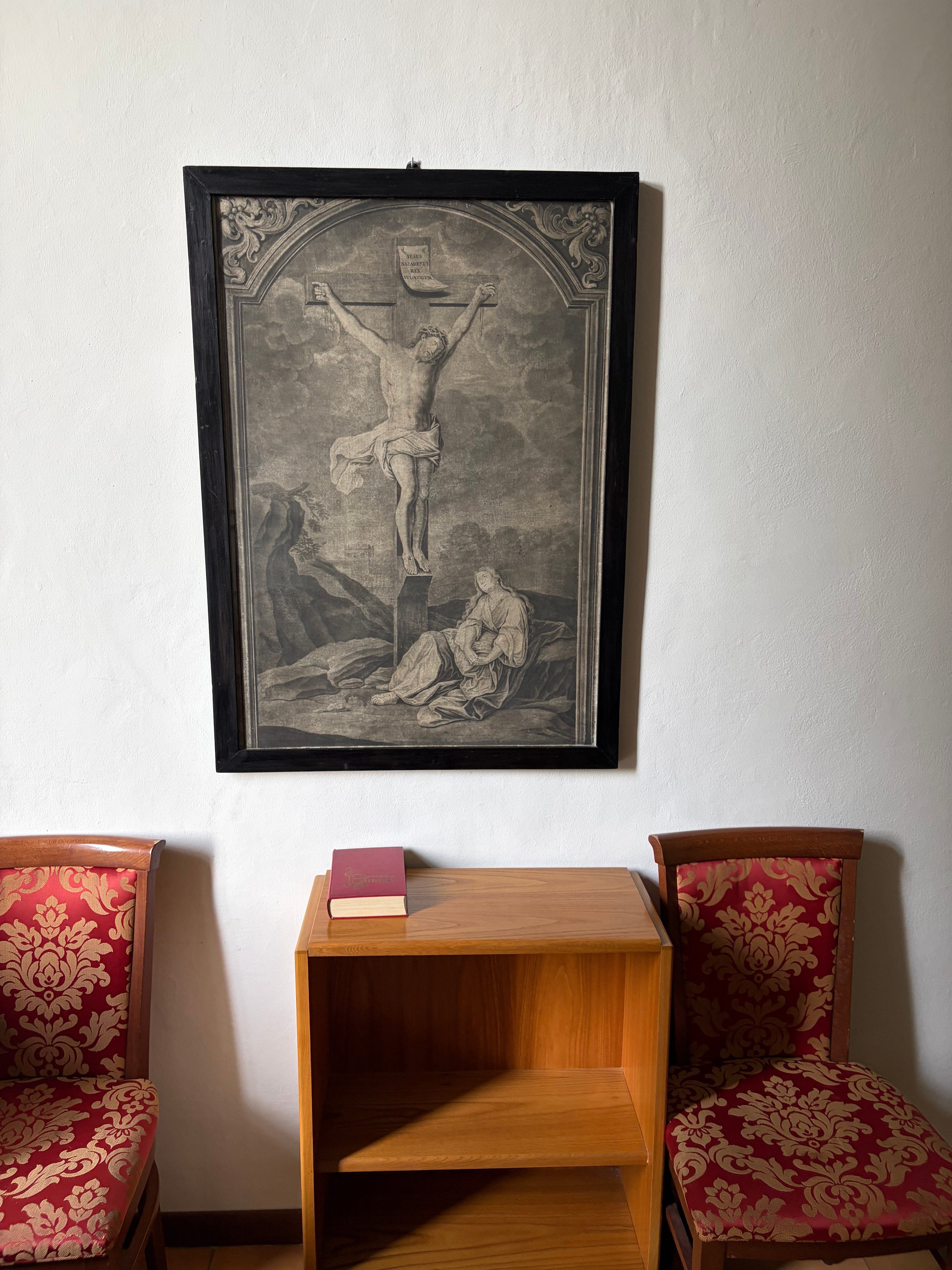
Lodging at 17th century Franciscan friary complete with courtyard, cloister garden, halls lined with baroque-ish original paintings, high-ceiling bedroom devoid of air conditioning (alhamdulillah) with antique prie-dieu and sketch of the crucifixion.
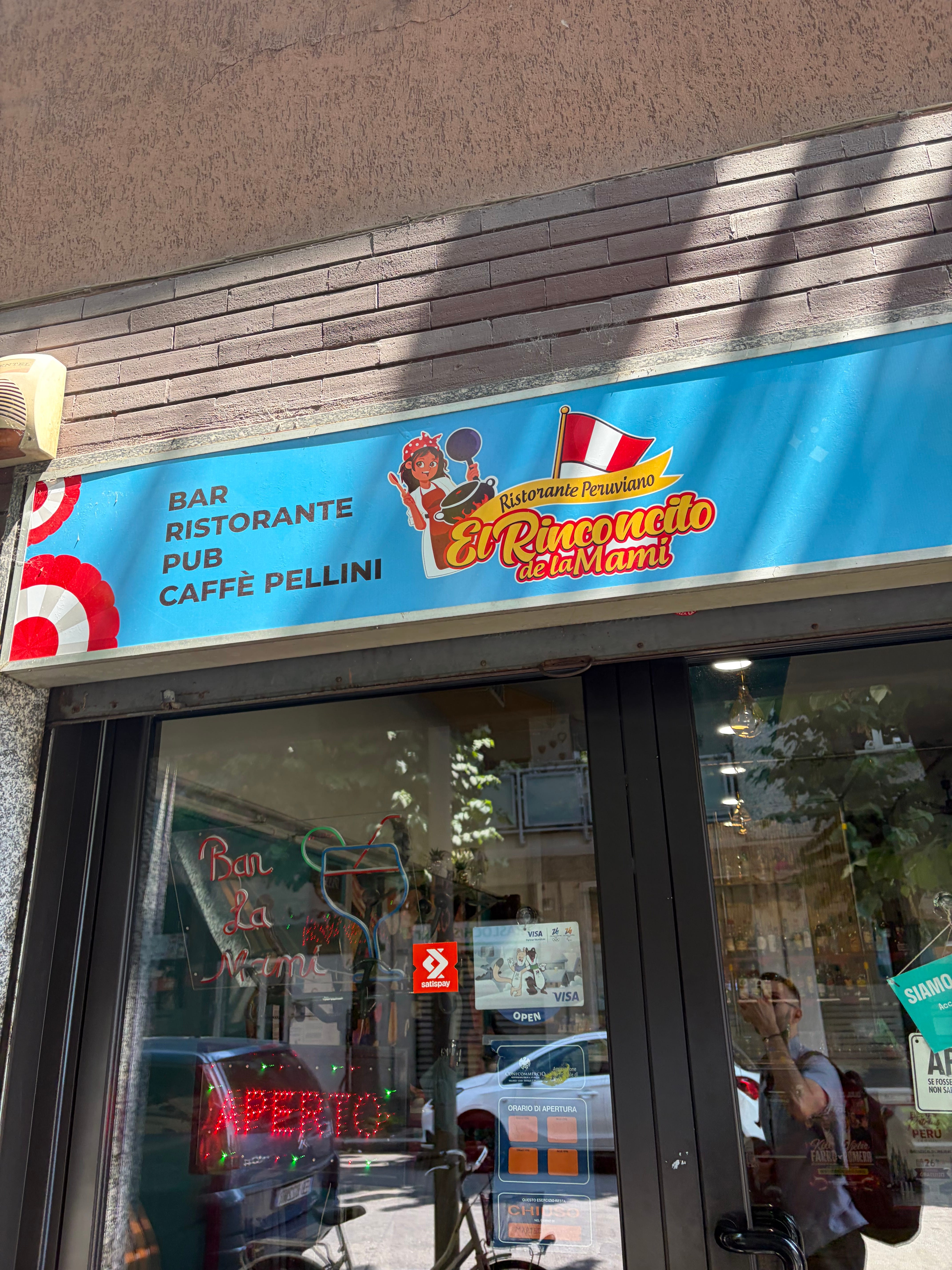
Dinner at caffe bar staffed by Peruvians while a mix of recent reggaeton hits (Rauw Alejandro, Mike Towers, Bad Bunny) plays in the background. I guffaw at the fact that they only charge 4 euro for a glass of red. Followed by vegan gelato.
This globalization of consumer culture, of libertinism and tolerance—and the subsequent idolatry of “development” or progress for its own sake—engendered a new monoculture whose control was totalizing. It absorbs not only political ideologies but also the particularity of cultural differences, making them, as Pasolini put it, “perfectly homogenized and acculturated.” Its alleged tolerance and freedom “conceal a decision to reconfigure everything so ruthlessly as to be without historical precedent,” and thus “represents no one.” Its “imposition of hedonism and joie de vivre” is “a deadly form of fascism.” Unlike the old forms of fascism which blatantly made known their ideals and goals, the new fascism is deceptive: It “has no outstanding qualities at all: it is not rhetorical in a human way, it is pragmatic in the American style. Its goal is the brutally totalitarian reorganization and homogenization of the world.”
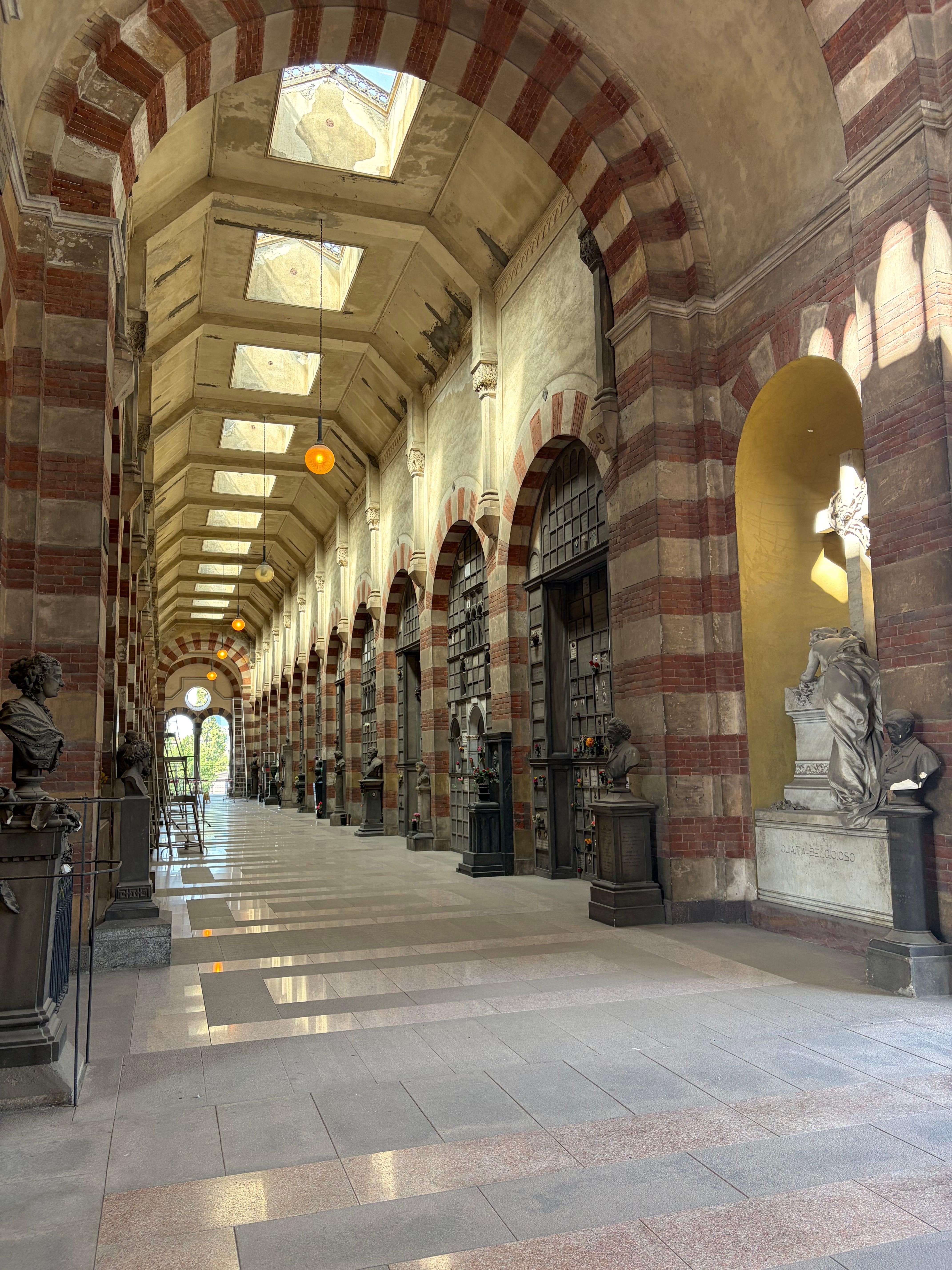
Morning in Porta Garibaldi neighborhood of Milan. Say a prayer in the Cimitero Monumentale and roam around the streets. Pop into a church after telling gypsy at the door I don’t have any money. It’s ok, she tells me. I can give her the money on my way out. Streets full of Arabs, Africans, and Latinx…much more than I saw last time I was here back in 2024. Very few indigenous Italians.
I find myself uneasy at having such a knee-jerk reaction to the proliferation of migrants in my motherland. My inner millennial SJW is disgusted at myself for thinking thoughts that far-right populists and ethnonationalists think. But then I remind myself that it’s ok—being disturbed by mass migration in Europe is more justifiable than feeling so in the US, where a steady flow of migrants has always been a key element of the foundation, of the cultural fabric of the national identity. In Europe, on the other hand, cultural homogeneity—the passing on of a distinct cultural legacy through the ages—is more of a thing. Thus waves of migrants pose a real challenge to Europe’s stability—for cultural and metaphysical as well as political and economic reasons.
I compensate for my “problematic” train of thought by insisting to myself that ethnonationalism and right-populism are—on top of being morally depraved—politically impotent. They are mere reactions that pose no real challenge to the expansion of globalization. They posture themselves as the antidote to globohomo, while in reality functioning as a mere reactionary performance, a simulation of “tradition” and pride in the particular. As Trump has proven, right populists have little to no real commitment to protecting local agency and cultural patrimony, and thus act in collusion with the very evils they set themselves in opposition to.
Besides, I reassure myself, it’s not the immigrants’ fault. It’s globohomo’s fault. It’s neoliberalism’s fault. Colonialism’s fault. I think of Pope Leo XIV’s insistence during his Apostolic visit to Spain that while people have the right to migrate, they also have to right to stay put in their home country…and more should be done to aid the nations from which natives feel compelled to flee.
Then I remember that had Europe not given up it’s Christian heritage, they wouldn’t be caught in this deadlock between globalist, diversity-coded neoliberalism and xenophonic ethnopopulism. Had they maintained their roots, they would’ve had a host culture to welcome and integrate immigrants into. Europe’s rejection of its roots renders them vulnerable to waves of migrants. I think of Pasolini, who understood the value of local cultures…of Simone Weil who understood the need for roots, of Fr. Arizmendiarrieta who understood that the Church’s vision for society stood apart from capitalist liberalism, nationalist fascism, and socialism.
Years before modern globalism emerged, nationalism was already eroding local cultures and institutions. You could even say that the nationalism that Vance praises—embodied by figures such as Theodore Roosevelt and Otto Van Bismarck—paved the way for the internationalist outlook he so openly disdains. By undermining the power of local community, nationalism weakened the most natural and deeply rooted ties individuals posses. After such ties have been cut, the ethical argument propounded by numerous religions and philosophies—that all humans are one community regardless of place—was able to exert its influence without substantive opposition.
Champions of rural America must reject reactionary nationalist attempts to rewind the clock back to the 1950s. They need a totally new solution to rural malaise—one that combines the localism of the past with the values of the open society that will likely dominate the coming century. This is not an easy task; it asks us to combine two things that have not historically gone well together. Yet it is the only real hope for rural America.
-Jeffrey Tyler Syck
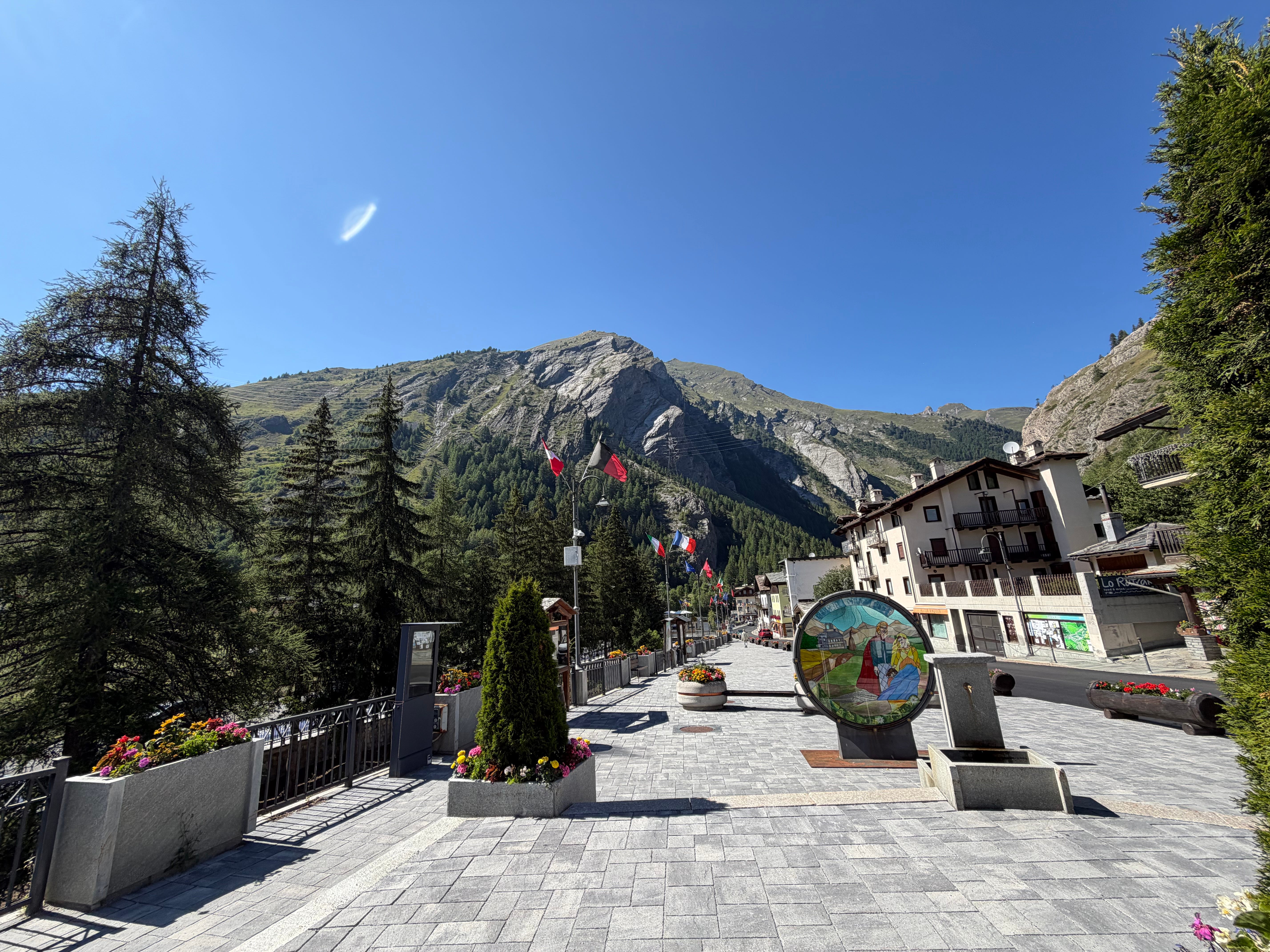
Off to the Alps for a retreat. [top secret]
For the record, I hate nature. I despise being removed from civilization. When I travel, all I want to do is pop into every single church I pass, eat, smoke, dance, and engage in cultural anthropology (observing the culcha and then writing/[shit]posting about it). Sure, you can see the hand of God in the natural world, but I see perceive his handiwork more keenly when watching humans—the apex of his creation—and the stuff they do/have created. In nature’s defense, it’s not as bad as suburbia…where there’s nothing sacred at all, and where there’s nothing to do at all.
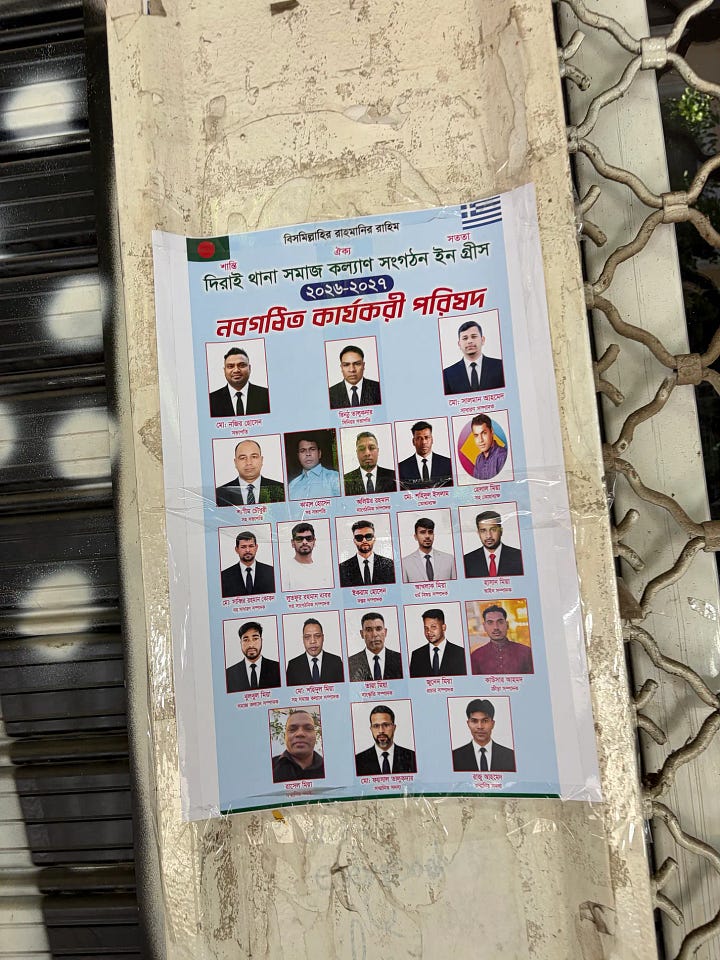
Arrive at Venizelos Airport, Athens. Impossible to get a taxi. I’m immediately forced to reconsider all my clamoring against the toxicity of America’s cult of efficiency and utilitarianism. My shockingly cheap hotel, which is in walking distance from basically everywhere I planned to go in the city, also happens to be in the neighborhood where Athenians go to buy drugs. The neighborhood’s Bangladeshi restaurants and businesses are interspersed with dilapidated abandoned buildings and lots.
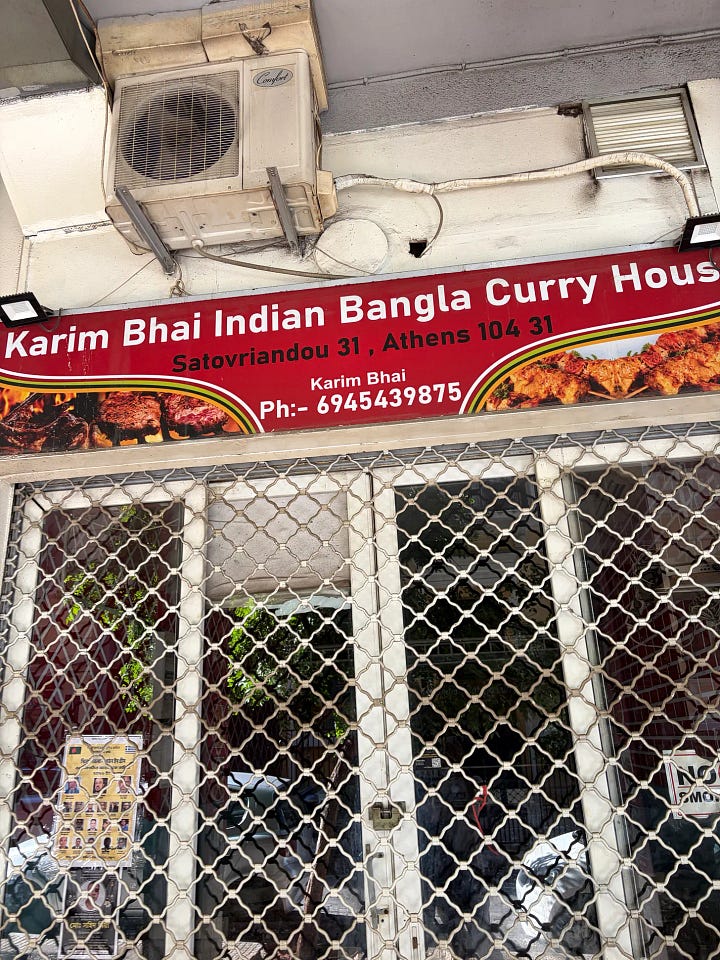
My feelings about cultural cohesion and mass migration are confirmed. I think back to the time my friend in college showed me a Vice News video about the Golden Dawn, a neo-nazi-adjacent, ultra-xenophobic movement in Greece that would go around terrorizing immigrants. At the time, I dismissed them as lunatics. But now I understand the very real problem they are trying to address, albeit with hatred and, ultimately, with stupidity: on top of being morally concerning, ethnonationalism is a hollow solution to the erosion of national identity…only capable of constructing an artificial, simulated version of it, rather than tradition in its dynamic, “living” form—which is capable of both maintaining a strong, cohesive culture as well as receiving foreigners into it.
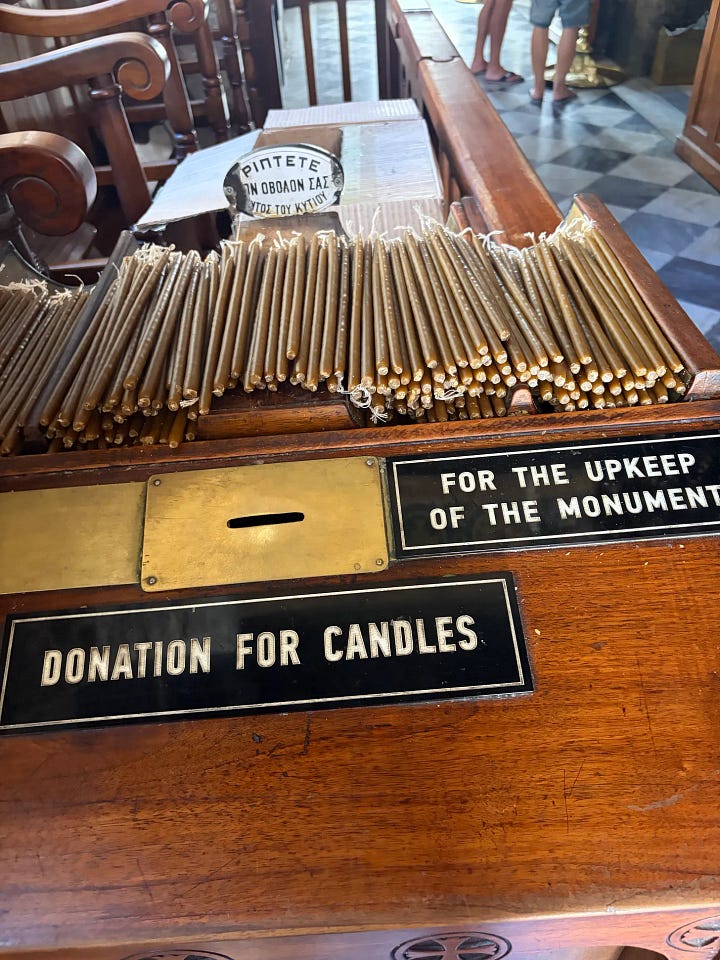
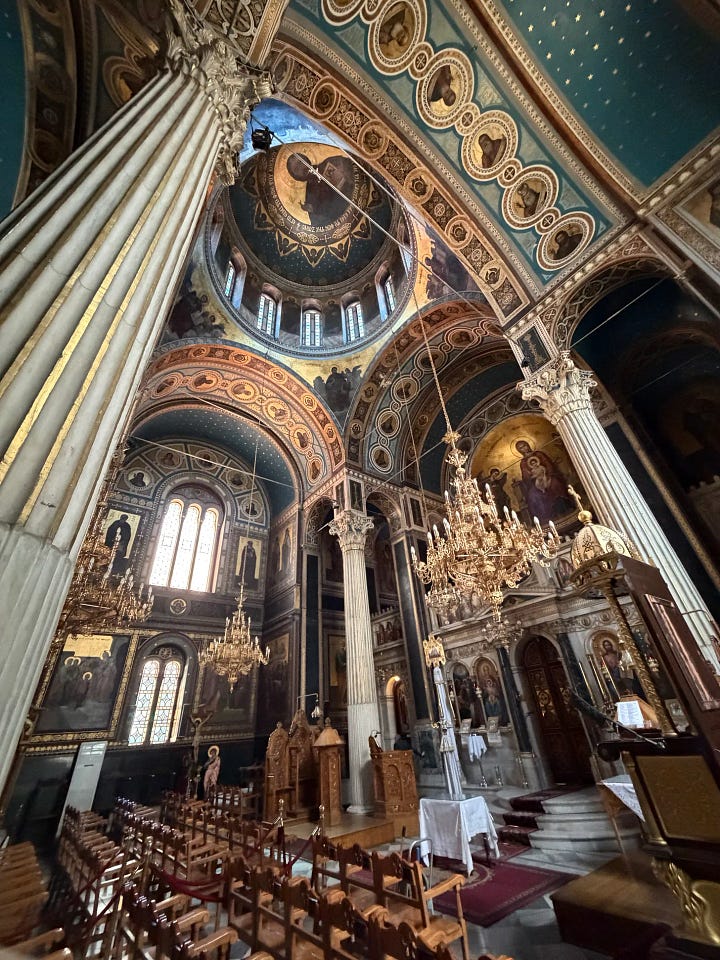
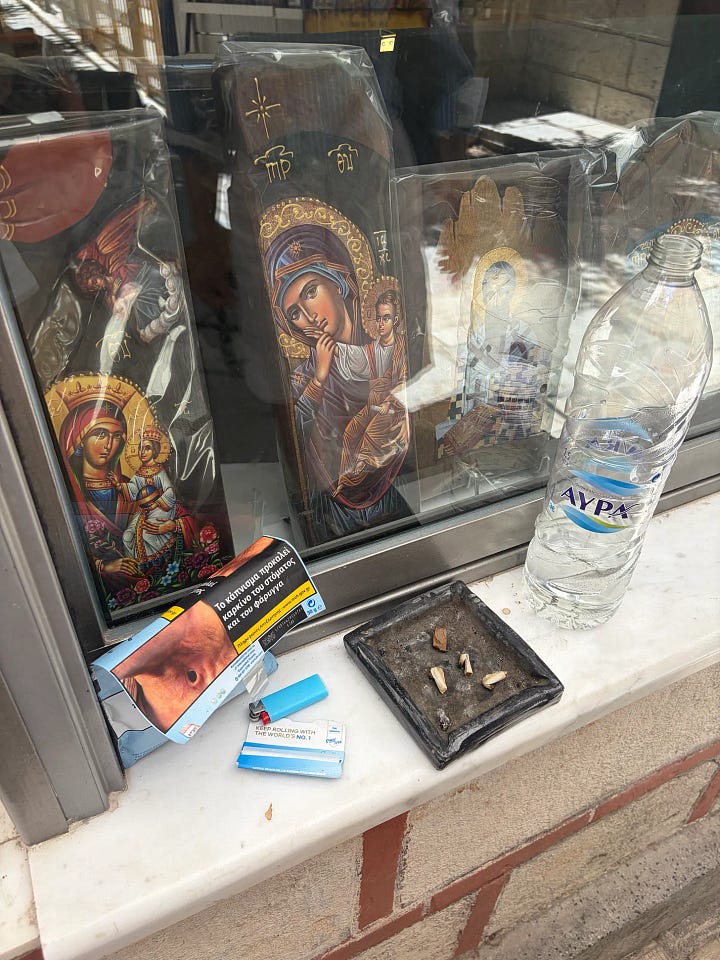
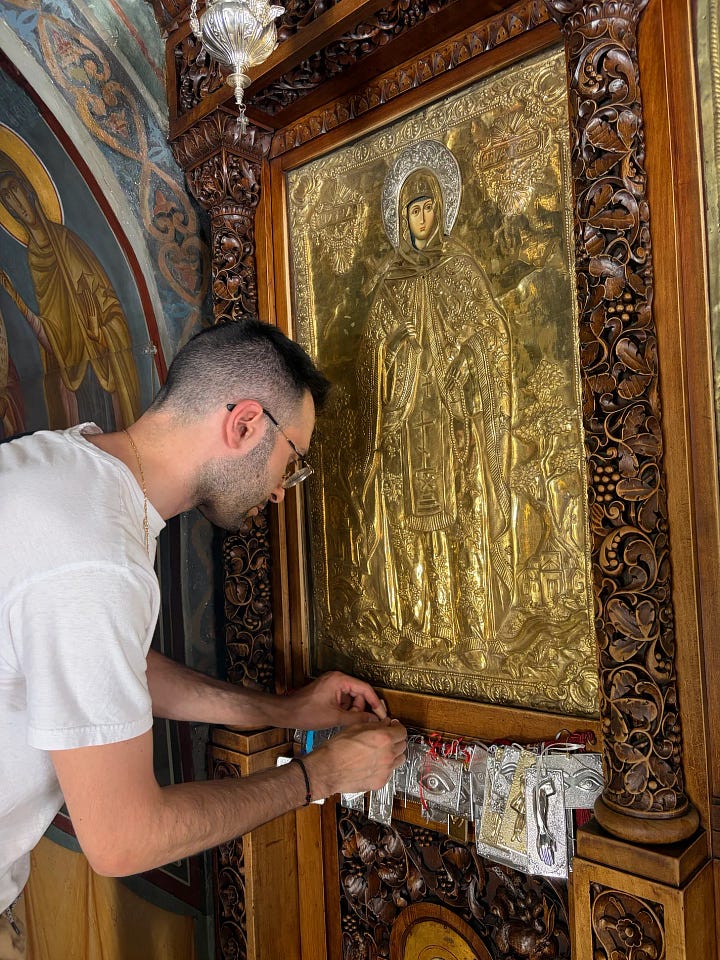
Once again, back to square one: where has Greece’s Christian heritage gone? I saw a poll on IG reporting that Greece is the 4th most religious country in Europe. 59% of Greek believe in God. 55% say religion is an important part of their lives. 38% go to church at least once a month and 29% pray daily. But much like Luigi Giussani observed about Italy in the 1950s, Christianity is viewed more as a cultural institution or a “natural” religion—treated like a source of morals, magic, and superstitions—rather than an actual “proposal” that ontologically shapes the way you view and live within reality. I came across a handful of deeply pious people (mostly old ladies, the who made up the majority when I attended church services) and a couple of atheistic rebels, but the vast majority view faith as nice background music—which is to say it is a welcomed presence, but not deemed an integral part of how one lives their life.
Surely, this has to do something with the deeply mystical and relatively static nature of Eastern spirituality and Orthodox ecclesiastical governance, with its basis in monasticism rather than in social, political, educational, or missionary/charitable endeavors.
-Geronda, we’ve heard that they are thinking of replacing the Greek alphabet with Latin characters.
-Forget it! That will not work! It will not work. We are lucky that God always makes good out of what is crooked and evil. Otherwise, we would all be lost. Our Tradition and language were not lost back then when everything was recorded in hand-written manuscripts and there were no photocopy machines or other ways to preserve them. Nor will they be lost now that we have so many means of preserving them. Have you noticed how Pontian refugees from Russia have kept their customs? It helped that they spoke Pontian Greek and were able in this way to keep their Tradition alive. And even though they were given a little freedom, they still chose to leave Russia in order to be truly free. With only the little freedoms they were given, they were like birds taken out of the cage and left to fly freely in a room. Wouldn’t they feel sorrow there, too? How could they have been happy with this kind of freedom? Imagine how hard their lives must have been!
Some individuals are trying to wipe out this Orthodox nation. Do you know what this means? An Orthodox Christian nation today is a matter of great importance. In the old days, we had philosophy. Saint Catherine used philosophy to silence the philosophers of her time. The ancient philosophers paved the way for Christianity.
The Gospel was written in Greek and spread around the world. The Greeks then enlightened the Slavs. There are those who stand to lose if Greece continues to exist. “She is doing us harm,” they say; “We must destroy her.”
[…]
I will urge individuals that I know in higher education to establish a few more universities in Greece, so that our children will not have to go abroad to study. They should study here. In this way, no children will remain abroad; nor will their parents have to spend a lot of money, and the country will save on currency.
I always say to young people who are going abroad to study, “Go if you want to, but be careful not to lose your faith; take only their expertise. And most important-ly, don’t forget to come home, to our Homeland. Greece is waiting for you. You owe her your help. Stay close to the Greek people. Help all those poor souls who would otherwise have to go overseas to find a doctor or a specialist. Be very careful not to let your hearts grow cold The Europeans are cold people. And the United States is only for becoming wealthy in material goods and becoming spiritually bankrupt.”
-Elder Paisios, With pain and love for contemporary man
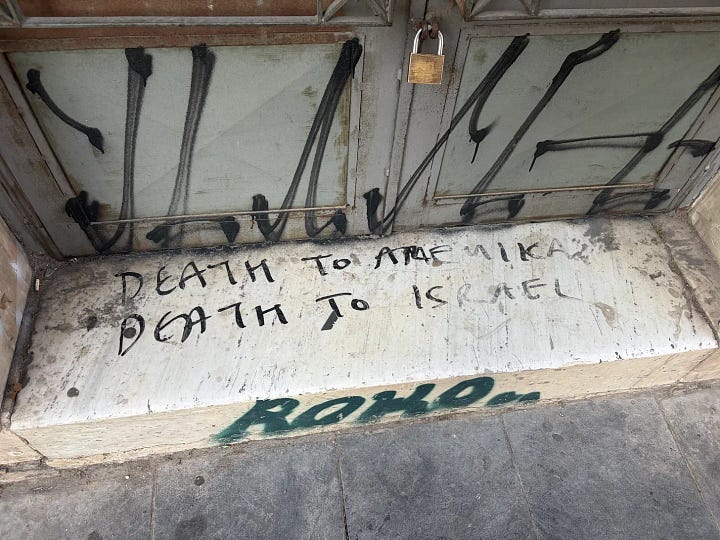
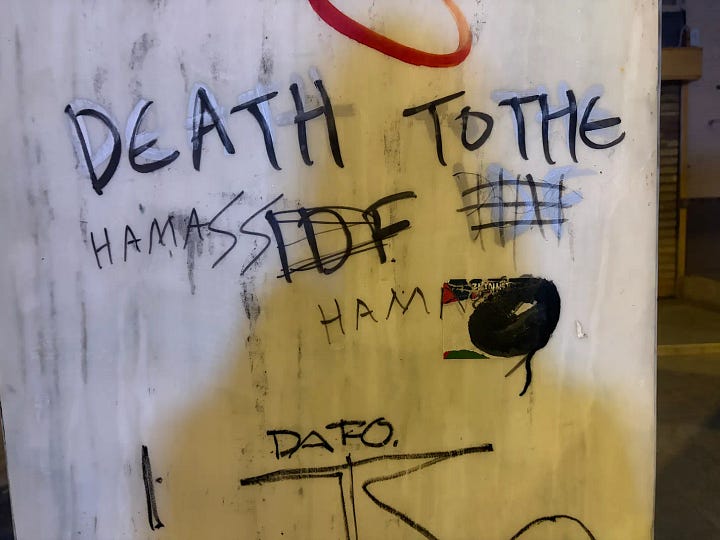

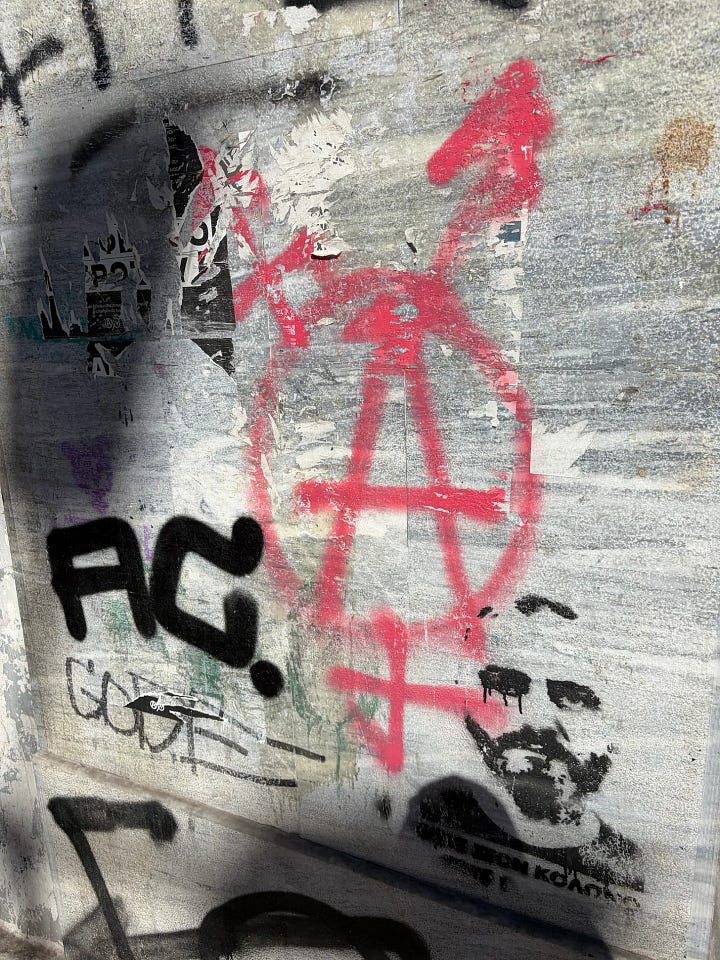
We roamed around the streets, passing fliers in Bengali, numerous malnourished cats, graffiti of various political persuasions [Antifa, pro-Palestine, “death to America,” pro-LGBT, Christian], and more dilapidated buildings…which I must admit brought back memories from my time in the West Bank. I am reminded of the time that King George II referred to Greeks as “orientals.” Despite being the “cradle of Western Civilization” and belonging to the EU, the lack of order and rationality—thanks in part to its Byzantine and Ottoman patrimony—reminds us of Greece’s “exotic” eastern flair that so allured the likes of Byron.
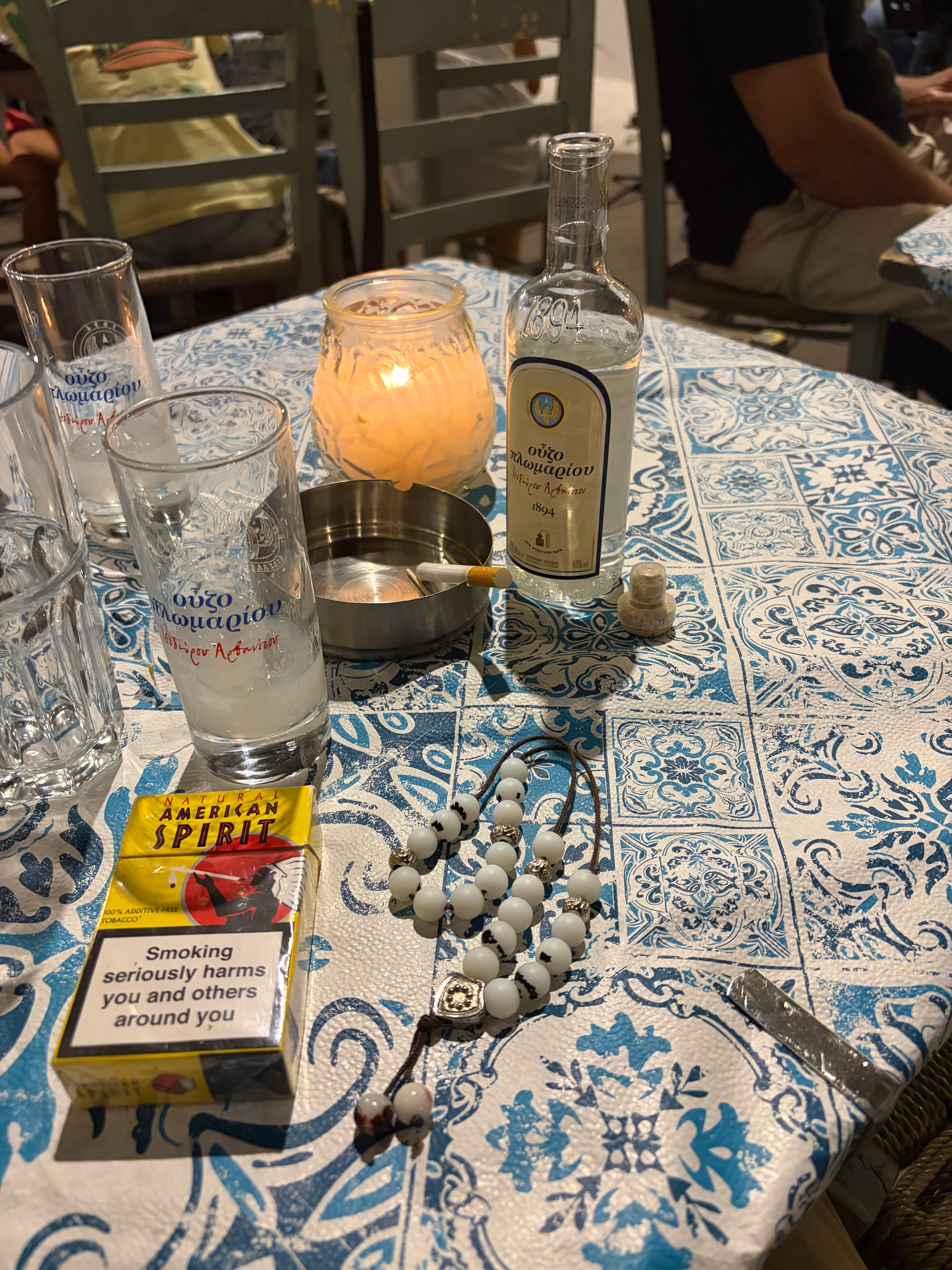
After dodging tourist trap restaurants and asking locals for where we can find traditional fare, and breathing a nicotine-laced sigh of relief upon being permitted—even encouraged, by the ashtray awaiting me on the table—to smoke while eating (33% of Greeks still smoke, making it #9 in all of Europe), we made our way to Mass at the Roman Catholic Cathedral of Saint Dionysius the Areopagite. Mass was said in modern Greek by a Greek-born priest of Syrian ancestry, with a choir of Filipino children, and a congregation mostly consisting of tourists, Filipinos, and a few east Asians, Latinx, and Africans. Behind me sat a Basilian (Byzantine Rite) monk from Lebanon who, after introducing myself, told me he’d pray for me for my feast day.
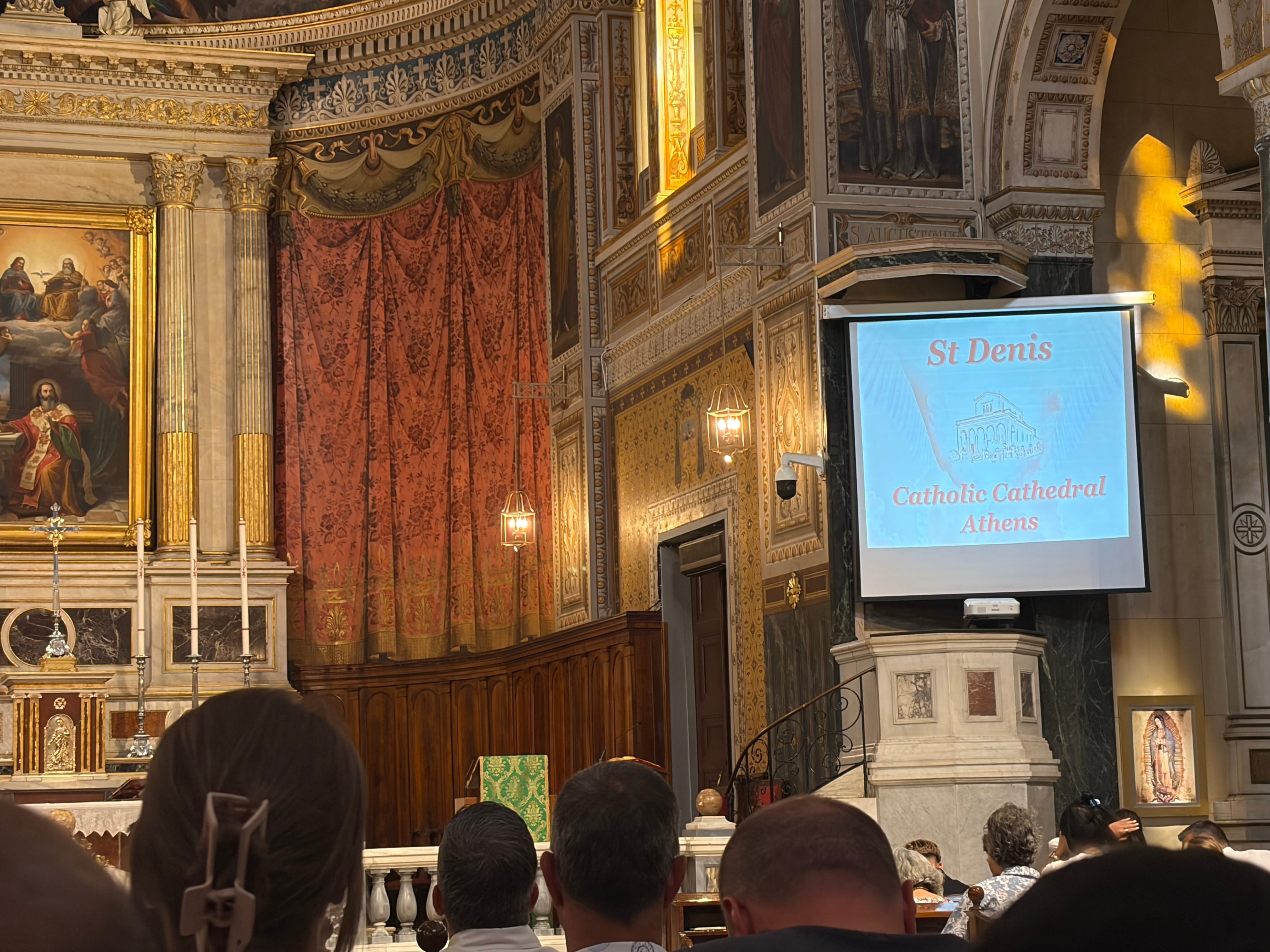
This stark example of globohomo didn’t hit me with the same sensation of horror as I felt while roaming the streets…perhaps because this parish provided an ethos of cultural—and metaphysical—cohesiveness. There was a spiritual—and perhaps also—cultural proposal to participate in and belong to, something generative, capable of uniting these people of different backgrounds and fostering harmony rather than chaos. An oasis of hope in a swamp of globohomo-induced nihilism.
Taxi to Piraeus to take the 7:15 am Blue Star ferry to Ikaria. I anxiously await the dude with the giant belly and booming voice who sells halva and loukoumi (Turkish delight) to board once we dock at Paros.
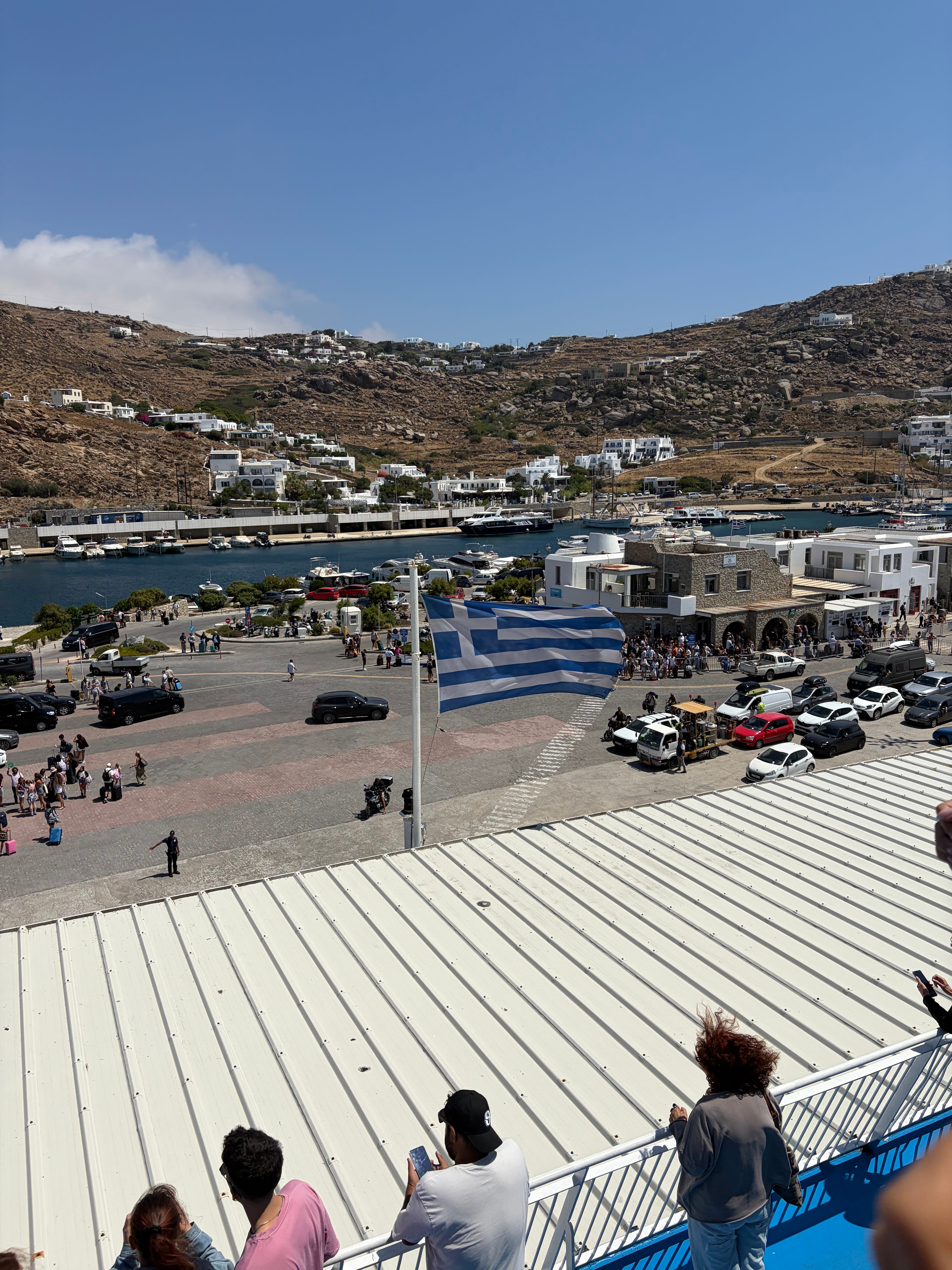
I roam the deck, where the groups of Balkan-maxxing young men decked in cut-off Ts, mid fades, Oakley-adjacent sunglasses, jean shorts, with fannypack across their chests are sitting with their frappes and iQos cigarettes in hand, some playing backgammon with each other.
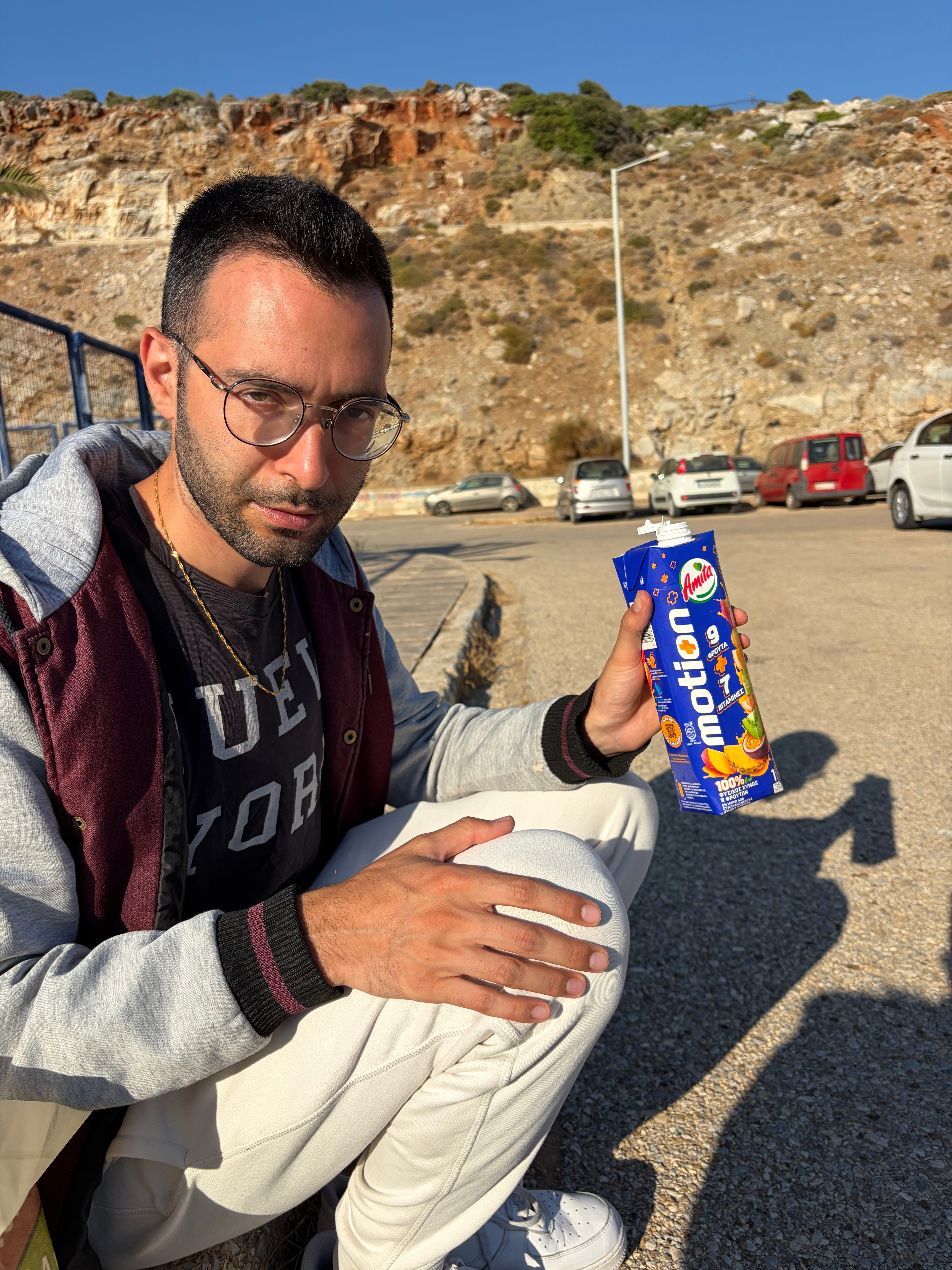
I indulge my craving for kefalograviera cheese, Amita “Motion” fruit punch, and Lay’s Oregano potato chips…only to find out they started adding MSG to the latter. Globohomo strikes again.
I disembark from the ferry hoping to find a taxi, only to find out they are all booked. I begin my 25 minutes walk to the Airbnb carrying 3 bags under the noonday sun, texting the host that I’ll be getting there late since I have to walk. As I sweat profusely, I relish the aroma of figs and symphony of cicadas chirping in the air. Halfway there, the host beckons us into the car and graciously drives us the rest of the way. I plop myself onto the bed, overjoyed to find a ceiling fan and blackout shades. Heaven.
We walk over to a secluded little beach where a woman clad in only a bikini bottom is tanning while her dog takes a dip in the Aegean. A mountain goat watches from the ledge of a cliff hanging over the water. I make my way over to the cafe to get a freddo cappuccino and ask the barista where he recommends we go to dinner. The best place is about a 45 minute walk. Knowing there are no taxis, we resolve to do the grueling walk. It will be ok because we’ll work up an appetite, we tell ourselves.
The waiter is the epitome of European customer service—or the lack thereof. Extremely kind, in a genuine way…because he actually enjoys being nice and not because he’s working for a tip. But also extremely inefficient. We have to remind him 3 times to bring us more water. And serves us the wrong kind of salad. But all with a smile. We ask him if he knows of any taxi drivers who can bring us back. He says no, but offers to drive us on the back of his vespa. Apparently his boss has no problem with him taking 20 minutes to drive customers to their Airbnb and back…but then again it’s common for waiters to take 20 minute cigarette breaks. It is despite, or perhaps because of, their inefficiency, that European waiters can be so genuinely kind.
The loss of (spontaneous, reciprocal, symbolic) human relations is the fundamental fact of our societies. It is on this basis that we are seeing the systematic reinjection of human relations -- in the form of signs -- into the social circuit, and are seeing the consumption of those relations and of that human warmth in signified form. The receptionist, the social worker, the public relations consultant, the advertising pin-up girl, all these apostles of the social machine have as their secular mission the gratification, the lubrication of social relations with the institutional smile.
Everywhere we see advertising aping intimate, intimist, personal styles of communication. It attempts to speak to the housewife in the language of the housewife next door, to speak to the executive or the secretary as a boss or a colleague, to speak to each of us as our friend or our superego or as an inner voice in the confessional mode. It thus produces intimacy where there is none -- either among people or between people and products -- by a veritable process of simulation. And it is this, among other things (though perhaps this above all), which is consumed in advertising.
-Baudrillard, The Consumer Society
After a full day on the island, one begins to understand why Ikaria is a Blue Zone. People are both extremely self-reliant and extremely interdependent. They know how to DIY, but have no problem asking a perfect stranger for help. People build and fix things themselves. But they have no qualms with hitching a ride with a perfect stranger. (It also helps that there’s no crime on the island…like, at all.) To a New Yorker, this is bizarre…ridiculous. But for Ikarians, this is common-sensical. This random guy needs a ride, needs help with cutting a tree, with fixing his car…why wouldn’t I help him? Wouldn’t I want him to help me if I were in his shoes?
They cook their own food from locally sourced ingredients. A tomato tastes like a tomato. Cheese tastes like a slice of heaven. They walk everywhere. They nap and dance and have sex frequently. Kids have a healthy balance of work and play, of peer and intergenerational interactions. The 9 year old son of the bakery owner takes my order and rings me up, asking mom for a price check on my bread. While parents eat dinner at a restaurant, kids play with each other in the streets. No helicopter parenting, nor babysitting the kids with iPads.
Even the teenagers seem stress-free. They work non-bullshit jobs—at a restaurant, at a store, in a mechanic shop—part of the day, and hang out at restaurants and parties with their peers while surrounded by babies and octageneraians the rest of the day. They take pride in their appearance without obsessing over it, without making “a thing” out of it. They have social media, but seem unconcerned about the likes and comments. They drink, but not for the sake of getting drunk.

Stephen G. Adubato@stephengadubato
“Euroskepticism”
11:53 AM · Aug 8, 2026 · 264 Views
1 Repost · 8 Likes
They don’t have identity crises because they know exactly who they are: They know, enjoy, and take pride in their cultural heritage. They know what village they come from, what family they come from. Their identity is founded in something solid, something meaningful and generative. They conceive of themselves as being in relationship with reality, with “the world beyond their head,” rather than in opposition to it. Their point of reference when thinking of themselves are not abstractions, the machinations of their own minds (or the minds of corporate execs). Rather, their point of reference is the concrete limits, contours, and surprises of reality itself. Their identity is molded by the interplay of tension and harmony with the real, with society, with their relationships, rather than by their own schemes and efforts.
I’m awestruck by being in the presence of kids who are genuinely happy, who are not perpetually anxious, fighting against something, who are not desperate for approval or trying to construct their “best life” or sense of self artificially, but for whom identity emerges organically from their relationship with the real. They are not plagued by the infinity of options presented to them by the liquid-like limits of “The Market.” Reality doesn’t make them anxious or restless. They are at ease with the world around them as it is.
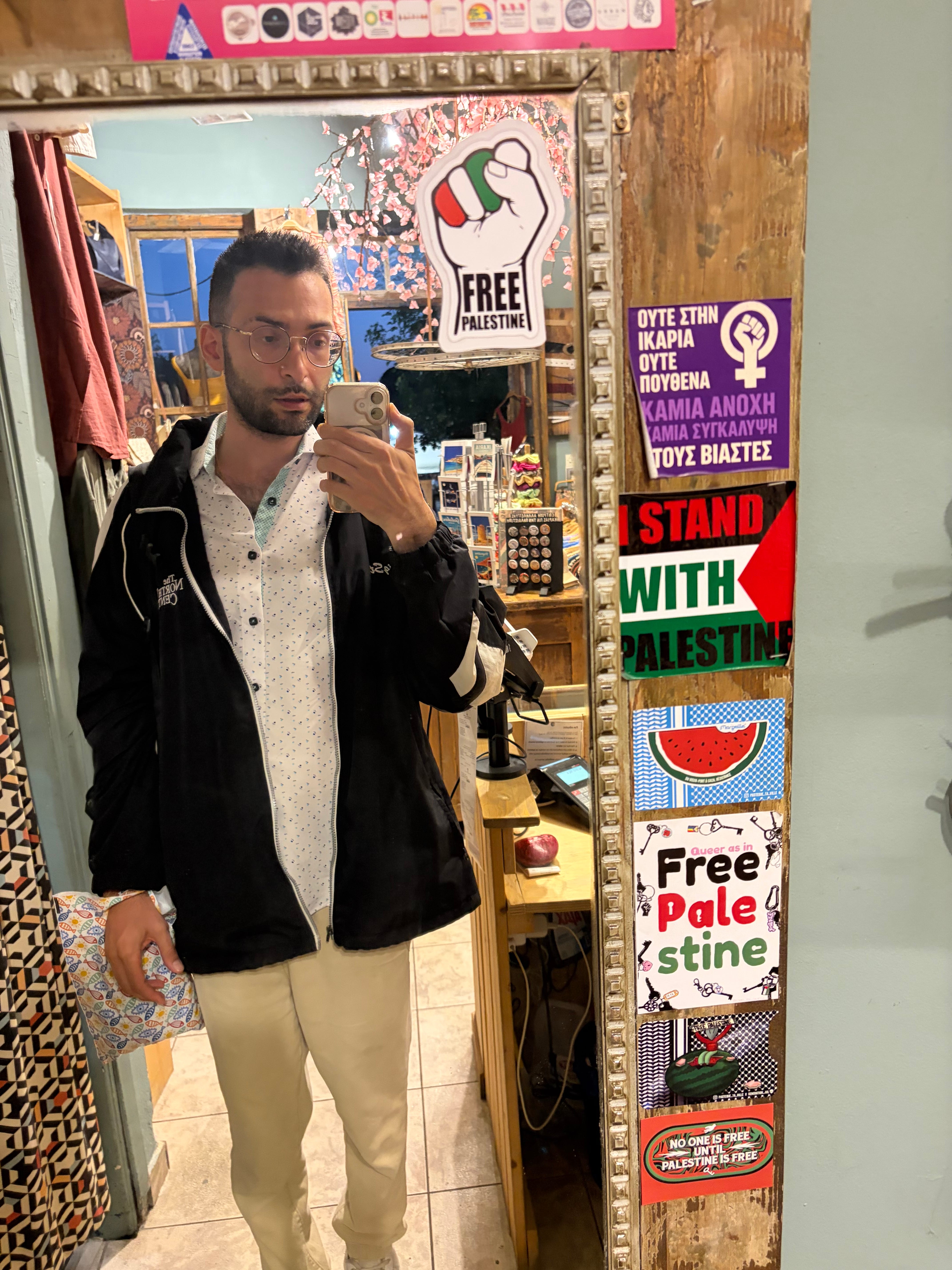
Run into Airbnb owner in the morning. “Off to work?” “Hmmm…maybe I’ll go to work today. First I have to go to the beach for a swim.” Thank God Greece was allowed into the EU! Who knows where it’s already crumbling economy would be with that work ethic.
Lunch at the other place the barista recommended. Waiter is extremely friendly, and inattentive to the point that it’s almost amusing. Across from us, there’s a group of young men in Balkan-maxxing attire.
The homosocial culture in Greece is striking. Men go around in packs, exuding a strikingly natural, effortless brand of masculinity: neither hypermasculine/performatively macho nor wimpy/effeminate. They take pride in their appearance, but not in a guë way. They are virile and clearly take pleasure in the hot girls passing by, but not in a lecherous way. And they enjoy being in each other’s company…they enjoy the bond that they can only share with fellow men.
Homosociality among women is less pronounced, more subtle. But they similarly exude an effortless femininity. Utterly gorgeous, done up—hair, makeup and outfit to the nines—more out of a desire to take pride in their appearance than to gain the approval of others. In part out of a desire to attract male attention, but not in a desperate way. Indeed, they are sexy, but without being slutty—emanating a natural rather than forced, anxious kind of beauty.
I begin to wonder where the actual homosexuals are. I notice a couple of butchy women here and there. The only effeminate man I noticed in Greece was the flight attend on the way here. Despite all the leftist graffiti, I’m surprised by the lack of a prominent LGBTQIA++ subculture. Then again, Greece remains an “oriental” culture…it retains its antiquated eastern aversion to “western” innovations like the normalization of homosexuality. Even the communists—who literally run the island [it’s where all the leftists were exiled during the civil war]—voted against gay marriage, for fear of turning children into a commodity.
I text a Greek friend asking what’s up with the Greek gays. She tells me that most of them are on the DL, dating women while snooping around on Grindr. But even the DL gays will tell you they’re straight. They retain the old school dictum—it’s only gay if you bottom. Surely, there’s nothing commendable about homophobia. Yet there’s something somewhat relieving about their holding onto the old school model of gay. Keep heterosexuality as the norm, and keep your naughty (gay) business in the underground…and never turn it into an “identity” marker. Don’t present as femme in public either (unless you become an Ottoman court eunuch). And only pursue gay sex for the sake of sex alone. Don’t pursue a romantic partnership—romance if for hetero pairings, homosexuality is strictly sexual, transactional. Romance between men constitutes a friendship, not a “romance” in the conventional sense. Besides, the secrecy keeps things spicier, on top of maintaining social order.
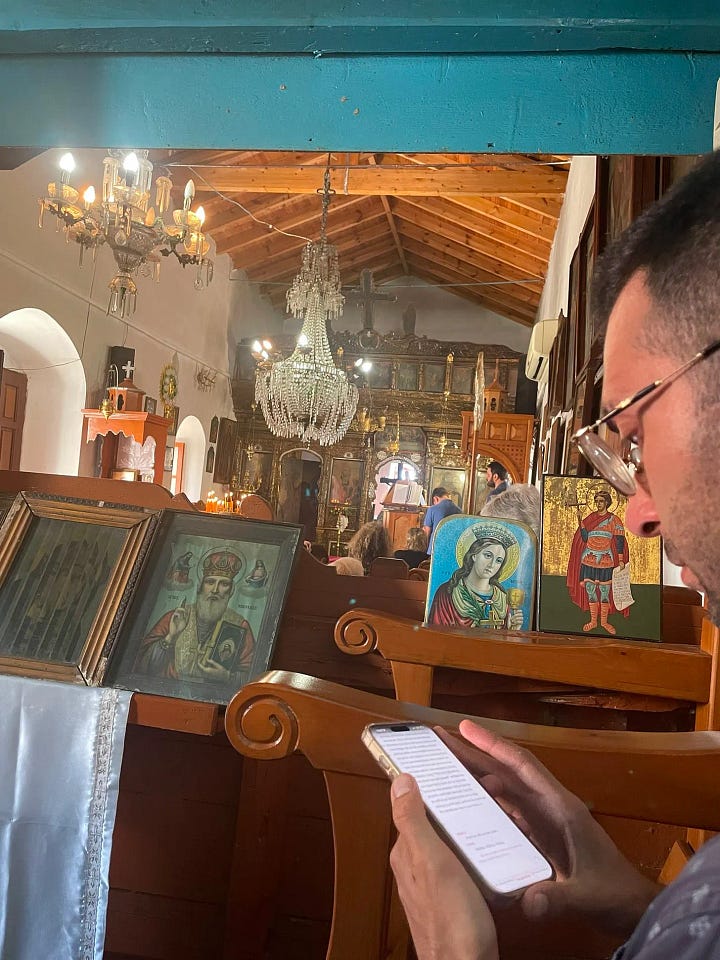
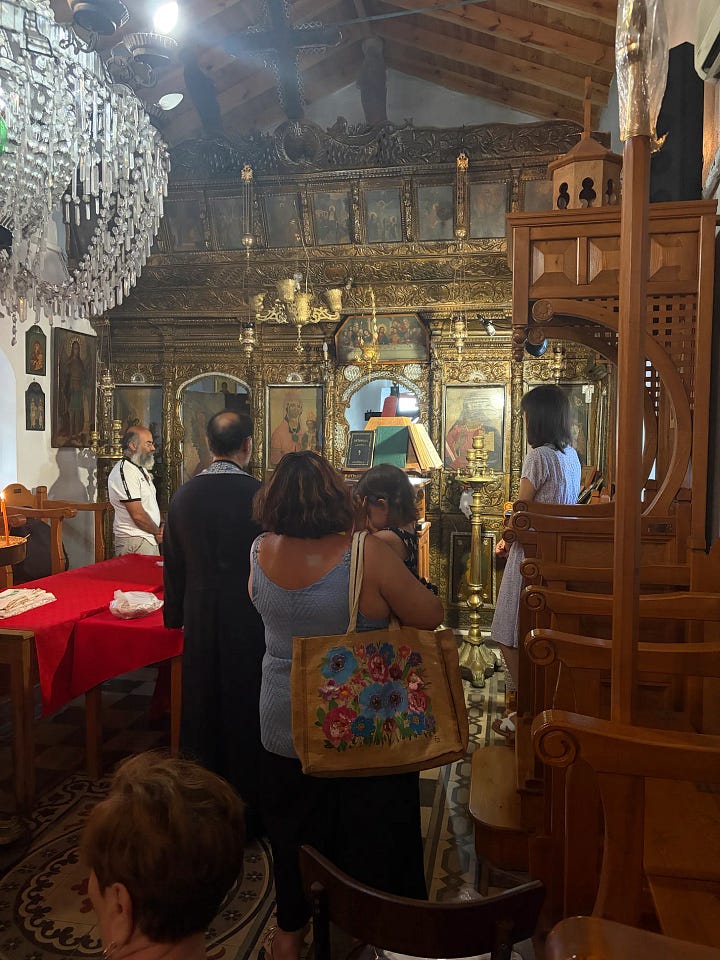
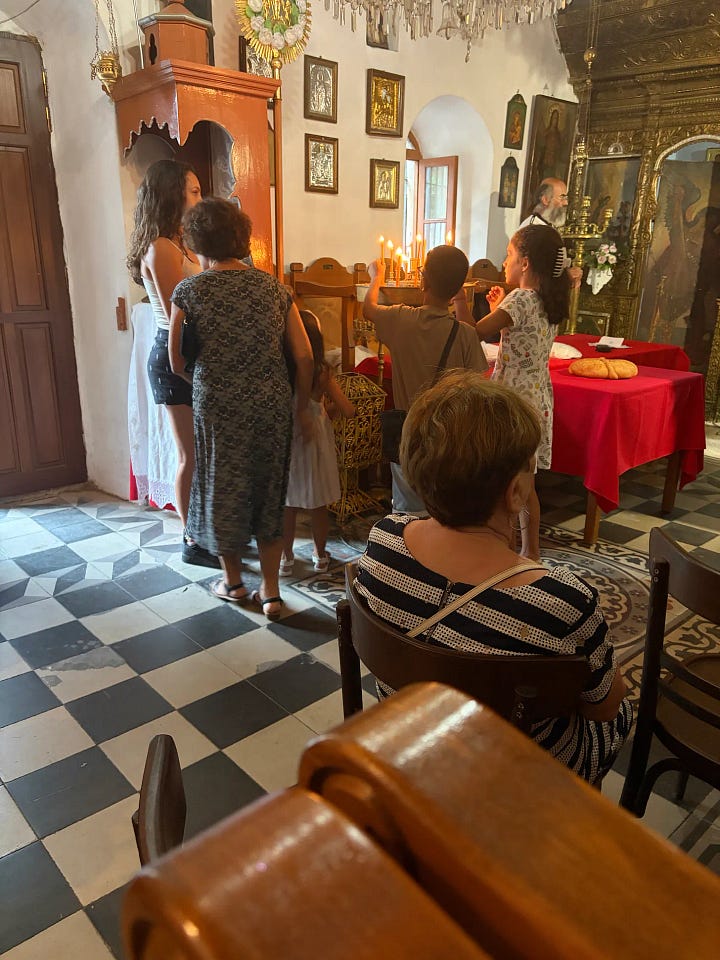
Feast of the Transfiguration. The priest begins the liturgy while simultaneously trying to fix the air conditioner in the sweltering little chapel that overlooks the port. The old ladies with little kids file in, most of the men wander out for a cigarette break, pausing to show reverence to the priest as he incenses outside the doors of the chapel. I love how they segregate the pious from the nominal believers—so natural, so accommodating. The chanter’s 6 and 11 year old sons join him at the paslterion to help him out. At the end, one of the old ladies begins cutting up and distributing the artoklasia—blessed bread—which is still warm from when she took it out of the oven that morning.
Church in the US feels so “processed,” so “developed” as Pasolini would say, compared to this. It’s a production, a consumer commodity—designed to please the customer so they leave a good Yelp review. Some parishes might be nice, but they leave you feeling empty in the end…like after going on a shopping spree or drinking soda with high fructose corn syrup or aspartame. The put-on nature of it doesn’t fill your soul the way reverence shrouded in informality and spontaneity can.
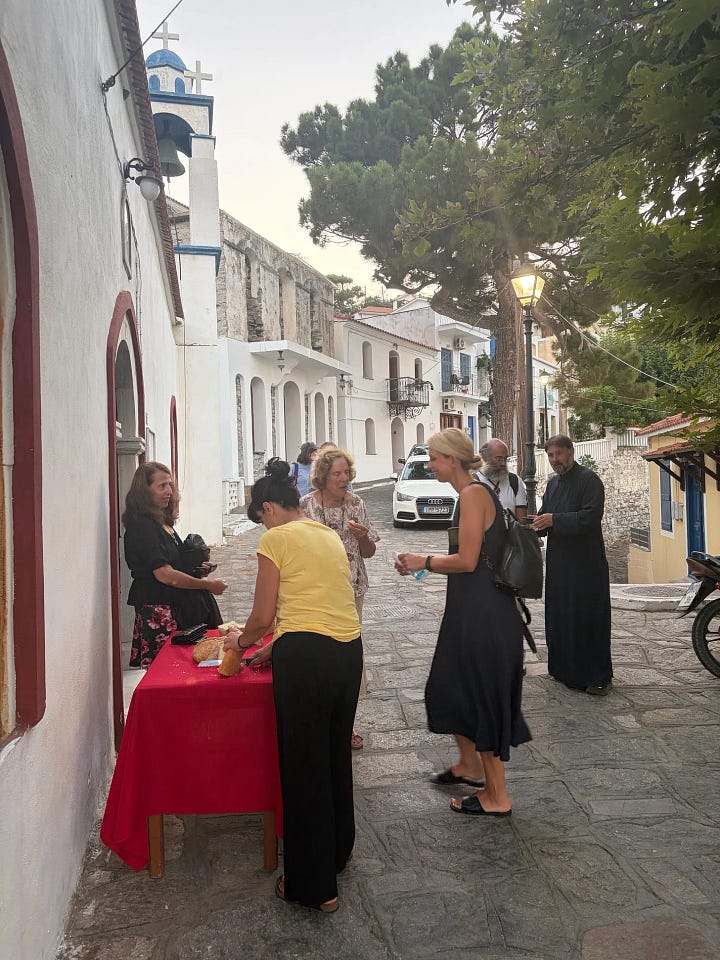
We walk over to a shop that makes fresh spanakopita. The man before us orders a sandwich. The owner tells him she’s out of bread, so she’ll just run over to the baker to get some to make his sandwich. She jumps on her Vespa…while we impatiently wait in line to order.
Quick swim, then back to the Airbnb to get ready for the panigiri—the village feast in honor of the Transfiguration. Panigiria are truly the culmination of everything I’ve ever yearned for: run by the villagers, these festivals—which date back to antiquity—feature fresh homemade food and wine, concentric circles of people—from 3 year olds to 90 year olds—dancing from sunset to sunrise to folk songs that have been passed down through the centuries played by a live band.
We are handed a flier for a communist festival hosted by the youth division of KKE as we walk in, and are barraged with cigarette smoke and the sound of the Ikariotiko being played on the violin. At least 50 tables surround the church, whose doors are wide open for when people want to take a break from dancing, eating, drinking, and smoking to light a candle.
I immediately join the dancers, doing the Ikariotiko, then the kalamatiano, then the balos, until I sweat through my shirt…then taking a break to dry off while puffing on a Greek Lucky Strike. I hop back into the circle…people squeeze in, and the circle gets too big as people start to bump up against the tables. I take the initiative to break off and begin the inner spiral. After 5 minutes I get tired of leading and try to get the Balkan-maxxing dudes next to me to take over, but to no avail. I wave over a middle-aged butch, and she gladly takes the lead. [I even made it into YouTube cut…in the back coming in from the right]
My heart surged with a burst of revelry and pride. I feel myself to have roots, a foundation, a heart, balls—to be fully a man, fully a human being, in this moment. I’m participating in a tradition, a form of culture, of joy, that has been passed on through millennia…knowing that I belong to so great a people as the Greeks. A pride that those living in homogenized, deracinated monocultures—however much “diverse”—will never know…yet that neither will the reactionary ethnonationalists, with all their clamoring about “tradition” and “national identity.”
Indeed, this is the kind of tradition, of cultural institution, that no one can invent artificially. It is too beautiful, too dynamic, too lively to be “constructed,” but can only be passed down through the ages, shared out of gratitude and joy. Indeed, it is this kind of “living” cultural pride that is capable of receiving outsiders, of offering something of substance to participate in and become part of.
I think of how much Pasolini would’ve loved this, this pride in the particular. In a people who smell and taste like something distinct, with flavor, with chutzpah—who are not bland “like a piece of toast.” I think of my grandparents, filled with gratitude for all that they passed down to me. I’m grateful for having had the opportunity to care for them on their deathbed, even with all the sacrifices that entailed. I’m grateful to my mom for forcing me to go to Greek school against my will, where I learned the language, history, culture, religion, dance, music, literature of my people—which gave me dignity, which gave me hope in the deracinated hellscape I called home.
People from the motherland wonder why their brethren in America are so proud, why we wave our flags and constantly remind people of our heritage. They wouldn’t understand…when your grow up in the cradle of global homogenization, without roots, without a clear identity…you hold onto to whatever remnant of roots, of substance, that you can (it’s the same reason Americans are prone to inventing identity categories like non-binary, neurodivergent, and Republican).
One of the main characteristics of this equality of lived expression, besides the fossilization of verbal language (students speak like printed books, street kids have lost all colloquial inventiveness), is sadness: joy is always exaggerated, ostentatious, offensive. The physical sadness of which I speak is profoundly neurotic. It is based on social frustration. Now that the social model to be attained is no longer that of one’s own class, but the one imposed by power, many people are no longer in any position to attain it. And this is horribly humiliating.
Allow me to offer a very modest example. At one time the baker’s assistant, or cascherino, as he is still called in Rome, was always, constantly cheerful: it was a real joy, which sparkled in his eyes. He used to walk down the street whistling and cracking jokes. His vitality was irresistible. He was dressed much more poorly than his contemporary counterpart: his trousers were patched, and even in good times his shirt was often hardly more than a tattered rag. But all of this formed part of a model that, in his village, had a value, and a meaning, and he was proud of it.
And, in short, what counts is that this person, this man, was cheerful. Isn’t happiness what really matters? Is it not for happiness that one fights for the revolution? The peasant or sub-proletarian condition was once able to express, in those persons who lived it, a certain “real” happiness.
Today, this happiness—with the coming of Development—has been lost. This means that Development is by no means revolutionary, not even when it is brings reform. It only generates anxiety. Today there are adults my age who are so aberrant as to think that the (almost tragic) seriousness with which our contemporary bakers hand us their package wrapped in plastic, with their long hair and moustaches, is better than the “silly” joy of the past. They think that to prefer seriousness to laughter is a virile way to face life. In fact, they are happy vampires, happy to see their innocent victims transformed into vampires, too.
Seriousness and a dignified demeanor are horrendous duties that are imposed on the petty bourgeoisie; and the petty bourgeoisie are therefore happy to see the poor people become “serious and dignified”, too. It never even occurs to them that this is real degradation: that the poor people are sad because they have become aware of their own social inferiority, since their values and their cultural models have been destroyed.
-Pier Paolo Pasolini, Lettere Lutterane
Last day. Airbnb owner catches us having mountain tea outside and asks us how we enjoyed the panigiri. “Omg so much fun…we stayed til like 2 am!” That’s nice, he tells us. He stayed til 5 am, took a quick nap, then went for his morning swim and then off to work.
We hang around on the beach, behaving like obnoxious Americans: talking loudly, drinking, dancing, making a scene…and taking pride in it all. We are the center of the world, and we know it. The Ikarians are eating up our brazen American superiority complex. The young man collecting the fee for umbrellas lights up when we tell him we’re from New York. He always dreamed of going there. He tells us about life on the island, how he rides dirt bikes, and asks to follow us on IG. We make nice with the bartender—Stavros, which means “cross.” My friend asks him if he’s religious, he tells us he goes to church regularly, and that he’s a boxer. Strikes me as much more genuinely chadded than any of the American Orthobros who post about their OCA church and BJJ gyms on X.
I overheard a Greek-American family next to us—the son, about 12 years old, proclaims that the panigiri last night was “the best night of his life,” as he “never had so much fun before.”
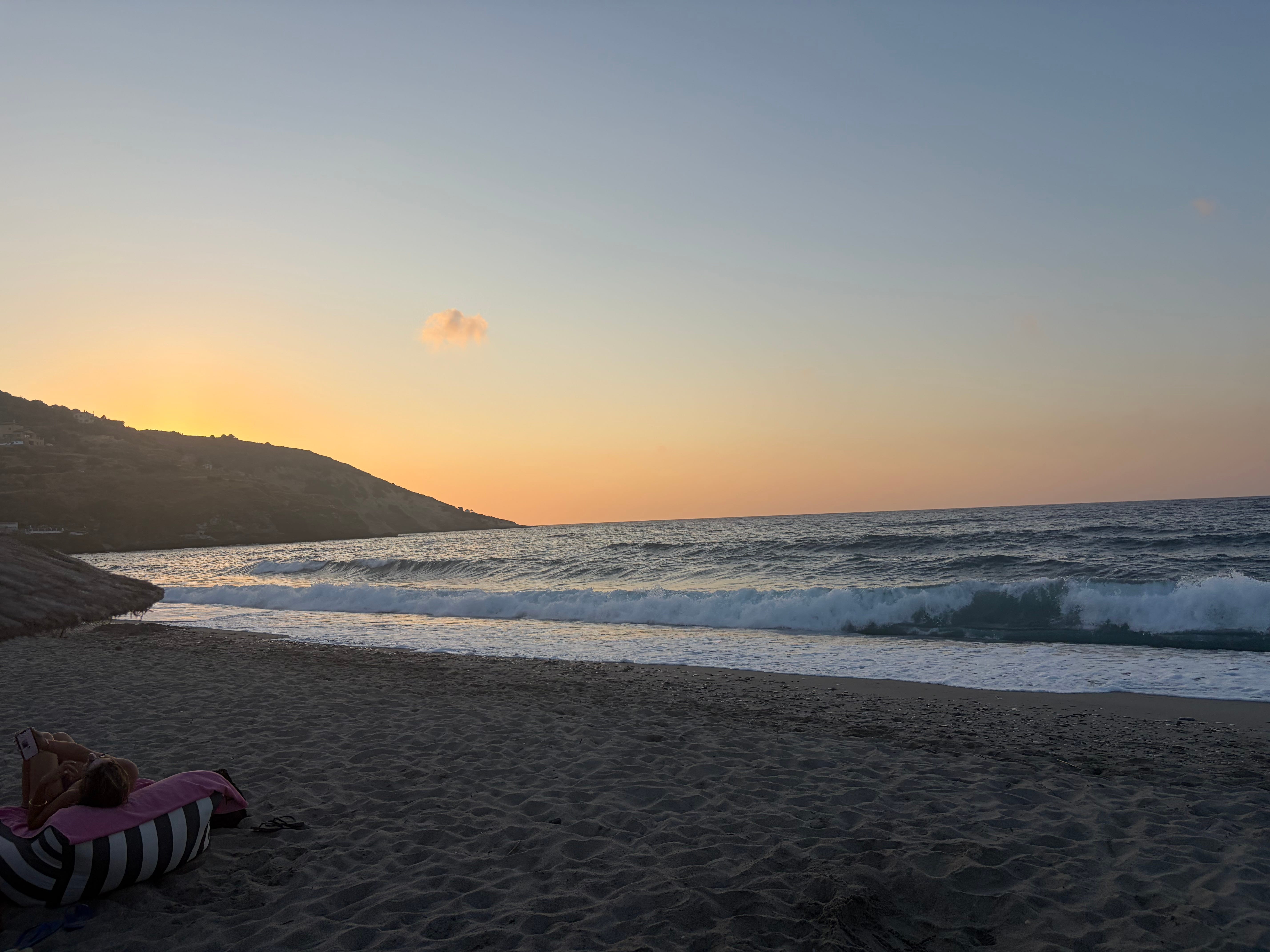
At our last supper, I see more people who were at the panigiri, including the lovely butch with whom I danced, and then overhear two women with heavy Noo Yawk accents. I lean over and ask if they’re from Astoria or Bay Ridge. Bayside, they tell me. Close enough. The brief whiff of Noo Yawk makes me nostalgic for home.
Back to NY/NJ. I start thinking how much I’ll miss the island life, the people, the food, the music…but then I remember I live in the center of the world. Where I can go down the block to one of the numerous Greek restaurants or markets to get authentic Greek food…or Italian, or Palestinian, or Korean, or Dominican. And I can drive up to Astoria to hear real Greek music, and down the shore to see the sea.
New York truly is the perfect combo of eveything: globalization and ethnic rootedness, corporate power and local communities, efficiency and messiness, tradition and progress, sacred and profane.
I’m glad to be home.
Comments
Nothing yet. Say the first thing.
Sign in to join the conversation.