
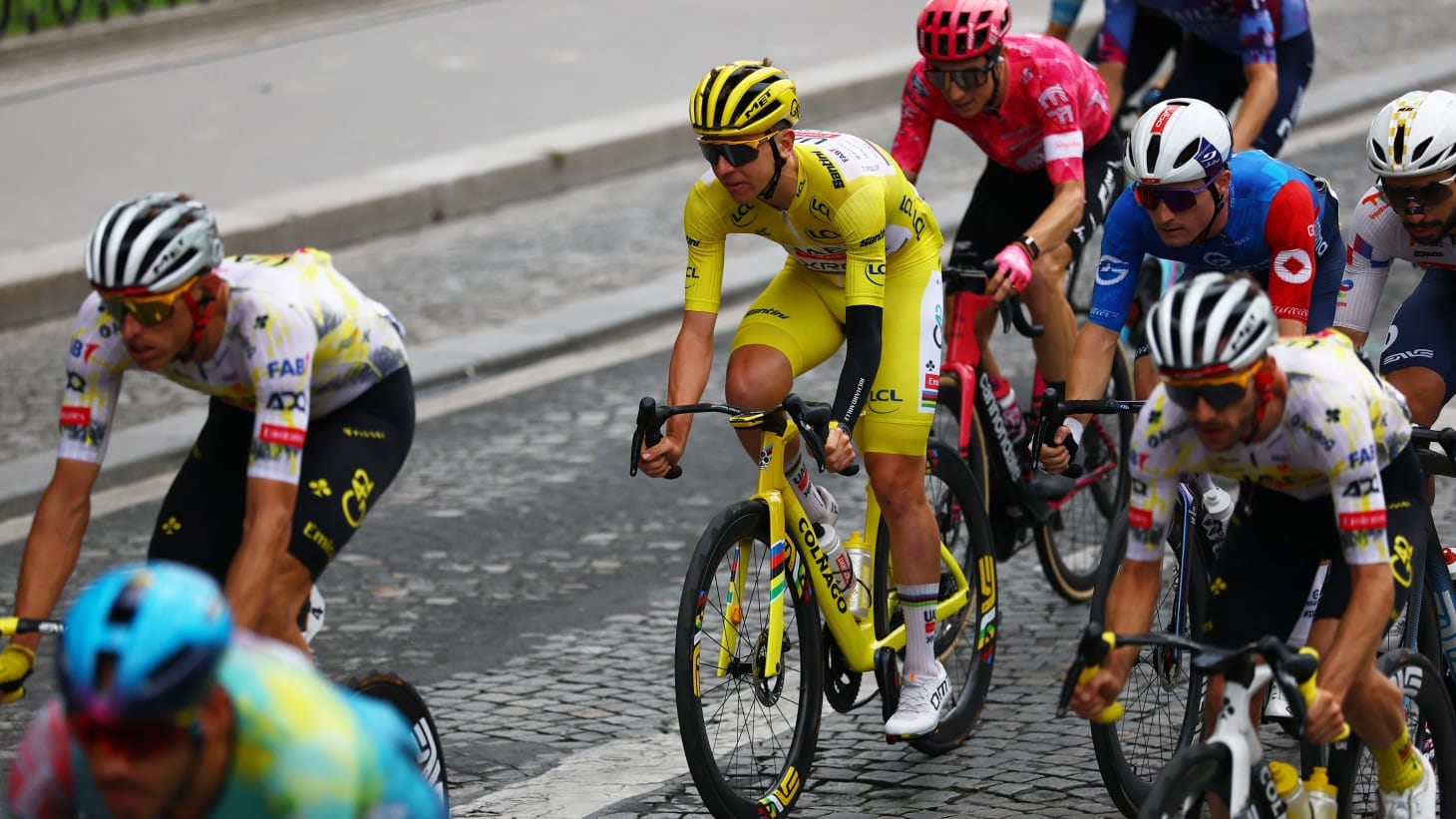
Every July, roughly 180 of the world’s fittest athletes ride over 3,300 kilometers across three weeks, climbing the equivalent of several ascents of Everest along the way. Widely considered the world’s most-watched annual sporting event, the Tour de France is a uniquely gruelling showcase of grit and endurance at the highest level. The 2026 Tour de France, which began July 4th in Barcelona and finishes this Sunday in Paris, has once again placed a spotlight on the heated rivalry between defending champion Tadej Pogačar and two-time winner Jonas Vingegaard. Just behind them, rising stars like Isaac del Toro and 19-year-old Paul Seixas are pushing the pace even further.
But as any athlete – or any of their coaches – will tell you, what happens on the bike is a culmination of everything that happened off of it. Doing anything at an elite level is a game of strategic, relentless preparation, and Grand Tour riders aren’t just training their legs for what might be the hardest ride of their life. They’re engineering their sleep, obsessively fueling their bodies, systematizing recovery down to the degree of hotel-room temperature, and actively managing their mental state under enormous public pressure. Even if none of us need to survive 21 stages through the Pyrenees and the Alps, the underlying principles these athletes rely on translate remarkably well to everyday life. Here’s what their preparation looks like, and how to borrow from it.
Team doctors across the peloton describe sleep as the single most important recovery tool available to a rider — more important than any supplement, ice bath, or massage. Unsurprisingly, teams go to extraordinary lengths to protect it: some carry their own mattresses and pillows from hotel to hotel, run air conditioning to keep rooms in a specific temperature and humidity range, and pair roommates based on matching sleep schedules rather than just friendship.
Interestingly, recent research monitoring riders during a Grand Tour found that even elite athletes with structured routines saw their sleep quality decline as the race intensified. Bedtimes crept later by about half an hour and wake times by nearly 45 minutes, largely due to the demands of meals, travel, and race-day adrenaline. The riders who pushed themselves hardest tended to sleep the least and the worst, a pattern that researchers say is worth paying attention to even outside elite sport.
Takeaways for everyday people:
Keep a consistent wind-down routine, even when your schedule is disrupted. A warm shower before bed can help trigger the natural temperature drop that promotes sleep onset.
Cool, dark rooms matter. Many teams target roughly 16–18°C (60–65°F) with blackout conditions.
Watch late-evening stimulation. Several riders make a deliberate habit of staying off their phones and social media before bed, since scrolling activates exactly the kind of mental stimulation that delays sleep onset.
The scale of eating in the pro peloton is hard to overstate. Riders can burn upward of
6,000–10,000 calories on the hardest mountain stages and need to replace nearly all of it. During a stage, most riders now aim for 90–120 grams of carbohydrate per hour — some climbers push even higher — consumed through a steady rotation of gels, drink mixes, and easily digestible bars, since fat and protein digest too slowly to fuel hard efforts in real time.
What’s notable is that this capacity is trained, not innate. Teams spend months before the Tour having riders practice eating large amounts of carbohydrate while riding, gradually building the gut’s ability to absorb the fuel without distress — the same way you’d build muscular endurance. Off the bike, recovery meals emphasize carbohydrate-heavy plates (rice, pasta, potatoes) with moderate protein, eaten as soon as possible after finishing to start replenishing depleted energy stores.
Takeaways for everyday people:
You don’t need pro-level intake, but the principle of matching fuel to effort holds: eat more on hard training days and less on rest days, rather than treating every day the same.
For anyone doing sustained exercise over an hour, some carbohydrate during the effort (even if it’s just a banana or a small snack) can meaningfully help energy and focus.
Refuel soon after a hard workout rather than waiting hours; a mix of carbohydrate and protein within that first post-exercise window supports better recovery.
Recovery in the pro peloton is the combined effect of dozens of small, unglamorous habits repeated daily with precision: eating quickly after the finish, getting a massage, hydrating deliberately, sleeping protected hours, and repeating the cycle the next morning.
As Pogačar himself has put it, sometimes the best recovery tool is simply sitting still and doing nothing, rather than adding more sessions, gadgets, or interventions on top of an already sore, exhausted body. His point was that balance — knowing where to draw the line on additional stress — matters as much as the training itself. Rest days on the Tour aren’t full days off, either. Riders typically still do a short, easy ride to keep their legs moving and avoid feeling stiff or “blocked” the next day, alongside massage, extra sleep, and careful meal planning. Too much rest can actually leave legs feeling heavy; too little can accumulate fatigue. Teams tend to know each rider’s individual tolerance well enough to fine-tune it.
Takeaways for everyday people:
Recovery is cumulative, not a single trick. Small daily habits — eating soon after exercise, staying hydrated, prioritizing sleep — outperform occasional big interventions.
Complete rest isn’t always optimal. Light movement (a walk, an easy spin) after a hard effort can help you feel better the next day compared to total inactivity.
Learn your own recovery tolerance rather than copying someone else’s routine exactly. What restores one person can leave another feeling stagnant.
The mental side of Grand Tour racing gets less attention than power numbers, but riders and staff describe it as decisive. One recurring theme from current riders is limiting exposure to outside noise — several deliberately avoid reading social media commentary during the race, describing it as a way to protect focus and stay grounded in their own process rather than reacting to public expectations or criticism.
Team performance staff have also emphasized that a calm, stable relationship between riders and their support team creates the mental foundation that allows physical performance to follow. Longer-term mental preparation shows up in how contenders build their season.
Some riders, like Pogačar, prepare by racing frequently against strong competition for months beforehand, treating high-pressure races as training for composure under stress. Others, like Vingegaard, take the opposite approach — training quietly at altitude for long stretches, away from public attention, to arrive mentally fresh. Both approaches share a common thread: deliberate, months-long preparation rather than last-minute cramming, and a clear sense of what each rider needs to feel ready.Takeaways for everyday people:
Notice what outside input helps you and what just adds noise. It’s reasonable to limit news or social media consumption around high-stress periods in your own life.
Build toward big moments gradually. Cramming preparation into the final days before a stressful event (a presentation, a race, a major decision) tends to backfire compared to steady, spaced-out preparation.
Identify your own pattern — some people perform best building confidence through repeated exposure to pressure, others need quiet, focused preparation away from distraction. Both are valid; the key is knowing which one is you.
When we think of professional athletes, we often imagine the resources they have that we don’t have access to ourselves: a team bus, a personal chef, rehab specialists, dieticians, a team of performance coaches. But the common thread across sleep, nutrition, recovery, and mental preparation in the Tour de France peloton isn’t access to elite resources — it’s consistency. These riders aren’t relying on one dramatic hack; they’re stacking small, repeatable habits day after day, and trusting that the accumulation matters more than any single decision or tool. Whether you’re chasing a yellow jersey or just want to feel more capable in your own pursuits, that’s an important lesson to take to heart.
Sources: Cyclingnews, Cyclist, EF Pro Cycling, ProCyclingUK, Velo/Outside, Roadman Cycling, and Physiological Reports (Fitton et al., 2026 study on Grand Tour sleep patterns).
No posts
Comments
Nothing yet. Say the first thing.
Sign in to join the conversation.