
More than 150 dairy tech enthusiasts joined online for IFCN’s 2026 Global Dairy Tech Briefing last week. During the event, I unveiled the Dairy Farm Tech 4.0 poster.
This poster continues to generate high interest. Each time a new version is released, the post announcing it sets new click-through and viewership records.
Here’s the latest version:
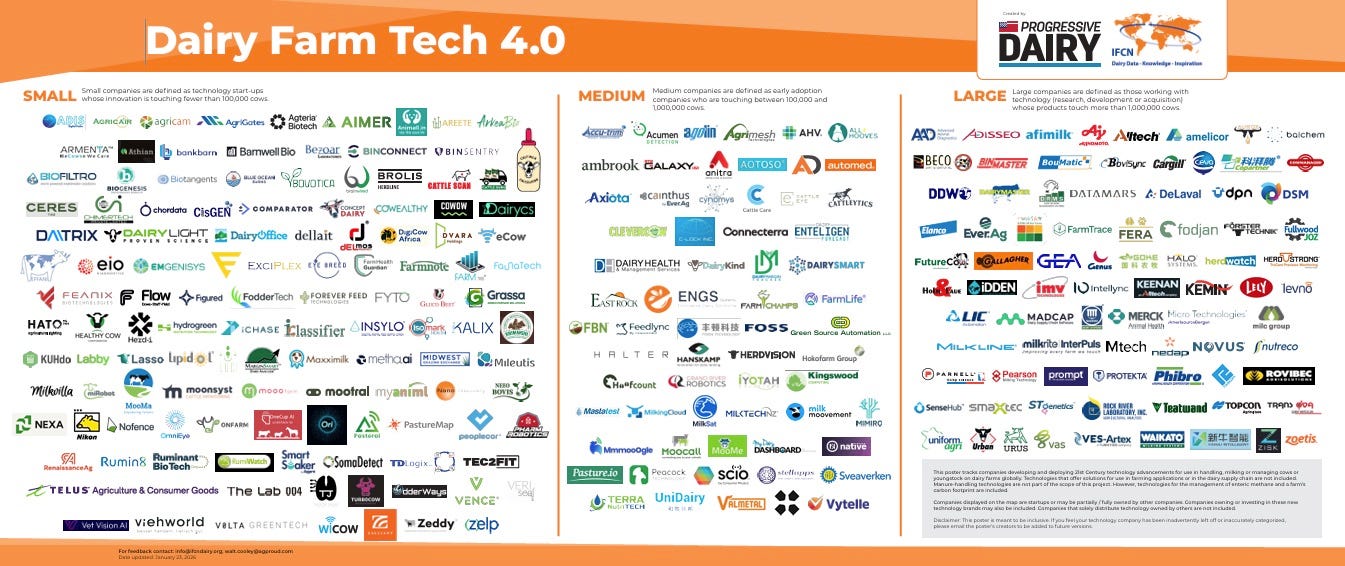
Email cowtechreport@gmail.com if you’d like a high-resolution PDF of the poster.
Congratulations to the following companies: 1) added this past year for their role in dairy tech or 2) exhibiting growth and moving into new size categories.
Added
NeeoBovis
Growing
BoviSync (medium to large)
Dairy Performance Network (medium to large)
FERA (medium to large)
Herdvision (small to medium)
Protekta (medium to large)
SmaXtec (medium to large)
During the event, I presented some of the data from the recent survey that many of you participated in. (Thank you for your responses.) Among the crowd favorites from that data were the top technologies you thought were going to gain ground in 2026. Here are the Top 5:
Methane-reducing feed additives garnered notable attention, reflecting the industry’s increasing focus on sustainability and environmental impact as a market opportunity.
No-fence or virtual fencing systems appeared repeatedly, indicating growing interest in flexible, technology-driven grazing management without physical infrastructure.
Internal monitoring devices – particularly rumen boluses and temperature sensors – were cited multiple times. Producers noted how they like and trust these tools’ abilities to detect illness early and evaluate treatment effectiveness through precise body temperature tracking.
Robotic milking systems and general automation continued to generate strong interest, with several respondents mentioning parlor automation and robotic solutions for both rotary and parallel parlor setups.
Computer vision cameras with artificial intelligence (AI) capabilities emerged as the most frequently mentioned technology. Respondents highlighted applications for monitoring cow locomotion, facial recognition for cow identification and general herd observation – suggesting producers see significant value in automated visual monitoring systems.
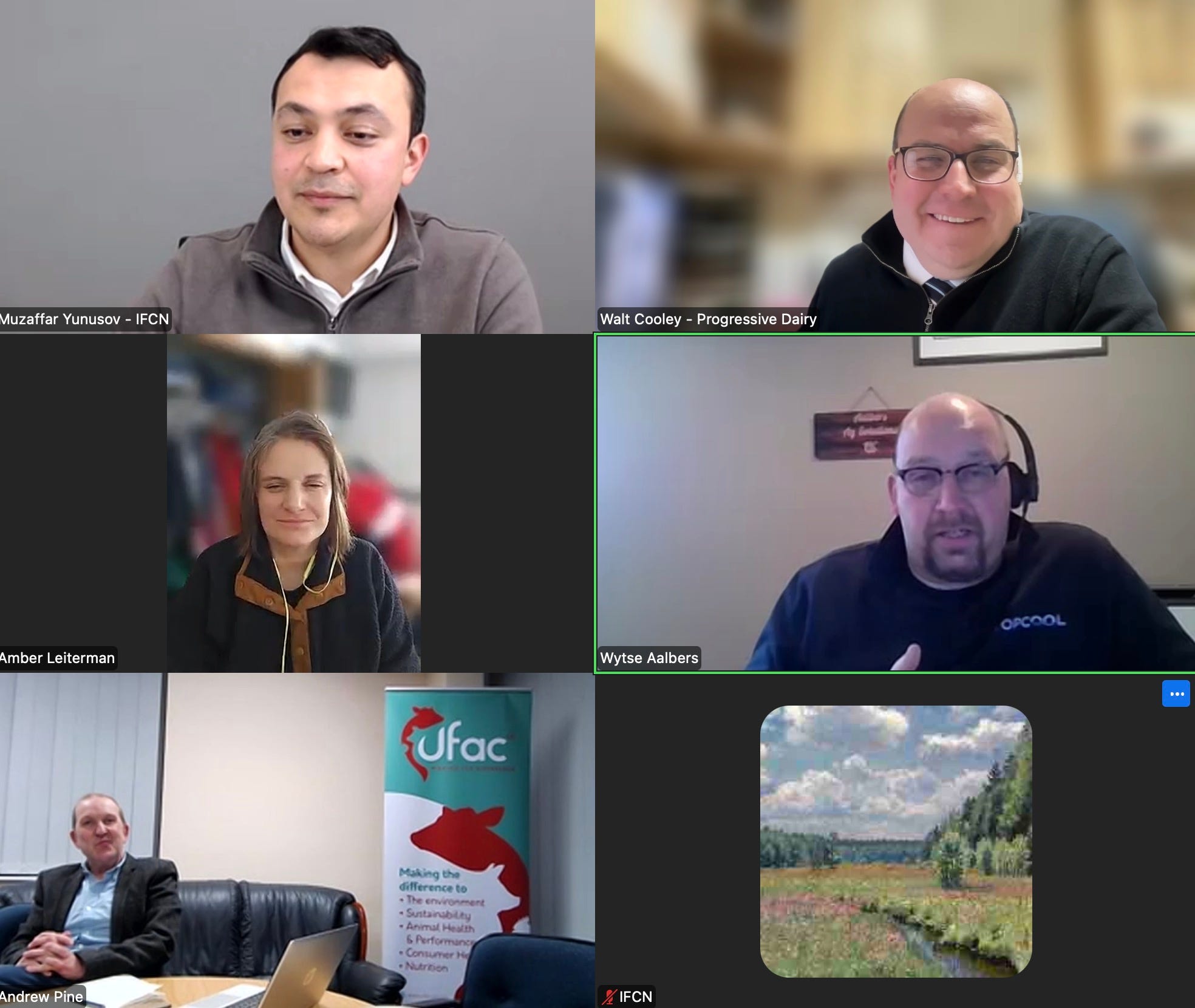
The panel that followed my presentation had a discussion about these points and agreed for the most part with this data. The one point the panel took issue with was methane reduction technology. This is probably more of a regional hot topic than a global one. Certain regions of the world are seeing interest in this more than others. We have yet to see much movement on this in North America.
I’ll recap more of these survey results in a future post. (Teaser: Wait until you hear what dairy technologies respondents think are overhyped. 😳 )
The light bulb moment for me at this event was Wisconsin dairywoman Amber Leiterman’s response to my question asking if whole-life monitoring (i.e., activity monitoring from birth through lactation) was going to gain ground. She said she does see it as an interesting tool for some dairies, but her focus is on other things.
“I like the simple technology of a roof and the three sides of a barn,” Leiterman says. “I’m just looking to build a barn to get our calves out of hutches. I bring that up every year at our partner meeting. But, for now, we provide the best environment we can with outdoor hutches and fresh air.”
Leiterman’s comments provide valuable insight to ag tech companies. Producers usually progress from one step of innovation to another. They don’t usually take leaps.
A producer raising their own calves would need a barn and the infrastructure that comes with it to most efficiently provide an environment to capture useful data. The below-zero weather that was impending in Leiterman’s area last week would show up on any activity monitor as stress.
Duh! Of course it would.
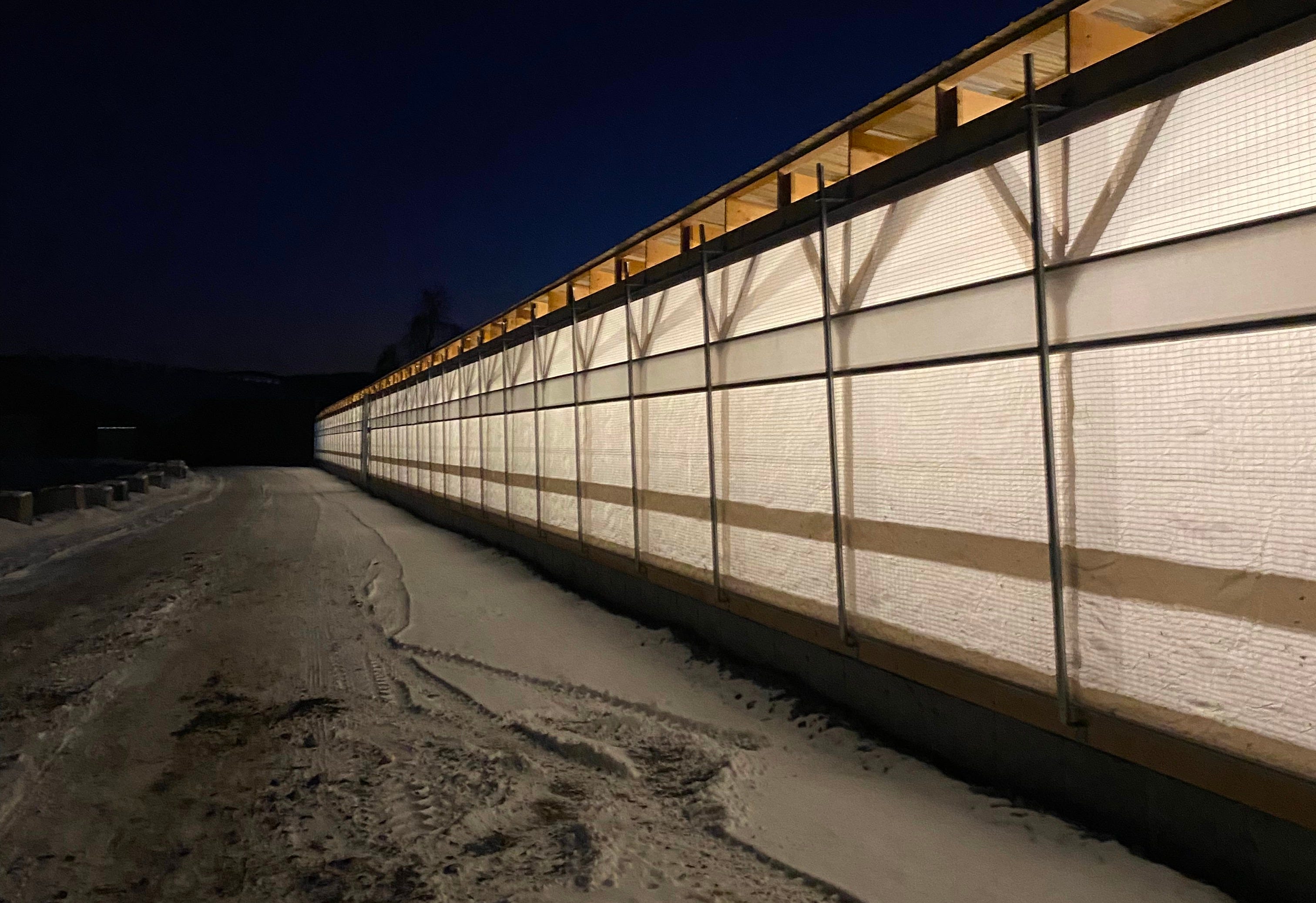
Only in controlling calf-raising conditions to first eliminate environmental deviations does activity monitoring become sensitive enough to be reliable and meaningful in the eyes of a producer.
Oh, and that barn that Leiterman hopes to eventually build, she and other producers are likely to build it with quality, long-lasting, proven tech such as fans or positive-pressure or tunnel ventilation.
Basic is where dairies will spend first. Then precision.
“What we’re seeing is increased spending on cow comfort. That’s probably where people will put their dollars – anything to make the cow live longer and also produce more milk each day,” said Wytse Aalbers, one of the event’s panelists and director of business development at Topcool. “Buy equipment that functions well, can last for a long time and that you can add some automation to later.”
Innovation, at least when it comes to facilities, requires that basic three-pronged approach, he said.
“A dairy producer doesn’t need to have AI in mind right away with every purchase,” Aalbers said.
I read a similar message from Julia Somerdin, who was at the agtech summit in Davos, Switzerland, held in conjunction with the World Economic Forum last week.
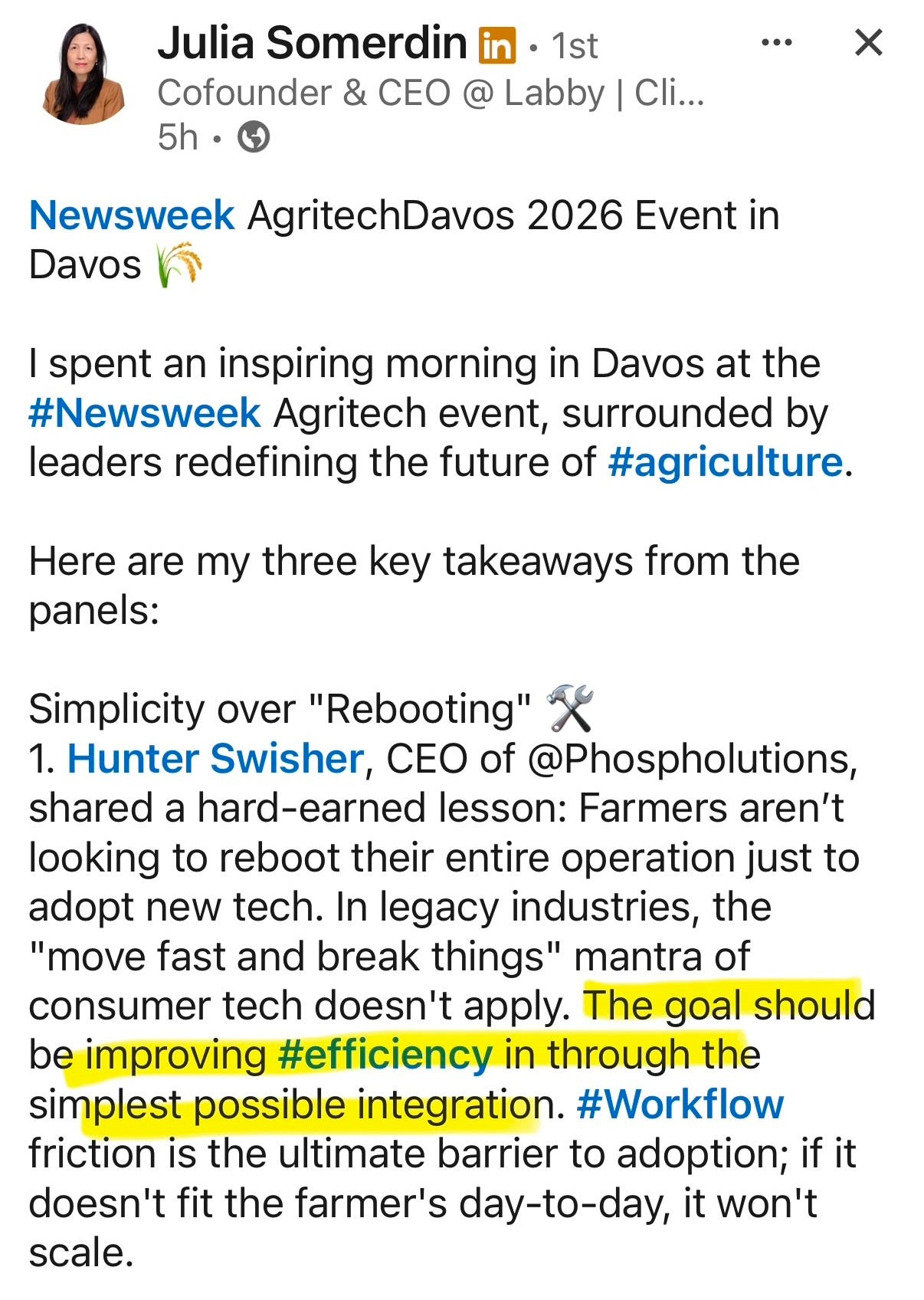
Remember: Producers move in incremental steps toward new technologies.
If you’re interested in catching up on what you missed at last week’s IFCN webinar, a recording of the event is available.

Projected profitability for the next 12 months for two dairy herd sizes INCREASED in recent profit projections from ZISK.
ZISK is a profit projection smartphone app that tracks individual dairy farm profitability based on current CME board prices. Projections for a 1,000-cow dairy producing an average of 80 pounds of milk per cow and a 2,500-cow dairy producing an average of 85 pounds of milk per cow are provided.
12-month dairy farm profit projections (as of Jan. 26, 2026):
1,000-cow dairy = $265,988 (UP about $134,400 since last week)
2,500-cow dairy = $1.388 million (UP about $359,700 since last week)
No posts
Comments
Nothing yet. Say the first thing.
Sign in to join the conversation.